Ballard Power's Solaris Win Meets a Costlier Reality
Published on 11/19/2026 at 17:41 | Editorial boerse-global.de
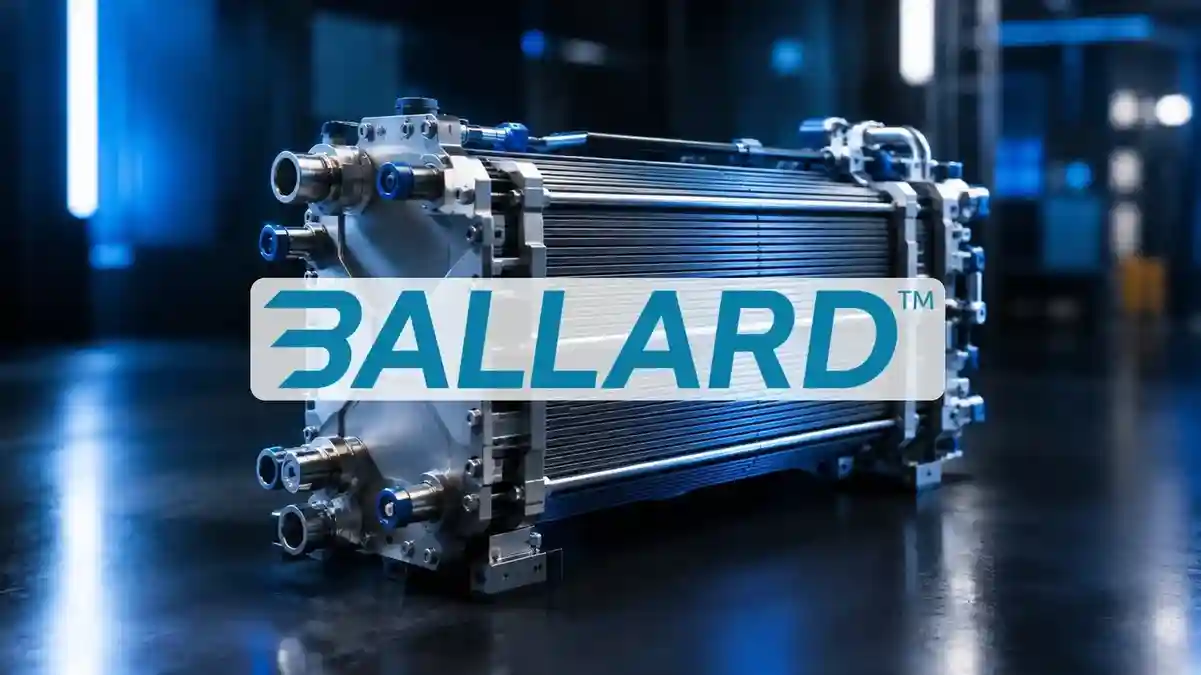
Ballard Power's hydrogen fuel-cell drive is headed for series production in the next-generation Solaris Urbino 12 hydrogen bus — a concrete platform win announced on 5 November. Whether that engineering milestone turns into dependable revenue is a separate question, and the company's third-quarter report, released 16 November 2026, offers little comfort on that front.
Revenue for the quarter came in at $22.5 million, down roughly 31% from $32.5 million a year earlier. KeyBanc analyst Sangita Jain, who reaffirmed her sector-weight rating on the stock on Tuesday, pointed to the softer top line and delayed bus deliveries, while also flagging the improved gross margin and the company's medium-term growth targets.
Costs Move Up, Revenue Moves Down
Management raised its full-year operating expense guidance under IFRS to $90–100 million from a prior $65–75 million. About $12 million of the new range reflects integration costs — expenses that are not meant to recur. The remainder of the increase is less easily explained, and whether it proves permanent is unclear. Capital expenditure guidance likewise climbed, to $10–13 million from $5–10 million, with roughly $10 million earmarked for the HPU fleet, whose expansion is to be financed largely on an asset-backed basis.
The juxtaposition is awkward: CEO Marty Neese, on the same day, reiterated a target of positive adjusted EBITDA by the fourth quarter of 2027, with full-year profitability sought in 2028.
Should investors sell immediately? Or is it worth buying Ballard Power?
A Margin That Cuts Both Ways
The loss picture did improve. Adjusted EBITDA came in at a negative $12.4 million, a sharp narrowing from the $31.2 million shortfall a year earlier, and gross margin climbed to 20% from 15%. Part of that margin gain, however, stemmed from adjustments to inventory provisions — a boost that cannot simply be extrapolated.
Jain's reference to delayed bus deliveries underscores the practical side of the business: a better margin on its own does not make revenue more reliable. For a durable growth trajectory, the improvement has to show up in sales as well.
Reading the Order Book Correctly
Total backlog rose 15% from the end of the second quarter to $180.6 million. The twelve-month portion, by contrast, fell 17% to $61.4 million. Of the roughly $13 million decline, about $12 million relates to intercompany orders that were removed from the figure — a distinction that matters when judging near-term visibility.
Dividing the quarterly loss by the current margin to estimate the revenue needed to break even would be misleading, since it extrapolates a business scope that was only partly consolidated during the quarter.
Cash tells a similarly incomplete story. Ballard held $373.9 million in cash at the end of September, down from $525.7 million a year earlier, while operating cash burn rose to $35.4 million from $22.9 million. Even at that higher burn rate, the balance sheet comfortably carries the company past its target quarter — proof of solvency, not of profitability.
Ballard Power at a turning point? This analysis reveals what investors need to know now.
The Market's Verdict
The shares touched a 52-week low of €1.02 on 17 November 2026 and stood at €1.14 on 19 November. By Thursday morning the stock was up 4.4%, though it remained 11% lower over a seven-day stretch.
Ballard's own route to break-even rests on three levers: the energy services business, further margin expansion, and cost synergies. That is an operating plan, not a result. The higher cost guidance does not invalidate it so long as part of the increase is integration expense, and the revenue decline does not refute it while the business scope is being reshaped. Nor do the quarterly figures confirm it.
What the announced Solaris series debut shows is where Ballard's technology is headed. What the quarter shows is how far the company still has to travel economically. Whether the two converge will be settled by deliveries and the revenue they generate — and that remains the open question.
Ad
Ballard Power Stock: New Analysis - 19 November
Fresh Ballard Power information released. What's the impact for investors? Our latest independent report examines recent figures and market trends.