
ASML Holds Firm as AI Design Fears Meet Renewed Analyst Conviction
Published on 10/08/2026 at 02:51 | Editorial boerse-global.de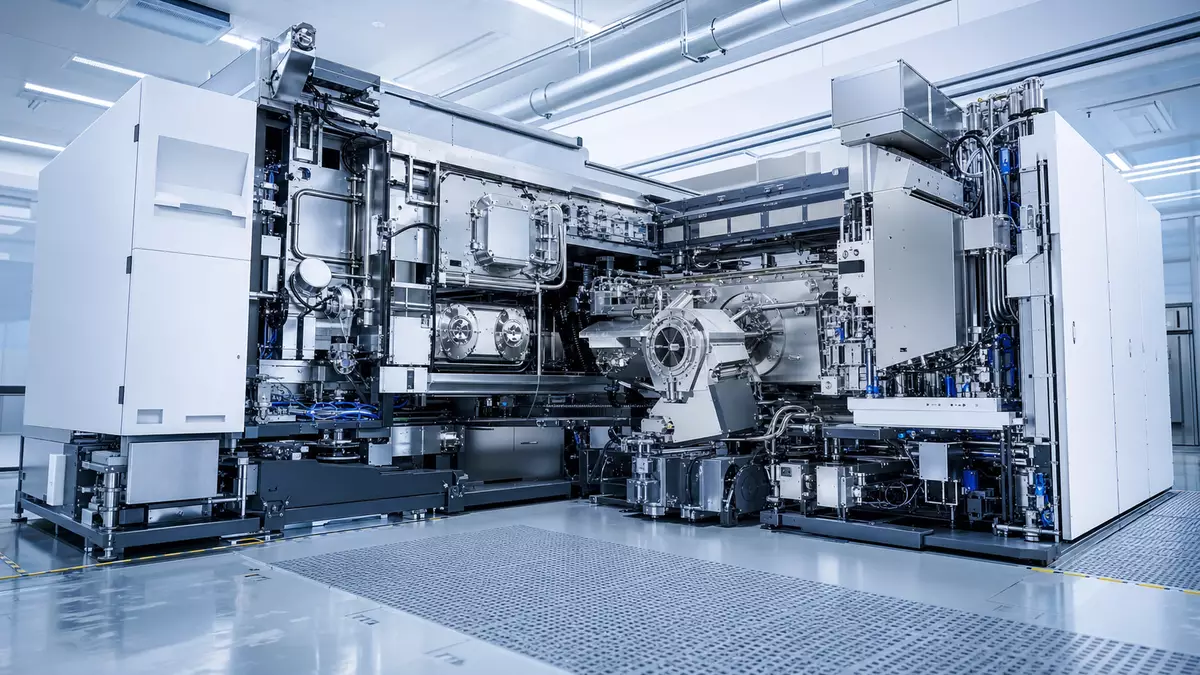
A fresh capability unveiled by French AI developer Mistral has rippled through the semiconductor sector, giving ASML Holding investors a new reason to question how much lithography equipment the artificial intelligence boom will ultimately require. Mistral's Large 4 model lists chip design among its functions — a detail that prompted parts of the investment community to revisit their assumptions about medium-term semiconductor demand for AI workloads. For Europe's most valuable technology company, the development amounts to another stress test for the investment narrative that has driven its shares sharply higher this year, though coverage of the episode stopped short of calling it the sole trigger for the pullback.
The Dutch lithography specialist ended the previous session down 0.9% at EUR 1,613.40. By midweek the stock was still giving ground, shedding 1.2% to trade at EUR 1,608.20 — a modest retreat that leaves the shares up 75% since the start of the year.
A Design Question With No Easy Answer
At the heart of the debate sits an unresolved industry puzzle: if new software models can speed up and streamline the design of highly complex processors, development cycles could shift in ways that are hard to predict. Market participants are weighing what greater design efficiency would mean for the build-out of global manufacturing capacity. Whether such progress would dampen demand for advanced production equipment — or generate fresh orders through new chip variants — remains an open question.
Against that uncertainty, ASML's capital policy has provided some ballast. The company's ongoing share buyback program underscores its financial headroom, and by shrinking the number of outstanding shares, management is reinforcing the capital structure at a time when the market is openly debating the durability of the semiconductor investment wave. The transactions signal reliability in an environment defined by rapid shifts in sentiment.
Should investors sell immediately? Or is it worth buying ASML Holding?
Two Banks, One Direction
Institutional support arrived from two corners. Didier Scemama of Bank of America reaffirmed his buy rating on ASML and raised his price target to EUR 2,557 from EUR 2,452, citing higher expected prices on a comparable basis and rising shipment volumes. That call was issued before the subsequent share price decline and was unrelated to it. RBC Capital likewise takes a constructive view, pointing to sustained demand for extreme ultraviolet (EUV) lithography systems, fueled by generative AI investment and growing lithography intensity in chip production.
The bullish tone among analysts stands in contrast to the short-term jitters that software headlines can provoke, highlighting the gap between immediate market nervousness and longer-term expectations among industry watchers.
The Order Book Takes Center Stage
Attention now turns to ASML's third-quarter 2026 results, scheduled for release on October 14. Observers are flagging the company's delivery schedule, which is heavily weighted toward the end of the year. Management continues to target full-year 2026 revenue of between EUR 43 billion and EUR 45 billion, with a gross margin of 54% to 56%. RBC Capital sees a possibility that the group could exceed or raise its guidance for the second half. Sentiment among institutional analysts remains broadly positive, though traders caution that expectations already baked into the price could invite short-term profit-taking.
High-NA Moves From Roadmap to Reality
Beyond steady demand for established EUV systems, the next technology generation is edging closer to commercial deployment. Intel has already installed its first High-NA EUV system as part of its 18A manufacturing process, while TSMC, the world's largest contract chipmaker, is targeting volume production with High-NA in 2030. Memory manufacturers are also taking note: DRAM producers plan to ramp up their use of the technology from 2028, since High-NA enables more precise exposure of smaller chip areas.
The road ahead is not without obstacles. Alongside the technological transition, market participants are tracking intensifying competition in older immersion DUV systems and the trajectory of international export controls on shipments to China. The coming quarterly figures should reveal just how quickly the world's chipmakers are pushing ahead with their long-term capacity expansions — and whether ASML's order intake can justify the confidence its analysts continue to express.
Ad
ASML Holding Stock: New Analysis - 8 October
Fresh ASML Holding information released. What's the impact for investors? Our latest independent report examines recent figures and market trends.


