
Apex Critical Metals: Rare Earth Junior Caught Between Sector Sell-Off and Nebraska Mineralogy Breakthrough
Published on 08/25/2026 at 20:12 | Redaktion boerse-global.de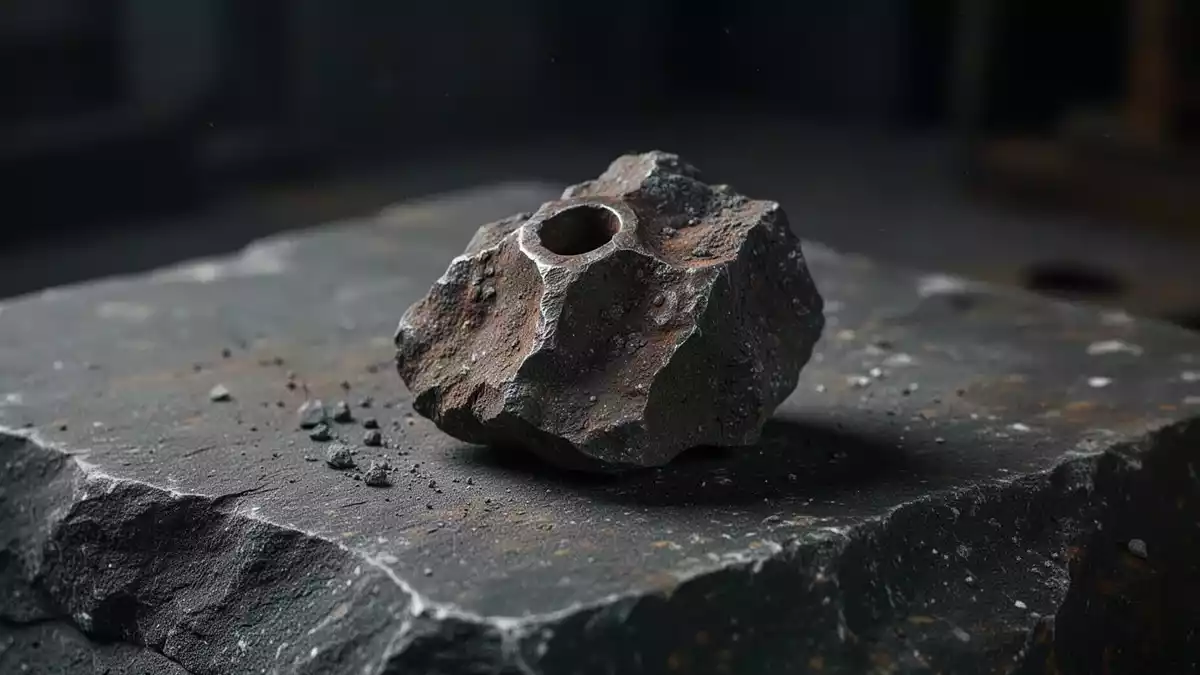
The whipsaw rhythm of exploration-stage investing has rarely been on better display than in the recent trading pattern of Apex Critical Metals. Within the span of a week, the rare earth junior has swung from a 16 percent surge on the back of a mineralogy confirmation at its Nebraska project to an 8 percent decline as a sector-wide de-risking of technology-adjacent growth names rippled through the market.
That Tuesday slide, which took the shares to EUR 0.8090, came with no company-specific catalyst. Instead, the selling pressure originated in a broader reassessment of artificial intelligence spending assumptions — and, by extension, the constellation of commodities and materials that investors have come to treat as proxies for the AI buildout.
Doubts Over AI Capex Spill Into Rare Earths
The trigger for the sector rotation was a weekend disclosure from Anthropic, which told investors its annualized revenue run-rate had reached USD 65 billion by the end of July — a figure well short of the USD 80 billion that had been circulating in Silicon Valley chatter. Reuters subsequently reported that Anthropic's internal projections see revenue reaching just USD 190-200 billion by 2028, trailing the more aggressive models some institutional investors had baked into their valuations.
Adding to the unease, the Wall Street Journal highlighted roughly USD 3 trillion in off-balance-sheet AI commitments across nine leading technology companies — a figure that dwarfs the approximately USD 600 billion in traditional capital expenditures those firms disclosed last year.
That recalibration of the AI growth narrative did not stop at chipmakers. Sellers also trained their sights on rare earth producers and critical minerals developers, which many portfolios hold as growth equities with similar risk profiles. USA Rare Earth, a competitor, also suffered losses on Monday as the entire critical minerals complex traded heavily. Apex, as an exploration-focused small cap in that segment, was swept up in the repositioning despite the absence of any adverse company news.
Managing risk is at the heart of any operation — and that applies to the workplace as much as the markets. Yet many employers overlook a dangerous gap in their health and safety documentation. A free toolkit with 41 checklists and templates helps you document risks properly and stay compliant. Download the free Risk Assessment Toolkit
Monazite and Bastnasite: The Technical Story Beneath the Noise
The sell-off obscures a more constructive development that had driven the stock sharply higher just days earlier. On Thursday, Apex confirmed through QXRD analyses that monazite and bastnasite are the dominant host minerals at its Rift project in Nebraska — a finding that briefly triggered a volatility pause in US trading on Friday.
The distinction matters more than the typical assay headline. Mineralogy determines how a rare earth deposit can ultimately be processed, and therefore whether rock can be converted into economically viable material. Monazite and bastnasite are both well-understood minerals with established processing pathways, which strengthens the case that Rift could eventually feed into Western efforts to reduce dependence on Chinese rare earth refining.
The confirmation drew on drill holes RIFT26-001A, RIFT26-002, RIFT26-003 and RIFT26-005A. Apex said the results would guide future metallurgical test work — an intermediate step that rarely makes headlines but is essential before the company can contemplate a maiden resource estimate, currently targeted for 2027.
The drilling campaign itself continues to generate data. From holes RIFT26-011 through RIFT26-014, Apex reported grades of 10.2 metres at 5.27 percent rare earth oxide and 8.0 metres at 4.48 percent in early August. At that point, 32 holes had been completed with 18 assays still pending.
A Financing Cushion for the Next Phase
Whether the geological picture ultimately holds together depends in part on Apex's ability to fund the upcoming test work and the planned resource estimate. Mid-August brought confirmation of a final base shelf prospectus allowing for the issuance of up to CAD 100 million in securities over the next 25 months, with the corresponding SEC registration becoming automatically effective on August 13. The framework permits public offerings, strategic placements and at-the-market distributions, giving the company access to capital should exploration funding requirements continue.
Earlier in the year, in May, Apex closed a private placement of 7,895,000 units at CAD 1.90 each, raising gross proceeds of CAD 15,000,500, with Canaccord Genuity Corp. acting as lead underwriter. The contrast between that pricing and the current share level underscores how sharply the financing environment for junior explorers has tightened in just a few months.
The company also added Trevor Hall to its board roughly three weeks ago. The stock has gained 10.0 percent since that appointment, though the move can hardly be attributed to the personnel decision in isolation.
Volatility as the Operating Norm
The numbers tell a story of extreme oscillation. Year-to-date, the shares are down 45 percent, and they sit 74 percent below the 52-week high of EUR 3.09 reached on October 15, 2025. Yet they remain 24 percent above the 52-week low of EUR 0.6530 marked on August 25. Over seven days, the stock is still up 11 percent despite Tuesday's drop, while the 30-day window shows a more moderate decline of 3.4 percent. The annualized 30-day volatility stands at 67 percent — elevated, but not unusual for an exploration-heavy small cap of this size.
The secondary source paints a slightly different statistical picture, noting a 40 percent annual loss alongside a 26 percent gain over twelve months, with the shares trading roughly 72 percent below their October high but 35 percent above the August trough. The discrepancies reflect different measurement windows and reference points, but the underlying message is consistent: this is a stock that moves violently in both directions.
Just as investors assess risk before committing capital, responsible employers evaluate workplace hazards before they become problems. Over 37,000 UK companies already use a free health and safety toolkit with ready-to-use risk assessments and checklists to protect their teams and stay compliant with regulations like COSHH and PUWER. Get the free Health & Safety Toolkit
The real question for investors is not whether the next price jump arrives, but whether the geological substance ultimately translates into a viable processing pathway. The confirmation of monazite and bastnasite is a necessary — but by no means sufficient — building block. Until the maiden resource estimate lands in 2027, Rift remains a promise, one that the market is currently pricing with considerable turbulence. For now, the recent weakness appears primarily sector-driven, with no concrete negative news regarding project progress on the horizon.


