

Almonty's Sangdong Math: A 21,000-Tonne Deficit, a 21-Year Contract, and a Cargo Booked for October 24
Published on 10/12/2026 at 05:01 | Editorial boerse-global.de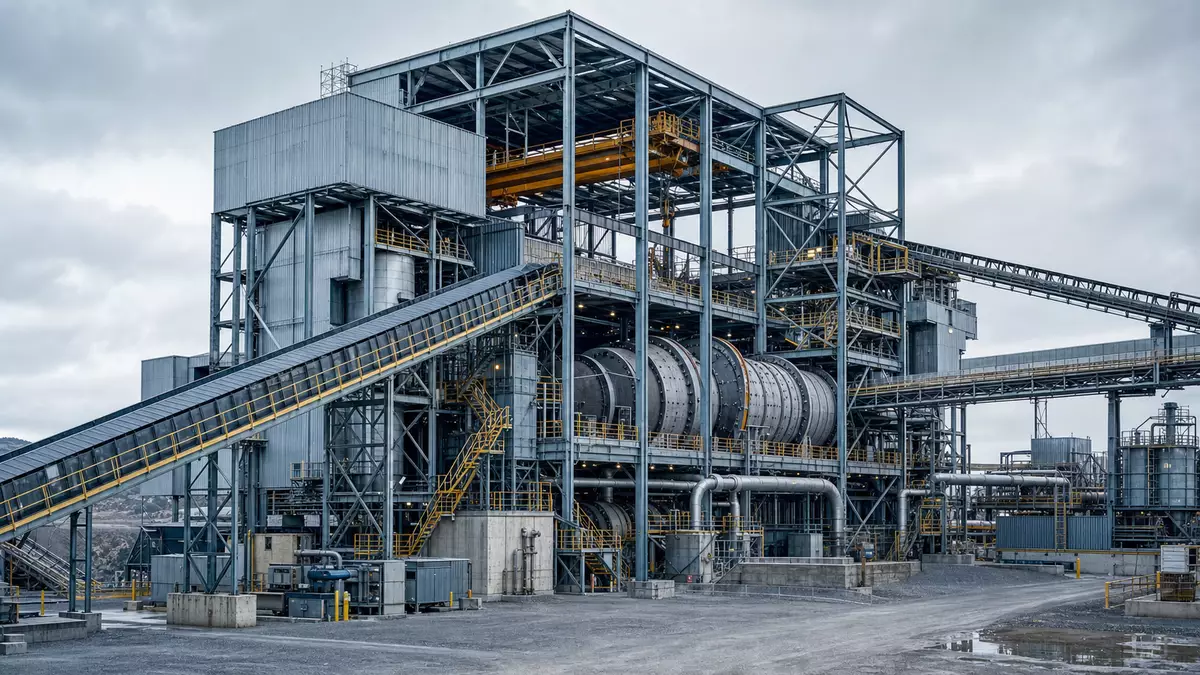
Two numbers sit at the heart of the Almonty investment case right now, and they pull in opposite directions. The first is 21,000 tonnes — the projected shortfall in non-Chinese tungsten supply that S&P Global outlined in a forecast published Wednesday. The second is $100 per mtu — the month-on-month decline in Rotterdam APT prices that Shanghai Metals Market reported on Friday. One describes a structural opportunity. The other records what the market actually paid this week.
Sangdong, Almonty's flagship mine, is named explicitly in the S&P Global forecast as part of the answer to the supply deficit. The projection puts tungsten mines outside China at roughly 22,000 tonnes of contained WO3 in 2026, against demand that leaves a gap of approximately 21,000 tonnes. For the company, that is a meaningful backdrop: the operation represents fresh supply into a market forecast to be undersupplied. It is not, however, a guaranteed price path, nor is it revenue already booked.
When Scarcity and Soft Prices Coexist
The counterweight arrived with Friday's pricing data. Shanghai Metals Market pegged Rotterdam APT at $2,700–3,100 per mtu, down $100 from a month earlier. Other tungsten reference prices also retreated. In China, media reports described the domestic market weakening on Thursday, with the APT range at RMB 520,000–560,000 per tonne — the floor of that band falling RMB 20,000 from the previous day. The Ganzhou Tungsten Industry Association's October forecast pointed the same way, naming RMB 550,000 per tonne for APT, RMB 50,000 below the prior month's figure.
Should investors sell immediately? Or is it worth buying Almonty?
None of this directly contradicts CEO Lewis Black's assessment on Wednesday that tungsten supply is tight. The two statements answer different questions. A supply shortage describes the relationship between availability and demand; a price print captures a single market movement. Scarcity expectations do not mechanically translate into higher reference prices, and reading only one side of the picture leaves out either the operational progress or the recent softening signals.
Contracted Volume Is Not the Same as Hedged Price
The operational backdrop is now concrete. Final operating approval for the Sangdong processing plant, announced on September 21, made Phase I commercially operational and cleared the way for tungsten concentrate sales. Concentrate production began roughly two weeks ago, and Black has said the mine is in active production and ramp-up. The first shipment of concentrate is booked for October 24 — a scheduled date, not a completed voyage.
What gives the marketing side its shape is the offtake arrangement: more than 90% of Phase I output is contractually committed to Global Tungsten & Powders for 21 years from first delivery. That is a distribution agreement, and it should be read as one. A long tenor does not by itself establish a fixed price hedge, and no guarantee of specific revenue or profit follows from it. Production start, offtake commitment, and actual delivery are three separate things for investors to track.
Friday's 2.7% share price gain does little to resolve the tension between operational momentum and softer market prints. The real question is not whether tungsten stays scarce, but how Sangdong brings production and contracted offtake together — turning a structural market thesis into a reliably running business.
Ad
Almonty Stock: New Analysis - 12 October
Fresh Almonty information released. What's the impact for investors? Our latest independent report examines recent figures and market trends.


