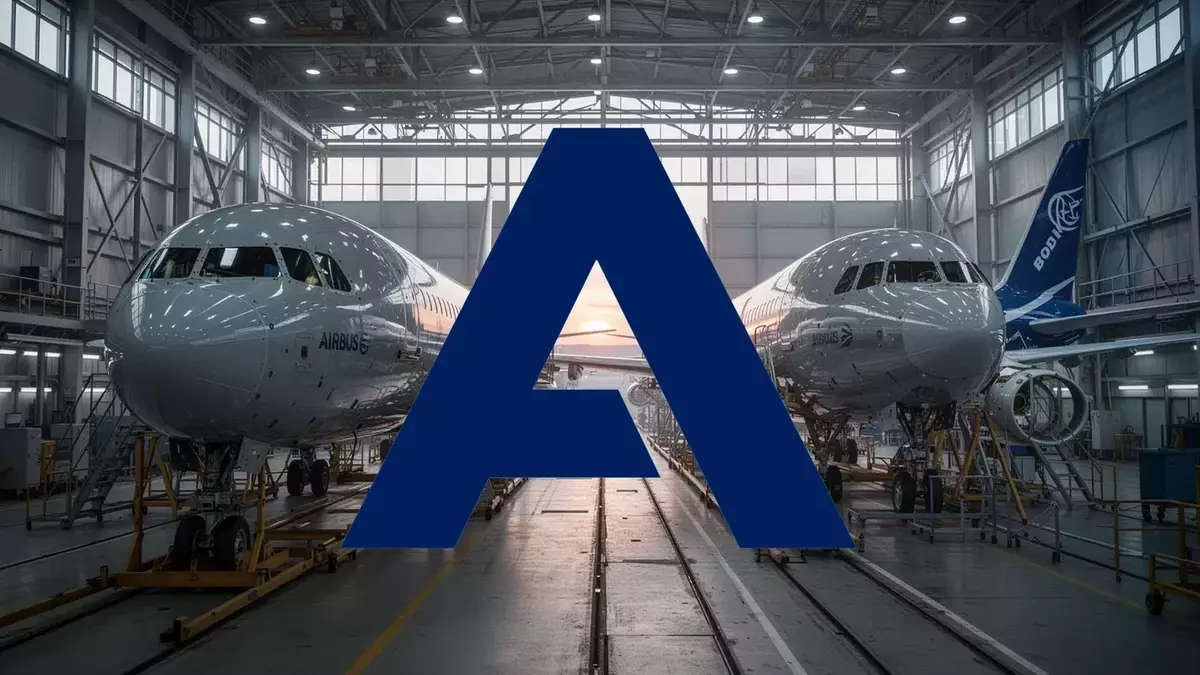
Airbus's Order Book Keeps Swelling, but the Assembly Line Remains the Real Story
Published on 08/08/2026 at 17:02 | Redaktion boerse-global.de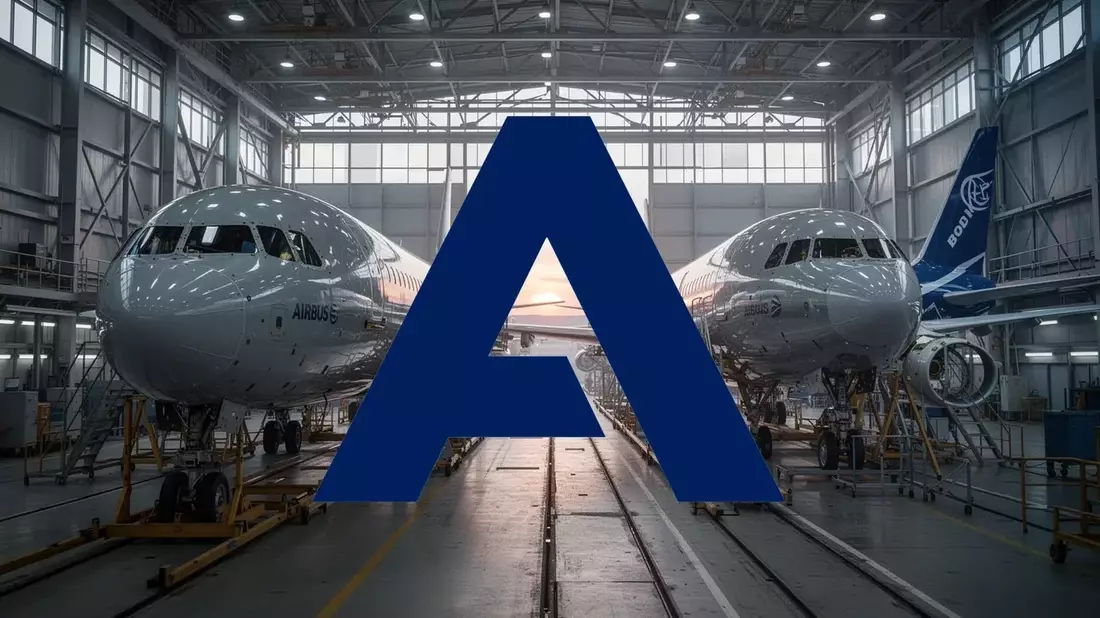
The arithmetic at Airbus is getting harder to ignore. Through the first seven months of 2026, the planemaker has delivered 418 commercial aircraft against a full-year target of roughly 870 — meaning the second half of the year must run at a considerably faster clip than the first. July alone saw 67 jets handed over to 39 customers, a pace that trails the monthly average needed to hit the year-end goal.
That delivery shortfall stands in sharp contrast to the order side of the ledger, where demand shows no sign of cooling. July brought 204 gross orders, pushing the 2026 total to 1,090. The backlog, meanwhile, had already swelled to 9,222 aircraft by the end of June, after net bookings of 821 in the first half.
Leasing giants and Middle Eastern carriers drive July's order haul
The month's largest single commitment came from SMBC Aviation Capital, which signed for 100 narrowbody jets from the A320neo family — split between 35 A320neo and 65 A321neo — a deal that Reuters confirmed was booked in the manufacturer's July order file. Hainan Airlines added 40 single-aisle aircraft (27 A320neo and 13 A321neo), while China Eastern Airlines opted for 25 A330-900 widebodies. Saudi Arabia's flynas ordered 25 jets of its own — 20 A321neo and five A330-900 — and Riyadh Air expanded its long-haul ambitions with six additional A350-1000s.
Several of those commitments trace back to the Farnborough Airshow, where the European manufacturer also unveiled its "Wing of Tomorrow" concept. The next-generation wing design is so elongated that the tips would need to fold upward to operate at existing airports. A three-year flight-test campaign using an A321neo as a testbed will examine full-scale wing extensions for the long-range program. Separately, Rolls-Royce has indicated that a stretched A350 variant is under evaluation, though Airbus has declined to comment on any timeline.
Should investors sell immediately? Or is it worth buying Airbus?
Supply chain friction persists despite progress
CEO Guillaume Faury, presenting half-year results in late July, acknowledged that the stockpile of finished aircraft waiting on engines has been cleared — no completed jets are currently grounded for lack of powerplants. But he cautioned that no buffer of Pratt & Whitney engines exists, meaning the supplier's promised delivery volumes continue to dictate the production ramp for 2026 and 2027. The ongoing compensation dispute over earlier Pratt & Whitney delivery delays adds another layer of strain to the manufacturing schedule.
The freighter program offers a brighter spot: Airbus still targets the A350F's first flight this year, with certification and initial deliveries ideally following by the end of 2027. Volume production, however, is not expected until 2028.
Financial results and shareholder returns
The half-year numbers, released on July 29, showed revenue up 12 percent to €33.2 billion, with adjusted EBIT of €2.7 billion and net income of €2.24 billion. Management reaffirmed its full-year guidance of roughly €7.5 billion in adjusted EBIT. A week earlier, on July 21, the board laid out a medium-term roadmap targeting adjusted EBIT of €12 billion to €13 billion by 2029, alongside a €5 billion share buyback program to be executed over three years.
In the first half, Airbus delivered 351 commercial aircraft — a 15 percent improvement over the 306 handed over in the same period of 2025 — comprising 44 A220s, 271 A320-family jets, 10 A330s and 26 A350s.
Regulatory and ownership developments
Two notable items emerged outside the operational narrative. BlackRock disclosed in a mandatory filing on Thursday that it had increased its voting stake in Airbus to 5.96 percent. Less welcome was a £6.4 million fine imposed by the UK's HMRC at the end of July for a breach of British export control regulations related to the transfer of sensitive technology — a violation the company reportedly self-reported.
Airbus at a turning point? This analysis reveals what investors need to know now.
Governance shift on the horizon
A change at the top of the supervisory board appears to be taking shape. Media reports suggest that long-serving board member Amparo Moraleda of Spain is now the favored candidate to become chair, displacing the French candidate originally expected to succeed the outgoing German chairman.
Market reaction
The share price reflects the generally resilient operational picture. Airbus stock closed Friday at €214.05, up 7.78 percent over the past 30 days and 8.37 percent year to date. That leaves the shares just 3.25 percent below the 52-week high of €221.25 reached on January 13. Investors appear to be weighing the sustained order inflow and medium-term growth projects against the engine-constrained delivery ramp — a tension that will come into sharper focus on October 28, when the nine-month results offer the next read on whether Airbus can close its delivery gap before year-end.
Ad
Airbus Stock: New Analysis - 8 August
Fresh Airbus information released. What's the impact for investors? Our latest independent report examines recent figures and market trends.