Airbus's High-Wire Act: A Record Order Book Meets the Hard Math of the Assembly Line
Published on 08/08/2026 at 16:35 | Redaktion boerse-global.de
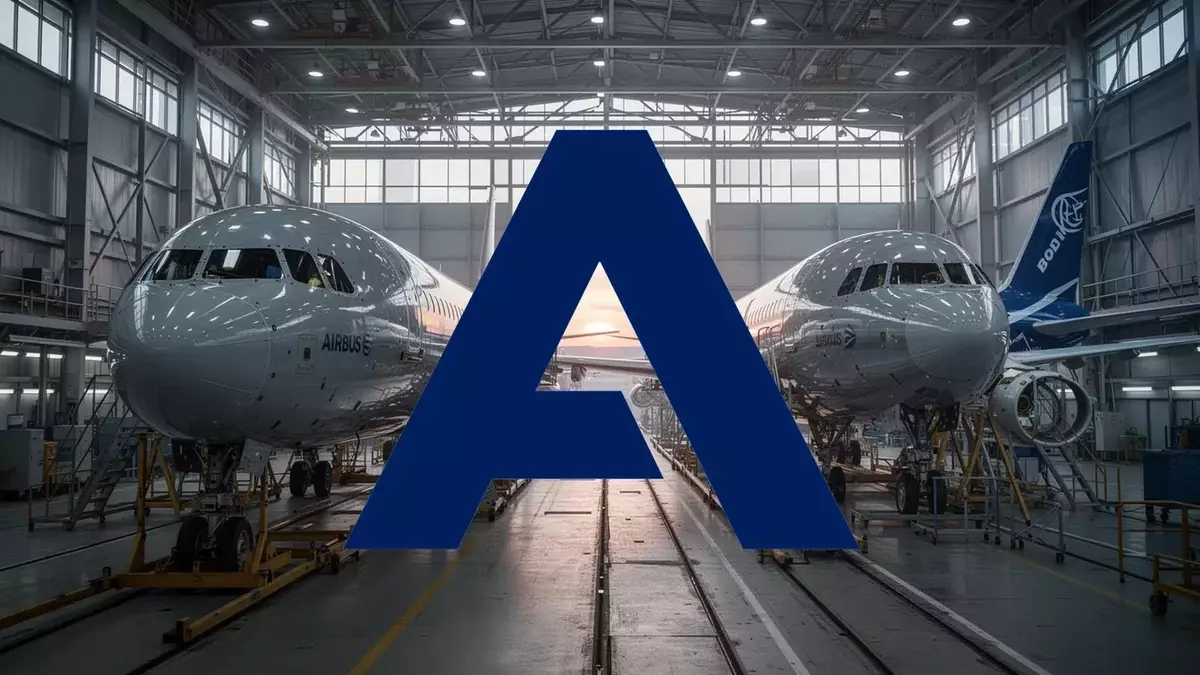
The arithmetic facing Airbus in the second half of 2026 is unforgiving. Having handed over 351 commercial jets in the first six months, the European planemaker must now average nearly 87 aircraft per month through December to hit its reaffirmed target of roughly 870 deliveries for the full year. It is a pace the company has never sustained, and it frames the tension behind an otherwise stellar week for the stock.
Investors, for now, are betting the factory floor will deliver. Shares closed Friday at €214.05, up 5.42 percent over seven trading sessions, leaving the equity just 3.25 percent shy of its 52-week high of €221.25, set on January 13. The rally has been fueled by a potent combination: a half-year earnings beat, a fresh €5 billion buyback, and an order book that keeps swelling.
A Half-Year Scorecard With Momentum
The numbers released in late July tell a story of broad-based acceleration. Revenue climbed 12 percent year-on-year to €33.2 billion, while adjusted EBIT reached €2.7 billion and net income came in at €2.243 billion. The second quarter was particularly striking, with net profit more than doubling against the prior-year period. Management used the results to reaffirm its full-year guidance: deliveries in a range of 850 to 890 aircraft, with adjusted EBIT of approximately €7.5 billion.
The financial firepower extends beyond the income statement. The board has authorized a €5 billion share repurchase program to be executed over three years, underpinned by a new medium-term outlook that sees adjusted EBIT climbing to between €12 billion and €13 billion by 2029, calculated on an assumed euro-dollar rate of 1.22. That combination of capital returns and an ambitious profit trajectory has given the stock its recent lift.
Should investors sell immediately? Or is it worth buying Airbus?
The Order Book Keeps Growing
July's commercial performance added fresh weight to the backlog. The company delivered 67 aircraft during the month and booked 204 gross orders, pushing the net order total for the year to 1,024 planes. The demand picture is broad. Irish lessor SMBC Aviation Capital confirmed a firm order for 100 A320neo-family jets, split between 35 A320neo and 65 A321neo aircraft. China Eastern Airlines ordered 25 A330-900 widebodies on the same day, while Qantas placed a firm order for twelve A350s as part of its international fleet renewal.
These orders arrive as Airbus pushes ahead on the technical front. Ground vibration tests for the A350F freighter program concluded on Monday, clearing a key hurdle toward the aircraft's first flight. Days earlier, an A350-1000ULR development aircraft completed a 24-hour, 24-minute nonstop flight from Toulouse to Melbourne — a 12,460-nautical-mile journey that stands as the longest point-to-point development flight in company history. The company also confirmed it is exploring out-of-autoclave composite manufacturing techniques with Boeing, a move aimed at enabling future production rates of more than 100 narrowbody aircraft per month — a signal that the industry is already planning capacity beyond today's supply constraints.
Institutional Confidence and Divergent Analyst Views
The shareholder register is shifting too. BlackRock disclosed on Thursday a 5.96 percent stake in Airbus, representing 47,152,884 shares — an increase of 26.6 percent from its previous holding. The move by one of the world's largest asset managers signals institutional conviction in the company's trajectory, even if it does not constitute an explicit buy recommendation.
Wall Street's reaction to the numbers has been more divided. Jefferies maintained its "Hold" rating with a €200 price target, noting that July deliveries of 67 aircraft came in slightly below expectations, though the company remains on track for its annual goals. RBC Capital Markets, by contrast, reaffirmed its "Outperform" rating, citing the medium-term outlook and first-half performance. Barclays had already reiterated its "Buy" recommendation on August 2, lifting its price target from €220 to €260. Other houses have signaled a positive stance, with price targets ranging from €210 to €260. Morningstar raised its fair value estimate for the stock to €183 in late July, citing the time value of money and the company's competitive moat.
Airbus at a turning point? This analysis reveals what investors need to know now.
Beyond Commercial Aviation
The conglomerate's military and space divisions have also been active. Hisdesat, the Spanish satellite operator, selected Airbus as prime contractor for the SpainSat NG-III secure communications satellite, while the company delivered its first NH90 helicopter in the Standard-2 configuration for special operations to France's DGA procurement agency. These contracts underscore the breadth of the business beyond civil aviation, though they carry less weight for near-term share performance than delivery numbers and the buyback.
The central question for Airbus in the months ahead is whether the production system can match the commercial momentum. The order book is full, the balance sheet is strong, and the buyback provides a floor under the stock. But the delivery schedule leaves no margin for error — and the market is watching every aircraft that rolls off the line.
Ad
Airbus Stock: New Analysis - 8 August
Fresh Airbus information released. What's the impact for investors? Our latest independent report examines recent figures and market trends.