
Airbus Faces a Defining September: Freighter First Flight Meets a Regulatory Paper Trail
Published on 08/19/2026 at 16:06 | Redaktion boerse-global.de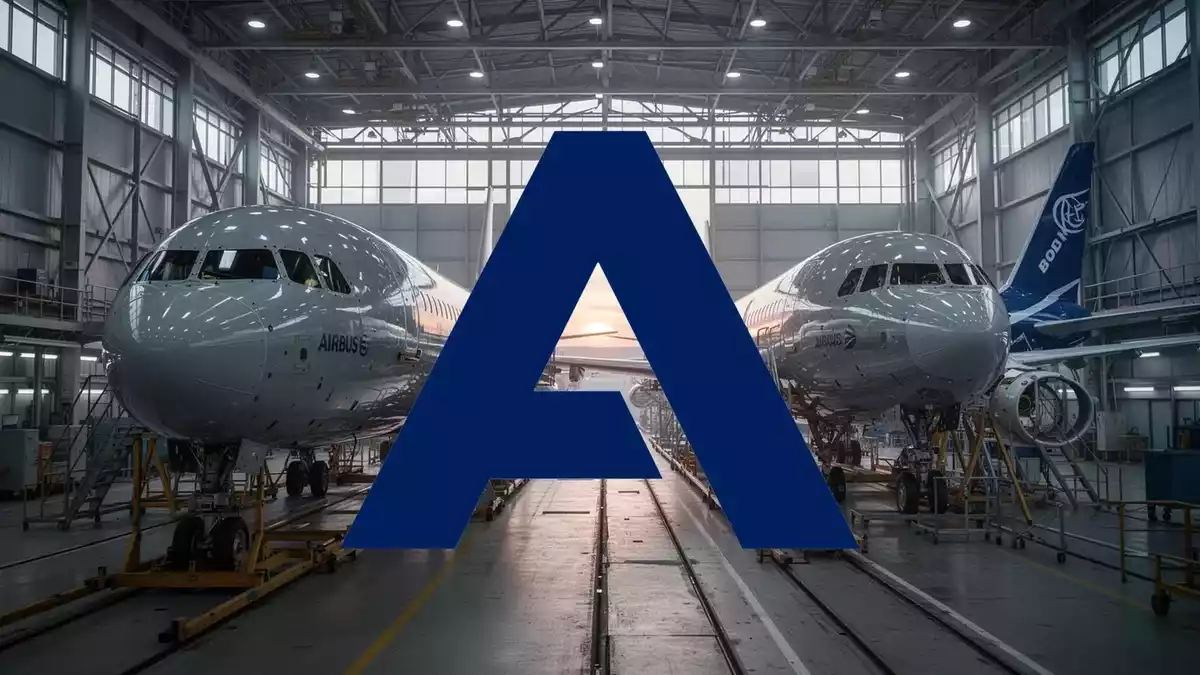
The calendar on the wall at Airbus's Toulouse headquarters has a date circled in red: September 24. That is when the A350F freighter is tentatively scheduled to make its maiden flight, kicking off a certification campaign expected to run 12 to 15 months and paving the way for first deliveries at the end of 2027. For a company that has spent the summer navigating a steady drumbeat of regulatory notices and compliance settlements, the freighter's debut represents something far more consequential than a routine test — it is a referendum on whether the European planemaker can execute on its most ambitious industrial program.
The stakes were underscored earlier this week when the specialist outlet Leeham News reported that production issues with the A350F's cargo doors could push deliveries into 2028. The stock responded with a 2.3 percent decline, closing at 209.10 euros. The market's reaction was telling: even a confirmed first-flight date was not enough to fully dispel doubts about the program's path to series production. Investors have clearly learned to treat any whisper of supply-chain friction at Airbus with a degree of skepticism.
Yet to focus solely on the freighter is to miss the broader picture. The regulatory machinery has been unusually active around the company in recent days, producing a flurry of filings that, on the surface, might suggest a company under siege. Airbus Operations Limited has reached a settlement with the UK's tax and customs authority HMRC totaling 6,409,388 pounds to resolve multiple violations of the country's export control regime related to documentation of technology transfers — the largest settlement of its kind the authority has ever secured. Separately, Airbus Americas terminated its long-standing lobbying mandate with Invariant LLC on August 13, according to a third-quarter congressional filing.
Documentation gaps can prove costly in any regulated industry — as Airbus's multi-million-pound settlement with HMRC demonstrates. For UK employers, similar scrutiny applies to workplace safety records. A free toolkit with 41 ready-to-use templates and checklists helps you document risk assessments properly and stay compliant. Download the free Risk Assessment Toolkit
Across the Atlantic, the Federal Aviation Administration has been busy as well. The agency has proposed an airworthiness directive for A330-941 models over a "Triple PRIM FAULT" in the flight control system, and has floated another directive covering all A330 and A340 variants addressing potential fuel leaks at low-pressure shutoff valves. Helicopter variants of the H160-B are also in the FAA's sights, with a proposed fix for a gap in the fireproofing seal in the cargo hold near the fuel tank separator box.
Three regulatory actions in a single week, alongside a multi-million-pound tax settlement — on its face, this reads like a catalog of troubles. But a closer look reveals a more nuanced reality. Most of these items are proactive audit procedures and documentation issues rather than acute safety incidents warranting groundings. A global manufacturer with thousands of aircraft in service naturally generates a constant stream of such administrative actions. Confusing routine oversight with operational weakness would be a mistake.
The operational numbers, for their part, tell a more encouraging story. July saw Airbus deliver 67 commercial aircraft, bringing the year-to-date total to 418. The order book has swelled with 204 gross orders in the same month, pushing the cumulative total for the year to 1,090 aircraft. Customers continue to commit in large numbers, and the production lines are running at a pace that supports the company's annual targets.
The capital markets side has moved in a similarly constructive direction. Morgan Stanley reaffirmed its "Overweight" rating on August 14 and lifted its price target from 227 to 255 euros, citing increased management confidence and improving production execution. Erste Group Bank had earlier nudged its earnings-per-share estimate for fiscal 2026 slightly higher to 2.10 US dollars following a strong second quarter. A downgrade to "Hold" from Sadif Investment Analytics in early August does little to alter the broader, more positive sentiment emanating from the major houses.
The stock currently trades about 5.5 percent below its 52-week high of 221.25 euros, reached in January, yet remains comfortably above its 200-day moving average of 191.90 euros. Over the past twelve months, the shares have gained 14 percent.
Beyond the freighter and the regulatory noise, the wider fleet ecosystem continues to evolve. Air France has extended the service life of its A318 aircraft through the end of March 2027, pushing the transition to the A220-300 back by five months. CDB Aviation has delivered three A321neo jets to Jet2 as part of a broader fleet modernization program for the British carrier, while Lufthansa City Airlines has moved its first A220-300 into final assembly at the Mirabel facility in Canada.
Regulatory oversight doesn't stop at aviation — UK employers face their own compliance duties under the Health & Safety at Work Act 1974. A free toolkit with 9 training tools, checklists, and risk assessments helps you meet your legal obligations and protect your workforce. Get the free Health & Safety at Work Act Toolkit
For investors, September now shapes up as the decisive test. A successful first flight of the A350F as scheduled would go some way toward calming concerns about the program's production readiness, at least in the near term. Should the reported cargo-door delays prove accurate, however, confidence in the timeline leading to end-2027 deliveries could erode further. The regulatory filings, meanwhile, are serious matters that warrant attention — but they primarily demonstrate how closely Airbus is monitored, not that the core business is faltering. The market, which has been driving the stock toward its yearly highs, appears to share that reading.


