

2020 Bulkers' Post-Liquidation Pivot Leaves Investors Scrambling for Direction
Published on 08/27/2026 at 16:43 | Editorial boerse-global.de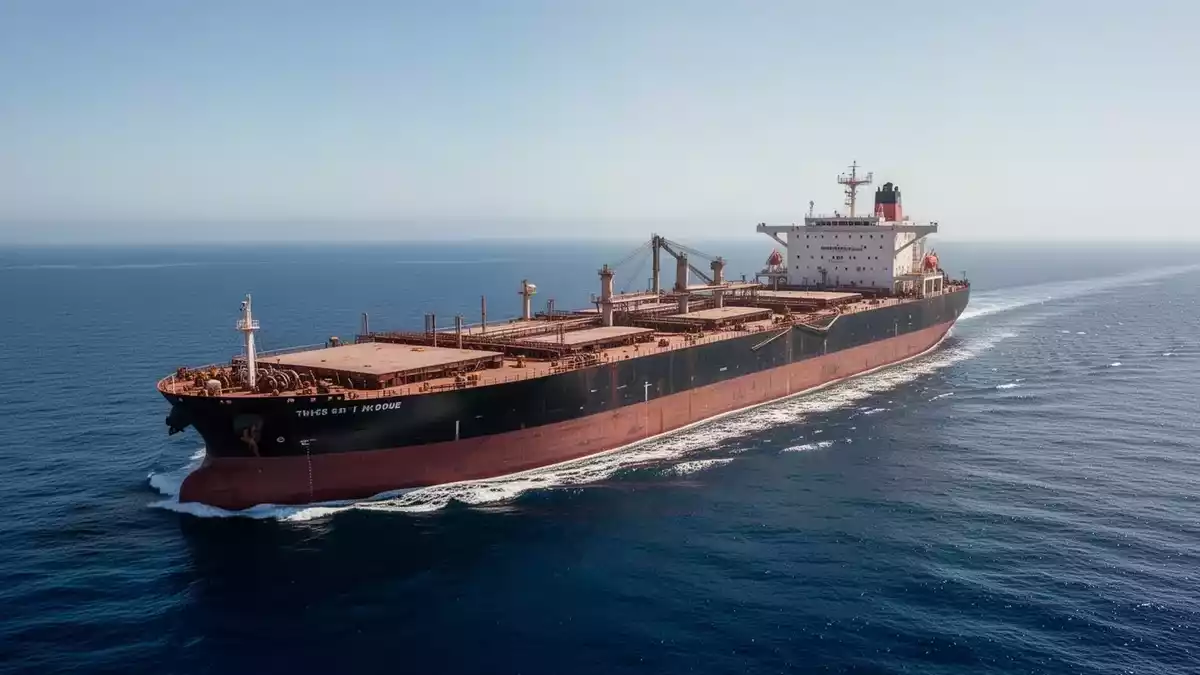
The Oslo-listed shipping shell formerly known as a dry bulk operator is testing investor patience. After handing back the vast majority of its fleet-sale proceeds to shareholders, 2020 Bulkers saw its stock slide another 11 percent on Thursday to 3.87 NOK, extending a run of losses that has pushed the equity far from the 10.07 NOK peak it touched in May.
The move came a day after the market initially punished the shares with a 13 percent drop to 4.40 NOK, meaning the company has now shed roughly a fifth of its value in just two sessions as the market recalibrates what the business is actually worth in its stripped-down form.
A Quarter Defined by Exit, Not Operations
The numbers themselves tell the story of a company in liquidation mode. For the three months to June 30, 2026, 2020 Bulkers booked a net profit of $29.8 million on EBITDA of $28.6 million. But those figures are largely a function of the asset disposal program rather than ongoing commercial activity — management has confirmed that virtually all material vessels have now been sold, with the "Bulk Sandefjord" handed over to its new owner back in April.
What remains is a comparatively modest war chest. Roughly $5 million sits on the balance sheet, earmarked for evaluating whatever comes next. That leaves the company with enough firepower to explore fresh strategic options, but nowhere near the capital base required to resume anything resembling its former fleet operations.
Should investors sell immediately? Or is it worth buying 2020 Bulkers?
Shareholder Returns Take Center Stage
The capital return program has been the dominant theme of 2026. In April, the company repurchased just under 2.8 million of its own shares — 2,791,163 to be precise — at 129.5 NOK per share. That buyback was paired with a special dividend of identical size, meaning investors received 129.5 NOK per share in cash distributions on top of the tender proceeds.
Those payouts have fundamentally reshaped the company's profile. The market capitalization now reflects a business that is, for all practical purposes, a cash shell with a mandate to find its next act — not an operating shipping company with recurring earnings power.
Board Stability Amid Structural Change
Tuesday's annual general meeting in Oslo signaled continuity at the governance level. Shareholders re-elected Magnus Halvorsen, Viggo Bang-Hansen and Lori Wheeler Naess to the board, while Ernst & Young AS was reappointed as auditor for the coming year.
Compensation was also locked in: the board's total remuneration for the current financial year, which runs through December 31, 2026, was capped at $250,000. The figure underscores the cost discipline that comes with a dramatically leaner corporate structure.
What the Market Is Really Pricing
The recent selling pressure reflects a genuine analytical dilemma. On one hand, the distributions have been generous and the remaining balance sheet is uncomplicated. On the other, the company's earnings capacity has evaporated alongside its fleet, leaving the shares trading on little more than the value of the residual cash plus whatever optionality the management team can create.
Even after this week's declines, the stock sits roughly 23 percent above its 50-day moving average, a reminder that the shares had run hard before the sell-off began. The question now is whether the remaining $5 million can be deployed into something that generates meaningful value — or whether the company is destined to remain a vehicle in search of a purpose, with the market marking down its optionality by the day.
Ad
2020 Bulkers Stock: New Analysis - 27 August
Fresh 2020 Bulkers information released. What's the impact for investors? Our latest independent report examines recent figures and market trends.


