World Cup Security Blitz and $24.9M Pentagon Mandate Signal DroneShield's Civil Pivot, but ASIC Clouds the Horizon
14.06.2026 - 11:24:20 | boerse-global.de
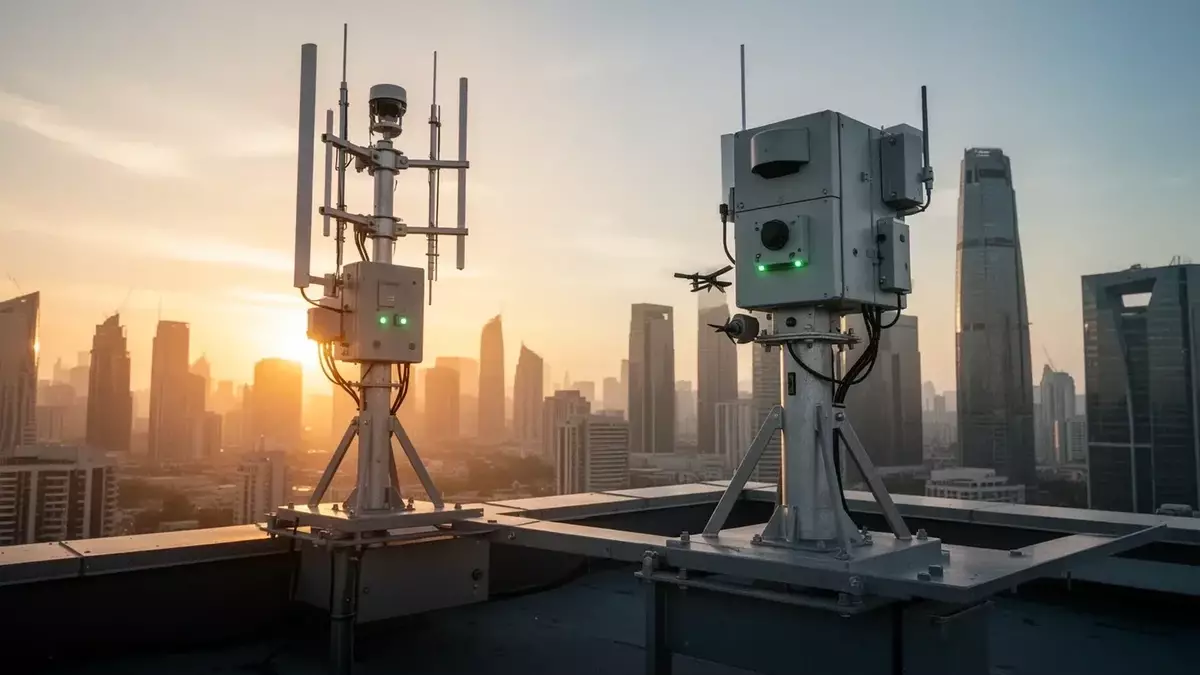
DroneShield has entered a crucial phase this summer, with its anti-drone technology securing the skies over Kansas City's Arrowhead Stadium during the FIFA World Cup while a freshly inked Pentagon contract and a Homeland Security grant underscore its growing footprint in both government and civilian markets. The Australian defence-tech firm, however, remains hamstrung by an ongoing regulatory probe that has knocked its stock more than 50% below recent highs.
The Kansas City Police Department is overseeing the World Cup deployment, which covers six matches at Arrowhead. The system integrates DroneShield's detection capabilities with Echodyne radar and Airspace Link's AirHub portal, providing real-time identification of drones — distinguishing authorised media flights, police aircraft, and potential intruders. The U.S. Department of Homeland Security is funding the initiative, channelling roughly $14 million to Missouri under a federal programme. For DroneShield, this represents its largest public civil operation to date and a live, high-stakes showcase for a product line traditionally overshadowed by military contracts.
Just days before the tournament kicked off, the company secured a separate mandate from JIATF-401, the Pentagon's central counter-drone coordination unit. The contract is valued at up to $24.9 million, with $19.3 million firmly committed and a further $5.6 million available through options. At least $10 million of that total is expected to be recognised as revenue in the current financial year. The deal marks an early win for chief executive Angus Bean, who took the helm in April.
Should investors sell immediately? Or is it worth buying DroneShield?
DroneShield's financial momentum is already visible in its first-quarter results. Revenue hit 74.1 million Australian dollars, up 121% year?on?year, while customer cash receipts surged 360% to 77.4 million AUD, reflecting strong collections. Operating cash flow came in at 24.1 million AUD. The balance sheet looks robust: the company holds 222.8 million AUD in cash, carries no debt, and has booked 154.8 million AUD in committed revenue for the full year. The U.S. team has doubled in size and local production is running four months ahead of schedule.
Against this operational backdrop, the shares have struggled to regain altitude. Last Friday the stock closed at €1.78, up 5.5% on the day but still roughly 51% below its 52?week high of €3.65. It trades about 13% under its 50?day moving average, with a relative strength index of 41.3, suggesting lingering bearish sentiment. The primary drag is an Australian Securities and Investments Commission investigation, disclosed in May, into corporate disclosures and share trading from last November. No timeline for resolution has been given. The uncertainty prompted Citigroup to relinquish its position as a substantial shareholder in early June.
The company is not standing still. A Q2 2026 software update introduced an automated drone classification system that tags aircraft as friendly, neutral, hostile, or unknown based on serial numbers and Remote ID data — a feature designed to cut operator response time in fast?moving scenarios. The ATAK?CIV plugin has been rebranded as "RfLink," offering real?time radio direction finding for distributed teams.
With a sales pipeline estimated at 2.2 billion AUD, the next major catalyst is the half?year results due on 26 August. By then, the World Cup deployment will have concluded, offering a tangible reference for civil-sector clients. Whether that, combined with fresh contract flows, can overcome the ASIC overhang remains the defining question for investors.
Ad
DroneShield Stock: New Analysis - 14 June
Fresh DroneShield information released. What's the impact for investors? Our latest independent report examines recent figures and market trends.