Why Whitney Houston Is All Over Your Feed Again
15.02.2026 - 23:00:12 | ad-hoc-news.de
If it feels like Whitney Houston is suddenly everywhere again, you're not imagining it. Your TikTok For You page, your Spotify home screen, random movie trailers, even that friend who never shut up about Ariana now sending you "I Have Nothing" clips at 3am – the Whitney wave in 2026 is real, loud, and very emotional.
Part of that is pure nostalgia, part of it is technology finally catching up to her catalog, and part of it is the simple fact that no one has ever really replaced her. If you're trying to figure out what exactly is going on – from new documentaries and reissues to AI-enhanced concerts and fan theories – this is your deep catch?up on all things Whitney right now.
Explore the official Whitney Houston site for news, music, and legacy projects
You don't have to be an ’80s baby to feel it. Gen Z is stitching her live vocals, vocal coaches are breaking down her runs, and whole arenas are still filling up for shows built entirely on her voice. Let's unpack what's actually happening behind the current Whitney buzz.
The Backstory: Breaking News in Detail
Because Whitney Houston passed away in 2012, any "breaking news" in 2026 is really about her legacy: new projects, reimagined shows, remasters, rights deals, and the way her music keeps cutting through new generations.
Over the past few years, we've seen a slow build: the biopic I Wanna Dance With Somebody, fresh documentaries, expanded deluxe editions of classic albums, and massive sync placements (from Super Bowl ads to prestige TV). That long build is now paying off with a proper Whitney revival online.
Streaming data has been quietly wild. Songs like "I Wanna Dance With Somebody (Who Loves Me)", "I Will Always Love You", and "How Will I Know" live permanently on global Top 200 playlists in some form – original versions, remixes, covers, mash?ups, or slowed + reverb edits. Labels lean hard into artists who still move streams across decades, so renewed investment in her catalog was basically guaranteed.
On the official side, the Whitney estate and partners have been steadily pushing out products that keep her present: immersive experiences, tribute tours, anniversary editions, and high?quality remasters. Every time a key date rolls around – the release anniversary of Whitney, the original The Bodyguard soundtrack, or a landmark award performance – the cycle restarts. Clips resurface, vocal breakdowns go viral, fans argue about "peak Whitney" all over again.
Industry voices keep repeating the same thing: Whitney is still the reference point. When big US/UK pop vocalists give interviews – from Adele to Sam Smith to newer names like Chappell Roan or Tate McRae – Whitney gets name?checked as the gold standard. Vocal coaches on YouTube call her the "benchmark for pop belting" and point to specific live performances as masterclasses.
What's newer in 2025–2026 is how her catalog is being visually and technologically re?framed. You get AI?enhanced upscaled concert footage, Dolby Atmos remasters reshaping old albums in spatial audio, remixed videos in 4K, plus tribute shows where live bands perform full Whitney sets synced to archival vocal tracks. Even without her physical presence, the live "event" around Whitney is back, and fans are treating each new drop like a release day.
For fans, the implications are layered. Older listeners are getting the most pristine versions of the songs they grew up with, often hearing tiny production details they never noticed before. Younger fans are discovering deep cuts beyond the obvious ballads via playlists and fan edits. And for artists, there's a renewed reminder: no matter how big the lighting rig is, the vocals still have to be that good.
The Setlist & Show: What to Expect
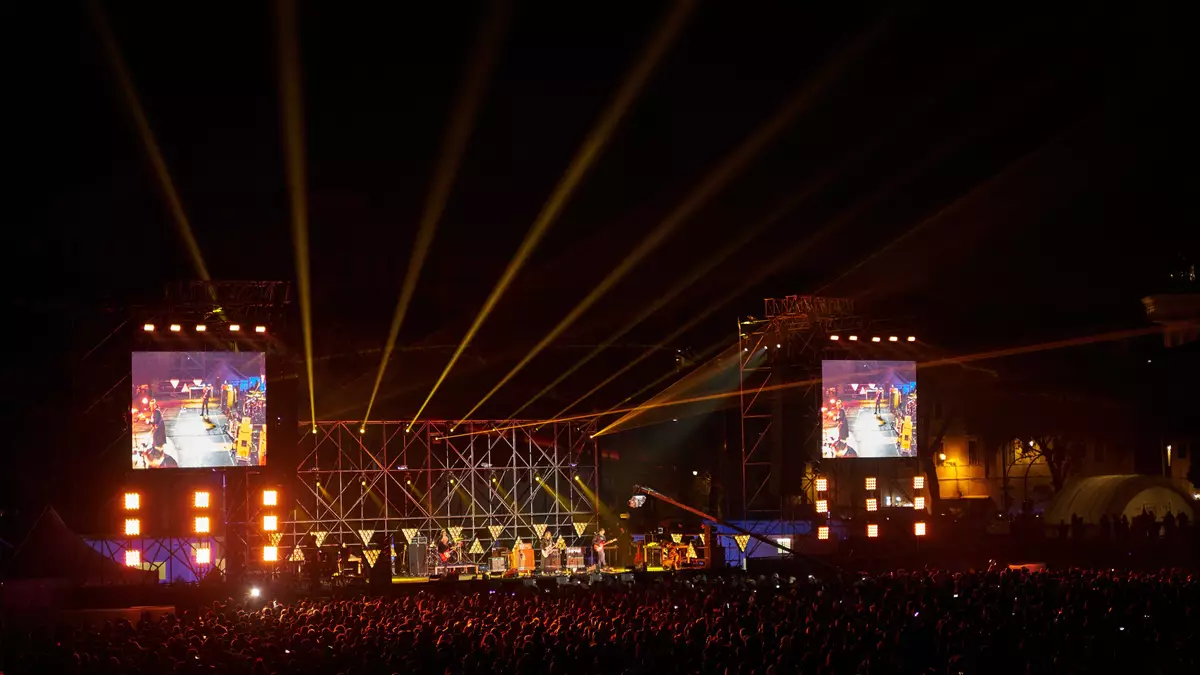
Because Whitney herself isn't touring, the live experience in 2026 is built around tributes, orchestral evenings, and immersive shows using her original recordings. If you're hitting one of the big Whitney?centric nights – whether it's a symphony-backed tribute or a licensed Whitney experience – the "setlist" is its own kind of greatest-hits puzzle.
Most shows lean on a core run of essentials:
- "I Wanna Dance With Somebody (Who Loves Me)"
- "How Will I Know"
- "I Will Always Love You"
- "I Have Nothing"
- "Greatest Love of All"
- "I'm Every Woman"
- "So Emotional"
- "Saving All My Love for You"
- "Run to You"
- "My Love Is Your Love"
Tribute vocalists or guest stars usually split the load, because trying to copy Whitney note for note is a fast way to blow your voice out. Instead, the best shows treat her songs like standards: faithful to the spirit and arrangements, but not straight-up impersonations. You still get the iconic key changes, those held notes in "I Have Nothing", the final chorus power in "I Will Always Love You", but with reinterpretation baked in.
Expect the structure of a typical Whitney-themed night to move in emotional chapters. The opening third is often the bright, flirty ’80s era: "How Will I Know" with full neon visuals, "I Wanna Dance With Somebody" turning the venue into a pop rave, "So Emotional" bringing the big drums and shoulder?pad energy. The crowd response is basically a generational group sing?along – older fans scream the verses, younger fans know every pre?chorus from TikTok edits.
The middle section usually slows down and shifts into the ballad era. This is where you get orchestral arrangements of:
- "Saving All My Love for You" with long, held strings
- "Run to You" reimagined with live piano and cello
- "Where Do Broken Hearts Go" or "All At Once" as deep cuts for hardcore fans
In symphonic or theater settings, producers often project archival footage: close-ups of Whitney nailing those studio sessions, or fragments of the legendary 1991 Super Bowl national anthem. That anthem performance remains a recurring centerpiece; some shows even recreate the exact arrangement with live orchestra while original footage plays on massive screens.
The final run is full catharsis and celebration: "I'm Every Woman" turning the venue into a queer dance floor revival, "My Love Is Your Love" giving the late-’90s bounce, and then the inevitable closer – "I Will Always Love You". Whether it's a live singer, Whitney's untouched studio vocal, or a blend, the entire room usually goes quiet for that a cappella intro, then erupts at the first massive key change.
Setlist nerds obsess over which deep cuts make it into these shows. When "Love Will Save the Day", "Queen of the Night", or "It's Not Right but It's Okay" slip in, fan forums light up, because those songs showcase different corners of her artistry: Latin?inflected uptempo, rock?leaning banger, and dark R&B-pop respectively.
Atmosphere?wise, don't expect a quiet museum event. Even the more "respectful" tribute nights tend to feel like a shared wake and a club night rolled into one. People dress in ’80s and early ’90s looks, bring homemade signs, and film entire segments for TikTok. The emotional arc is heavy: nostalgia, grief, joy, and pure stan energy bouncing off each other in real time.
What the web is saying:
Rumor Mill: What Fans Are Speculating
Even without new studio music, the Whitney universe still generates a wild amount of speculation. Reddit threads on r/popheads and r/music routinely spin up around a few recurring themes.
1. Will we ever get an "unreleased album"?
Fans love to believe there's a fully finished, unheard Whitney album locked in a vault somewhere. Realistically, insiders have suggested that while there are demos, alternate takes, and session scraps, the idea of a clean, cohesive "lost album" is unlikely. What is more realistic – and what many fans quietly expect – is another archive?driven project: expanded editions with unheard demos, remixes by current producers, or a compilation centered on a specific era (for example, a complete My Love Is Your Love sessions box).
Some Redditors float fantasy tracklists where modern producers like Kaytranada, Disclosure, or SG Lewis rework deeper cuts, imagining a vibe-heavy, club?leaning Whitney project that never was. It's wishful thinking, but it shows where younger fans want to hear her: not just in power ballads, but also in moody R&B and dance spaces.
2. AI Whitney: terrifying or magical?
This is the hottest and messiest debate. Generative AI covers of Whitney songs – and worse, AI "new" Whitney vocals on unrelated tracks – circulate constantly. Many fans find it disrespectful, especially given how much her real voice meant to people. They point out that Whitney was about breath control, phrasing, and physical performance, not just a sound timbre an algorithm can copy.
Others admit some AI-assisted restorations of old live audio and video are impressive. When used to clean up soundboards, upscale grainy concert footage, or rebuild damaged TV broadcasts, AI tech can feel like a gift, especially for younger fans who never saw her live. The line in fan conversation is clear: restoration and preservation = mostly okay; synthetic "new" Whitney singing songs she never chose = mostly not okay.
3. The next generation "Whitney" comparison curse
Every time a young powerhouse vocalist breaks out – think Ariana Grande, Jennifer Hudson, Jazmine Sullivan, or new UK/US TV talent show winners – social media immediately throws up split-screen videos: "New girl vs Whitney Houston live 1987." Fans argue in TikTok comments and YouTube shorts about "who did it better" while others are just tired of the comparisons.
The general Reddit stance has settled into: there is no "new Whitney," and there doesn't need to be. The more interesting conversation is how Whitney's influence shows up in melisma choices, breath support, and approach to ballads – not in trying to crown a successor.
4. Ticket drama around tribute shows
Another recurring thread: are Whitney-themed experiences really worth arena-level prices? Some fans complain about dynamic pricing on tribute tours that don't actually feature anyone from Whitney's original band or creative circle. Others counter that massive production – full orchestras, bespoke visuals, licensing costs – isn't cheap, and the emotional payoff is still huge.
Because there's no "one" official global Whitney tour, fans spend a lot of time comparing setlists, vocalists, and production quality between competing tribute shows. Reddit and TikTok become de facto review sites: people post clips, rate the singers, and warn others away from cheaper cash?grab productions that use low?res visuals and karaoke?level arrangements.
5. Will there be another major biopic or prestige series?
With biopics and limited series dominating the awards conversation, fans speculate about a more expansive Whitney project: a multi?episode streaming series that digs deep into her church upbringing, early label politics, and late?career struggles, instead of cramming everything into one two?hour film.
Nothing officially confirmed as of mid?2026, but the appetite is there. Fans repeatedly say the same thing across social media: "Tell the whole story, but don't flatten her into just the tragedy." If another major screen project happens, it will have to balance the headlines with the music nerd detail – studio anecdotes, producer sessions, and how she shaped pop singing as we know it.
Key Dates & Facts at a Glance
| Type | Date | Location / Album | Key Detail |
|---|---|---|---|
| Debut Album Release | February 14, 1985 | Whitney Houston | Featuring hits like "Saving All My Love for You" and "How Will I Know". |
| Breakthrough Album | June 2, 1987 | Whitney | First album by a woman to debut at No. 1 on the Billboard 200. |
| Iconic Soundtrack | November 17, 1992 | The Bodyguard Soundtrack | Includes "I Will Always Love You", one of the best?selling singles of all time. |
| National Anthem Moment | January 27, 1991 | Super Bowl XXV, Tampa | Her rendition of the US national anthem became a definitive live vocal reference. |
| Late?Era Classic | November 17, 1998 | My Love Is Your Love | Brought Whitney into late-’90s R&B and dance with hits like "Heartbreak Hotel". |
| Final Studio Album | August 28, 2009 | I Look to You | Her last studio album, featuring collaborations with Alicia Keys and R. Kelly. |
| Rock & Roll Hall of Fame | 2020 | Cleveland, Ohio | Whitney was posthumously inducted, cementing her legacy in rock and pop history. |
| Legacy Streaming Milestones | 2010s–2020s | Global | Multiple tracks cross hundreds of millions of streams on major platforms. |
FAQ: Everything You Need to Know About Whitney Houston
Who was Whitney Houston, in simple terms?
Whitney Houston was an American singer and actor who redefined what mainstream pop vocals could sound like. Born in Newark, New Jersey, in 1963, she grew up in a music-saturated environment: her mother Cissy Houston was a respected gospel and soul singer, and Aretha Franklin was a family friend. That church foundation and professional training collided in a voice that could be soft and conversational one moment and absolutely skyscraper?level the next.
For younger fans raised on streaming, it helps to think of Whitney the way people talk about Beyoncé or Adele now – not just as a hitmaker, but as someone whose presence shaped the entire sound of radio for a long stretch of time. Except in Whitney's case, she arrived when MTV, radio, and physical sales all peaked at once, which made her domination feel even bigger.
What is Whitney Houston most famous for?
Three pillars define her mainstream fame:
- The voice: Crystal-clear tone, massive range, and ridiculous control. Tracks like "I Will Always Love You", "I Have Nothing", and "Greatest Love of All" are still considered vocal workout songs for professionals.
- The hits: A run of No. 1 singles across the ’80s and ’90s that basically soundtracked weddings, proms, movies, and every "big moment" montage you can think of.
- The Bodyguard era: Playing opposite Kevin Costner in The Bodyguard and delivering that soundtrack turned her from just a pop star into a global icon. "I Will Always Love You" is one of the most recognized recordings in history at this point.
On top of that, she helped normalize Black women front and center on MTV and pop radio in a way that cracked open doors for the next generation.
Why do singers and vocal coaches still obsess over her?
Because Whitney didn't just hit big notes; she made technically insane things sound casual. Vocal coaches on YouTube love to pause her live performances and point out micro?details: the way she modifies vowels on high notes to keep them open, the breath support that lets her hold phrases for entire lines, the perfectly controlled runs that never smear into mush.
Even now, when a new talent show contestant wants to prove they're serious, they pick Whitney. Songs like "I Have Nothing" and "I Will Always Love You" have become rite-of-passage pieces. Nail them, and judges lose their minds. Struggle, and the internet kindly reminds you what the original sounded like.
Did Whitney Houston write her own songs?
Most of Whitney's biggest hits were written by professional songwriters and producers. That was standard for major pop artists in the ’80s and ’90s, especially women. Clive Davis, the legendary label exec who championed her, lined up top-tier songwriters and producers to build songs around her voice.
In modern pop conversation, there's sometimes a weird bias toward "you have to write everything yourself" to be considered an artist. Whitney’s career is a reminder that interpretation is its own high art. She took songs other people wrote and inhabited them so completely that they feel like her life story, even when they weren't originally personal diary entries.
Where should a new fan start with Whitney Houston's music?
If you only know the big ballads, start with this mini starter pack:
- For pure joy: "I Wanna Dance With Somebody (Who Loves Me)", "How Will I Know"
- For vocals that make your chest hurt: "I Have Nothing", "Run to You", "I Will Always Love You"
- For late?’90s mood: "It's Not Right but It's Okay", "My Love Is Your Love"
- For deep-cut respect: "Love Will Save the Day", "All the Man That I Need", "Exhale (Shoop Shoop)"
After that, run the full albums: Whitney Houston (1985) for the clean, glossy debut era; Whitney (1987) for imperial chart power; My Love Is Your Love (1998) to hear her in a more contemporary R&B and dance context.
When did Whitney Houston pass away, and how did that affect her legacy?
Whitney Houston died on February 11, 2012, in Beverly Hills, California. The news hit like a global shockwave, partly because she felt like a permanent fixture and partly because her struggles with addiction and public scrutiny had already been tabloid fodder for years.
In the years since, the narrative around her has slowly shifted. Early coverage leaned heavily into the tragedy and messiness. But as time has passed, there's been a more balanced correction: documentaries and think pieces focusing on the industry pressure she faced, the racism and respectability politics around how her music was marketed, and the weight of being labeled "The Voice" from such a young age.
For younger fans, discovering her posthumously, the conversation often starts with the music, not the scandals. That's part of why the current Whitney resurgence feels different: it's less about gawking at the downfall and more about honoring the work.
Why does Whitney Houston still matter to Gen Z and Millennials?
Because so many of the things people care about in pop today – live vocals, emotional honesty, genre?crossing, iconic visuals – run straight through her. She was a Black woman dominating spaces that didn't originally center her, long before conversations about representation became mainstream. Her songs continue to soundtrack viral videos, drag performances, wedding dances, and reality show finales.
And then there's the relatability factor. Underneath the ’80s gloss and giant ball gowns, Whitney's big themes are simple: heartbreak, self?worth, longing, hope. When she sings "I've got nothing, nothing, nothing," or "Learning to love yourself, it is the greatest love of all," it doesn't feel corny. It hits in that slightly embarrassing but very real place where you remember exactly who you were crying over when you first heard it.
In a music era obsessed with virality and speed, Whitney represents the opposite: songs that live for decades, vocals that don't need heavy tuning, and performances that still go viral in grainy SD resolution. That's why, even in 2026, she's not just an "oldies" act. She's still the bar.