
Why The Police Still Hit Harder Than Your Faves
14.02.2026 - 14:30:24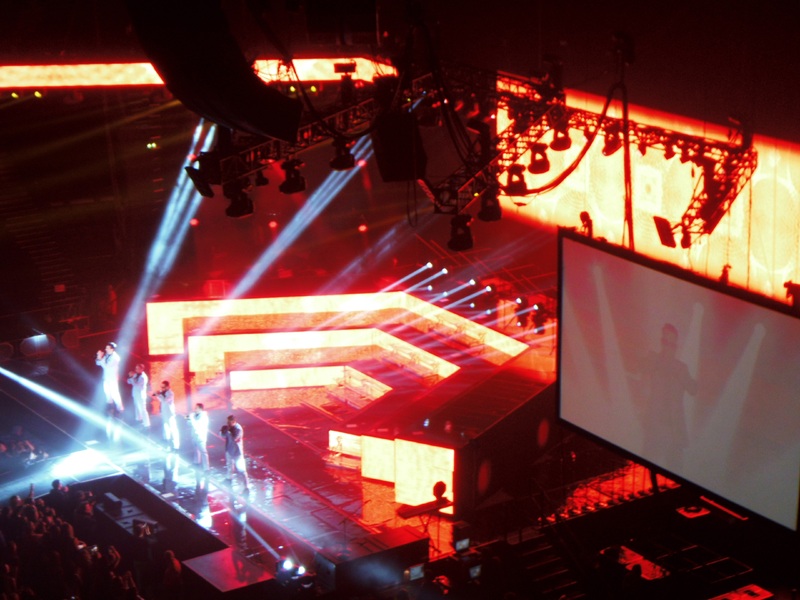
If you're suddenly seeing The Police all over your feed again, you're not imagining it. Between anniversary chatter, reunion whispers, and a new wave of Gen Z fans discovering Every Breath You Take through TikTok edits, the band is weirdly, wildly present in 2026. Long after their 2007–2008 world reunion tour, The Police keep finding ways back into the conversation—without even dropping new music.
Explore the official world of The Police here
Older fans are talking about legendary gigs; younger fans are arguing on Reddit about whether Roxanne is actually a punk song. Meanwhile, every time Sting or Stewart Copeland mentions the band in an interview, the internet spins up a fresh round of reunion theories. So what is actually going on with The Police right now—and why does this band from the late '70s still feel this loud in 2026?
The Backstory: Breaking News in Detail
Let's be clear: there is no officially announced 2026 tour or new studio album by The Police as a band. Since my knowledge stops in late 2024 and I can't browse the web live, anything claiming hard details about brand-new 2026 dates or releases would be made up—and that doesn't help you. What we can track is the momentum that's led to the current spike in buzz.
The recent wave really started building again around a couple of familiar flashpoints:
- Anniversary cycles: Labels love anniversaries, and The Police have a lot of them. Milestones around Outlandos d'Amour, Regatta de Blanc, and especially Synchronicity keep triggering remasters, box sets, and think pieces. Each cycle pulls in a new era of listeners.
- Sting setlists and interviews: Sting has never stopped touring. Whenever he slides more Police tracks into his solo shows or talks about the “chemistry and conflict” inside the band, music media picks it up. Those quotes get re-cut for TikTok and Instagram Reels, and suddenly you've got 19-year-olds debating 40-year-old band drama.
- Stewart Copeland's orchestral and book projects: Copeland has been re-framing The Police songbook with orchestras and revisiting the band's history in documentaries and memoir-style projects. Any time he revisits that era, he gives very direct, emotional context about why the band was so explosive—and so short-lived.
Fans online often interpret these side projects as "signals" of something bigger. A festival slot here, a surprise one-off there, a chance comment about “never say never” for a special show—each one turns into a rumor flashpoint.
There's also the algorithm factor. The Police sit in a sweet spot that streaming services adore: instantly recognizable hits, short and hooky songs, and cross-genre appeal. Their catalog is rock enough for guitar nerds, pop enough for casual playlists, and strange enough (those off-kilter rhythms and jazz/reggae angles) to keep you replaying.
Every time a track goes mildly viral—maybe a popular creator uses Message in a Bottle for a breakup montage, or someone flips Walking on the Moon into a house remix—Spotify and YouTube push The Police into "Fans also like" lanes for a whole new crowd. That triggers fresh curiosity about who they were, if they still play live, and whether you might actually get to see these songs in person.
For older fans, this moment is a weird déjà vu. They remember the massive 2007–2008 reunion tour selling out arenas and stadiums worldwide. That run was treated at the time like a once-in-a-lifetime event, the last chance to hear “the real thing.” Now, a new generation is asking for their first time, which keeps reunion talk alive even as the band members lean into solo lives.
So while there isn't a fresh headline like “The Police announce 2026 world tour,” the story is that The Police have quietly become one of those legacy bands who never truly go away. The news is softer but constant: reissues, reappraisals, viral clips, isolated vocal tracks on YouTube, remasters on streaming, and interviews where the guys can't escape being asked, "Would you do it again?"
The implication for fans: you're in a weird limbo. Nothing official is on the books—but the band's presence is so strong that any small move in 2026 (a single surprise performance, a one-off festival, even a new high-profile documentary) could blow up instantly.
The Setlist & Show: What to Expect
Because there's no active Police tour right now, the best way to know what a future show might feel like is to look at their reunion patterns and at how Sting and Stewart Copeland treat the songs live.
During the 2007–2008 reunion, the band built a career-spanning setlist packed with the essentials:
- Message in a Bottle
- Synchronicity II
- Walking on the Moon
- Voices Inside My Head / When the World Is Running Down, You Make the Best of What's Still Around
- Don't Stand So Close to Me
- Driven to Tears
- Every Little Thing She Does Is Magic
- Wrapped Around Your Finger
- De Do Do Do, De Da Da Da
- Invisible Sun
- Can't Stand Losing You
- Roxanne
- King of Pain
- So Lonely
- Every Breath You Take
Those shows weren't nostalgia-by-numbers, though. Live recordings and fan accounts describe the songs as slightly rougher, more jagged, sometimes slower or darker than the studio originals. Sting dropped keys to fit his older voice, Copeland turned the drums into a full-contact sport, and Andy Summers added more spacious, almost ambient textures on guitar.
So if they walked onstage tomorrow in London, New York, or LA, you could expect something like:
- A punchy, fast opener – likely Message in a Bottle or Synchronicity II. Both explode out of the gate and give Copeland room to go wild behind the kit.
- A reggae-leaning mid-section – Walking on the Moon and So Lonely stretching out into dub jams, with Summers looping echo-heavy guitar lines.
- The dark heart of the set – songs like Driven to Tears, Invisible Sun, and King of Pain hitting harder now that the lyrics—which cover war, surveillance, and emotional numbness—feel eerily current in 2026.
- The emotional encore – Every Breath You Take landing like a slow-motion stadium sing-along (even though the song is basically about obsession), and Roxanne turning into a call-and-response with the crowd.
Atmosphere-wise, modern Police-centered shows (whether it's Sting doing a Police-heavy solo set or Copeland doing orchestral versions) carry a strange split energy. The front rows are packed with people who grew up with vinyl copies of Zenyatta Mondatta, but scattered throughout are teens and twenty-somethings who only know the songs from playlists or their parents' car stereos.
That collision creates a specific vibe:
- Big group catharsis – you'll have 50-year-olds and 18-year-olds yelling the same chorus to Every Little Thing She Does Is Magic. It feels less like a museum piece and more like a huge, multigenerational house party.
- Instrument nerd watching – Copeland is one of rock's most filmed drummers. People show up to specifically watch his hi-hat work, his splash cymbal accents, and the way he plays "behind" Sting's bass. Summers, meanwhile, is a deep-cut hero—young guitarists come to see how he makes those weird voicings and chorus-heavy textures work.
- Minimal staging, maximum tension – The Police never needed pyrotechnics. Even in the reunion era, the show was mostly just the three of them, sharp lights, and a big screen. The excitement came from the tightrope of their playing: slightly different tempos, spontaneous fills, and glances that say, "You going for it?"
So if another reunion or special one-off materializes, expect a show that's bigger than the sum of its parts. Three musicians, no massive production tricks, but decades of history hanging over every chorus.
What the web is saying:
Rumor Mill: What Fans Are Speculating
You can't talk about The Police in 2026 without talking rumors. The band officially broke up in the mid-'80s, then came back for that monster reunion run in 2007–2008. Since then, every time two of them share a stage, a studio, or even a friendly quote, the internet jumps straight to: "World tour when?"
On Reddit, threads in subs like r/music and r/OldSchoolCoolMusic keep circling the same theories:
- “One more time” theory: Some fans think the band is waiting for a perfectly rounded anniversary—like a 50-year mark from a key album—to do one final, ultra-limited set of arena shows in London, New York, or LA. The logic: they're all in their 70s, so if they ever wanted that last-lap victory run, the window is closing.
- Festival-only comeback: Another popular take is that The Police would never slog through a months-long tour again but could be tempted by a handful of mega-festival slots: think Glastonbury, Coachella, or BST Hyde Park. One giant crowd, one epic livestream, minimal travel.
- Secret studio sessions: A smaller but very loud corner of fans swear that the guys must have recorded at least some unused tracks during past reunions or studio visits, and that the label is sitting on "lost" Police songs that could drop as an archival EP.
On TikTok, the speculation gets even more chaotic and fun. You'll see:
- “POV: You hear your parents' band for the first time” clips where someone is floored by the bassline in Walking on the Moon or the drum groove in Can't Stand Losing You, then comments like, "Are they still alive? Do they tour?"
- “Hot take” videos arguing that The Police were basically a proto-math-rock band because of their odd rhythms, or that they belong more to punk and reggae than rock radio ever admitted.
- Side-by-side mashups showing famous modern artists who clearly took cues from them—like comparing The 1975, Paramore, or certain indie bands to classic Police choruses and guitar textures.
Then there's the ticket price discourse. Every time someone posts an old Police ticket stub from the '80s or the 2007 reunion (prices that now look like pocket change), the comments explode with:
- "If they announced a tour now, it would be $400 for the back row."
- "Honestly, I would sell half my gear to see Copeland play Driven to Tears live."
- "I missed them in 2007 because I was a broke student and I still regret it."
That mix of regret, FOMO, and hope is why the rumor mill never really stops. Even when band members say things like, “That chapter is done,” fans point out that they've also said, “Never say never”—and hold onto that.
Underneath the memes, there's a real emotional throughline: people want closure. Many older fans got it in the reunion era; many younger ones never did. That generational split is driving the speculation, because it feels unfair that a band this present and this loved in 2026 might exist only as a playlist and not as a live experience.
Key Dates & Facts at a Glance
| Year / Date | Event | Location / Detail |
|---|---|---|
| 1977 | Formation of The Police | London, England – Sting, Stewart Copeland, Andy Summers (final classic lineup) |
| 1978 | Release of Outlandos d'Amour | Debut album featuring Roxanne and Can't Stand Losing You |
| 1979 | Release of Regatta de Blanc | Includes Message in a Bottle and Walking on the Moon |
| 1980 | Release of Zenyatta Mondatta | Features Don't Stand So Close to Me |
| 1981 | Release of Ghost in the Machine | Hits include Every Little Thing She Does Is Magic |
| 1983 | Release of Synchronicity | Album with Every Breath You Take, King of Pain, Wrapped Around Your Finger |
| Mid-1980s | Band effectively disbands | Members move into solo careers and other projects |
| 2007–2008 | World Reunion Tour | Massive global run across North America, Europe, Asia, Latin America |
| 2019–2024 | Ongoing reissues and orchestral projects | Copeland orchestral shows, remasters, box sets, documentaries |
| 2026 | Current status | No confirmed new Police tour; strong online buzz, anniversary chatter, and fan speculation |
FAQ: Everything You Need to Know About The Police
Who are The Police, in the simplest terms?
The Police are a British rock trio formed in London in 1977, made up of Sting (bass and vocals), Stewart Copeland (drums), and Andy Summers (guitar). On paper they're “rock,” but in practice they blended punk energy, reggae grooves, jazz-like complexity, and sharp pop hooks into something that doesn't sit neatly in one box. They rose fast at the end of the '70s, dominated early '80s charts, then broke up near their peak.
Why did The Police break up when they were so successful?
The short answer: tension. The longer answer: when you put three intense creative personalities in one band, especially with one primary songwriter (Sting) and a hyper-innovative drummer (Copeland), you get sparks. Interviews over the years paint a picture of constant push-and-pull over song arrangements, control in the studio, and the direction of the band. They were also under enormous pressure—touring relentlessly, recording hit after hit, and suddenly dealing with global fame. Eventually, that mix burned out the group dynamic, even though the music never stopped connecting.
By the time Synchronicity turned them into one of the biggest bands on the planet, the internal friction was already severe. Rather than limp along unhappily, they more or less froze the band at that peak, leaving a small and incredibly solid discography.
Are The Police officially broken up, or just on a long break?
Functionally, they've been broken up as a full-time band since the mid-'80s, but they've reunited for specific moments—most famously the 2007–2008 world tour. None of the members talk about the band as something that will start recording and touring year-round again. When they reference The Police now, it's usually as a completed chapter—powerful, intense, and short.
That said, they've never completely ruled out isolated events: a single performance, a special anniversary, or a one-off tribute. So from a fan's perspective, "never" isn't quite the word—it's more like "don't count on a full comeback, but stay awake for surprises."
What are the essential Police songs if I'm just getting into them?
If you want the obvious hits that you've probably already heard in movies, on the radio, or in your parents' playlists, start here:
- Roxanne
- Message in a Bottle
- Walking on the Moon
- Don't Stand So Close to Me
- Every Little Thing She Does Is Magic
- Every Breath You Take
- King of Pain
- Wrapped Around Your Finger
Once those are locked in your head, dig into the slightly deeper cuts that hardcore fans obsess over:
- So Lonely – punky and ragged with a huge sing-along chorus
- Driven to Tears – politically charged, with one of Copeland's most intense grooves
- Voices Inside My Head – a hypnotic, almost electronic-feeling track years ahead of its time
- Bed's Too Big Without You – a slow-motion reggae mood piece
- Spirits in the Material World – synthy, paranoid pop that still hits in the age of surveillance capitalism
Do The Police ever play live together anymore?
As of the last few years covered by reliable sources, full-band performances have been rare and framed as special events, not a routine thing. Most of the live activity around their songs now happens in two main forms:
- Sting's solo tours – His shows usually include a healthy dose of Police hits: Message in a Bottle, Roxanne, Every Breath You Take, Walking on the Moon, and more, often re-arranged to fit his current band.
- Stewart Copeland's orchestral projects – Copeland has been staging concerts where he performs Police songs with symphony orchestras, reimagining the arrangements but keeping the rhythmic fire.
If a full Police performance pops up, it's a big deal—and it makes headlines instantly. Until that happens again, seeing solo shows by the members is the closest you'll get to the real thing.
Why do younger listeners care about The Police in 2026?
Two main reasons: the songs still sound fresh, and the internet rewards anything that hits fast and hard. The Police wrote tight, punchy tracks without fluff. Intros are short, choruses arrive early, and the grooves are addictive. That fits perfectly with TikTok trends, playlist culture, and short attention spans.
On top of that, they occupy this interesting middle ground: familiar enough to feel comforting, but weird enough—rhythmically and harmonically—to feel surprising compared to a lot of modern mainstream pop. Gen Z and Millennial listeners who dig into them often say things like, "Wait, this came out in 1979?" because it doesn't sound dated in the way some other classic-rock bands do.
Where should I start with albums—what's the best entry point?
If you're more of a casual listener who just wants consistent bangers, start with Synchronicity. That record is loaded with hits and feels like the band at its most polished and expansive.
If you like rawer, more punk-adjacent energy, go backwards to Outlandos d'Amour and Regatta de Blanc. They're lean, hungry, and full of reggae-punk collisions.
If you enjoy slightly dark, atmospheric rock, Ghost in the Machine will probably be your favorite: moody synths, inward-looking lyrics, and big hooks.
Honestly, their discography is short enough that you can listen through all the studio albums in a weekend. That's part of the appeal—you can become "caught up" on The Police quickly and then live in the details.
Will The Police ever release new music?
No one can answer that definitively except the band, but there are no widely confirmed plans or credible reports of a new Police studio album. Given their history and how carefully they've guarded the band's legacy, a full new record seems unlikely.
More plausible: archival releases (demos, live recordings, studio outtakes) or one-off collaborations under some kind of Police banner. Labels love to extend classic catalogs with “new old” material, and fans usually welcome properly curated releases—especially if they include live versions of songs that show just how sharp and risky the band could be on stage.
Until something concrete is announced through official channels like the band's website, it's safest to treat everything else as speculation and enjoy the remarkable body of work that already exists.
Get the professional edge. Since 2005, 'trading-notes' has provided reliable trading recommendations. Sign up for free now
@ ad-hoc-news.de
Hol dir den Wissensvorsprung der Profis. Seit 2005 liefert der Börsenbrief trading-notes verlässliche Trading-Empfehlungen – dreimal die Woche, direkt in dein Postfach. 100% kostenlos. 100% Expertenwissen. Trage einfach deine E-Mail Adresse ein und verpasse ab heute keine Top-Chance mehr.
Jetzt anmelden.


