Why Sonic Youth Still Feels More 2026 Than Most New Bands
19.02.2026 - 21:52:33 | ad-hoc-news.de
If you have even one ripped flannel or a single shoegaze playlist saved, you have probably felt it lately: people will not shut up about Sonic Youth again. Your feed is full of grainy 90s clips, vinyl reissues selling out in minutes, and younger bands name-checking them like they just discovered a new genre. For a group that officially went on hiatus in 2011, the 2026 noise is weirdly intense. And it is not just nostalgia. It feels like the world has finally caught up to the chaos they were playing with the whole time.
Explore the official Sonic Youth archive, merch, and deep-cut history
There is no official reunion tour on sale, no surprise album drop on streaming right now. But behind the scenes and across fan communities, something is clearly brewing: anniversary talk, festival wishlists, solo projects crossing over, and a full-on critical reappraisal. If you are trying to piece together what is actually happening with Sonic Youth in 2026, here is the full breakdown.
The Backstory: Breaking News in Detail
First, the reality check: Sonic Youth is still technically not an active band. The group dissolved after Kim Gordon and Thurston Moore separated in the early 2010s, and since then, the conversation has mostly been about legacy, reissues, and individual projects. But in the last few years, the story has shifted. Instead of just being a legendary band you "should" know, Sonic Youth has quietly become a reference point for how modern indie, noise, and alt-pop are made and marketed.
Recent interviews with Kim Gordon and Thurston Moore have fueled that energy. Gordon has been leaning hard into a blazing late-career run as an experimental rock icon, with solo material that sounds more 2026 than most artists half her age. Moore has kept up a steady stream of music too, touring Europe and the UK with his own band and talking often about the Sonic Youth archives. In several conversations with music magazines, he has hinted at how much unreleased live material, demos, and oddities are sitting in storage. That alone has fans in permanent refresh mode, waiting on the next surprise upload or special edition.
Meanwhile, the official website and social channels connected to Sonic Youth keep quietly dropping archival releases, rare live recordings, and merch that sells out faster than you would expect for a band that has not released a studio album as a unit in over a decade. These are not flashy mainstream campaigns, but targeted drops that hit the exact overlap of vinyl nerds, noise lifers, and younger TikTok heads discovering Daydream Nation for the first time.
On the festival and tour rumor side, the buzz keeps resurfacing in waves. Promoters and journalists are well aware that a full reunion in 2026 would break the internet for a minute, especially if it involved a handful of key cities in the US and UK. When Kim Gordon or Thurston Moore get added to festival lineups—London, New York, Los Angeles, Berlin—comment sections instantly fill with people asking the same thing: "If they can both play the same festival, why not the same stage?" There is no real confirmation behind that wishful thinking, but you can feel the demand in every thread.
Another key factor: the band's catalogue keeps getting re-contextualized. Critics, podcasters, and longform writers are linking Sonic Youth to everything from hyperpop's blown-out distortion to the way pop stars now treat noise and feedback like design tools. Instead of being shoved in a 90s alt-rock corner, they are being written about as a kind of permanent moodboard for experimental guitar music, downtown art, and punk attitude. Each new thinkpiece or anniversary spotlight pulls in a wave of younger listeners who want to know why all their favorite bands keep bringing this name up.
All of this points to the same conclusion: even without a fresh album or a confirmed tour, there is something active happening around Sonic Youth right now. It is in the air, in the algorithms, and in the way newer artists talk about them like elders who never really left the room.
The Setlist & Show: What to Expect
Because there is no official Sonic Youth reunion tour in 2026, the only hard data we have on live energy comes from archives, solo shows, and the occasional special performance featuring overlapping members. But fans are obsessive, and recent years offer a pretty clear idea of what a hypothetical Sonic Youth-adjacent night in 2026 actually feels like.
Start with the obvious: if Sonic Youth did walk onto a stage together tomorrow, the fantasy setlist in fan circles almost always circles around a tight core. You would have a run of classics like Teen Age Riot, Silver Rocket, and Candle from Daydream Nation. Then there would be the snarling groove of Kool Thing and Dirty Boots, a deep-dive moment with Schizophrenia and Stereo Sanctity, and at least one slow-burn noise excursion like The Diamond Sea that stretches out into the kind of feedback sculpture they basically invented in the rock mainstream.
Recent solo tour setlists from Thurston Moore and Kim Gordon help fill in the vibe. Moore's shows have mixed solo material with occasional Sonic Youth tracks, often reshaped—longer intros, extended feedback codas, improvisational middle sections. You can expect detuned guitars, alternate tunings, and that loose, sideways rhythmic feel that makes a 4/4 rock song feel like it is constantly bending at the edges. Kim Gordon’s sets lean into harsher beats, industrial textures, and spoken-word fragments, but when she touches anything Sonic Youth-adjacent in mood, the crowd reaction is instant: phones out, people screaming along to lines they memorized from ripped CDs and old MP3s.
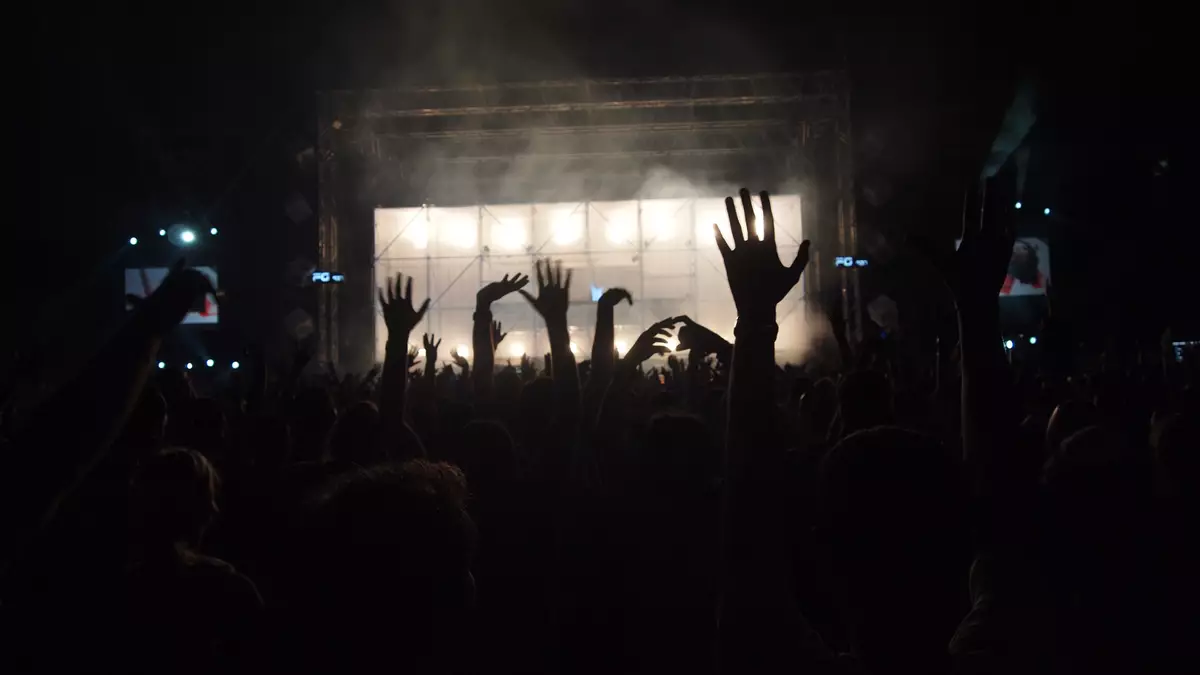
Atmosphere-wise, a Sonic Youth-related show in 2026 would land at a weirdly powerful crossroads of generations. Older fans who saw them in small clubs or early-90s theaters still show up early, plant themselves near the center, and listen with the kind of quiet attention that was common before everyone lived through their screens. Younger fans often come in through TikTok edits, Letterboxd-core movie soundtracks, or current bands like black midi, Big Thief, or Bartees Strange citing them as core influences. These newer fans treat Daydream Nation or Goo like sacred texts, so even the opening riff of something like Cross the Breeze or Sugar Kane hits like a generational handshake.
One thing that stands out in fan recollections from older shows: the volume and the physicality of the sound. Guitars do not just sit in the mix; they swarm. Feedback is not an accident; it is a hook. Songs like Expressway to Yr Skull or Hey Joni build up over minutes until you are not just hearing the band, you are inside a moving wall of noise. That kind of intensity plays very differently in the current live climate, where a lot of artists chase clarity and big pop drops. Sonic Youth’s approach—improvising sections, swapping instruments, leaving in the mess—feels almost radical again.
So if you are imagining your ideal 2026 Sonic Youth night, it is probably a mix of precision and chaos: the hits that still melt indie-kid brains, the weirdo deep cuts like Shadow of a Doubt, and at least one extended noise passage that reminds everyone why people still argue about this band on music forums at 3 a.m.
What the web is saying:
Rumor Mill: What Fans Are Speculating
Reddit, Twitter (or X), and TikTok have basically turned Sonic Youth into a permanent group project. Every time a new archival drop appears, or a festival announces Kim Gordon and Thurston Moore on the same lineup, rumor culture goes into overdrive.
One recurring theory: a limited, city-specific reunion for a major album anniversary. Fans in r/indie_rock and r/music have floated the idea of a "one-weekend-only" run where the band would play Daydream Nation in full in New York and London, maybe one European date like Berlin. The argument in those threads is simple: they do not need to become a full-time touring band again, but a small, carefully curated run would sell out in seconds, document beautifully, and give younger fans a chance to say they experienced it at least once.
Another angle centers around the archives. Some users point to how other legacy bands have dropped full live box sets, studio outtake comps, and big deluxe editions with new liner notes and essays. Sonic Youth has already done pieces of that, but fans expect a more aggressive wave of archival releases as streaming and vinyl sales for classic alternative acts keep proving surprisingly strong. There is even speculation about a dedicated documentary or multi-part series built around their New York history: the early No Wave scene, the downtown art shows, the way they helped bridge hardcore, indie, and experimental music.
TikTok, as usual, has its own spin. There is a mini-trend of people filming themselves hearing tracks like Teen Age Riot or 100% or Incinerate for the first time, with the captions basically saying: "Why does this feel like it came out yesterday?" You also see edits where Sonic Youth tracks are paired with fashion moodboards—oversized band tees, thrifted denim, DIY piercings—or with scenes from cult movies, anime, or grainy skate clips. That visual remixing has reignited the idea that Sonic Youth is not just a band; it is an aesthetic.
There is also a more emotional conversation running beneath the hype. Some long-time fans on Reddit and old-school forums are openly protective, worried that the band is being flattened into a simple "grunge-adjacent" reference or mood-board sound. Others push back and say that the best way to honor a band like this is to let it mutate. If teenagers are discovering Goo because they saw Kim Gordon photos on a fashion account, that is fine—history is messy, and Sonic Youth always thrived in mess.
On the more speculative end, you occasionally see wild theories crop up: secret recording sessions, undisclosed festival headline sets, or a surprise EP of reworked classics. None of those have real evidence yet, but they show how hungry people are for new movement under the Sonic Youth banner. Even threads that start about Thurston Moore's memoirs or Kim Gordon's art exhibitions often end with someone dropping the same line: "So, be honest, what are the actual odds they play together again at least once?"
Key Dates & Facts at a Glance
| Type | Event | Date | Location / Note |
|---|---|---|---|
| Band Formation | Sonic Youth first forms in New York | Early 1980s | Downtown Manhattan, art and No Wave scene |
| Breakthrough Album | Daydream Nation original release | 1988 | Often cited as one of the greatest alternative rock albums |
| Major Label Era | Goo released on a major label | 1990 | First album on Geffen; launched tracks like "Kool Thing" |
| Classic 90s Peak | Dirty hits the alt-rock wave | 1992 | Singles like "100%" and "Sugar Kane" become fan staples |
| Hiatus | Band activity pauses | 2011 | Members shift focus to solo work and other projects |
| Legacy Boost | Ongoing reissues and archival releases | 2010s–2020s | Live albums, demos, and rare recordings drop across formats |
| Current Status | No official reunion announced | As of 2026 | Members active as solo artists; fan speculation remains intense |
FAQ: Everything You Need to Know About Sonic Youth
Who are Sonic Youth, in the simplest possible terms?
Sonic Youth is a New York-born band that pushed electric guitars way past what mainstream rock usually allowed. Think detuned strings, clashing chords, feedback treated as melody, and songs that could snap from whisper-level intimacy to full speaker-melting noise in seconds. The core lineup most fans think of includes Thurston Moore, Kim Gordon, Lee Ranaldo, and Steve Shelley. Instead of chasing traditional chart pop, they took the DNA of punk and experimental music and fused it with hooks, repetition, and attitude. If your favorite band messes with alternate tunings, long noise outros, or art-school visuals, there is a decent chance Sonic Youth cleared that path for them.
Why are people still talking about Sonic Youth in 2026?
The short answer: because the entire music ecosystem has shifted closer to what they were doing all along. Modern listeners are used to distortion-heavy pop, genre collisions, and artists who treat their careers like fluid art projects rather than rigid band identities. Sonic Youth was doing that in the 80s, 90s, and 2000s. As streaming platforms surface more deep cuts and playlists cluster old and new artists together, people are hearing Sonic Youth not as "retro grunge ancestors" but as a band that still sounds aligned with current underground and indie sounds.
On top of that, social media has made their visual vibe newly iconic: the Goo cover art, old tour photos, Kim Gordon's stagewear, grainy clips from 90s TV appearances. They fit perfectly into a world obsessed with archive aesthetics, analog textures, and anything that looks and sounds like it came from a weirder, more dangerous version of youth culture.
Are Sonic Youth getting back together anytime soon?
There is no confirmed reunion, tour, or new studio album under the Sonic Youth name as of early 2026. The members have consistently focused on their individual work—music, books, visual art, producing, and collaborations. That said, fans and music media keep the reunion question alive because of how influential they remain and because other legendary bands have found ways to do one-off shows, special anniversary sets, or partial lineups for festivals.
If they ever did decide to do something, it would likely be very controlled and specific: a few major cities, maybe a museum-connected performance, a curated festival slot, or a filmed special show. But until anyone in the band confirms even the smallest of those plans, every headline about a Sonic Youth "return" is just rumor or wishful thinking. The safe expectation is more archival projects and solo tours, not a full comeback as a traditional band.
Where should a new fan start with Sonic Youth’s music?
If you want the most commonly recommended entry points, two albums come up over and over: Daydream Nation and Goo. Daydream Nation is the sprawling, almost mythic album that blends long songs, intricate guitar work, and some of their most beloved tracks, like Teen Age Riot. Goo brings that energy to a more polished, major-label setting and adds unforgettable songs like Kool Thing and Tunic (Song for Karen) that still feel sharp and relevant.
If you like rawer edges, Sister and EVOL are darker, more jagged, and incredibly rewarding once you adjust to the tuning experiments. If you are more into mid-2000s indie rock, something like Rather Ripped provides a cleaner, more accessible take on their style without losing the weirdness. And do not overlook their later-era albums and soundtrack work, which often feel like a bridge between rock, noise, and ambient soundscapes.
What makes Sonic Youth different from other alternative rock bands?
Several things. First, their obsession with alternate tunings and unconventional guitar setups makes their songs feel physically different. Chords ring in strange clusters; harmonics jump out of nowhere. Second, they consistently blended high-art ideas with low-to-the-ground club energy. You could hear traces of avant-garde composers and downtown New York art performance in the same set that delivered mosh-pit-ready riffs.
Third, their dynamic range is unusually wide. A song might drift in on barely-there guitar whispers and spoken vocals, then explode into a full storm of distortion and drums without feeling forced. That makes their discography less about individual radio hits and more about entire albums or live sets as immersive experiences. They also gave space to multiple songwriting voices—Thurston Moore, Kim Gordon, and Lee Ranaldo—each bringing different emotional textures and lyrical angles.
How have Sonic Youth influenced newer artists?
You can see their fingerprints everywhere. Indie bands and experimental acts constantly cite Sonic Youth as the band that proved you could be noisy and still write songs people chant along to. Guitarists borrow their tunings and their willingness to treat the instrument like a source of texture instead of just clean chord progressions. Producers and sound designers borrow the idea of using hiss, hum, and distortion as active parts of a mix instead of flaws to clean up.
Beyond sound, there is a career-level influence. Sonic Youth moved between indie and major labels while staying weird, collaborated with underground artists, and played museums and squats with the same seriousness. That model—taking artistic risks while still building a loyal audience—shows up in the way many current indie stars and alternative pop acts structure their own paths. When a new band experiments fearlessly and expects fans to come along instead of watering things down, they are quietly following the Sonic Youth blueprint.
Why do some people say Sonic Youth is "overrated" while others act like they're untouchable?
That split reaction is almost built into the band. Sonic Youth makes music that asks you to meet it halfway. If you go in expecting straightforward hooks and big choruses from start to finish, you may bounce off the noise, repetition, and long instrumentals. That can make some listeners feel like the hype is exaggerated or that people only name-drop them to look cool.
On the other hand, once the sound clicks for you—maybe through one song that suddenly makes sense on a late-night walk, or one live clip that hits different at full volume—they can become a lifetime favorite. For those fans, Sonic Youth stands for freedom: the right to be messy, to experiment, to be loud and awkward and artsy without apology. That emotional connection can feel almost too intense to explain, which is why discussions about them online sometimes turn into full-on debates. Underneath the arguments, though, is a simple truth: few bands have inspired as much long-term loyalty, curiosity, and creative risk-taking as Sonic Youth.
In 2026, that push and pull—between noise and melody, major label and underground, myth and reality—is exactly why their name keeps surfacing. Whether or not they ever play another show together, the world they helped build around distortion, art, and youth is still expanding, and you can feel it every time their tracks sneak into a playlist beside artists who were not even born when Dirty came out.