Why Silver’s Historic Supply Deficit Can’t Stop the Slide: Rate Fears and a Solar Exodus Drive Prices Below $64
11.06.2026 - 19:13:12 | boerse-global.de
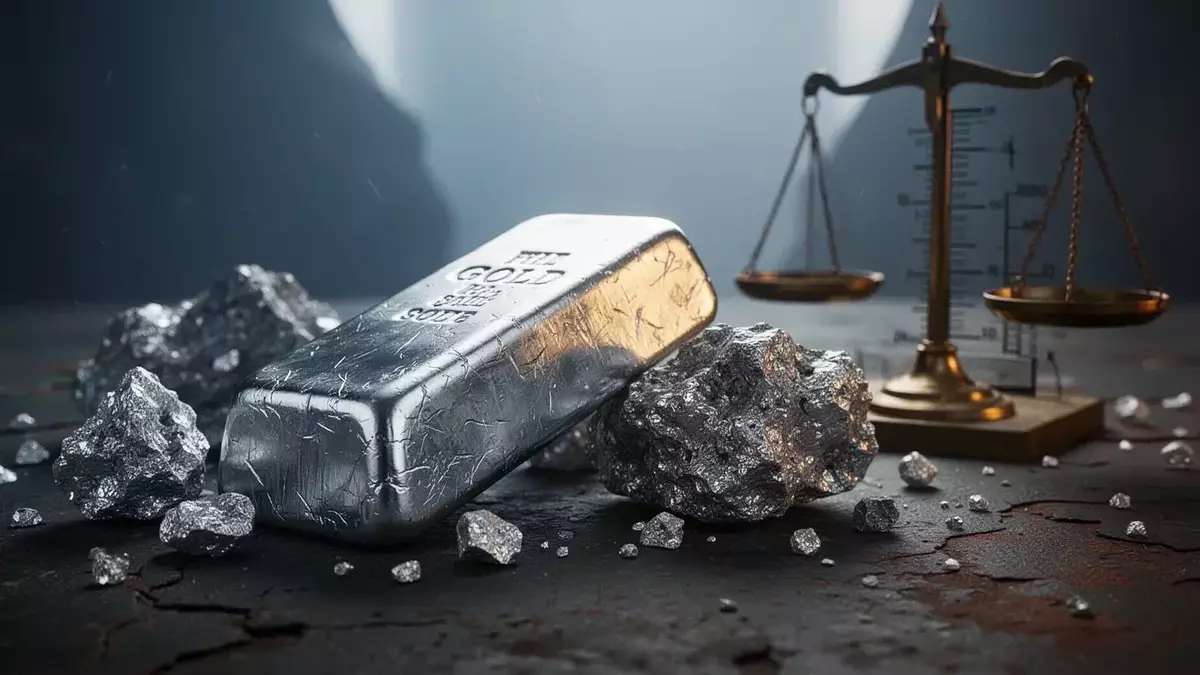
Spot silver is trading near $63.95 an ounce, down roughly 26% over the past month despite a still-lofty yearly gain of nearly 76%. That stark disconnect captures a market caught between powerful opposing forces: a physical deficit that has now persisted for six straight years, and a convergence of macroeconomic and structural headwinds that are overwhelming every bullish supply argument.
The immediate catalyst for the latest leg lower is geopolitical. US airstrikes against Iranian targets resumed for a second day, keeping the Strait of Hormuz effectively closed and sending energy costs surging. That has turbocharged inflation expectations, with US consumer prices in May rising 4.2% year-on-year — the hottest reading since April 2023. Energy accounted for more than 60% of the monthly increase. On the producer side, headline PPI jumped 6.5% annually, the steepest since November 2022, with gasoline alone climbing 23.4% month-on-month against a consensus forecast of 0.7%.
Higher energy costs feed directly into broader inflation, and that is squeezing the precious metals complex. The European Central Bank already responded by raising its deposit rate by a quarter-point to 2.25%, becoming the first major central bank to act specifically because of the Iran conflict. Eurozone inflation accelerated to 3.2% in May, well above the 2% target, and the ECB slashed its growth forecast for the bloc to just 0.8% for 2026. Across the Atlantic, markets are now fully pricing in at least one 25-basis-point rate increase from the Federal Reserve by December, a stark reversal from the easing expectations that had buoyed silver earlier in the year. The Fed, along with the Bank of Japan and the Bank of England, meets next week; while the consensus is for the fed funds rate to stay at 3.50-3.75%, all eyes will be on Jerome Powell’s tone regarding future moves.
Should investors sell immediately? Or is it worth buying Silber Preis?
For a non-yielding asset like silver, rising rates are the classic poison. The metal has fallen as low as $63.00 an ounce, its weakest since December 2025, before clawing back above $64 on reports the US military had halted its latest round of strikes, rekindling hopes of peace negotiations. But traders remain skeptical: the Strait of Hormuz remains largely blocked, energy prices stay elevated, and the inflation outlook points to further tightening.
What makes the current sell-off so remarkable is that it is unfolding against a backdrop of genuine physical scarcity. The Silver Institute projects a 46.3-million-ounce deficit for 2026, the sixth consecutive year of supply shortfalls. Cumulative drawdowns from inventories since 2021 have reached nearly 762 million ounces. COMEX warehouse stocks have plunged from 531 million ounces in October 2025 to roughly 315 million ounces today. China, the world’s largest silver producer, is set to tighten export controls further in 2026, requiring state licenses and effectively excluding smaller exporters. Yet none of this has been enough to prop up the spot price.
Part of the explanation lies in a structural shift in the metal’s largest industrial end-use: photovoltaics. Solar-panel manufacturers, confronting a surge in silver prices above $80 an ounce, have accelerated efforts to replace the metal with cheaper alternatives. Silver accounts for as much as 29% of module costs, putting intense pressure on margins. After solar-related demand slipped 6% in 2025 to 186.6 million ounces, analysts at Metals Focus now forecast a further 19% contraction in 2026, to around 151 million ounces. Longi Green Energy plans to begin mass production of copper-based cells in the second quarter of 2026; Jinko Solar is preparing copper-backed modules; and Shanghai Aiko Solar already offers silver-free cells commercially. The broader industrial take — which includes everything from electronics to brazing alloys — fell 3% to 657.4 million ounces last year, the first decline since the pandemic, according to the World Silver Survey.
The divergence between physical tightness and price weakness has produced an unusually wide range of forecasts. The average LBMA analyst call for 2026 is $79.57 an ounce, but the published range stretches from $42 to $165 — a spread that underscores how wildly market scenarios diverge. In the near term, the 50-day moving average remains the key technical reference. With no rate-cut signal on the horizon from the Fed, the supply deficit is likely to provide a floor rather than a catalyst for a sustained advance. For silver to break higher, it will need fresh impetus from the inflation path, a weaker dollar, or a reversal in the solar industry’s substitution drive — none of which appears imminent.
Ad
Silber Preis Stock: New Analysis - 11 June
Fresh Silber Preis information released. What's the impact for investors? Our latest independent report examines recent figures and market trends.