
Why Marvin Gaye Still Hits Harder Than Ever in 2026
Published on 03/02/2026 at 05:46 | Editorial responsibility: Rafael Müller, Editor-in-Chief AD HOC NEWS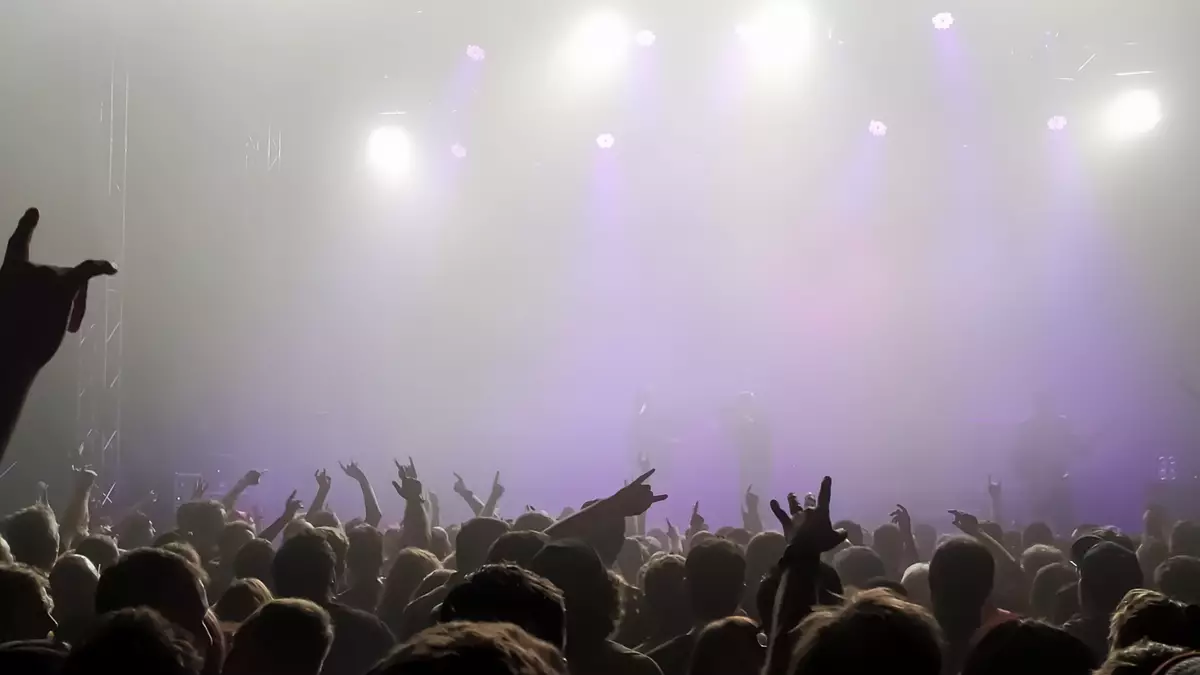
You might have noticed something wild lately: Marvin Gaye is suddenly all over your feeds again. His voice is soundtracking thirst-trap edits, soft-focus couple videos, political TikToks, and even "get ready with me" clips. Tracks like "Let's Get It On" and "What's Going On" feel strangely made for 2026 – even though they dropped decades ago. If it feels like the culture has quietly decided Marvin is back at the center of the conversation, you're not imagining it.
Explore Marvin Gaye's official world – music, history, and more
Between anniversary releases, constant samples in rap and R&B, and younger fans discovering him through algorithm magic, Marvin Gaye is in one of his biggest waves of posthumous relevance. And if you're feeling a little late to the party, or you just want to understand why this voice still wrecks people emotionally half a century on, you're exactly who this deep dive is for.
The Backstory: Breaking News in Detail
Marvin Gaye passed away in 1984, so there aren't new interviews or fresh tour announcements from the man himself. But that doesn't mean nothing is happening. When it comes to legacy artists, the news often comes through estates, labels, reissue campaigns, documentaries, and how the music is being re-framed for a new generation.
Over the past few years, Marvin Gaye's catalog has quietly shifted from "classic soul your parents loved" to "core reference point" for modern R&B, retro-pop, and even alt-rap kids. Labels continue rolling out remastered editions of albums like "What's Going On" and "Let's Get It On," sometimes bundling studio outtakes or previously unreleased live recordings. Music journalists keep circling back to these records whenever the world feels particularly chaotic, because Marvin was one of the first mainstream artists to fuse protest, spirituality, and raw romance in a way that still feels modern.
There's also the ongoing conversation around how often he’s sampled and referenced. You hear echoes of Marvin in tracks by artists like Kendrick Lamar, Snoop Dogg, and countless neo-soul singers. Any time a new track re-works Marvin's DNA, the discourse lights up again: Is it respectful? Is it lazy? Is it keeping the legacy alive? Even without new original material, his name stays in circulation because he's become shorthand for sensuality, vulnerability, and social conscience in music.
For fans, the implications are pretty huge. When streaming platforms push curated playlists like "Soul Classics," "Bedroom R&B," or "Conscious Soul," Marvin is usually front and center. That placement, combined with viral TikTok sound trends, means a 16-year-old in 2026 can hear "Mercy Mercy Me (The Ecology)" or "Sexual Healing" for the first time and fall down a full-blown rabbit hole. That's the real breaking news: Marvin Gaye has slipped out of the museum and straight back into everyday emotional life. He's not just nostalgia; he's becoming a living part of how younger fans process love, politics, and mental health through music.
So even though there's no new Marvin Gaye album dropping next Friday, there is a constant flow of renewed attention: remasters that sound crystal clear on modern headphones, documentaries being re-streamed every time a social-justice wave hits, think pieces from major mags revisiting "What's Going On" as the blueprint for protest records, and fan-made edits that keep cutting his vocals into new visual stories. That steady stream keeps one question buzzing: how does music from the '70s feel more emotionally accurate to 2026 than half the new releases?
The Setlist & Show: What to Expect
Because Marvin Gaye is no longer with us, you won't get a brand-new world tour announcement. But that hasn't stopped venues, orchestras, and tribute bands across the US and UK from building entire nights around his music. If you see something billed like "A Night of Marvin Gaye," "What's Going On – Live Tribute," or "Marvin Gaye: The Legacy Concert," there are a few things you can almost bet your life on.
First, the song staples. Any serious Marvin-focused show will usually include:
- "What's Going On" – often used as the opener or a climactic moment. Bands stretch the intro, build a slow groove, and let the crowd sing the hook back. It turns into a call-and-response moment where a 50-year-old song lands like a headline.
- "Let's Get It On" – the one that makes the whole room awkward-laugh and then lean into it. Tribute singers either go full sensual or flip it into a more playful, teasing performance.
- "Sexual Healing" – typically saved for late in the set, with warm red lights, slow tempo, and everyone's phones out. Live bands often extend the outro into a jam.
- "Mercy Mercy Me (The Ecology)" – vibes shift into reflective mode. In 2026, lines about the environment and pollution hit even harder as climate anxiety rises.
- "Inner City Blues (Make Me Wanna Holler)" – a deep groove moment. Modern drummers lean into hip-hop swing, making it feel like a roots-rap beat.
- "Got to Give It Up" – the dance-floor reset button. Even people who don't know Marvin's full catalog recognize this as the party track.
Depending on the band, you might also get classics from his duet era, especially songs with Tammi Terrell like "Ain't No Mountain High Enough" and "You're All I Need to Get By." Those tracks usually turn into audience participation moments, with couples singing at each other or entire sections harmonizing the hooks.
Atmosphere-wise, a Marvin Gaye tribute show in 2026 doesn't feel like a dusty museum reenactment. The production is often surprisingly modern: LED backdrops with archival footage, stylized fonts of 70s album covers, mood lighting that leans into pinks, reds, and warm ambers for the slow jams, cooler blues and purples for the politically charged songs. Some shows incorporate spoken-word intros or recorded snippets of Marvin interviews before key songs, underscoring how brutally honest he was about love, war, faith, and addiction.
If you're walking into one of these nights as a casual fan, expect to leave with a completely different understanding of his range. You'll go from the silk-sheets vibe of "Let's Get It On" to the almost gospel-level intensity of "Wholy Holy" or "Save the Children" in the span of a few minutes. Good bands lean into dynamics: quiet, prayer-like verses that explode into big crescendos, horn stabs that echo Motown glory days, and bass lines that feel suspiciously like the foundations of modern R&B.
And while you won't see ticket prices in stadium-tour territory – these are usually theater-sized events or orchestral halls – demand is still real. The pull isn't just nostalgia; it's that people want to feel something deeper than a two-minute TikTok clip. A setlist built around Marvin Gaye almost guarantees a night that swings between soft chaos and full catharsis.
What the web is saying:
Rumor Mill: What Fans Are Speculating
Even without new music, Marvin Gaye's name lives rent-free in fan theories. On Reddit and TikTok, the conversation keeps splintering in a few directions.
1. The "What's Going On" prophecy theory
On r/music and r/popheads, you'll find long threads arguing that "What's Going On" basically predicted the 2020s. Fans point to lyrics about war, police brutality, environmental damage, spiritual crisis, and mental exhaustion. Younger listeners, discovering the album during lockdowns and protest waves, talk about feeling low-key freaked out that a record from 1971 can read like a push notification from this morning.
Some users even organize the album into a modern storyline: from anxiety doomscrolling ("What's Happening Brother") to burnout ("Flyin' High (In the Friendly Sky)") to climate dread ("Mercy Mercy Me") to full emotional collapse ("Inner City Blues"). The theory isn't that Marvin literally had a crystal ball, but that he tapped into cycles of injustice and loneliness that keep repeating. For Gen Z, that makes him feel less like a retro icon and more like a deeply online empath decades before the internet.
2. The TikTok slow-jam discourse
Then there's the whole debate about how Marvin's sensual songs are being used. On TikTok, "Let's Get It On" and "Sexual Healing" pop up under everything from thirst edits to totally ironic memes. Some fans love the way younger creators reclaim the songs as memes-with-feelings; others argue it flattens how emotionally complex the tracks actually are.
Under comment sections, you’ll see people reminding everyone that Marvin was dealing with real heartbreak, religious guilt, and depression while making this music. To them, these aren't just sexy background tracks, they're a kind of therapy session set to a groove. That clash – between meme culture and raw vulnerability – is one of the most active vibe wars around his catalog.
3. Sample wars and lawsuit arguments
Another hot topic: how often modern artists lean on Marvin's sound. Fans still argue about high-profile legal cases where songs were accused of borrowing too much from his grooves or feels. In comment threads, some listeners defend aggressive protection of Marvin's work, saying his arrangements and rhythms are sacred and should be licensed respectfully. Others think overzealous lawsuits risk turning him into a barrier instead of an influence.
This spills into a bigger theory: that Marvin Gaye is slowly becoming to R&B what the Beatles are to rock – a cultural watermark you can't escape. People wonder if, 10 years from now, he’ll officially be considered the default reference point for soul, the way Prince and Michael Jackson often are for pop and performance.
4. "If Marvin were alive" fantasy scenarios
Every few months, there’s a fresh thread or TikTok question: if Marvin Gaye were alive today, who would he collaborate with? Names that trend constantly: H.E.R., Anderson .Paak, Kendrick Lamar, SZA, Frank Ocean, and Leon Bridges. Fans imagine cross-generational tracks blending lush 70s instrumentation with modern lyrical diary-writing and experimental production.
On a more emotional level, some users wonder out loud if Marvin would be okay in today's mental-health-aware era, or if social media pressure would have intensified his struggles. That speculation says a lot: people don't just see him as a legendary voice; they see him as a complicated human whose vulnerability still resonates in a time when everyone is used to talking about trauma more directly.
Key Dates & Facts at a Glance
- Birth name: Marvin Pentz Gay Jr.
- Born: April 2, 1939, Washington, D.C., USA.
- Died: April 1, 1984, Los Angeles, California, USA.
- Signature label: Motown (primarily on its Tamla imprint) during his classic period.
- Breakout 1960s hits: "Stubborn Kind of Fellow" (1962), "How Sweet It Is (To Be Loved by You)" (1964), and a long run of duet singles with Tammi Terrell through the late '60s.
- Iconic protest album: "What's Going On" released in 1971 – often ranked among the greatest albums of all time by major music publications.
- Classic slow-jam era: "Let's Get It On" album released in 1973, expanding Marvin's reputation as the king of sensual soul.
- Late-career comeback: "Midnight Love" released in 1982, featuring the global hit "Sexual Healing."
- Rock & Roll Hall of Fame: Inducted in 1987, three years after his death.
- Grammy recognition: Won two Grammys in 1983 for "Sexual Healing" (Best Male R&B Vocal Performance and Best R&B Instrumental Performance).
- Posthumous influence: Continues to be sampled, covered, and referenced across R&B, hip-hop, pop, and neo-soul in the 1990s, 2000s, and 2020s.
- Streaming era status: Core presence on soul, R&B, and "chill" playlists on major platforms, introducing new generations to his work.
- Most recognizable songs for casual listeners: "What's Going On," "Let's Get It On," "Sexual Healing," "Ain't No Mountain High Enough" (with Tammi Terrell), "Got to Give It Up," "I Heard It Through the Grapevine."
FAQ: Everything You Need to Know About Marvin Gaye
Who was Marvin Gaye, in simple terms?
Marvin Gaye was an American singer, songwriter, and producer who became one of the central figures of Motown and modern soul. If you strip away all the mythology, he was a guy with a once-in-a-generation voice who spent his career trying to reconcile conflicting sides of himself: spiritual vs. sensual, public vs. private, hopeful vs. deeply troubled. He could make you think about war and injustice one minute and then make you want to text your crush the next.
He started off in the early 1960s as a more traditional pop-soul and R&B performer, delivering tightly written singles for Motown. Over time, he pushed back against the factory line approach and demanded more creative freedom, eventually writing and producing his own material. That shift – from hit-singer-for-hire to full creative author – is a huge part of why musicians worship him.
What is Marvin Gaye best known for?
Most people know Marvin Gaye for a handful of towering songs: "What's Going On" (social and spiritual soul), "Let's Get It On" (sensual, aching slow jam), and "Sexual Healing" (80s synth-infused R&B that still sounds surprisingly fresh). But within music circles, he's loved for entire albums that feel like emotional worlds.
"What's Going On" is often considered his masterpiece – a concept album where songs bleed into each other, blending jazz, gospel, and soul with lyrics about war, poverty, addiction, and faith. "Let's Get It On" and "I Want You" are worshipped as some of the most intimate, emotionally complex "love" records ever made. They’re not just about sex; they’re about longing, shame, desire, and the need to connect.
He's also legendary for his duet work with Tammi Terrell in the late 1960s. Tracks like "Ain't No Mountain High Enough" and "You're All I Need to Get By" basically set the template for romantic duets that feel like two real people talking to each other rather than just singing at each other.
Where should a new fan start with Marvin Gaye's music?
If you're just starting out, you don't have to go full music-history-nerd right away. A simple route:
- Step 1: The obvious hits – Queue up a playlist with "What's Going On," "Let's Get It On," "Sexual Healing," "I Heard It Through the Grapevine," and a couple of duets with Tammi Terrell. This gives you the emotional range: political, romantic, sensual, and straight feel-good.
- Step 2: One full album listen – Put your phone down for 35–40 minutes and play "What's Going On" from top to bottom, no shuffle, no skipping. It's built like a continuous piece of music. Listen for the layered vocals, the bass lines, the sax parts, and how the lyrics move from confusion to fragile hope.
- Step 3: Late-night deep cuts – When you're in your feelings, switch to "I Want You" or the deeper tracks on "Let's Get It On." Songs like "Distant Lover" hit differently at 2 a.m.
From there, you can branch out into earlier Motown-era hits if you want to hear how much he evolved over time.
When did Marvin Gaye's music become political, and why does it still feel relevant?
Marvin made a sharp turn into political and social territory with "What's Going On" in 1971. He drew inspiration from stories from his brother, who served in Vietnam, and from watching civil unrest, police violence, and poverty unfold in the US. At first, Motown reportedly wasn't into releasing such a heavy, gospel-jazz-soul hybrid as a single. But once it hit, it was obvious this was more than just a song; it was a shift.
The reason it still feels relevant in 2026 is painfully obvious: the issues he's singing about haven't gone away. Lines about war, injustice, inequality, and inner turmoil land in a world that's constantly doomscrolling. For younger listeners who feel burnt out by news cycles, there's something weirdly comforting about hearing someone from an older generation voice the same confusion and anger, but with gentleness and hope baked in.
Why is Marvin Gaye so important to modern R&B and hip-hop artists?
On a technical level, Marvin Gaye pushed the boundaries of what a male R&B vocalist could sound like. His falsetto, his stacked vocal harmonies, and his conversational phrasing have been studied and echoed by generations of singers. You can hear traces of him in everyone from D'Angelo and Maxwell to Frank Ocean and The Weeknd.
On a creative level, he turned albums into personal statements instead of just collections of singles. That move – writing about his own inner life and the world around him – paved the way for the kind of confessional, conceptual records we now get from artists like Kendrick Lamar, Beyoncé, or SZA.
And then there's sampling. Hip-hop producers have lifted grooves, bass lines, and textures from Marvin's catalog for decades. Even when a song doesn't legally sample him, you can feel his influence in the way drums swing, keys glide, and vocals float over the top of the mix.
How did Marvin Gaye's personal struggles shape his music?
Marvin Gaye's life was marked by deep emotional conflict – religious pressure from his upbringing, complicated relationships, depression, addiction, financial problems, and a fractured bond with his father. Those struggles didn't stay separate from the music; they leaked into everything he recorded.
A lot of his sensual songs are threaded with guilt and longing rather than just pure joy. When he sings about love and desire, you can hear both the craving for connection and the fear that it's going to fall apart. In his socially conscious songs, you feel him wrestling with big questions about faith and purpose, not just pointing fingers at abstract systems.
That emotional layering is why his tracks feel so rich. You can listen to a song like "Let's Get It On" purely as a slow jam, or you can hear the vulnerability in his voice and read it as someone begging not to be alone. Both readings are valid, and that complexity is part of what keeps people coming back.
Why does Marvin Gaye still matter in 2026?
Marvin Gaye matters because he nailed something that every era craves: honesty wrapped in melody. The world is louder and more chaotic now, but the core feelings he sang about – wanting love, fearing loss, aching for justice, doubting yourself, reaching for something spiritual – haven't changed.
In a time when a lot of music is built for quick hits and short-form clips, his songs reward deep listening. They're beautifully arranged and produced, but they're also emotionally transparent in a way that feels very 2020s. Younger fans hear someone owning contradictions they recognize in themselves: sensitive and messy, hopeful and exhausted, romantic and scared.
So if you keep seeing Marvin Gaye pop up on your algorithm, it's not just nostalgia doing the work. It's the culture quietly admitting that sometimes the most accurate soundtrack for right now was recorded decades ago – by a man whose voice still sounds like he's singing straight to you.


