Why James Brown Still Sounds More 2026 Than 2026
25.02.2026 - 16:15:14 | ad-hoc-news.de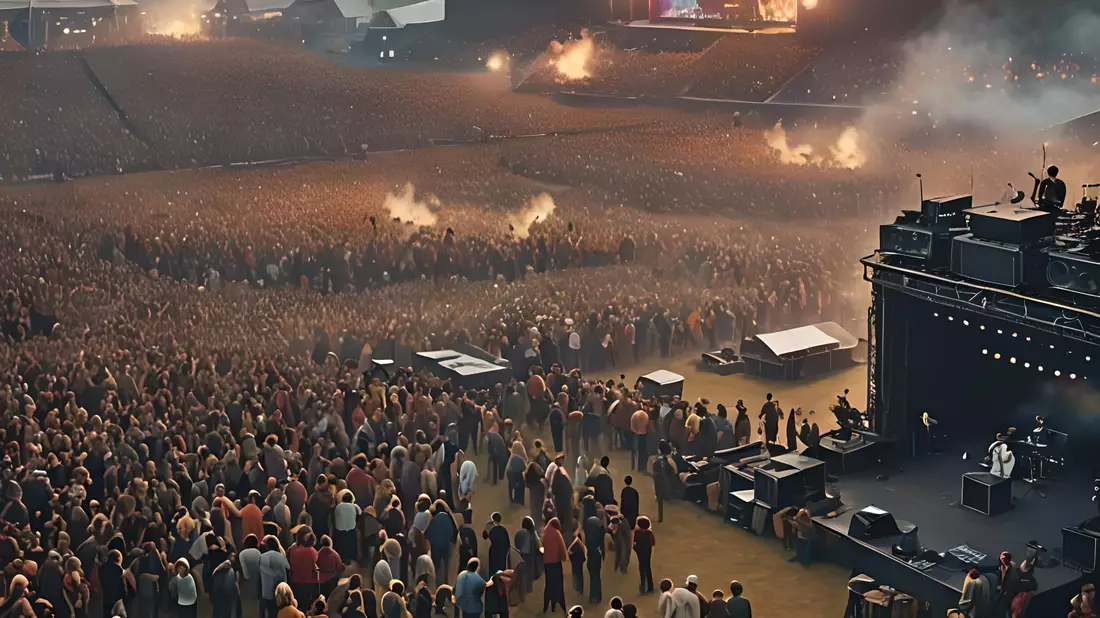
If you spend any time on TikTok, at NBA games, or even in random Netflix trailers, you’ve probably clocked it: James Brown just will not leave the mix. A scream here, a drum break there, that razor-sharp horn stab before the beat drops – even if you never sat with a full James Brown album, his sound is all over the music you love right now. From hip-hop samples to funk revival bands and DJ mashups, the "Godfather of Soul" is having another moment, and it honestly feels like he never left.
Explore the official James Brown universe here
Search data, sync placements, and endless memes have pushed James Brown back into Gen Z and Millennial playlists. You hear "Get Up (I Feel Like Being a) Sex Machine" under thirst traps, "The Payback" under villain edits, and those iconic screams chopped into Jersey club flips. The crazy thing? Most of those grooves were cut more than 50 years ago, but they still hit harder than half of what’s on New Music Friday.
So what exactly is happening with James Brown in 2026 – and what should you know if you’re only now falling down the funk rabbit hole?
The Backstory: Breaking News in Detail
First thing to understand: even though James Brown passed away in 2006, the business around his music is very alive in 2026. Over the past few years there’s been a major push from his estate and label partners to reframe him not just as your parents’ soul legend, but as a central pillar of modern pop and hip-hop. That strategy is finally paying off in a big way.
Several developments are powering the current James Brown wave. One is the constant flow of syncs in film, TV, and gaming. When a track like "I Got You (I Feel Good)" gets dropped into a high-profile movie trailer or a feel-good sports montage, Shazam lights up, streaming spikes, and a new wave of listeners shows up. Catalog insiders have pointed out that his monthly listeners jump noticeably every time a big sync hits, especially in the US and UK.
Behind the scenes, labels have been working the anniversary angle. Milestones around albums like Live at the Apollo and The Payback keep triggering new remasters, colored-vinyl reissues, and curated playlists on platforms like Spotify, Apple Music, and YouTube Music. Editorial teams love a "heritage but still insanely relevant" artist; James Brown is basically built for that lane. The more playlist placements he gets – Funk Essentials, Sampled, Soul Classics, even Workout mixes – the more he creeps into your algorithm.
Another underrated factor is the way producers talk about him. In interviews, everyone from Dr. Dre and Pharrell to Mark Ronson and Anderson .Paak has named James Brown’s grooves as a blueprint. Hip-hop heads already know that Brown is one of the most sampled artists in history – especially the legendary "Funky Drummer" break from Clyde Stubblefield. When younger fans go down the sample-credit rabbit hole for their favorite rap tracks, they keep landing on the same name: James Brown.
Music journalists and podcasters have also been revisiting his catalog, not just to retell the myth but to break down the mechanics. Why do these tracks feel so tense, so physical, so alive? It comes down to arrangement, performance, and attitude. Brown’s band was drilled like a military unit, every horn stab and rhythm guitar chop in the exact perfect spot, while James shouted, floated on top, and then snapped everything back into line with a single scream or count-off. That level of control and chaos is catnip for creators trying to understand why some grooves never get old.
For fans, the core takeaway is this: James Brown isn’t trending because of nostalgia alone. He’s trending because modern music keeps orbiting around ideas he locked in decades ago – the emphasis on the one, the rhythmic minimalism, the way he turned the band itself into a drum machine before drum machines even existed. In 2026, when so much music is made inside laptops, those live, sweaty, human performances feel both retro and shockingly fresh.
The Setlist & Show: What to Expect
Obviously you’re not walking into an arena in 2026 to see James Brown himself. But what is happening, especially in US and UK cities, are tribute shows, funk nights, and full-band homages that build entire sets around his music. If you’ve seen flyers for "James Brown Revue"-style events or "Funk & Soul Night: The Music of James Brown," here’s what you can usually expect from the setlist and vibe.
Most bands treating this seriously will hit the core must-play songs. That usually means:
- "Papa’s Got a Brand New Bag" – Often used to open the night, because it’s literally one of the first big funk blueprints. The guitar chops, the horn punches, the stop-start feel – this is where the future started.
- "I Got You (I Feel Good)" – There is no way they skip this. It’s the crossover smash everyone knows from commercials and movies. Live, it turns into a giant call-and-response moment.
- "Get Up (I Feel Like Being a) Sex Machine" – The crowd energy peak. Extended versions can stretch past ten minutes as the band rides that one-chord vamp, dropping out and slamming back in on Brown’s classic commands: "Get up! Get on up!"
- "Super Bad" – A little darker and looser. Great moment for the drummer and bassist to flex. Modern bands often lean into the grit of this one.
- "The Payback" – Slow-burn, menacing funk. Even if you don’t know the original, you’ve heard pieces of it sampled in hip-hop. Live, the bassline feels like it’s crawling up from the floorboards.
- "Cold Sweat" – Historically massive, musically crucial. It’s rhythm-section science in real time, with the horns commenting on James’s every line.
- "It’s a Man’s Man’s Man’s World" – The emotional ballad moment. Singers either completely crush this or wisely keep it short. Either way, it breaks up the nonstop groove.
- "Please, Please, Please" – In classic Revues, this closed the show, complete with the famous cape routine. Modern tributes love re-creating that drama.
Outside the hits, deeper shows dip into cuts like "Soul Power," "Talkin’ Loud and Sayin’ Nothing," "Licking Stick – Licking Stick," and sometimes the full-band workouts like "Give It Up or Turnit a Loose." DJs building James Brown-centric sets will often lean heavy on "Funky Drummer," "Mother Popcorn," and the JB’s material like "Pass the Peas" and "Gimme Some More" for pure breakbeat energy.
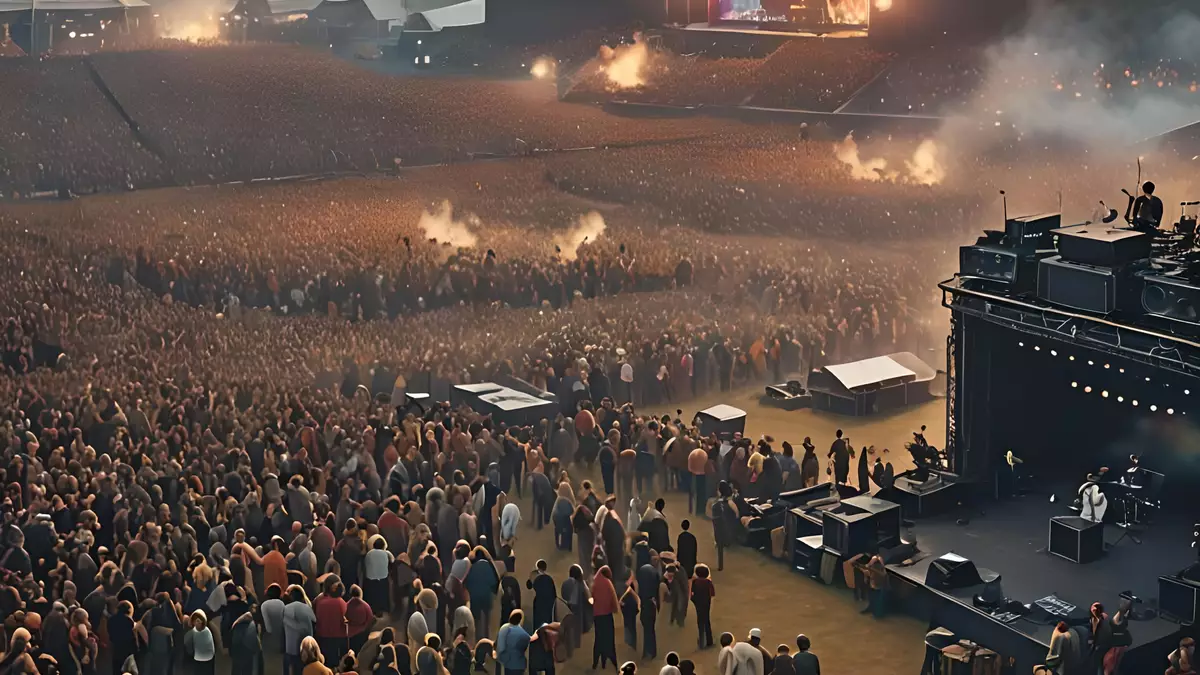
The atmosphere leans more like a sweatbox rave than a polite heritage concert. You’re talking non-stop groove, barely any ballads, and lots of interactive moments. Even in tribute form, James Brown’s influence on stagecraft shows up: sharp suits or coordinated outfits, tight choreography, horn players locking in move-for-move, and a bandleader (or MC) calling out cues in real time. The whole thing is about tension and release – holding the groove right to the point of explosion, then dropping everything back to drums and bass so the crowd screams for the horns to come back in.
Don’t expect note-perfect recreations of every record. The magic of James Brown’s original band was in how human and risky it felt. Great tribute bands and funk collectives in 2026 honor that by stretching songs, flipping breakdowns, and letting solos breathe. In smaller clubs in New York, London, LA, and across Europe, you’ll see players from the jazz, neo-soul, and jam-band worlds all using James Brown tunes as a shared language. It’s a way for musicians to show they can truly groove, not just play fast.
For you as a fan, the most important thing to know is this: James Brown’s music is built for physical reaction. Whether you’re in the pit at a tribute show or hearing a sample drop in a DJ set at a festival, your body’s going to react before your brain catches up. That was true in the 1960s, and it’s still true in 2026.
What the web is saying:
Rumor Mill: What Fans Are Speculating
Because James Brown’s catalog is so active, the online rumor mill around him never really shuts off – it just shifts focus. On Reddit threads in spaces like r/music and r/hiphopheads, a lot of the current speculation revolves around three big topics: future reissues, sample clearances, and biopic/series talk.
1. The reissue and box-set theory
Every time an anniversary passes for a key album like The Payback or Live at the Apollo, fans on Reddit start theory-crafting about an "ultimate edition" box set. Users trade wish lists for previously unreleased live tapes, complete shows from specific nights at the Apollo Theater, and full-session outtakes that have only ever circulated as bootlegs. The more labels lean into deluxe reissues for other legacy artists, the more James Brown fans wonder when they’ll get the same all-in treatment for every era of his career, especially the late ’60s and early ’70s peak funk period.
2. Sample clearance drama and future flips
Because Brown’s grooves power so many classic hip-hop tracks, younger producers are constantly asking: How hard is it, really, to clear a James Brown sample in 2026? Producers on forums and Discords swap second-hand stories. Some say it’s become more structured and predictable in recent years, others claim the prices are still intense for big syncs or commercial releases. This has sparked a low-key new trend: producers are replaying and re-recording classic James Brown-style breaks and horn lines to get the same feeling without paying for the master recording. Reddit debates rage over whether that’s respectful homage or a cop-out.
Fans are also always trying to predict the next big mainstream artist to build a single around a James Brown sample. Any time a major rapper or pop star hints at a "throwback funk" direction in the studio, Reddit threads start guessing which Brown track they’ll flip: will it finally be a full, unapologetic interpolation of "Super Bad" or something deeper like "Escapism"?
3. Biopic and series rumors
Ever since the 2014 film Get On Up, there’s been on-and-off chatter about a more expansive James Brown project – either a prestige streaming series or a documentary built around never-before-seen footage and band interviews. In 2026, with music docuseries booming, fans on social media keep insisting that his story is way bigger than one two-hour movie can handle. TikTok essays and YouTube video essays outline entire dream casting lists, fantasy directors, and episode breakdowns, covering everything from the early gospel years through the civil-rights-era activism and into the intense late-career tours.
There’s also a constant debate about how deeply any new project should dig into the messier parts of his life – including his arrests and abusive behavior – versus focusing on the artistic legacy. That tension shows up every time a James Brown clip goes viral. Some comment sections fill with pure awe at the performance; others point out that untangling the art from the artist is complicated. It’s not just gossip – it’s part of a larger generational conversation around how we hold legends accountable while still acknowledging their impact.
4. TikTok edits and dance challenges
On TikTok, the speculation is less "industry" and more vibes. People keep predicting the "next James Brown song" to blow up after edit trends. We’ve already seen "The Payback" attached to everything from villain-core aesthetics to gym transformations. Users are betting that something like "Soul Power" or a deep-cut live version of "Give It Up or Turnit a Loose" is primed for a Jersey club or drum-n-bass remix trend. Because James Brown’s shouts, screams, and stop-start breaks are so easy to loop and flip, he’s ideal content fuel for producers trying to go viral fast.
Underneath all the rumors is one consistent vibe: nobody thinks the James Brown wave is going away. Whether the talk is about deluxe reissues, documentary deals, or the next viral edit, the assumption is that his sound will keep resurfacing, reshaped to fit whatever format the internet is obsessed with next.
Key Dates & Facts at a Glance
- Birth: James Brown was born on May 3, 1933, in Barnwell, South Carolina, USA.
- Early Breakthrough Single: "Please, Please, Please" (1956) – the song that first put him on the national map.
- Live at the Apollo (Album): Recorded October 24, 1962, at the Apollo Theater in Harlem, released in 1963. Often cited as one of the greatest live albums ever.
- "Papa’s Got a Brand New Bag": Released 1965 – widely considered one of the first major funk records, shifting from straight soul into a more rhythm-focused sound.
- "I Got You (I Feel Good)" Chart Peak: Released 1965; became one of his biggest hits and a defining soul anthem.
- "Cold Sweat": Released 1967 – crucial in codifying funk’s focus on the groove and the "one" (emphasis on the first beat of the bar).
- "Say It Loud – I’m Black and I’m Proud": Released 1968 – an anthem of Black pride and empowerment during the civil rights era.
- The Payback (Album): Released in 1973 – a landmark funk record, with the title track later heavily sampled in hip-hop.
- Most-Sampled Era: Late ’60s to mid-’70s – particularly tracks like "Funky Drummer," "Give It Up or Turnit a Loose," and JB’s spinoffs.
- Nicknames: Known as the "Godfather of Soul," "Soul Brother No. 1," and "Mr. Dynamite."
- Rock & Roll Hall of Fame: Inducted in 1986, part of the Hall’s very first class.
- Passing: James Brown died on December 25, 2006, in Atlanta, Georgia.
- Streaming Era: In the 2020s, his monthly listeners have consistently stayed in the multi-million range across major platforms, fueled by samples, syncs, and social media trends.
- Legacy Focus in 2020s: Ongoing remasters, curated playlists, and tribute shows in the US/UK and across Europe keep his music active for new generations.
FAQ: Everything You Need to Know About James Brown
Who was James Brown, in simple terms?
James Brown was a US singer, bandleader, and performer who reshaped popular music from the 1950s onward. If you strip away the titles and mythology, he was the guy who turned rhythm into the main character. Before him, most pop and soul leaned on big melodies and smooth arrangements. Brown flipped that: he made the groove itself the hook. Vocally, he shouted, screamed, and riffed more like a preacher than a traditional crooner. On stage, he pushed his bands to play with machine-like precision while he danced, dropped to his knees, and worked the crowd within an inch of collapse. The combination of showmanship and musical discipline is why so many people call him the "Godfather of Soul" and credit him with laying the groundwork for funk, and by extension, hip-hop.
Why do people say James Brown invented funk?
No single person invented an entire genre, but James Brown is the closest thing funk has to a ground zero. Starting in the mid-’60s, especially with songs like "Papa’s Got a Brand New Bag," "Cold Sweat," and "There Was a Time," he pushed his band into a new way of thinking: every instrument becomes part of the rhythm. Horns don’t float above the beat; they punch accents inside it. Guitars don’t strum chords; they scratch out tight, percussive patterns. Meanwhile, the bass and drums lock into hypnotic, looping phrases centered around "the one" – the first beat of each bar. That approach created a sound where you don’t wait for the chorus to feel something; the entire track is the payoff.
Funk as a broader culture also involves fashion, dance, attitude, and community, and other artists – from Sly and the Family Stone to Parliament-Funkadelic – expanded it dramatically. But if you trace the sonic DNA that runs through modern R&B, house, hip-hop, and even some pop, you keep landing back on those James Brown records as a starting point.
How did James Brown influence hip-hop specifically?
Hip-hop producers in the late ’70s, ’80s, and ’90s treated James Brown records like a giant parts library. The most famous example is the "Funky Drummer" break, a short drum solo played by Clyde Stubblefield during a 1970 James Brown track. DJs and producers looped that break over and over again, turning it into the backbone of countless rap songs. Once samplers got cheaper and more accessible, creators didn’t just use the drums – they grabbed horn stabs, bass licks, and vocal shouts.
Acts like Public Enemy, Eric B. & Rakim, LL Cool J, and many more built signature tracks around Brown samples. That sound – gritty, live, and hard-hitting – defined entire eras of hip-hop. Even when producers moved away from obvious sampling for legal or stylistic reasons, the idea of chopping live funk into something new never left. So if your favorite 2026 rapper uses a crunchy breakbeat and a stabbing horn line, you’re basically hearing James Brown through three or four generations of evolution.
What’s the best starting point album if I’m new to James Brown?
If you’re streaming and you want a full project vibe, there are a few strong entry points depending on what you like:
- Live at the Apollo (1963) – If you love intense live energy and crowd noise, this is essential. It’s more R&B/soul than pure funk, but you feel the charisma and the work ethic immediately.
- The Payback (1973) – If you want deep, cinematic funk. Long tracks, simmering grooves, and a darker, more atmospheric feel. Perfect for night-time listening or sample-spotting.
- Any solid "Best Of"/Greatest Hits collection – For a quick crash course in the big songs: "I Got You (I Feel Good)," "Papa’s Got a Brand New Bag," "It’s a Man’s Man’s Man’s World," and more.
Realistically, in 2026 a lot of people start with curated playlists like "This Is James Brown" on streaming. That’s totally valid – think of those as highlight reels that you can use to figure out which era and sound you want to dive into next.
What made his live shows so legendary?
Stories about James Brown live shows almost sound exaggerated until you watch the footage. He ran his band like a drill sergeant and a mad scientist at the same time. Musicians talk about being fined for missed cues or sloppy notes, but also pushed into incredible musical heights because the pressure was so intense. On stage, he controlled every detail: the pacing of the set, the costume changes, the breakdowns, the fake-outs where he’d act too exhausted to continue until someone draped a cape over him – and then he’d tear it off and explode back into the song.
Unlike some artists who treat live shows as a way to replicate recordings, Brown treated the gig as the main event and the record as a snapshot. Tempos were often faster, grooves longer, call-and-response bigger. His dancing – the splits, the footwork, the spins – became a direct influence on everyone from Michael Jackson to Bruno Mars and Chris Brown. When people describe him as one of the greatest performers of all time, they’re not just talking about vocal ability. They’re talking about how completely he owned the stage and bent the audience to his will.
Was James Brown a perfect hero?
No, and that matters. While many fans and musicians rightfully celebrate his artistic legacy, there’s also a documented history of personal issues and abusive behavior, including domestic violence and run-ins with the law. Modern conversations about James Brown increasingly hold both truths at once: he changed music in ways that are hard to overstate, and he caused harm in his personal life that shouldn’t be brushed aside.
For a lot of younger fans, the question is how to engage with his work responsibly. One approach is to be honest and informed: know the full story, not just the highlight reel, and be open about it when you talk about him. Another is to focus on how his innovations can be carried forward by artists who align more closely with your values. Music history is complicated, and James Brown is a clear example of how genius and damage can exist in the same person.
Why does James Brown still feel relevant to Gen Z and Millennials?
Three main reasons. First, the sound fits the current appetite for groove-heavy music. We’re in a cycle where disco, funk, and house textures are back in charts and festival sets. James Brown slots right into that space; his records already do what a lot of new tracks are trying to capture.
Second, the sampling and sync culture makes him unavoidable. You might discover him through a drill flip, a lo-fi remix on YouTube, or a meme edit, but once you recognize his voice or a specific groove, you’ll hear it everywhere. That repetition builds familiarity even if you never consciously decide to be a fan.
Third, the performance aesthetic – maximal effort, intense crowd connection, raw charisma – is exactly what stands out on a content-saturated internet. Short clips of James Brown performing feel incredibly modern: the sweat, the sharp outfits, the dramatic pacing of a show. You can watch a 40-second highlight from a 1960s TV performance and it lands like the best live TikTok you’ve seen all week.
Put simply: the culture keeps moving, but the basic things that make music hit – rhythm, attitude, showmanship – are timeless. James Brown locked those elements in so hard that 2026 still sounds like it’s catching up.