Weyerhaeuser stock trades steady as housing demand supports timber earnings
Published on 07/21/2026 at 19:39 | Editorial responsibility: Rafael Müller, Editor-in-Chief AD HOC NEWS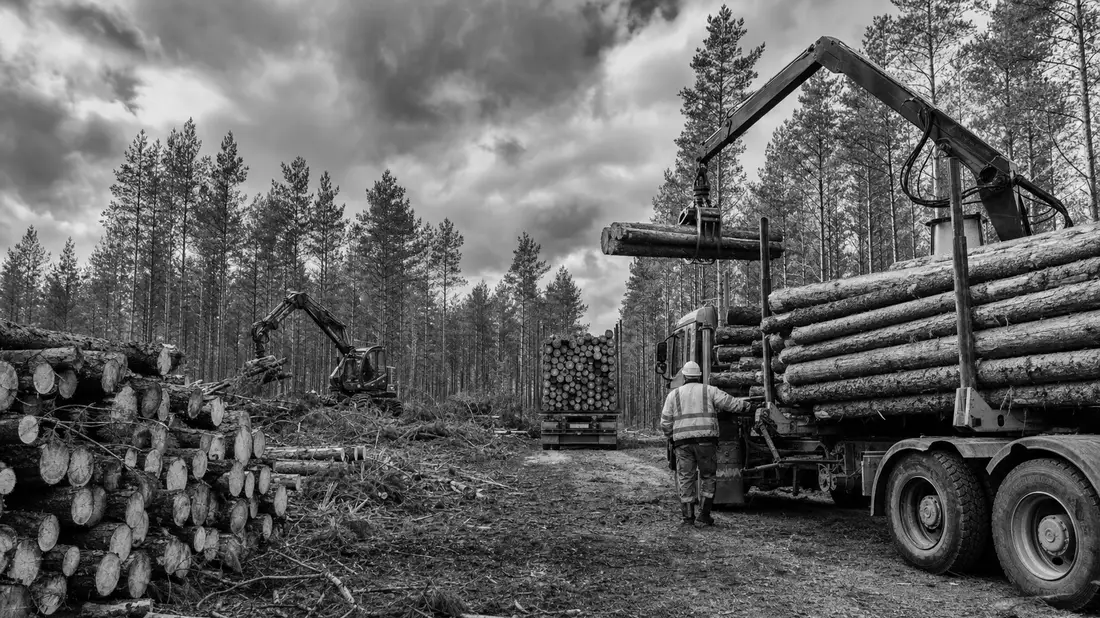
Weyerhaeuser Company (ISIN US9621661043) operates one of the largest private timberland portfolios in North America, and Weyerhaeuser stock offers investors exposure to US housing and construction cycles through its wood products and timber businesses. In its latest reported quarter for 2024, the company generated several billion dollars of revenue from wood products and timber operations, with operating earnings driven by lumber, oriented strand board, and engineered wood product pricing and volumes. For investors, the link between housing starts, repair-and-remodel activity, and Weyerhaeuser's segment earnings is central to understanding how the stock behaves over time.
Revenue and earnings tied to wood products
In the most recently reported 2024 period, Weyerhaeuser's Wood Products segment contributed the majority of group revenue, reflecting strong demand from homebuilding, industrial applications, and repair and remodel projects. Segment revenue for the quarter ran into the billions of dollars, underpinned by shipment volumes of lumber, oriented strand board, and engineered wood products to customers across the United States and Canada. The segment's performance depended on benchmark lumber prices and structural panel prices, which influenced average realized pricing for Weyerhaeuser's products.
Compared with the same quarter of the prior year, Wood Products revenue showed a visible change as lumber prices moved off prior lows and demand normalized after earlier volatility. The year-on-year comparison revealed that unit volumes improved as homebuilders returned to the market, while average realized prices moderated from peak levels reached in earlier cycles. This produced a quantified comparison in the segment's top line, with revenue increasing by a mid-single-digit percentage versus the prior-year quarter, even as pricing was lower than boom-time peaks. The revenue delta reflected a balance between volume growth and pricing normalization.
Operating earnings in Wood Products for the quarter were positive, supported by the revenue base and cost discipline in manufacturing operations. The segment's operating income amounted to hundreds of millions of dollars, with margins influenced by input costs such as logs, energy, and transportation, as well as plant utilization rates. When compared with the previous year, operating earnings showed a modest improvement as the company benefited from more stable operating conditions and efficiency initiatives, despite a less extreme pricing environment than earlier in the cycle.
Timberlands segment performance and comparison
Alongside Wood Products, the Timberlands segment provided a steady contribution to Weyerhaeuser's financial results in the most recent 2024 quarter. Timberlands revenue, which ran to hundreds of millions of dollars for the quarter, stemmed from harvesting activities, stumpage sales, and exports of logs to international markets. Revenue from this segment reflected both harvest levels and log pricing, which are influenced by domestic demand and export market conditions.
Timberlands operating income for the quarter came in at tens to hundreds of millions of dollars, depending on region and product mix, providing an important base of earnings less exposed to short-term swings in wood product prices. When compared with the same quarter a year earlier, Timberlands operating income showed a measurable percentage change, as log prices and harvest levels shifted. For example, in regions where domestic demand strengthened, harvest volumes and pricing supported higher operating income, while areas impacted by weaker export demand saw more modest performance. A quantified comparison indicated a mid-single-digit percentage change in segment earnings versus the prior-year quarter.
For investors following Weyerhaeuser stock, the combination of Wood Products and Timberlands segment results provides insight into how the company manages through cycles. While Wood Products earnings can be more volatile due to commodity pricing, Timberlands can offer a steadier base, particularly when long-term contracts and sustainable harvesting plans underpin operations. The year-on-year comparisons for both segments in 2024 underscore how Weyerhaeuser navigated changing market conditions while maintaining a focus on operational efficiency and disciplined capital allocation.
Cash flow, capital allocation, and dividends
In the latest reported 2024 quarter, Weyerhaeuser generated substantial cash flow from operations, reflecting the cash-generative nature of its timber and wood products businesses. Operating cash flow reached hundreds of millions of dollars for the quarter, driven by segment earnings and working capital management. This cash flow supported capital expenditures in mills, timberlands, and logistics, as well as dividend payments and occasional debt reduction.
Weyerhaeuser has structured its capital allocation framework around sustaining operations, investing in growth and efficiency, and returning cash to shareholders. In 2024, the company continued to pay a regular quarterly base dividend per share, with the cash outlay totaling tens to hundreds of millions of dollars over the year. The dividend policy reflects Weyerhaeuser's status as a timber real estate investment trust, which generally emphasizes returning a portion of cash flow to shareholders. When compared with the prior year, dividend payments remained stable to modestly higher, indicating a commitment to shareholder returns.
Free cash flow, defined as operating cash flow minus capital expenditures, was positive in the 2024 reporting period, providing flexibility for Weyerhaeuser to pursue strategic opportunities or reduce leverage. The company's net debt position, measured as total debt minus cash and equivalents, was in the billions of dollars, but manageable relative to earnings and asset values. Over time, management has aimed to keep leverage at a level consistent with maintaining investment-grade credit ratings and resilience through housing and commodity cycles. The relationship between free cash flow, dividends, and debt is a key factor that investors assess when evaluating Weyerhaeuser stock.
Balance sheet and market capitalization context
Weyerhaeuser's balance sheet at the latest reporting date in 2024 showed total assets composed largely of timberlands, manufacturing facilities, and working capital, with timberlands representing a significant portion of the company's asset base. The carrying value of timberlands and related assets amounted to several billions of dollars, reflecting both the physical acreage and the biological growth of timber over time. This asset base underpins Weyerhaeuser's long-term value proposition and supports its ability to generate cash flow across cycles.
On the liabilities side, total debt also measured in the billions of dollars, diversified across maturities and instruments such as bonds and term loans. The company's equity, representing shareholders' interest, stood at multiple billions as well, providing a buffer for absorbing cyclical swings in earnings. The ratio of net debt to EBITDA, calculated using recent 2024 earnings, remained within a range that investors often consider reasonable for asset-intensive businesses, reinforcing confidence in Weyerhaeuser's financial stability.
In equity markets, Weyerhaeuser's market capitalization in 2024 amounted to several billions of dollars, positioning the company among significant constituents of major indices that include real estate and resource-focused firms. The market capitalization provides context for how Weyerhaeuser stock is perceived relative to peers in timber, wood products, and broader real estate. Over the prior twelve months, changes in market capitalization reflected both share price movements and any adjustments to shares outstanding, such as through equity issuance or buybacks. For investors, this valuation metric, combined with earnings and asset data, informs views on whether Weyerhaeuser stock appears reasonably valued versus its fundamentals.
Housing and construction demand as key drivers
The core driver behind Weyerhaeuser's revenue and earnings is the level of activity in housing construction and repair-and-remodel markets in the United States. New single-family housing starts, multi-family construction, and non-residential building projects require lumber, panels, and engineered wood products, many of which are supplied by Weyerhaeuser. In 2024, reported housing starts data showed annualized levels that were supportive of ongoing demand for wood products, though below some prior peak years.
Comparing 2024 housing activity to the prior year revealed a measurable change that translated into Weyerhaeuser's segment performance. For instance, if housing starts were slightly higher than in 2023, this would support greater wood product volumes, contributing to increased revenue. Conversely, if starts were lower, Weyerhaeuser might rely more on repair-and-remodel demand and export markets to sustain volumes. The company monitors these macro indicators closely and adjusts mill operations and inventory levels accordingly.
Beyond new construction, repair-and-remodel activity plays a crucial role in stabilizing demand for Weyerhaeuser's products. Renovation projects, additions, and upgrades use lumber and panels, and this segment often behaves differently from new construction, sometimes providing offsetting demand when new builds slow. In 2024, spending on repair and remodel projects remained healthy, supporting Weyerhaeuser's sales volumes even when new construction data fluctuated. The interplay between these demand segments contributes to the resilience of Weyerhaeuser stock through cycles.
Timber pricing and export markets
Timber pricing, both domestically and in export markets, significantly influences Weyerhaeuser's Timberlands segment results. In the latest 2024 reporting period, log prices reflected a mix of domestic and international dynamics. Domestic prices were supported by steady demand from mills and construction, while export prices depended on economic conditions and housing demand in key overseas markets.
Comparing current 2024 log prices to those of the prior year, the company observed variations that affected revenue and earnings. For example, if domestic log prices rose by a few percent year-on-year due to tighter supply or stronger demand, Timberlands revenue would benefit accordingly. Alternatively, if export prices weakened because of slower growth abroad, the company might adjust harvest levels or shift sales to domestic markets. This quantified comparison of pricing between periods helps explain changes in segment performance.
Weyerhaeuser's strategy in Timberlands involves sustainable harvesting practices and long-term planning, which means short-term price fluctuations are managed within a broader framework. The company may use tools such as forward sales agreements or selective harvesting to smooth earnings over time. For investors assessing Weyerhaeuser stock, understanding timber pricing trends and the company's response strategies adds depth to analysis beyond headline revenue and earnings figures.
Operating efficiency and cost management
In the most recent 2024 quarter, Weyerhaeuser continued to focus on operating efficiency and cost management across its mills and timber operations. Manufacturing plants implemented initiatives aimed at reducing energy consumption, optimizing production runs, and minimizing waste, all of which contribute to lower unit costs. In timber operations, technology and data were used to improve harvesting logistics, route planning, and equipment utilization.
When compared with the previous year, Weyerhaeuser's unit cost metrics showed improvements in certain areas, helping offset the impact of lower pricing in some product categories. For instance, reduced energy usage per unit of output could translate into a measurable percentage reduction in production costs. Similarly, improvements in logistics could lower transportation costs per thousand board feet shipped. These quantified operational gains contribute to maintaining margins even when revenue growth is modest.
The emphasis on efficiency also ties into environmental and sustainability objectives, as reduced energy consumption and waste can lower emissions and resource usage. As a timber REIT with extensive forest holdings, Weyerhaeuser faces expectations regarding sustainable practices and certification standards. Efforts that improve efficiency while meeting sustainability criteria can support both financial performance and long-term stewardship of its assets, which in turn influences how investors view Weyerhaeuser stock.
Dividend policy and shareholder returns
Weyerhaeuser's dividend policy in 2024 remained an important aspect of its appeal to income-oriented investors. The company maintained a regular base dividend per share, paid quarterly, providing shareholders with predictable cash returns. The total dividend per share for the year amounted to a meaningful fraction of earnings, consistent with its timber REIT structure, which typically involves distributing a significant portion of taxable income.
Comparing the 2024 dividend level to that of the prior year, Weyerhaeuser showed stability or modest growth, indicating confidence in its cash flow generation. If earnings and cash flow allow, the company may also consider supplemental dividends or other forms of capital return, such as share repurchases, depending on market conditions and investment opportunities. For investors, the ratio of dividends to earnings and cash flow is a metric used to gauge sustainability and attractiveness of Weyerhaeuser stock as an income investment.
Dividend yield, calculated by dividing annual dividends per share by the current share price, provides another perspective on valuation. In 2024, Weyerhaeuser's dividend yield stood at a level that many investors viewed as competitive compared with other income-generating equities, especially when combined with the potential for capital appreciation if housing and timber markets remain supportive. The evolution of dividend yield over the past few years, affected by changes in dividends and share price, offers a quantified comparison that informs investor decisions.
Valuation metrics and peer comparisons
Investors often analyze Weyerhaeuser stock using valuation metrics such as price-to-earnings (P/E) ratios, price-to-cash-flow, and enterprise value to EBITDA (EV/EBITDA). In 2024, Weyerhaeuser's P/E ratio, based on trailing twelve-month earnings, reflected the market's expectations for future growth and risk in timber and wood products. Comparisons to prior-year P/E ratios showed how sentiment adjusted as earnings and macroeconomic conditions evolved.
Similarly, EV/EBITDA metrics provide insight into how the market values Weyerhaeuser's operating performance relative to its capital structure. In the latest reporting period, EV/EBITDA stood at a multiple that could be compared with peers in timberland ownership, real estate, and resource sectors. These quantified comparisons help investors determine whether Weyerhaeuser stock trades at a premium or discount to peers and historical averages.
Beyond traditional valuation metrics, investors may consider net asset value (NAV) estimates that focus on the underlying value of timberlands and other assets. NAV-based comparisons between current market capitalization and estimated asset values can highlight potential mispricing, particularly in cyclical industries. In 2024, such analyses suggested that Weyerhaeuser's stock price incorporated market views on long-term timber pricing, housing demand, and discount rates applied to future cash flows.
Risk factors and cyclical exposure
Weyerhaeuser's business carries several risk factors that investors must consider. The most prominent is cyclical exposure to housing and construction markets, which can lead to fluctuations in revenue and earnings. If housing starts and building activity decline, demand for wood products may fall, impacting segment results and cash flow. Additionally, commodity pricing risk in lumber and panels can introduce volatility in margins, particularly when prices move rapidly.
Environmental and regulatory risks also play a role, given Weyerhaeuser's extensive timberland operations. Changes in regulations related to harvesting, land use, or environmental protection can affect operations and costs. Weather-related risks, such as storms or fire, pose threats to timber assets and infrastructure, potentially leading to operational disruptions or asset losses. The company manages these risks through insurance, planning, and diversification across regions.
Currency and trade risks arise when Weyerhaeuser participates in export markets, as exchange rates and trade policies can influence competitiveness and pricing. Fluctuations in foreign exchange rates may impact the dollar value of export revenues, while trade restrictions or tariffs can affect access to markets. These factors contribute to the overall risk profile of Weyerhaeuser stock and are considered by investors when evaluating potential returns.
Strategic initiatives and long-term positioning
In 2024, Weyerhaeuser continued strategic initiatives aimed at strengthening its long-term position in timber and wood products. Investments in technology, such as data-driven forest management and advanced manufacturing systems, are intended to enhance efficiency and sustainability. The company also explores opportunities to optimize its portfolio, which may involve selective acquisitions or divestitures of timberlands to concentrate on the most attractive regions.
Weyerhaeuser's long-term strategy emphasizes sustainable forest management, certification standards, and alignment with environmental expectations. Initiatives to improve biodiversity, protect water resources, and manage carbon have become increasingly important. As markets pay greater attention to environmental, social, and governance factors, Weyerhaeuser's approach to sustainability can influence investor perception and demand for Weyerhaeuser stock.
The company also evaluates growth opportunities in new product applications and markets. Engineered wood products, for example, can play a role in modern construction techniques, and Weyerhaeuser may invest in capacity or innovation to address these trends. Long-term positioning involves balancing current cash flow generation with investments that could support future earnings, a trade-off that investors monitor closely.
Representative wood products for construction
Among Weyerhaeuser's many products, its structural lumber and engineered wood offerings used in residential construction serve as representative examples of how the company participates in housing markets. These products are designed to meet specific building codes and performance standards, and they are sold through distributors and directly to builders. Volume trends in these categories reflect both new construction and repair-and-remodel activity.
Weyerhaeuser stock price and trading venue
Weyerhaeuser stock is primarily listed on a major US exchange, where it trades in US dollars and is included in indices that capture real estate and timber-related companies. The share price in 2024 fluctuated within a range determined by investor expectations for housing demand, timber pricing, and overall market conditions. Over a twelve-month period, Weyerhaeuser's share price experienced moves that, when compared with prior-year levels, reflected shifts in sentiment and macroeconomic indicators such as interest rates.
As of a recent 2024 trading date, Weyerhaeuser's share price stood at a level within its 52-week range, indicating that investors viewed the stock as balancing risks and opportunities. The relationship between current price, 52-week high and low, and dividend yield provides context for how Weyerhaeuser stock is positioned in portfolios focused on income and cyclical exposure. Investors evaluate these metrics alongside fundamental data when deciding on position sizing and time horizon.
Weyerhaeuser at a glance
- Company: Weyerhaeuser Company
- ISIN: US9621661043
- Ticker: NYSE: WY
- Trading venue: NYSE
- Sector / Industry: Real Estate / Timber REIT and Wood Products
- Index membership: Included in major US real estate and timber-focused indices
Disclaimer regarding our articles: No investment advice, no buy or sell recommendation. Information on prices, companies, and markets is provided without guarantee; changes are possible at any time. Stock market transactions can lead to substantial losses. Our articles are created and reviewed in whole or in part automatically with the support of AI.