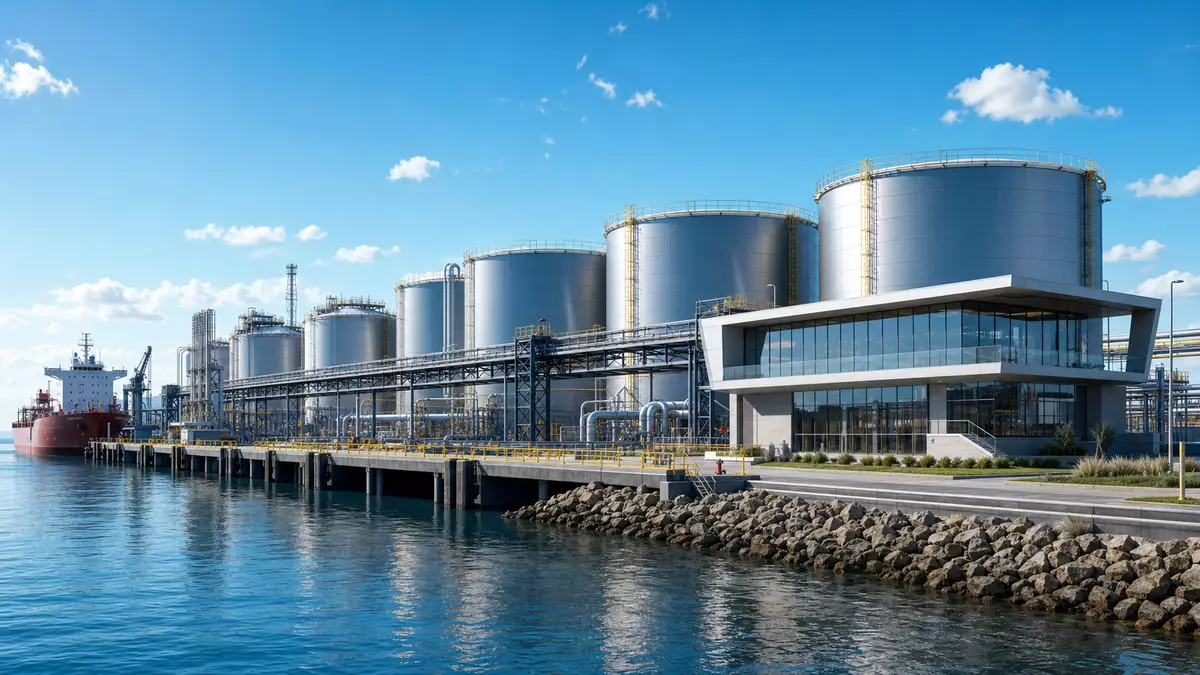
Vopak stock holds steady as terminal operator prepares for next earnings after resilient 2025 results
Published on 07/22/2026 at 03:10 | Editorial responsibility: Rafael Müller, Editor-in-Chief AD HOC NEWS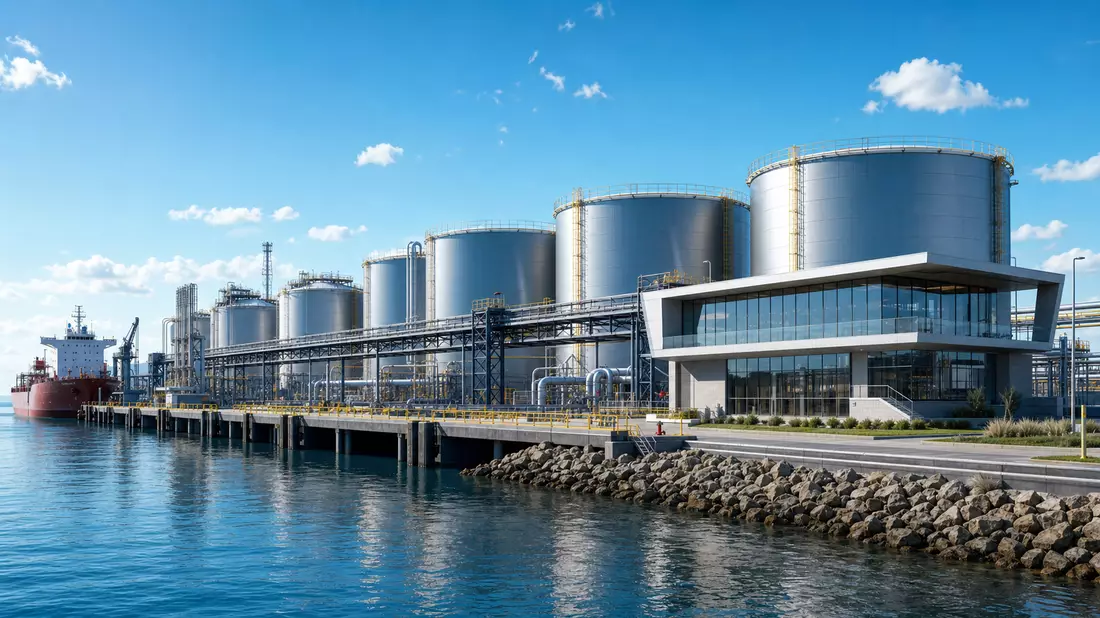
Royal Vopak N.V. (ISIN NL0009432491) is a Dutch independent tank storage company whose Vopak stock represents one of the core liquid bulk infrastructure plays on Euronext Amsterdam. The company operates a global network of terminals storing oil, chemicals, gases, and increasingly new energy products. According to the companys investor materials, Vopak has positioned itself as a critical logistics provider for industrial clusters and gas hubs around the world, with a strategic focus on safety, operational reliability, and disciplined capital allocation.
Even though near term news flow can vary, the companys most recent full-year figures offer a clear view of the fundamental picture. In its latest annual reporting context, Vopak has continued to emphasize stable cash generation from contracted capacity while redeploying capital into growth segments such as industrial terminals and gas infrastructure. For investors, the interplay between earnings resilience, leverage, and new growth projects is a central theme when analyzing Vopak stock today.
Revenue and earnings trends in recent years
Royal Vopak N.V., headquartered in Rotterdam, reports its financials in euros and historically refers to net profit and earnings in terms of net profit attributable to shareholders and earnings per share (EPS). Over recent fiscal years, the company has managed to achieve a gradual improvement in underlying earnings despite portfolio rationalization and ongoing investments. Vopak typically discloses its revenue and EBITDA progression, as well as net profit development, in its annual reports and presentations to investors.
In the latest available annual context, Vopak reported group revenues measured on a proportional consolidation basis that underline the scale of its operations. The companys tank storage activities span crude oil, petroleum products, chemicals, liquefied gases including LNG and LPG, and certain vegetable oils, creating diversification across end markets. Across its network, occupancy rates and contract structures are key drivers for revenue stability, with long term take-or-pay and minimum throughput commitments forming a significant part of the portfolio. As a result, changes in global trade flows, refinery configurations, and petrochemical demand can influence volumes but are often partly cushioned by contractual arrangements.
At the EBITDA level, Vopak emphasizes both reported and underlying EBITDA, adjusting for exceptional items and divestments. In general, the company aims for robust operating cash flows to support dividends and investments in new terminals, expansions, and digital capabilities. Margin development over time reflects factors such as energy costs, maintenance expenditures, and efficiency gains from operational excellence programs and digitalization. For investors following Vopak stock, trends in EBITDA margins and cash conversion are important indicators of the companys ability to fund growth while maintaining a prudent balance sheet.
Earnings comparison and leverage metrics
Compared to prior years, Vopak has sought to balance portfolio optimization with selective growth. This often includes divesting non core terminals and reinvesting in industrial terminals and gas infrastructure where long term contracts with industrial customers or gas off takers provide visibility. Over recent reporting periods, the company has highlighted that these moves support earnings quality, even if headline volumes or revenues from certain traditional oil storage segments fluctuate.
Vopaks net profit trend demonstrates the impact of such portfolio changes and investments. When comparing recent fiscal net profit figures with earlier periods, investors can observe how divestments, energy transition related opportunities, and changes in depreciation and interest expenses feed through to the bottom line. EPS development similarly reflects the companys performance and capital structure decisions including potential share buybacks or issuance. Leverage, usually captured in metrics such as net debt to EBITDA, plays a central role in assessing Vopak stock, as the company finances a portion of its asset base and development pipeline through debt while aiming to stay within target ranges.
In addition, return on capital employed and return on equity are key gauges for the effectiveness of Vopaks capital allocation. The companys strategy to focus on infrastructure-like assets with stable, contracted revenues is designed to support attractive returns over time. Nonetheless, investors must consider how new projects ramp up, the timing of cash flows, and any potential construction or regulatory risks. In this context, Vopak frequently communicates about project milestones and commissioning schedules, so the evolution of these projects over successive reporting periods is a useful lens for evaluating performance versus previous years.
Industrial terminals and gas infrastructure focus
Beyond headline financial metrics, the operational focus of Vopak has shifted more visibly toward industrial terminals and gas infrastructure. Industrial terminals are typically located adjacent to large industrial complexes, such as petrochemical plants or refineries, and provide tailored storage and handling services. Gas infrastructure projects include LNG import or small scale terminals, LPG facilities, and sometimes infrastructure linked to new energy vectors. These segments generally benefit from long term contracts and strategic importance for customers, supporting more predictable cash flows.
For Vopak stock, this shift matters because it can change the risk-return profile compared with traditional spot driven oil storage. Industrial and gas infrastructure assets may involve higher initial capital expenditure but attract long term commitments. As these projects enter service and reach higher utilization over time, they can contribute to earnings growth and margin stability. The companys investor communications underscore the intention to develop such assets in collaboration with partners and customers, which can reduce risk and align interests.
Investors also monitor how Vopak manages its exposure to traditional oil and chemicals storage in light of energy transition trends. While fossil fuels remain significant in the medium term, structural changes in the energy mix and regulatory frameworks influence demand for different types of storage. Vopaks diversified portfolio across regions and products aims to mitigate these shifts, enabling the company to pivot capacity toward structurally attractive segments where possible.
Dividend policy and shareholder returns
Royal Vopak N.V. has a track record of paying dividends to its shareholders, reflecting its positioning as an infrastructure company with recurring cash flows. The dividend policy typically aims to offer a stable or gradually growing dividend per share over time, subject to earnings, cash generation, and leverage considerations. The payout ratio indicates how much of net profit is distributed as dividends, and management balances this against investment needs and financial flexibility.
Vopak stock therefore appeals to investors who value income as well as potential capital appreciation. Dividend announcements around annual results are key events, often accompanied by commentary on the outlook and capital allocation priorities. Over successive years, changes in the dividend level, payout ratio, and any additional shareholder distributions such as share repurchases can be compared to gauge the evolution of shareholder return strategy.
From a valuation standpoint, metrics such as the dividend yield, price to earnings ratio, and enterprise value to EBITDA multiple are used to assess Vopak stock relative to peers in the tank storage and broader infrastructure segments. These multiples can move with changes in earnings progression, project pipeline visibility, and broader market conditions including interest rates and risk appetite for infrastructure assets.
Operational excellence and safety performance
Operational excellence and safety are central pillars of Vopaks business model. The company regularly reports safety indicators such as total injury rates and process safety events, which are closely watched by customers, regulators, and investors alike. Strong safety performance not only protects employees, contractors, and communities but also underpins the reliability of operations and the confidence of counterparties.
In its communications, Vopak links safety initiatives with continuous improvement programs and digitalization. For example, the use of advanced monitoring systems, automation, and data analytics can help reduce incidents and enhance efficiency. Over time, improvements in these areas can translate into better utilization, cost control, and risk management, which ultimately support financial performance. Thus, non financial metrics, while not directly part of the earnings line, play an important role in the overall assessment of Vopak stock.
The companys global footprint also introduces complexity in managing diverse regulatory environments and local operational challenges. Vopak addresses this with standardized procedures, training, and global oversight, seeking to maintain consistent standards across its terminals while respecting local conditions. Investors often consider how such governance and risk management structures support long term sustainability of the business.
Vopak terminal services and customer base
Vopak operates a broad range of terminal services, including storage, blending, and handling of liquid bulk products for customers in the oil, chemical, gas, and increasingly new energy sectors. These services are typically offered under long term contracts with major energy companies, trading houses, industrial producers, and distribution companies. The customers rely on Vopaks infrastructure to manage inventory, ensure supply chain continuity, and access key logistical hubs such as deep sea ports and industrial zones.
The companys portfolio includes facilities in Europe, Asia, the Americas, and other regions, creating diversification in geographic exposure. This helps mitigate localized demand shocks and allows Vopak to participate in shifts in global trade flows. For instance, changes in refinery configurations or chemical production centers can influence storage demand in particular regions, but the broader network provides flexibility to adjust capacity and pursue growth projects where demand is strongest.
New energy related initiatives, such as infrastructure for biofuels or future energy vectors, complement the traditional customer base. These projects may still be developing, but they highlight the companys effort to stay relevant as energy systems evolve. For Vopak stock, such projects represent both an investment opportunity and an execution challenge, requiring careful evaluation of technology, policy frameworks, and customer commitments.
Stock trading venue and liquidity
Vopak stock is listed on Euronext Amsterdam, giving it access to European equity capital markets and providing liquidity for global investors. The shares trade in euros under the ticker symbol that identifies Royal Vopak on the exchange. Trading volumes reflect interest from institutional and retail investors, as well as index inclusion and sector positioning. For many investors, the listing on a major European exchange offers familiarity and regulatory oversight consistent with European market standards.
Liquidity is an important consideration because it influences transaction costs and the ability to enter or exit positions efficiently. For an infrastructure company such as Vopak, stock turnover may be lower than for fast growing technology names, but the presence of long term institutional holders and index funds supports a stable investor base. The companys free float and market capitalization determine eligibility for certain indices, which in turn can drive passive flows into Vopak stock.
Over time, changes in market capitalization and index membership can be tracked to understand how the market values the company relative to its peers. Rising market capitalization may reflect a combination of share price appreciation and potentially share issuance for growth or acquisitions, while declines could result from price movements or buybacks. These dynamics feed into the broader picture of how Vopak is perceived in equity markets.
Market environment and sector dynamics
The broader market environment for tank storage and logistics infrastructure influences Vopak stock. Factors such as global oil demand, chemical production growth, gas market evolution, and energy transition policies shape the background in which Vopak operates. Periods of high volatility in commodity markets can affect short term storage demand and pricing, while more structural trends determine long term contract opportunities and investment decisions.
Competitors in the tank storage sector include other global and regional terminal operators, some of which are privately held and others listed. Comparative metrics such as occupancy rates, EBITDA margins, and leverage ratios can be used to benchmark Vopak against these peers. However, differences in portfolio composition, geographic footprint, and customer mix mean that exact comparisons require careful context.
Regulatory developments, particularly around environmental standards, safety, and energy transition policies, also play a role. Vopak must comply with these regulations across its jurisdictions, which can influence costs and investment needs. At the same time, compliance and proactive engagement can create opportunities, for example in environmental upgrades or new infrastructure installations aligned with policy goals.
Vopaks digitalization and innovation efforts
Beyond physical assets, Vopak has increasingly invested in digitalization and innovation. This includes projects to improve terminal management systems, enhance data analytics, and optimize operational workflows. Digital tools can provide real time visibility for customers, support predictive maintenance, and improve scheduling and capacity utilization, all of which contribute to service quality and efficiency.
Innovation also encompasses areas such as automation, robotics, and remote monitoring, which can enhance safety and reduce human error. Over time, such initiatives may lower operating costs and support scalability of the Vopak network. As these technologies are implemented more widely, they become part of the companys competitive proposition, differentiating Vopak terminals from those that rely on more traditional processes.
For investors, digitalization and innovation are relevant because they can influence both the cost base and revenue opportunities. Enhanced customer interfaces and data services may open the door to new value added offerings, while improved efficiency supports margins. Although specific projects may require upfront investment, the long term potential aligns with Vopaks infrastructure and service oriented business model.
Representative product and service: bulk tank storage
A representative core service in Vopaks portfolio is the provision of bulk tank storage for liquid hydrocarbons and chemicals. Customers contract specific tank capacity at strategically located terminals, often near deep water ports or industrial clusters, to store feedstocks, intermediate products, or finished goods. The service includes not only static storage but also handling such as loading and unloading from ships, pipelines, rail cars, and trucks, as well as certain blending or quality management services where appropriate.
This bulk storage service underpins global trade and industrial production, enabling customers to manage supply chains efficiently and respond to market conditions. For example, traders may use storage to bridge timing differences between supply and demand or to position products geographically. Producers may rely on storage to buffer production and ensure steady supply to customers. Vopaks capability to provide safe, reliable, and compliant storage and handling is core to its market role.
Vopak stock and investor perspective
From an investor perspective, Vopak stock represents a combination of infrastructure characteristics, industrial exposure, and energy transition optionality. The companys assets offer contracted revenues and barriers to entry typical of infrastructure plays, while the underlying products and customers tie it to energy and chemical markets. As a result, Vopak stock may appeal to investors seeking income and relatively stable cash flows, with some exposure to commodity related dynamics and long term structural changes in energy systems.
Analysts and investors evaluate Vopak using a range of metrics including revenue growth, EBITDA margin trends, net profit and EPS progression, leverage ratios, dividend yield, and project pipeline visibility. They also consider qualitative factors such as managements track record, governance, risk management, and strategic alignment with energy transition themes. Over time, the performance of Vopak stock in relation to these fundamental drivers helps determine its position in portfolios focused on infrastructure, energy, or industrial themes.
As the company moves toward its next earnings release, attention typically focuses on how recent projects contribute to results, how occupancy and contract coverage evolve, and whether leverage remains within target ranges. Any adjustments to guidance or capital allocation priorities can influence market expectations and, in turn, the valuation of Vopak stock.
Disclaimer regarding our articles: No investment advice, no buy or sell recommendation. Information on prices, companies, and markets is provided without guarantee; changes are possible at any time. Stock market transactions can lead to substantial losses. Our articles are created and reviewed in whole or in part automatically with the support of AI.