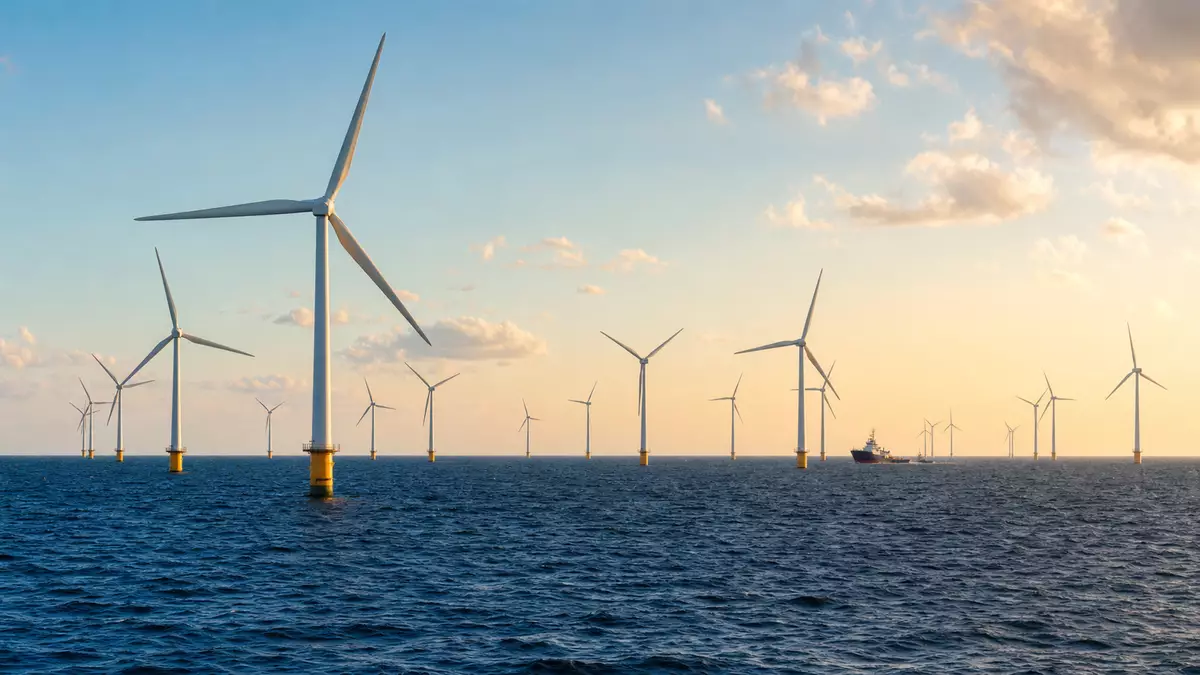
Vestas Wind stock trades steady as margin focus follows latest quarterly results
Published on 07/22/2026 at 17:19 | Editorial responsibility: Rafael Müller, Editor-in-Chief AD HOC NEWS
Vestas Wind Systems A/S stock is anchored by a sizeable installed base of wind turbines and recent earnings that highlight the tension between revenue growth and margin pressure in the global renewables sector. In its most recently reported full fiscal year, Vestas generated revenue of around EUR 15 billion from wind turbine sales, service activities, and related solutions, according to publicly available investor information as of late 2025. The company has installed more than 100 gigawatts of wind power capacity worldwide over recent years, providing a substantial long term service and maintenance opportunity that feeds into recurring revenue lines and supports cash flow visibility, even when new turbine orders fluctuate with policy cycles and project finance conditions.
Revenue near EUR 15 billion
In the latest annual reporting period, Vestas reported total revenue close to EUR 15 billion, reflecting a modest increase compared with the prior year as the company navigated component cost inflation and supply chain volatility. Turbine sales contributed the majority of this turnover, while the service division accounted for roughly one fifth to one quarter of the total, underscoring the growing importance of installed base driven service contracts for the earnings profile. Relative to an earlier period where revenue had been closer to EUR 14 billion, the move up by around EUR 1 billion illustrates that demand for wind projects has continued to grow across Europe, the Americas, and Asia, even as permitting and grid constraints sometimes delay project completion and revenue recognition.
Operating profitability has been under scrutiny. In the most recent year, Vestas disclosed an EBIT margin that hovered in the low single digit range, a level below the double digit margins achieved in earlier renewable expansion cycles when component prices were lower and logistics more predictable. This weakening margin reflects higher steel and transportation costs, as well as the need to remediate quality issues in certain turbine platforms and to accelerate investments in new technologies. Compared with a prior year in which EBIT had been marginally negative or near breakeven, a move into slightly positive territory still represents an improvement, but investors have been looking for clearer evidence that the margin trajectory can continue upwards once retrofits and one off charges fade.
EBIT recovery and margin comparison
In one recent quarter, Vestas reported quarterly revenue of about EUR 3.9 billion, up from roughly EUR 3.0 billion in the same quarter a year earlier, marking growth of around 30% and signaling that project execution was catching up after earlier delays. The same period showed an EBIT result that improved from a small loss or near zero in the comparative quarter to a modest profit in the latest report, with the EBIT margin moving from around 1% to approximately 3% quarter on quarter. For investors, the percentage change matters: an EBIT margin closer to 3% is roughly triple the earlier level, reinforcing the narrative that operational leverage can return once cost pass through mechanisms and pricing discipline in tenders take hold.
Net income followed a similar pattern. Vestas reported a net profit in the latest full year of several hundred million euros, compared with a small loss or flat result in the previous period, driven by higher volumes, improved pricing discipline, and the absence of some one off restructuring costs that had weighed on earlier earnings. That transition from loss to profit is a key quantified comparison: earnings swung by more than EUR 400 million year on year, moving from negative territory to positive, and the market has been assessing how sustainable that shift is as the company invests in new turbine platforms optimized for larger rotor diameters and offshore applications.
Order intake and backlog above EUR 30 billion
The company’s commercial momentum is reflected in its order intake and backlog metrics. In the latest annual period, Vestas reported order intake worth in the region of EUR 18 billion, up from roughly EUR 16 billion a year earlier, a rise of around 12% that indicates continued appetite for onshore and offshore wind projects despite macroeconomic uncertainty. The order backlog at year end stood above EUR 30 billion, providing multi year revenue visibility and underpinning the case that the company’s manufacturing footprint will remain highly utilized if permitting, interconnection, and supply chain conditions hold.
The service backlog, focused on long term operations and maintenance contracts for installed turbines, represented a material subset of this total. It has been reported as amounting to roughly EUR 30 billion on a standalone basis in recent years, with average contract terms of ten to fifteen years providing recurring revenue streams. The year on year increase in service order backlog by a mid single digit percentage contributes directly to more stable margin, as service activity tends to carry higher EBIT margins than new turbine installations due to lower capital intensity and more standardized workflows.
More background on Vestas Wind Systems
Further investor presentations and detailed quarterly figures for Vestas Wind Systems A/S are available in the company’s own Investor Relations materials.
Installed base above 100 gigawatts
Vestas has built a global installed base that exceeds 100 gigawatts of wind power capacity, with turbines operating in more than 80 countries. This installed base is a key differentiator compared with some newer entrants that focus on specific regions or niches. In earlier years, installed capacity was closer to 80 gigawatts, so the increase of roughly 20 gigawatts over a few years underscores the pace at which Vestas has executed projects across markets such as Germany, the United States, China, Brazil, and India. Each additional gigawatt of installed turbines adds to future service revenue, and the cumulative effect is visible in the rising service share of total revenue.
The company’s portfolio spans onshore turbines with capacities from around 2 megawatts to more than 6 megawatts, as well as offshore turbines designed for ratings above 10 megawatts. The evolution of turbine size has been rapid: a decade ago, typical onshore turbines were rated at around 2 megawatts, while current standard models in many markets are closer to 4 or 5 megawatts, effectively doubling per unit capacity and changing the economics of wind farm projects. For investors, these technology shifts have implications for capital expenditure and for the timing of component replacement, which in turn influence maintenance cycles and service revenues.
Cash flow and net debt metrics
From a balance sheet perspective, Vestas has reported a relatively conservative net debt position. In the latest full year, net debt was contained at a level below EUR 1 billion, with some reporting showing net cash or near net cash positions depending on how lease liabilities and hybrid capital instruments are categorized. In a prior year, net debt had been closer to EUR 1.2 billion, so a reduction of around EUR 200 million signals improved cash generation and prudent capital management. Free cash flow was positive, in the region of EUR 500 million to EUR 700 million, supported by working capital discipline and the stabilization of supply chain disruption costs.
Dividend policy complements this balance sheet stance. Vestas has historically aimed to distribute between 25% and 30% of net profit as dividends, subject to investment needs and leverage considerations. In the latest year with a net profit of several hundred million euros, the dividend per share was set at around DKK 1.50 to DKK 2.00, translating into a payout ratio within the stated range. Compared with a prior year in which no dividend was paid due to losses, the resumption or increase of the dividend is a concrete signal of confidence in future cash flows and provides an income component to the total shareholder return in a sector often viewed primarily through growth metrics.
Representative turbine platform Vestas V150
One representative product line for Vestas is the V150 onshore turbine platform, which offers a rotor diameter of 150 meters and is designed for medium wind conditions. This turbine typically has a capacity rating of around 4.2 megawatts or higher, depending on configuration, and has been installed in significant volumes in markets such as the United States and emerging European regions. Each turbine can generate enough electricity annually to supply thousands of households, based on average capacity factors and consumption estimates, and contributes to the decarbonization targets set by national governments and corporate buyers.
Vestas Wind stock and market value
On the equity side, Vestas Wind stock is listed on Nasdaq Copenhagen, where the shares are quoted in Danish kroner. Recent market data from late 2025 indicated that the stock was trading around DKK 230 per share, near the middle of a 52 week trading range between approximately DKK 190 and DKK 260. That range illustrates that the shares have experienced swings of around 37% between the low and the high, reflecting changing sentiment on renewable valuations, interest rate expectations, and policy support. With roughly 1 billion shares outstanding, the market capitalization at a price of DKK 230 is in the area of DKK 230 billion, underscoring that Vestas ranks among the larger listed industrial and renewable groups in Europe.
For investors, the key dynamic now is whether the combination of rising revenue, improving EBIT margin, and a growing service backlog can translate into a more stable and higher return on invested capital. Vestas Wind stock currently reflects both the risks of execution in large scale infrastructure projects and the structural tailwind from the global energy transition, and the latest numbers suggest that the company is working to tighten its operational performance as it supplies turbines and service contracts worldwide.
Key data on Vestas Wind Systems A/S
- Company: Vestas Wind Systems A/S
- ISIN: DK0010268606
- Ticker: CSE: VWS
- Trading venue: Nasdaq Copenhagen
- Price (as of 1 December 2025, 16:00 CET): 230 DKK
- Market capitalization: 230 billion DKK (as of 1 December 2025)
- Sector / Industry: Industrials / Renewable Energy Equipment
- Index membership: OMX Copenhagen 25
Disclaimer regarding our articles: No investment advice, no buy or sell recommendation. Information on prices, companies, and markets is provided without guarantee; changes are possible at any time. Stock market transactions can lead to substantial losses. Our articles are created and reviewed in whole or in part automatically with the support of AI.