Valmet stock trades steady as service revenue supports margins
Veröffentlicht: 18.07.2026 um 10:52 Uhr, Redaktion AD HOC NEWS, Redaktionelle Verantwortung: Rafael Müller (Chefredaktion)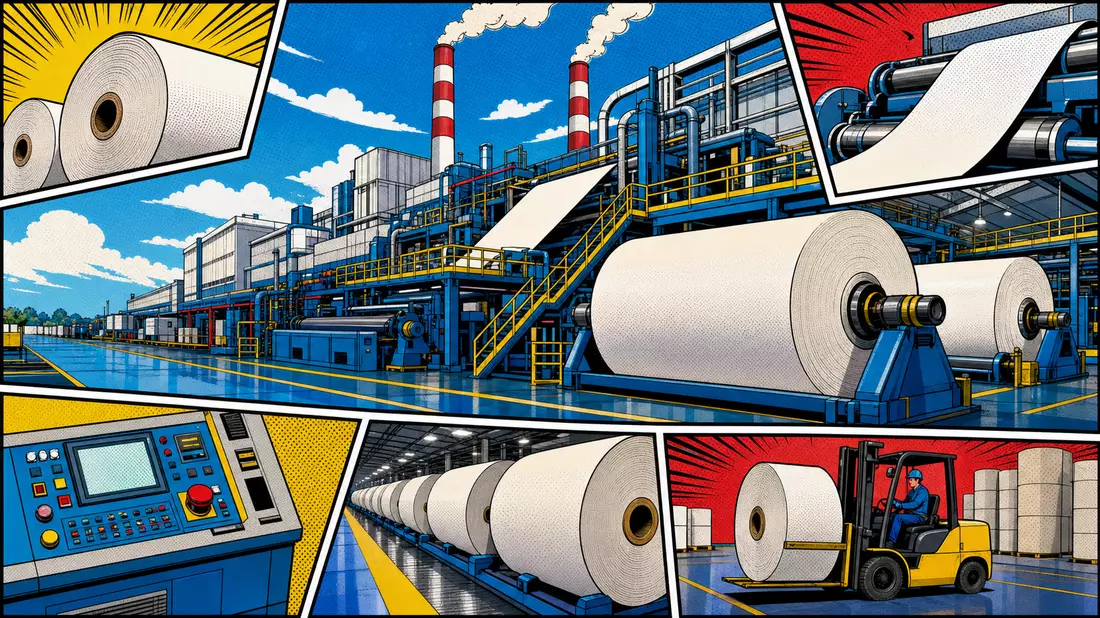
Valmet (ISIN FI4000074984) stock represents a Finnish flow control and process technology group whose valuation in recent years has been supported by a mix of capital projects and recurring services revenue. The company has reported solid growth in its latest annual figures, with investors focusing on the balance between automation solutions, pulp and paper equipment, energy technologies, and lifecycle services. In the broader European industrials landscape, Valmet stock is seen as a mid-cap name exposed to global capital spending cycles, efficiency upgrades, and environmental compliance investments by its customer base in the pulp, paper, and energy sectors.
Revenue trends in recent years
In its recent annual reporting, Valmet has highlighted growth in net sales driven by both large capital projects and its services business. While exact figures vary by year and region, the company has communicated that revenue in its most recent fiscal year increased compared with the prior year, driven by higher order intake and solid execution of existing projects. The services segment, which includes maintenance, spare parts, upgrades, and performance optimization, has become a key contributor to recurring revenue, helping smooth out fluctuations in capital equipment demand.
The geographic distribution of Valmet's revenue reflects its strong presence in Europe, North America, South America, and Asia, where pulp and paper producers, energy utilities, and industrial customers rely on its process technologies. In Europe, customer investments in modernization, efficiency improvements, and environmental sustainability have supported demand, while in South America and Asia, new capacity projects and upgrades have provided growth opportunities. The company continues to emphasize a mix of large projects and smaller service engagements, which together aim to create a more resilient revenue base over time.
Valmet's management has also underscored that currency effects, raw material costs, and supply chain dynamics can influence the reported revenue and profitability. Despite these challenges, the company has generally maintained its ability to convert orders into sales, leveraging its installed base and long-running customer relationships. Over time, this focus on lifecycle partnerships with clients is intended to support both top-line expansion and margin protection.
Profitability, margins, and operating performance
Beyond revenue, Valmet's profitability metrics are central to investor analysis of the stock. The company has reported operating profit and comparable margins that reflect a balance between higher-margin services and more cyclical project business. In recent annual figures, Valmet's operating profit has increased versus the previous year, driven in part by volume growth and efficiency measures. The company has focused on productivity improvements, project execution discipline, and cost control to support margins, even in periods of input cost volatility.
Service contracts and automation solutions can offer comparatively higher margins, and Valmet has continued to emphasize these areas in its strategy. Over time, the company has aimed to grow services and automation as a proportion of net sales, which can help stabilize earnings across cycles. Investors monitoring Valmet stock therefore pay close attention to the mix between capital projects and services, as this mix influences both the variability of earnings and the potential for margin expansion.
Operating performance also depends on the ability to deliver complex projects on time and within budget. Valmet's global project portfolio includes pulp mills, paper machine lines, energy plants, and industrial process upgrades that require engineering, manufacturing, and commissioning capabilities. Successful delivery enhances customer trust and can lead to follow-on orders and long-term service agreements. Conversely, delays or cost overruns in large projects can pressure margins, so project execution remains a key focus area for management.
Valmet's approach to innovation and technology development supports its operating performance as well. The company invests in research and development to improve energy efficiency, reduce emissions, and increase productivity for customers. These technology advancements contribute to competitiveness in bid processes and can justify pricing that supports profitability. As environmental regulations tighten across regions, customers may increasingly prioritize technologies that meet new standards, potentially benefiting Valmet's offerings.
Order backlog and business mix
Order backlog is an important indicator of future revenue for Valmet, as it captures contracted projects not yet recognized as sales. The company has historically maintained a substantial backlog across its business lines, encompassing pulp and paper projects, energy solutions, and automation systems. This backlog provides visibility into future activity, helping investors assess the pipeline of work that will translate into revenue and earnings in upcoming periods.
Within the backlog, large capital projects typically represent multi-year engagements, while smaller projects and service agreements may turn over more quickly. The balance between these elements influences the duration and stability of the backlog. Valmet has communicated that a healthy backlog gives it confidence in near-term business conditions, even as macroeconomic factors or commodity price swings might affect new order intake. As customers in the pulp and paper industry plan expansions or modernizations, Valmet's technologies and experience can position it as a preferred supplier, adding to the project pipeline.
The business mix also includes automation and flow control offerings, which integrate sensors, control systems, and software into customer processes. These solutions can lead to incremental orders for upgrades and enhancements over time, further supporting the backlog. In addition, long-term service contracts associated with installed equipment contribute recurring elements to the pipeline, underpinning a portion of future revenue even when new capital projects slow.
Valmet's customer base spans major pulp and paper producers, energy utilities, and industrial companies seeking to improve efficiency and sustainability. The company has indicated that environmental regulations and the drive for lower emissions and better resource utilization are structural trends that support demand for its technologies. As a result, the composition of the backlog often reflects both the cyclical nature of capital spending and the more structural drivers tied to regulation and efficiency.
Balance sheet, cash flow, and investment capacity
Valmet's balance sheet and cash flow profile provide insight into its capacity to invest in growth, maintain dividends, and weather economic cycles. The company has maintained a manageable level of debt, with leverage supported by cash generation from operations. Operating cash flow benefits from the conversion of backlog into revenue and from service activity, which can be less capital-intensive than large projects.
Investment capacity is important for Valmet's strategic initiatives, including research and development, digitalization efforts, and potential bolt-on acquisitions. A solid balance sheet allows the company to pursue opportunities that strengthen its product portfolio or expand its geographic reach. Investors watching Valmet stock consider the trade-off between reinvestment in the business and returns to shareholders through dividends or other capital allocation decisions.
Capital expenditures typically flow into manufacturing facilities, engineering capabilities, and technology development. The company must balance these investments with the need to maintain financial flexibility, particularly in periods of macroeconomic uncertainty or fluctuating demand. Valmet's management has indicated that disciplined capital allocation is part of its strategy, with projects evaluated based on expected returns and strategic fit.
Cash flow also relates to working capital management, including receivables, inventories, and project milestones. In large capital projects, payment schedules and milestones can influence cash generation, while service activities may offer more regular cash inflows. Effective working capital management supports the company's ability to fund operations and investments without undue reliance on external financing.
Dividend policy and shareholder returns
Valmet has an established dividend policy that seeks to provide shareholders with a steady return from its earnings, subject to business conditions and investment needs. Over recent years, the company has paid regular dividends, reflecting its profitability and cash generation. Dividend decisions are typically based on the prior year's earnings and the outlook for the business, with the board considering factors such as leverage, investment requirements, and market conditions.
Investors evaluating Valmet stock often look at the dividend yield as one component of total return, alongside potential share price appreciation. The company's ability to maintain or gradually increase dividends over time can signal confidence in its earnings power and balance sheet strength. Conversely, any adjustment in dividends might reflect changes in market environment or strategic priorities.
Shareholder returns also depend on the company's performance in delivering revenue growth, margin improvement, and efficient capital allocation. Valmet's focus on services, automation, and technology innovation is intended to support long-term competitiveness and earnings resilience. If these strategies succeed, they can underpin both the dividend stream and the potential for the stock to gain value over time.
Additionally, the shareholder base for Valmet includes institutional investors, funds, and individual investors, many of whom may take a long-term view of the stock in the context of global industrial and environmental trends. The company's communication with investors, including through its investor relations materials, plays a role in shaping expectations and understanding of its dividend policy and broader performance.
Strategic focus and market positioning
Strategically, Valmet positions itself as a leading provider of technologies, automation, and services for the pulp, paper, and energy industries. Its offerings include equipment for pulp production, paper and board manufacturing, tissue machines, and energy solutions, along with advanced process automation and performance optimization services. This positioning aims to capture value across the lifecycle of customer assets, from initial project delivery to long-term operation and maintenance.
Market positioning emphasizes technical expertise, reference projects, and a track record of successful delivery. In competitive bid situations, Valmet must demonstrate that its solutions meet performance, cost, and environmental requirements, often in comparison with other global suppliers. The company's installed base and history of collaborations with major industry players can be an advantage when vying for new contracts.
Environmental and regulatory trends are central to Valmet's strategy, as customers increasingly seek solutions that reduce emissions, improve resource efficiency, and comply with tighter standards. The company develops technologies and services that help customers meet these objectives, potentially creating demand for upgrades or replacements of older equipment. This focus on sustainability aligns with broader themes in global industrial markets and may contribute to future opportunities for Valmet.
Digitalization is another strategic pillar, with Valmet offering automation systems, data analytics, and remote monitoring capabilities. These technologies can enhance plant performance, reduce downtime, and enable predictive maintenance, making them attractive to customers seeking operational improvements. Over time, digital offerings may deepen customer relationships and support recurring revenue streams, reinforcing the investment case for Valmet stock.
Competitive landscape and peers
Valmet operates in a competitive landscape that includes other global suppliers of process technologies, automation systems, and services for the pulp, paper, and energy industries. Competitors may offer overlapping product ranges, such as pulp and paper machinery, boiler and energy systems, or industrial automation solutions. In this environment, Valmet differentiates itself through technological innovation, project execution capabilities, and long-standing customer relationships.
The competitive dynamics can influence pricing, margins, and order intake. In some segments, competition may be concentrated among a few large global players, while in others, regional or niche suppliers may also participate. Valmet's ability to win orders depends on its value proposition in terms of performance, reliability, lifecycle support, and total cost of ownership.
Peer comparison is relevant for investors considering Valmet stock, as they may benchmark its valuation and financial metrics against those of other industrial technology companies. Factors such as growth rates, margin profiles, balance sheet strength, and dividend policies can be evaluated in relation to peers. Valmet's focus on the pulp and paper value chain, combined with energy and automation offerings, gives it a specific profile that may differ from more diversified industrial conglomerates.
In addition, the company's presence in various regions and exposure to different currencies add complexity to comparisons. Exchange rate movements can affect reported results and valuations, making it important for investors to understand the geographic and currency mix of Valmet's business. Over time, the company's strategic moves, such as entering new markets, expanding service offerings, or pursuing acquisitions, can alter its competitive position relative to peers.
Product and technology example
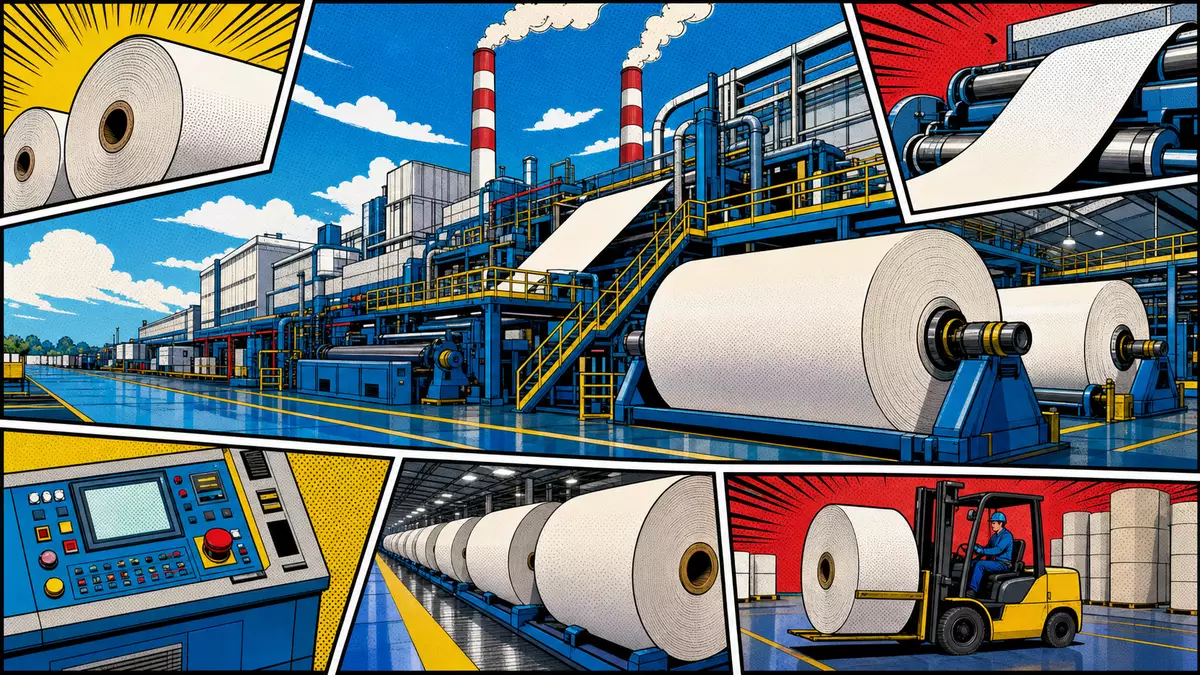
One representative product area for Valmet is its suite of pulp and paper process technologies, which encompass key equipment and systems used in the production of pulp, paper, board, and tissue. These technologies include elements such as pulp cooking and bleaching systems, paper machine sections, and auxiliary equipment designed to optimize the efficiency, quality, and environmental performance of the production process. The company complements these hardware solutions with advanced automation systems, enabling precise control of process variables and integration of data across the plant.
Valmet stock and investor perspective
Valmet stock is listed on the primary Finnish market, providing investors with exposure to a company that combines capital equipment, automation, and services in the pulp, paper, and energy industries. The stock's long-term performance is tied to the company's ability to grow revenue, maintain or expand margins, and allocate capital effectively, while navigating cyclical demand patterns and structural trends such as environmental regulation and digitalization. For many investors, the stability of service revenue and the visibility provided by order backlog are key components of the investment narrative, alongside the potential for technology-driven growth.
Valmet stock key data
- Company: Valmet Oyj
- ISIN: FI4000074984
- Ticker: HEL: VALMT
- Trading venue: Helsinki Stock Exchange
- Sector / Industry: Industrials / Machinery and industrial automation
- Index membership: OMX Helsinki
Disclaimer zu unseren Artikeln: Keine Anlageberatung, keine Kauf oder Verkaufsempfehlung. Angaben zu Kursen, Unternehmen und Märkten ohne Gewähr; Änderungen jederzeit möglich. Börsengeschäfte können zu hohen Verlusten führen. Unsere Beiträge werden ganz oder teilweise automatisiert mit Unterstützung von AI erstellt und geprüft.