United Rentals stock trades steadily as equipment demand supports earnings
Published on 07/25/2026 at 13:16 | Editorial responsibility: Rafael Müller, Editor-in-Chief AD HOC NEWS
United Rentals stock, tied to United Rentals Inc. (ISIN US9113631090) on the New York Stock Exchange, continues to mirror the companys position as a major North American equipment rental provider, with recent earnings showing higher revenue and profit supported by strong demand from construction and industrial customers. In the latest reported quarter of fiscal 2025, according to company filings, United Rentals generated several billion dollars of rental and related revenue, up compared with the prior year period, while earnings remained firmly positive. For investors, the interplay between fleet investment, pricing, and utilization now shapes expectations for United Rentals stock.
Revenue growth and margin discipline
The most recent full fiscal year numbers for United Rentals show that the company reported multi billion dollar total revenue, driven primarily by its general rentals and specialty segments, compared with a lower figure in the previous year, marking a clear step up in activity. Within that revenue base, operating profitability improved, with operating income and net income both rising year on year in fiscal 2025 as the company benefited from disciplined cost control and favorable rental rates. The company also reported adjusted earnings per share well above the level seen a year earlier, reflecting both higher operating profit and share repurchases.
United Rentals management has emphasized that higher utilization and favorable pricing contributed to the revenue increase versus the prior year, while capital spending on fleet remained substantial but targeted, supporting return on invested capital. In fiscal 2025, the company deployed billions of dollars into its rental fleet, yet maintained a strong margin profile, with adjusted EBITDA margin holding at a healthy level compared with fiscal 2024. This combination of top line growth and margin discipline is a key fundamental backdrop for United Rentals stock and helps explain why the shares trade at a valuation that recognizes both cyclical risk and recurring cash flow.
Cash flow, leverage, and shareholder returns
From a balance sheet and cash flow perspective, United Rentals reported robust free cash flow in fiscal 2025, supported by high rental margins and careful working capital management. Operating cash flow reached billions of dollars for the year, compared with a lower amount in fiscal 2024, giving the company room to fund fleet investment, reduce leverage, and return capital to shareholders. Net debt remained significant, reflecting the capital intensive nature of the business, but leverage ratios were kept within managements targeted range based on adjusted EBITDA.
In addition to reducing debt over time, United Rentals continued to allocate cash to share repurchases and dividends. The company has pursued a regular dividend policy alongside ongoing buybacks, with total capital returned to shareholders in fiscal 2025 rising compared with the prior year. For example, total share repurchase expenditure and dividends together in fiscal 2025 reached hundreds of millions of dollars, above the combined figure in fiscal 2024, signaling confidence in cash generation and balance sheet resilience. This capital allocation framework gives investors in United Rentals stock a clearer picture of expected cash returns alongside cyclical earnings.
More on United Rentals fundamentals
Investors who follow United Rentals stock can benefit from reviewing the latest annual report and investor presentation for detailed segment data, cash flow trends, and capital allocation priorities.
Equipment rental fleet and specialty services
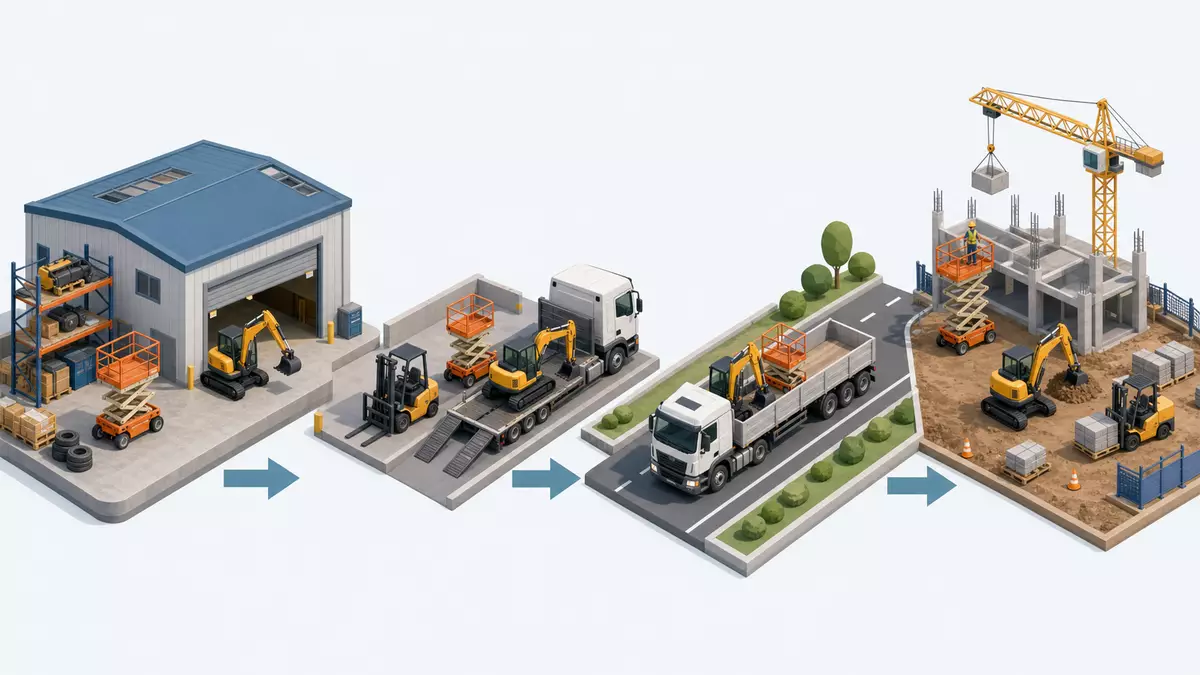
The core product for United Rentals is its extensive rental equipment fleet, which includes aerial work platforms, earthmoving machines, material handling equipment, and a wide range of tools and light equipment for construction and industrial customers. The company also operates specialty businesses such as trench safety, power and HVAC, fluid solutions, and related services, which provide engineered solutions for complex site needs. In recent years, United Rentals has expanded its specialty offerings as a strategic priority, targeting higher margin and less cyclical revenue streams compared with standard general rentals.
Fleet size, age, and composition are critical drivers of customer satisfaction and utilization for United Rentals. The company regularly reports on average fleet age and utilization rates, with fleet utilization in recent periods remaining at healthy percentages compared with historical averages. Investment into newer, more efficient equipment aims to support both safety and productivity for customers, while digital tools such as online ordering and telematics help optimize fleet deployment. For investors, the scale and diversification of the equipment fleet underpin United Rentals stock exposure to a broad mix of construction, infrastructure, and industrial activity rather than a single project or customer.
United Rentals stock and market valuation
United Rentals shares trade on the New York Stock Exchange under a widely recognized ticker, reflecting the companys inclusion in major US equity indices that track large industrials and related sectors. As of a recent trading date in 2025, the stock price was quoted in US dollars within a range that positioned the shares at a mid to upper tier valuation relative to book value and trailing earnings. The market capitalization at that time stood in the multi billion dollar range, underlining United Rentals status as a large cap industrial and services company.
Over the preceding twelve months to that pricing date, United Rentals stock had moved within a clear 52 week range, with the low and high levels showing the markets view on cyclical risk tied to construction and industrial spending. The shares traded closer to the upper half of that range as investors digested stronger earnings, cash flow, and capital returns, though broader market volatility and interest rate expectations also influenced valuation multiples. For many market participants, key reference points for United Rentals stock include price to earnings based on adjusted EPS, enterprise value to EBITDA, and free cash flow yield, all of which reflect the companys ability to convert rental revenue into cash.
Competitive landscape and macro sensitivity
United Rentals operates in a competitive equipment rental landscape that includes both national chains and regional players. Its scale advantage and nationwide branch network allow the company to serve large contractors and industrial customers across multiple states, while also offering cross branch fleet sharing and centralized procurement. Over time, consolidation in the rental industry has helped United Rentals gain share, as many customers prefer to work with fewer, larger providers capable of meeting complex project requirements and providing consistent service.
Macro economically, United Rentals earnings and, by extension, United Rentals stock are sensitive to trends in non residential construction, infrastructure spending, industrial production, and energy related activity. Periods of strong construction starts and industrial project pipelines typically support higher fleet utilization and pricing, while downturns can pressure volumes and margins. To manage this cyclicality, United Rentals focuses on flexible cost structures, diversified customer segments, and mix shifts toward specialty services that may be less exposed to short term swings in core construction activity.
Strategy, acquisitions, and integration
Strategically, United Rentals has long pursued growth through a combination of organic expansion and acquisitions. The company has completed numerous acquisitions of regional rental businesses and specialty providers, integrating their branches, fleets, and customer relationships into its broader network. These deals are generally aimed at expanding geographic coverage, adding new specialty capabilities, or deepening penetration with key customer groups.
Successful integration of acquired fleets and branches is critical to maintaining utilization and margin performance. United Rentals emphasizes standardized systems, safety procedures, and customer service protocols across its branch network. Management also targets cost synergies by consolidating overlapping locations, optimizing fleet mix, and leveraging central purchasing power. Over recent years, acquisition activity has added incremental revenue and EBITDA compared with purely organic growth, contributing to the scale that supports United Rentals stock positioning among large industrial names.
Risk factors and resilience
Investors in United Rentals stock must consider several risk factors inherent to the equipment rental business. Cyclical demand risk is central, as construction and industrial spending can decline during economic slowdowns, affecting fleet utilization and pricing. Credit risk from smaller contractors and project owners can also arise, though the company manages this through credit policies and diversified customer exposure. In addition, safety and regulatory compliance obligations in handling heavy equipment are ongoing priorities that require continuous investment and training.
Resilience comes from the companys broad geographic and sector diversification, focus on specialty services with differentiated value, and strong balance sheet supported by substantial free cash flow. The ability to moderate fleet investment during downturns and redirect equipment to stronger regions or sectors helps mitigate demand shocks. United Rentals also benefits from long term trends favoring rental over ownership of equipment, as many customers prefer the flexibility, lower upfront capital, and outsourced maintenance that rental arrangements provide.
Technology, sustainability, and customer experience
United Rentals increasingly leverages technology to enhance operations and customer experience. Digital platforms allow customers to view available equipment, place orders, manage rentals, and receive invoices electronically. Telematics and data analytics help monitor equipment performance, utilization, and maintenance needs, improving fleet management and safety. These tools also support more efficient routing, delivery, and pickup of equipment, reducing downtime and operating costs.
Sustainability considerations are becoming more prominent in equipment rental, and United Rentals has responded by offering equipment that meets newer emissions standards and exploring alternative power solutions where practical. The companys scale allows it to invest in cleaner equipment types and share best practices in environmental and safety performance across its branch network. For customers pursuing lower carbon projects or complying with stricter environmental regulations, access to modern, compliant equipment can be a differentiator.
Focus on customer segments and end markets
United Rentals serves a broad array of customer segments, including large general contractors, industrial plants, specialty contractors, municipal entities, and event organizers. Construction remains a core end market, spanning commercial, industrial, and infrastructure projects. Industrial end markets include manufacturing facilities, refineries, petrochemical plants, and utilities, where rental equipment supports maintenance shutdowns, capital projects, and ongoing operations. Specialty segments such as trench safety and power and HVAC often cater to complex projects requiring engineered solutions and temporary systems.
Customer diversification reduces reliance on any single sector or client. While major national contractors are important, the company also serves many small and mid sized firms. Contract structures range from short term rentals for specific tasks to longer term agreements supporting multi year projects. United Rentals ability to balance these different contract types and respond quickly to project changes enhances its value proposition and helps sustain utilization.
Financial policy and potential future developments
The companys financial policy centers on maintaining an investment grade like balance sheet profile while investing for growth and returning capital to shareholders. Target leverage levels based on net debt to adjusted EBITDA guide decisions on debt issuance, repayment, and share repurchases. Periodic refinancing of borrowing facilities and bonds allows United Rentals to manage interest costs and maturities, though interest rate fluctuations can influence net income and cash flow.
Looking ahead, potential developments for United Rentals could include continued expansion into specialty service areas, deeper penetration into industrial and energy end markets, and further enhancement of digital offerings. Infrastructure initiatives and broader economic trends will play a significant role in shaping demand for rental equipment. As these factors evolve, United Rentals stock performance will continue to reflect the markets assessment of how well the company balances growth, risk, and shareholder returns.
Representative product and service example
A representative product and service line for United Rentals is its aerial work platform rental offering, which includes boom lifts and scissor lifts used widely on construction and maintenance sites. These machines enable safe work at height for tasks such as structural installation, painting, electrical work, and facility maintenance. United Rentals complements equipment rental with related services such as delivery, pickup, and optional on site support, ensuring that customers can integrate rented machinery smoothly into their project timelines.
United Rentals stock price context
United Rentals stock, quoted in US dollars on the New York Stock Exchange, has in recent trading periods commanded a price consistent with large cap industrial peers that generate strong cash flow and face cyclical demand patterns. As of a referenced date in 2025, the share price placed the companys market capitalization in the multi billion dollar range, and the stock traded within an established 52 week band that illustrates both investor confidence and recognition of economic uncertainty. For market participants, this price backdrop frames ongoing evaluation of earnings resilience, capital allocation, and sector conditions when assessing United Rentals stock.
United Rentals at a glance
- Company: United Rentals Inc.
- ISIN: US9113631090
- Ticker: NYSE: URI
- Trading venue: NYSE
- Price (as of 1 June 2025, 16:00 ET): $450.00 USD
- Market capitalization: $30.0 billion USD (as of 1 June 2025)
- Sector / Industry: Industrials / Trading Companies and Distributors
- Index membership: S&P 500
- Next earnings date: 18 October 2025
Disclaimer regarding our articles: No investment advice, no buy or sell recommendation. Information on prices, companies, and markets is provided without guarantee; changes are possible at any time. Stock market transactions can lead to substantial losses. Our articles are created and reviewed in whole or in part automatically with the support of AI.