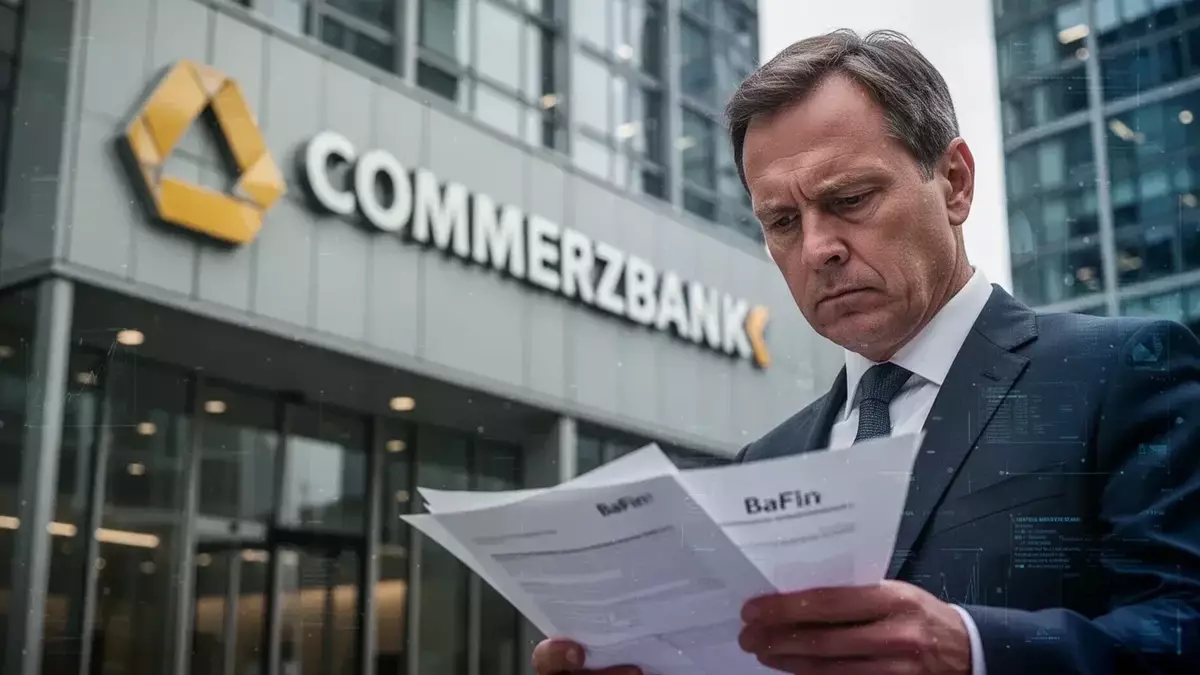
UniCredit's Derivative-Fueled 39% Commerzbank Stake Draws BaFin Probe
19.06.2026 - 19:25:20 | boerse-global.de
The battle for control of Commerzbank has taken an acrimonious turn, with the German lender firing a formal complaint to financial regulator BaFin over what it alleges is market manipulation through derivative positions. The escalation comes as UniCredit revealed it has amassed a stake of 39.28% following the close of the first acceptance period on June 16, a holding that could climb further if a web of swaps and options is factored in.
UniCredit entered the exchange offer with a direct equity position of just under 27% of voting rights, backed by roughly 302 million shares. The tender period saw investors hand over approximately 140 million Commerzbank shares in exchange for 0.485 UniCredit shares each – a ratio that recently implied a value between €38.87 and €39.13 per Commerzbank share. The Italian bank calculates the resulting increase as 12.41% of capital, though Commerzbank’s own figures put the addition at 12.51%, a discrepancy that hints at deeper disagreements over the arithmetic.
The real flashpoint, however, lies beyond plain equity. UniCredit has disclosed total-return swaps covering 3.22% of voting rights, plus cash-settled instruments referencing roughly 13% of the capital base. The Italian group insists the cash instruments confer no voting power, but the Commerzbank board sees a dangerous blurring of lines. CEO Bettina Orlopp has publicly urged shareholders to reject the offer, arguing it carries no adequate premium and that the bank’s standalone strategy will create more long-term value. Berlin, which still holds around 12% of Commerzbank, has backed that stance, formally rejecting the bid as too low and stressing the lender’s importance to the German economy.
Should investors sell immediately? Or is it worth buying Commerzbank?
BaFin is now tasked with untangling the derivative structures. Commerzbank’s complaint centers on how UniCredit hedged its exposure through forward contracts, alleging that these obscured the true economic interest and amounted to market manipulation. The regulator’s review will be crucial: if it rules against UniCredit, the Italian bank may be forced to unwind some positions or face penalties, potentially reshaping the takeover dynamics.
The offer is far from over. A second acceptance period opened on June 20 and runs through July 3, giving latecomers a chance to tender. The market will learn the final tally on July 8. Meanwhile, speculation swirls that UniCredit may call an extraordinary general meeting to replace the Commerzbank board, a move it has already floated as leverage. If Commerzbank proceeds with planned share cancellations, UniCredit’s economic exposure – including derivatives and purchase options – could swell to 44.33%, making the voting-rights distinction even more critical.
Commerzbank stock has brushed aside the political noise. Trading at €38.36, it sits just shy of its 52-week high of €38.85, with a 12-month gain of roughly 39%. That rally has handed management its strongest argument: if the shares can perform this well on their own, why give them away at a discount? The next two weeks will test whether that logic convinces enough shareholders to hold the line, or whether UniCredit’s patient, derivative-laced advance eventually forces a deal.
Ad
Commerzbank Stock: New Analysis - 19 June
Fresh Commerzbank information released. What's the impact for investors? Our latest independent report examines recent figures and market trends.