U2 2026 Tour Buzz: Are We Getting One More Epic Run?
08.03.2026 - 16:19:01 | ad-hoc-news.de
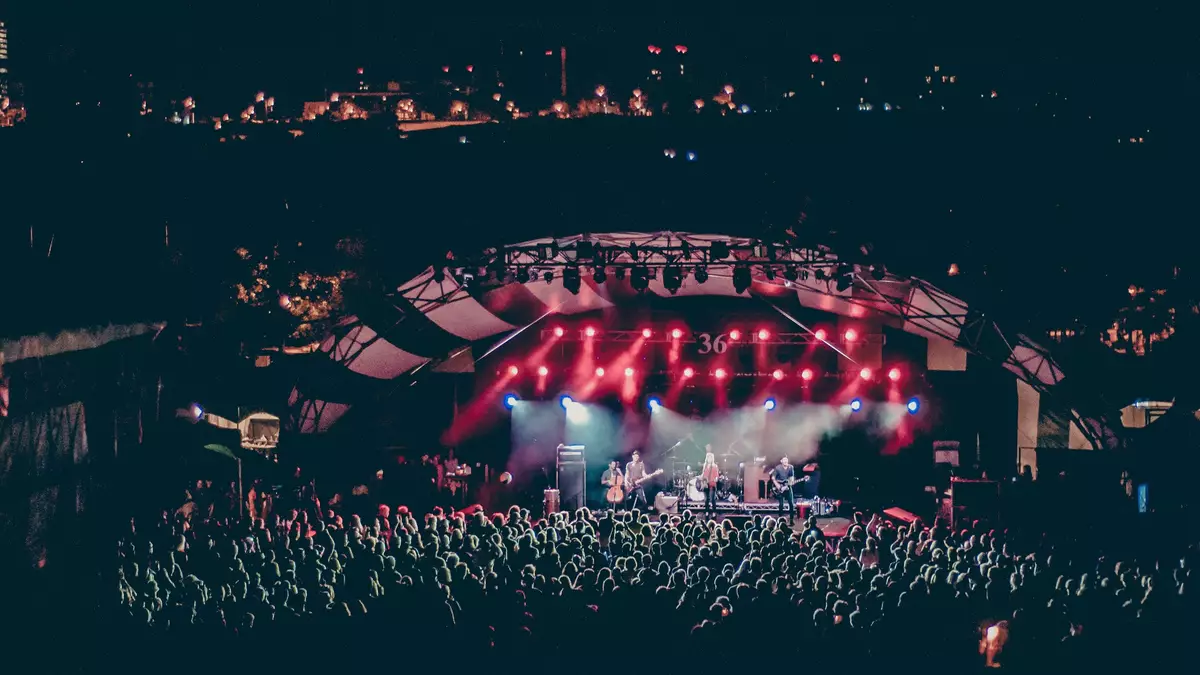
If you feel like U2 are suddenly everywhere again, you're not alone. Hints in interviews, mysterious website updates, and hardcore fans dissecting every move have turned 2026 into full-on U2 watch season. Whether you saw them in arenas in the 2000s, at a stadium last decade, or you're Gen Z discovering them through TikTok edits of With or Without You, the question is the same: are U2 about to launch another mega tour?
Check the latest official U2 tour updates here
Fans are screenshotting every small change on that page, parsing interviews for clues, and trading venue wishlists like fantasy league spreadsheets. There's a real feeling of now or never around the band at this point: one of the last truly huge rock acts that can still sell out stadiums across the US, UK, and Europe while pulling in younger crowds who never got to feel the full U2 live experience.
The buzz isn't just nostalgia. It's about whether U2 can still surprise you in 2026 – with a new tour concept, a refreshed setlist, maybe even fresh music tied in. And if you've watched them at any point over the past four decades, you know: when the lights go down and City of Blinding Lights or Where the Streets Have No Name kicks in, that question usually gets answered fast.
The Backstory: Breaking News in Detail
So what is actually happening right now? Officially, U2 have stayed vague in classic big-band fashion: a few teasing lines about "staying tuned" for tour news, mentions of "unfinished business" in interviews, and a heavy emphasis on how much they enjoyed getting back on stage in the mid-2020s, especially after their highly publicized run of cutting-edge shows in high-tech venues.
Across recent music press chats, Bono has kept circling the same themes: the band still has "something to prove" live, they're obsessed with how their classic songs connect with younger fans, and they don't see themselves as a legacy act just replaying the hits. In one conversation with a major music magazine, he hinted that the band had been sketching ideas for a new kind of show that would "reframe our story" without being a straightforward greatest-hits tour. Edge, as usual, came in with the more technical angle, talking about new guitar textures and updated arrangements for older songs.
Behind the scenes, what has fans really locked in is the digital breadcrumb trail. Touring pages on fan sites and the band's official channels have quietly updated wording, swapped banners, and triggered automated alerts on fan-run trackers that scrape tour sites for changes. Reddit threads are full of users sharing code-level changes and metadata tweaks, interpreting them like cryptic runes. Several reliable U2 tour bloggers have pointed out that booking windows for major US and European stadiums in late 2026 are unusually tight, often a sign that a big act has reserved soft holds while details get finalized.
On the business side, U2 remain one of the few rock bands that can talk directly to major promoters and ask for a multi-continent, high-production run and actually get it. That matters in 2026, when touring costs are up, production is more complex than ever, and ticket pricing is under a microscope. Industry insiders quoted in trade publications have hinted that "a major veteran live act" is circling a global run with a heavy US/UK focus. No one will go on record, but the description fits U2 better than almost anyone.
For fans, the implications are huge. A fresh tour right now likely means:
- Hybrid crowds: Millennials and Gen X turning up with kids or younger siblings who discovered U2 through streaming playlists and series soundtracks.
- Setlist shifts: More attention to deep cuts and fan-favorite album tracks alongside the anthems, because U2 know their hardcore base has aged into the expensive seats.
- Ticket drama: A return of the stressful presale scrambles, waiting-room queues, and resale chaos that always follows a band at this scale.
- Live experiments: Visual production that leans into new tech while still keeping the old-school “four guys on a stage” core that fans get protective about.
Nothing is fully locked until the band and promoters hit "announce", but all the signals point in one direction: 2026 is shaping up as the year U2 either stage one more enormous lap around the world – or risk leaving that chapter unwritten.
The Setlist & Show: What to Expect
If you're trying to guess what a 2026 U2 show might look and feel like, the smartest move is to track how they've been building their sets over the last few touring cycles. U2 have always used the live stage as a narrative device. Every tour has a thesis, and every setlist is edited like a film.
There are a few songs you can almost bet on. It's incredibly rare for U2 to hit a major city without rolling out:
- Where the Streets Have No Name – traditionally the moment the whole stadium turns into a single moving organism.
- With or Without You – the slow-burn singalong that even casual fans know word for word.
- Beautiful Day – a late-career classic that still feels like walking into bright sunlight.
- Sunday Bloody Sunday – often reworked acoustically or with alternate lyrics to fit the moment.
- One – the emotional core of nearly every tour, a song that can shift from intimate to anthemic depending on the arrangement.
Recent tours have shown U2 playing with structure in clever ways. One run might open on stripped-back versions of older tracks, like I Will Follow or Gloria, reminding everyone they started as a scrappy post-punk band. Another leg leans deeper into cinematic, widescreen songs like City of Blinding Lights or Magnificent, paired with high-res visuals and narrative interludes.
Expect at least one dedicated section of the show that focuses on a specific era or album. Hardcore fans have been loudly lobbying online for a lean into the early '90s experimental period – think The Fly, Mysterious Ways, Until the End of the World, Even Better Than the Real Thing. TikTok edits of that leather-jacket, fly-shades Bono era have been trending, especially among younger rock fans rediscovering the band through algorithm-driven playlists.
Another strong possibility: a rotating slot for deep cuts and regional favorites. On previous tours, U2 have swapped in songs like Bad, Acrobat, Stuck in a Moment You Can't Get Out Of, or All I Want Is You depending on city, mood, and fan energy. European nights sometimes favor politically charged tracks like Miss Sarajevo or Walk On, while US shows lean into heartland-leaning songs from The Joshua Tree and Rattle and Hum.
Production-wise, a 2026 show will likely blend two things U2 do better than almost anyone:
- High-concept visuals: massive LED walls, immersive lighting, and narrative sequences that link songs into chapters.
- Intimate staging: small B-stages or catwalk moments where the band can strip everything back to just guitar, voice, and crowd noise.
Fans online are already sharing fantasy setlists that look something like this:
- Open with: Elevation / Vertigo / Beautiful Day to hit the energy button early.
- Middle arc: New Year's Day, Pride (In the Name of Love), Bad, One, tying older songs to current events on screen.
- Deep-cut segment: rotating between Acrobat, Ultraviolet (Light My Way), Out of Control, Electrical Storm, or Who's Gonna Ride Your Wild Horses.
- Final run: Where the Streets Have No Name, With or Without You, City of Blinding Lights, plus one final surprise closer.
Atmosphere-wise, expect a genuinely mixed crowd. You'll have people who saw U2 on The Joshua Tree tours standing next to 20-somethings who first heard Ordinary Love on a movie soundtrack or discovered Hold Me, Thrill Me, Kiss Me, Kill Me via superhero edits on YouTube. The energy at a U2 show has always been more communal than cool: strangers shout-sing choruses together, phones go up, arms go around shoulders. If you're someone who hates that, you'll suffer; if you secretly love shared catharsis, you'll be fine.
What the web is saying:
Rumor Mill: What Fans Are Speculating
If you scroll through r/music, r/U2, or pop-leaning subs like r/popheads, you'll see the same themes play out in different fonts: When are they announcing? How much will tickets cost? Are they going to play my city or just the "usual" major markets?
One recurring Reddit theory is that U2 are plotting a "career-in-three-acts" type show: early post-punk beginnings, '80s anthem era, and the more experimental '90s/2000s chapter. Fans point to the way the band have been talking in interviews about "chapters" and "eras," plus the surge of nostalgia content around The Joshua Tree and Achtung Baby anniversaries. That format would also play nicely into the era-driven culture that TikTok and streaming have created, where younger fans often discover bands by specific eras rather than full chronological albums.
On TikTok, U2 clips keep resurfacing in unexpected contexts:
- Live snippets of Bad soundtracking emotionally heavy edits and coming-of-age montages.
- With or Without You covers blowing up in singer-songwriter circles.
- Old-school Bono stage banter memes, both earnest and lovingly cringe.
This has fed another common fan theory: that U2 will lean harder into social-ready segments in the show – long crowd-singing outros, visual moments designed to look good in vertical video, and arrangements that let a bridge or outro go viral the next morning.
The other, less fun side of the rumor mill is ticket pricing. Ever since the wider controversy around dynamic pricing and platinum tiers hit stadium tours, rock and pop fans have been wary. U2, as a top-tier touring act, sit right in the center of that stress. Fans are begging for:
- Fair floor pricing and at least some "real fan" presale options tied to fan club memberships or verified signups.
- Transparent fees, so people know what they're actually paying before they hit the final checkout screen.
- Reasonable upper-level options so new, younger fans can actually afford to be in the building.
Reddit threads are full of people swapping strategies: using VPNs to access different country presales, signing up to every email list in sight, and setting up group chats to coordinate buying windows. There's also a cottage industry of "U2 ticket whisperers" – fans who have done this for multiple tours and offer detailed guides on which sections are worth it, which aren't, and when to avoid reseller traps.
Another hot topic: new music. A portion of the fandom is convinced that any proper 2026 tour will be tied to at least a batch of fresh songs, even if not a full studio album. Clues fans cite include casual mentions of "writing sessions" and "finishing off a few things" in interviews, plus the band's historical pattern of using big tours to launch or stress-test new tracks. Speculation threads often namecheck hypothetical titles, imagine where in the setlist new songs might drop, and debate whether U2 should lean more rock, more electronic, or lean into stripped-back, reflective songwriting.
Underneath all the jokes, memes, and worry about prices, the vibe is simple: fans don't feel done. They want one more chapter, one more night in a packed stadium shouting the "It's a beautiful day" line with actual strangers, one more chance to see if U2 can still flip the switch from "band you stream sometimes" to "band that owns your whole night."
Key Dates & Facts at a Glance
Here's a quick-reference rundown to keep your U2 brain organized while you wait for official announcements:
- Band Origin: Formed in Dublin, Ireland in 1976 by Bono (Paul Hewson), The Edge (David Evans), Adam Clayton, and Larry Mullen Jr.
- Breakthrough Era: Early 1980s, with albums like War and the hit singles Sunday Bloody Sunday and New Year's Day.
- Global Icon Status: Cemented in 1987 with the release of The Joshua Tree, featuring Where the Streets Have No Name, I Still Haven't Found What I'm Looking For, and With or Without You.
- Experimental Shift: Early '90s, with Achtung Baby, Zooropa, and the era of The Fly, Mysterious Ways, and massive multimedia touring concepts.
- Key Live Reputation: Known for era-defining tours like Zoo TV, PopMart, Vertigo, 360°, and more recent technologically advanced residencies and arena shows.
- Typical Tour Focus Regions: Heavy runs through the United States (New York, Los Angeles, Chicago, Boston, Atlanta, Seattle, Dallas), the UK (London, Manchester, Glasgow), Ireland (Dublin), and major European cities (Berlin, Paris, Amsterdam, Rome, Madrid).
- Fan Ticket Tips: Watch for official presale codes via the band's site and mailing list, plus local venue and promoter pre-registrations.
- Streaming Staples: On platforms like Spotify and Apple Music, U2's most streamed songs remain With or Without You, One, Beautiful Day, Where the Streets Have No Name, and I Still Haven't Found What I'm Looking For.
- Live Show Length: U2 sets typically run around two hours, often a bit longer when the band are feeling loose and talkative.
- Setlist Variation: Core hits nearly always present; a rotating pool of 5–8 songs swap in and out between cities.
- Official Tour Info: The band directs fans to their dedicated tour page for the latest updates, presale details, and city/venue info.
FAQ: Everything You Need to Know About U2
Who are U2, and why do people still care in 2026?
U2 are a four-piece rock band from Dublin who turned scrappy teenage rehearsals into a multi-decade run at the top of the live music world. Unlike some classic rock acts built on one era, U2 have multiple iconic phases: the earnest political rock of the early '80s, the widescreen Americana of The Joshua Tree, the sarcastic, fragmented '90s experiments, and the 2000s return to anthemic, stadium-ready songs. People still care because the songs stuck, the live shows rarely feel lazy, and they've continually tried to update their sound and staging instead of just replaying their greatest hits exactly as they were.
What is U2 like live for someone who's never seen them?
If your frame of reference is modern pop or hip-hop shows that rely on dancers, tracks, and tight choreography, a U2 concert hits differently. It's four musicians very visibly playing – sometimes messy, often emotional, with real-time interaction between band and crowd. Bono talks a lot; The Edge pulls tones out of his guitar that sound like full synth pads; Adam and Larry hold the center down in a way you feel in your chest. The big moments are huge – confetti, lights, immersive visuals – but U2 shows always keep room for quiet: a stripped-back Stay (Faraway, So Close!) or an acoustic Desire that feels like the band squeezed a club into the middle of a stadium.
Where will U2 most likely tour next – US, UK, or Europe?
Historically, U2 have built tours around three pillars: the US, the UK/Ireland, and mainland Europe. The US often gets the longest run, hitting coastal cities and central hubs. The UK is usually anchored by multiple London nights plus one or two other major cities. Dublin is the emotional home fixture. Europe tends to include major capitals and a few wildcard stops where fan communities are vocal. If and when they fully announce a 2026 run, expect a first wave of US and Western European dates, with additional cities and possibly South American or Asian legs added later if demand and logistics line up.
When do U2 tickets usually go on sale, and how do you actually get them?
U2's sales pattern typically runs in layers. First, there's a fan-club or official mailing list presale: you register early, receive a unique code, and get a shot at tickets before the general public. Then, promoter presales (Live Nation, local partners) and credit-card-tied presales sometimes roll out. Finally, general sale opens, usually leading to the familiar "in queue" screens, spinning wheels, and tense group chats. Getting tickets in 2026 will likely mean:
- Signing up early on the band's official channels.
- Being flexible about dates and sections – sometimes a second night appears later.
- Deciding in advance what you're willing to spend so you don't panic buy bad seats.
- Avoiding secondary resale until you're sure more official inventory isn't coming.
What songs does U2 "have" to play, and what could they surprise us with?
There's an unwritten contract. Most crowds expect Beautiful Day, With or Without You, Where the Streets Have No Name, One, and usually Pride (In the Name of Love). If U2 dropped all of those in a single night, you'd hear about it for weeks. But the real magic for longtime fans sits in the surprises: an unannounced Bad stretching into a 10-minute emotional jam, the return of deep cuts like Acrobat or Who's Gonna Ride Your Wild Horses, or left-field choices like Zooropa or The Unforgettable Fire. As the fanbase has aged with the band, U2 have gradually allowed more of those album tracks into the spotlight.
Why do some people love U2 and others roll their eyes?
Part of U2's longevity is also what makes them divisive. Bono's onstage speeches and offstage activism can feel deeply meaningful to some fans and over-earnest to others. The band unabashedly aim for big feelings, big statements, big production – no irony shield, no "we're too cool to care" posturing. If you're allergic to sincerity, it can be a lot. But if you like the idea of a band trying to turn a stadium into something that feels like a community meeting, a church, and a rock show all at once, U2 live hits that nerve like few others.
What should a first-time U2 concertgoer know before going?
First: pace yourself. U2 shows often start with a bang but leave some of the biggest emotional punches for the final third, when everyone is sweaty, hoarse, and fully bought in. Wear shoes you can stand in for two hours. Don't expect the band to sound like a perfect studio playback – some songs are rougher live, some choruses get handed fully to the crowd. Learn the core lyrics to the big songs; you'll enjoy it more if you can lose your voice with thousands of other people on the "It's a beautiful day" and "We're one, but we're not the same" lines. And if you're going with older or younger fans, be ready for generational whiplash as different eras of the catalog hit different people around you in completely different ways.
Are U2 finished after this next tour, or is there more coming?
No band at this stage of their career can promise endless future cycles, but if you read between the lines, U2 talk less like a group planning a farewell and more like a band trying to figure out how many more meaningful chapters they can squeeze in. They've hinted that they don't want to repeat themselves or stay on the road just out of habit. That's exactly why 2026 feels loaded: any major tour will be read as "one more big statement" – not necessarily the last, but not just another lap, either. If you've always said "I'll catch them next time," this might be the year to stop gambling on "next."