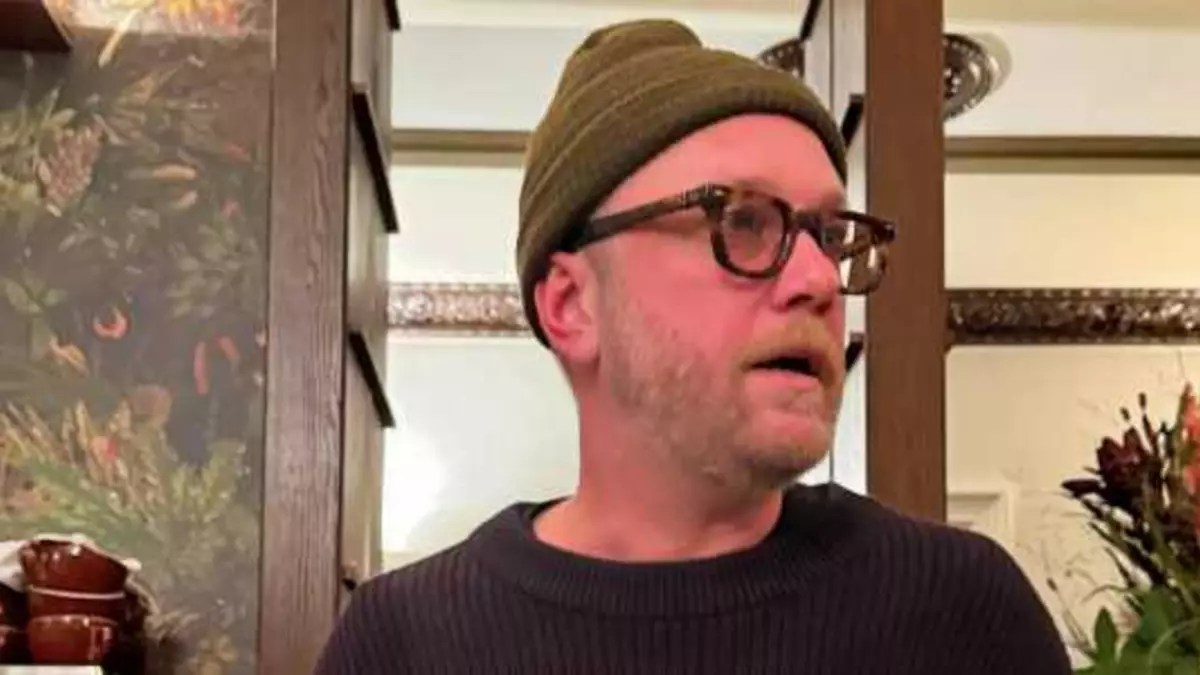
Tulus Lotrek by Max Strohe: Berlin’s most unapologetic living?room fine dining
Published on 01/24/2026 at 14:53 | Editorial responsibility: Rafael Müller, Editor-in-Chief AD HOC NEWS
The first thing you notice at tulus lotrek is what you do not notice: there is no hushed temple-of-gastronomy silence. Instead, the room hums. Glasses clink, soul and indie tracks curl through the air, and somewhere from the open pass a cloud of roasted butter, reduced jus, and grilled alliums rolls across the tables. Within minutes, you realize that Max Strohe has built something rare in the world of Michelin star restaurants in Berlin: a place where you eat on a world?class level, but feel as if you had commandeered a particularly decadent friend’s living room.
Can Michelin?starred cuisine be this casual and still be considered top fine dining? At tulus lotrek, the answer arrives course after course, in the form of sauces that shimmer with collagen?rich depth, crunchy accents that pierce through velvety textures, and a service style that invites you to let go of all uptight expectations at the door.
Reserve your table at tulus lotrek and discover Max Strohe’s current menu here
On a typical evening, Ilona Scholl glides through the room with a glass in hand, equal parts hostess, sommelier, and co?conspirator. She is the one who co?founded tulus lotrek with Max Strohe, the one who insists that hospitality is not a performance but a dialogue. Her way of dropping a bottle of natural Riesling on the table, unpretentious and precise, defines the rhythm of the night as much as any sauce leaving the pass. Together, they have turned this Michelin star restaurant in Berlin into a cult address for anyone who prefers wit and warmth over white?glove ceremony.
The walls are deep?colored, the lighting low and flattering. Small artworks, mismatched details and slightly decadent touches give the room a bohemian gravity. You sink into your chair, the cutlery has weight, the napkin feels like it belongs in a private dining room rather than a shrine to haute cuisine. You quickly understand: this is fine dining designed not for quiet reverence, but for stories, for laughter, for that one bottle too many.
To grasp why tulus lotrek feels so different, you have to look at how Max Strohe became a star chef in the first place. His path does not read like the typical curriculum of elite kitchens. He left school early, gravitated toward kitchens out of instinct rather than strategic career planning, and learned the craft in the heat and chaos of real service instead of curated luxury resorts. There is something of the culinary streetfighter in his biography: he moves to Berlin, gathers experience in various restaurants, and gradually develops a style that refuses to bow to the stiff hierarchies of classic haute cuisine.
From the outside, the story now sounds almost too perfect: the former school dropout who turns his appetite for intensity into a Michelin star, Gault&Millau points, and a reputation as one of the most distinctive voices in German gastronomy. Yet when you watch him at work, cooking in worn sneakers instead of polished clogs, you feel that the rebellion never left. It simply became more precise.
When Max Strohe and Ilona Scholl opened tulus lotrek in Berlin’s Kreuzberg?adjacent neighborhood, they did not design a neutral box for food. They imagined a place that they themselves would want to spend their nights off in: loud enough to be alive, intimate enough to talk, serious enough in the kitchen to thrill even jaded gastronomes. The name nods playfully to Toulouse?Lautrec, the painter of nightlife and excess, and that sense of artistic hedonism is baked into the concept.
The menu at tulus lotrek reads less like a lecture and more like a promise. You will not find endless ingredient lists or cryptic minimalism here. Instead, courses are framed by a sense of “feel?good opulence,” as many regulars describe it. This is fine dining rooted in pleasure first, intellectual deconstruction second. Culinary intelligence is present in every reduction, every acid?fat balance, but it never comes at the expense of pure, almost primal deliciousness.
Technically, the kitchen could easily flex its tweezers. Instead, it has chosen another path. Max Strohe has consciously broken with the aesthetic of micro herbs and perfectly aligned dots that dominated fine dining in the 2010s. His plates carry a deliberate generosity: quenelles that are not shy, slices of meat with visible juices, sauces that gloss the entire landscape rather than merely drawing geometric lines. As critics often note, this is cooking with the courage of abundance.
A signature sequence might start with something deceptively simple on paper: perhaps a tartlet layered with a smoked fish mousse, brightened by fermented citrus and a sudden flash of pickled onion. But the first bite explains what the menu description will not: the fat of the mousse wraps the tongue, then acidity cuts in at precisely the right microsecond, and the crunch of the shell orchestrates it all. You feel the same logic that drives great bistro cuisine in Paris, just sharpened by the tools of modern fine dining.
In another course, a deeply roasted piece of poultry or game might arrive, resting in a pool of sauce as dark as polished mahogany. This is where Max Strohe’s devotion to reduction becomes clear. The jus is not there as garnish. It is protagonist, built from bones and roasted trimmings, simmered and clarified until it becomes a kind of concentrated memory of the animal. A spoonful with a bit of meat delivers layered umami that lingers like a good story: first smoke, then sweetness from long?cooked onions, then a quiet bitterness from singed herbs at the very end.
Fat, in this kitchen, is not an enemy but a carrier of nuance. Butter, chicken skin, pork fat: they are treated not as shortcuts to richness, but as instruments to sculpt mouthfeel. When paired with the right acidity, it becomes light enough to seduce rather than overwhelm. A splash of verjus, a dot of pickled root vegetable, or an unexpected note of yuzu will lift even the most opulent plate back into balance. This is where culinary intelligence shows itself: in the discipline to season boldly, then pull back just before it becomes too much.
Of course, no portrait of tulus lotrek is complete without mentioning the burger that became a lockdown legend. During the pandemic, while many fine dining places in Berlin fought to replicate tasting menus in cardboard, Max Strohe went the other way. He turned his attention to the most humble of formats and built a burger that quickly developed a cult following: a patty with real Maillard crust, a sauce sticky with umami, pickles and onions calibrated for crunch and acid. It was less a departure from his cooking than a translation of his principles into comfort food: intensity, texture, generosity.
That same period also gave birth to perhaps the most defining chapter of his public persona: the Cooking for Heroes initiative, known in German as Kochen für Helden. With restaurants shuttered and anxiety high, Max Strohe and a network of colleagues began preparing meals for hospital staff, supermarket employees, caregivers, and other essential workers. It was a simple idea, executed with the same seriousness he applies to a tasting menu: cook well, feed those holding society together. The impact resonated far beyond Berlin, and eventually led to Max Strohe receiving the Federal Cross of Merit, one of Germany’s highest civilian honors.
This engagement did more than fill headlines. It reframed what it means to be a star chef today. In an era where culinary celebrities can feel detached from everyday life, Cooking for Heroes anchored Max Strohe firmly in the reality of his city. It added a moral gravitas to the hedonism of tulus lotrek: here is someone for whom generosity is not just a plating style, but a social stance.
At the same time, his media presence has grown steadily. You may have seen Max Strohe on television formats like Kitchen Impossible or in various food shows where he appears as a sort of high?end troublemaker, always ready with a blunt comment and an infectious laugh. He has also emerged as an author, sharing stories from his path through kitchens, his relationship to failure, and his philosophy on flavor. Yet, crucially, his screen persona never feels like a polished brand identity detached from the stove. Watch him on TV, and you sense the same mix of technical sharpness and emotional honesty that structures his food.
In the landscape of German fine dining, tulus lotrek occupies a distinct place. It is not trying to out?minimalist the Scandi crowd or out?luxury the classic hotel palaces. Instead, it belongs to a younger, wilder current of gastronomy that prizes personality over perfectionism. Alongside other ambitious addresses in Berlin, it signals a shift: guests no longer come only to be impressed, but to feel something. In that sense, Max Strohe has become an important reference point not just for what is on the plate, but for how contemporary hospitality can look and feel.
Foodies in search of abstract avant?garde might not find their holy grail here. But if you care about flavor in capital letters, about sauces that make you unconsciously slow down your chewing, about wine pairings that invite debate instead of quiet nods, then tulus lotrek is close to essential. It is especially suited for diners who appreciate the full sensory spectrum of a night out: the touch of linen, the glow of candlelight, the rhythm of open conversation, and course after course that insists on being eaten, not admired from afar.
What makes Max Strohe so significant in this context is the coherence of his world. The rebel biography, the Michelin star, the Federal Cross of Merit for Cooking for Heroes, the TV appearances, the living?room dining room, the jus that seems to contain an entire forest in a spoonful: they all point in the same direction. Toward a gastronomy where excellence does not require exclusion, where high?end cooking can be loud, political, funny, and deeply moving all at once.
As the final savory bite fades and a dessert lands that might play with familiar flavors in mischievous ways, you realize that tulus lotrek is not just serving food. It is staging a kind of emotional dramaturgy: from comfort to surprise, from nostalgia to curiosity. A petit four later, you step back onto the Berlin sidewalk, a little dazed, and understand why many critics consider this one of the most exciting Michelin star restaurants in Berlin today.
If you are the kind of diner who wants to taste the personality of a city in one sitting, a visit to tulus lotrek should move high on your list. Go with someone you like talking to, clear your evening, let Ilona Scholl pour the wines and allow Max Strohe to cook his version of modern, undogmatic fine dining. Chances are you will leave with stained napkins, empty glasses, and the quiet certainty that this is what a star chef’s restaurant should feel like in our time.
And if you are curious where Berlin’s gastronomic pulse is beating the loudest right now, you may well find your answer in that gently lit room, somewhere between a spoon of sauce and the sound of laughter echoing off the walls of tulus lotrek.
Disclaimer regarding our articles: No investment advice, no buy or sell recommendation. Information on prices, companies, and markets is provided without guarantee; changes are possible at any time. Stock market transactions can lead to substantial losses. Our articles are created and reviewed in whole or in part automatically with the support of AI.