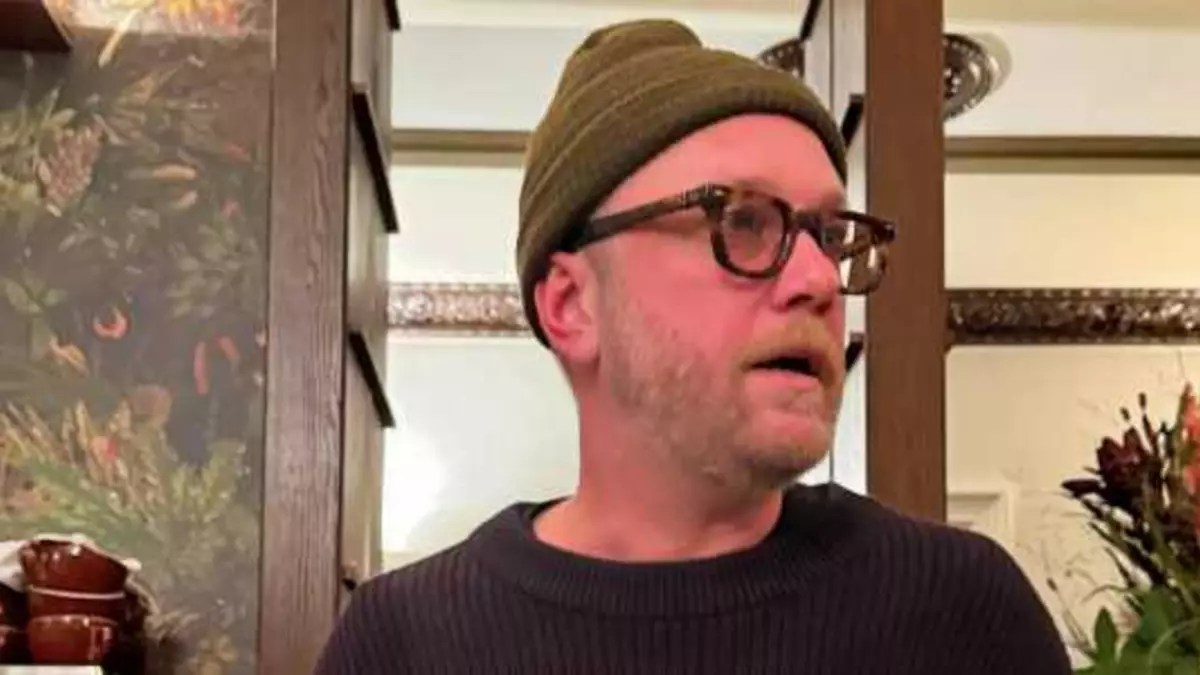
Tulus Lotrek by Max Strohe: Berlin’s most relaxed michelin star restaurant of pure flavor
Published on 01/07/2026 at 14:53 | Editorial responsibility: Rafael Müller, Editor-in-Chief AD HOC NEWS
The first thing you notice at tulus lotrek is what you do not hear. No hushed, reverent murmurs. No clinking of cutlery choreographed like in a grand hotel. Instead, there is laughter, a low murmur of conversation, the soft thump of bottles being opened. Within seconds, you realize: yes, this is a michelin star restaurant in Berlin, but it feels like dropping into a very good friend’s home. And at the center of it all stands Max Strohe, orchestrating an evening that is less ceremony and more joy.
Reserve your table at tulus lotrek and discover Max Strohe’s current menu here
The room itself sets the tone. Dark, warm colors, lamps that cast a flattering glow, a touch of bohemian Berlin. You sink into your chair rather than perching on it; napkins land with a casual flick, not a solemn fold. This is fine dining without the starch. In the open kitchen, Max Strohe and his team work with focused calm, sending out plates that are unapologetically rich, full of umami, built around sauces that cling to the memory long after the last sip of wine. It smells of roasting bones, slowly reducing jus, caramelized onions, butter and smoke.
There is a question that hovers over the first glass of wine: can a michelin starred kitchen be this relaxed, this almost anarchic, and still count among Germany’s culinary elite? At tulus lotrek, the answer arrives course after course: absolutely.
Max Strohe made his name in Berlin by turning his back on the sterile perfection of tweezer cuisine. Where others stack radishes on the tip of a single chive, he builds sauces with a depth that feels almost old-world. He works with acidity the way a DJ works a crowd, dialing it up to lift fat and sweetness, pulling it back to let a product’s own character speak. Plates here do not strive for Nordic minimalism; they revel in feel-good opulence, in flavor that coats the palate and pulls you back for another bite.
To understand how this style emerged, you have to look at the life of Max Strohe. He did not glide through hotel school and classic brigades. The story, as Berlin food lovers know it, starts far more chaotically: school dropout, detours, the sense that a conventional path simply did not fit. Gastronomy became the place where his restlessness could be turned into energy, where long hours and hard work were not a punishment but a ticket into another world.
Training in ambitious kitchens gave Max Strohe the technical backbone he needed, but it never filed down his edges. When he eventually moved to Berlin, it was not to disappear into the machinery of big-name hotels, but to carve out his own corner of the city’s culinary landscape. Together with Ilona Scholl, the charismatic hostess and co-founder of tulus lotrek, he opened a restaurant that feels like a lived-in salon rather than a stage. Their partnership is essential to the house’s spirit: he builds the plates, she reads the room, setting the tone for an evening that blends high craft with low threshold.
Ilona Scholl’s service is a decisive part of why tulus lotrek ranks among the most beloved addresses of the Berlin fine dining scene. She glides from table to table with a mix of mischievous humor and precise professionalism, explaining a complex wine pairing in language anyone can understand, calling regulars by name, making first-timers feel like they have somehow been coming here for years. In a city dense with star chef temples, this living-room hospitality is a sharp differentiator.
The cuisine itself is a manifesto. In many michelin star restaurant kitchens, you can feel the gravitational pull of minimalism: fewer elements, colder plates, ethereal broths, vegetables arranged like in a design store window. At tulus lotrek, the plate arrives and simply looks like something you desperately want to eat. There is crunch where you need it, like a shattering crumb or a crisp poultry skin; there is silk where you desire comfort, in velvety purées and glossy reductions. From the first amuse-bouche, Max Strohe signals that he cares more about flavor architecture than about Instagram geometry.
Critics often speak of his cooking as “intense” and “bold,” and those adjectives land the moment a main course hits the table. Imagine a piece of perfectly cooked meat, rosé at the center, surrounded by a sauce so carefully layered it tastes like an edited novel of stock, roasted bones, herb stems and wine. A bright note from pickled vegetables cuts through the richness, while a small, almost humble garnish - say a potato cooked in butter until its edges start to crisp - becomes an equal player. This is culinary intelligence in practice: understanding fat as a flavor carrier, acid as a scalpel, sweetness as a connector.
During the pandemic, when dining rooms went dark, tulus lotrek did not simply hibernate. At a time when many star chef establishments were fighting for survival behind closed doors, Max Strohe and his team became a different kind of lifeline. With the “Cooking for Heroes” initiative, known in German as “Kochen für Helden,” they cooked for hospital staff, supermarket workers, and people who kept the city running while the rest stayed at home. Thousands of meals left the kitchen, a gesture of gratitude and solidarity that turned a fine dining address into a community canteen for those on the front line.
The impact of Cooking for Heroes went far beyond social media applause. It was recognized at the highest level: Max Strohe received the Federal Cross of Merit for his engagement, a rare honor for a chef. In an industry often obsessed with guidebook stars and rankings, this award highlighted another dimension of gastronomy: the ability to nourish society, not just a clientele. It cemented his role as more than a star chef; he became a public figure embodying a certain Berlin spirit, one that mixes irreverence with deep responsibility.
Media attention followed naturally. Viewers across Germany know Max Strohe from TV formats where chefs compete and improvise, such as appearances in popular shows like Kitchen Impossible. On screen, he comes across much as he does in his restaurant: a bit scruffy, quick with a dry remark, visibly in love with the craft of cooking. His role as author further broadens this image, giving him a voice in the conversation about food culture, hospitality and what modern fine dining can be. Yet in contrast to some TV personalities, this media presence never feels like a distraction from the stove; it amplifies his brand without diluting the seriousness on the plate.
One emblematic chapter in the tulus lotrek story is the famous burger that caused a minor hype during lockdown. While many fine dining spots struggled to translate their multi-course menus into delivery boxes, Max Strohe leaned into comfort food. His burger - stacked, juicy, perfectly seasoned, structurally engineered to survive the ride home without turning into a soggy mess - became an instant hit. It encapsulated his philosophy: high craft applied to low-threshold pleasure. Foodies queued, posted, argued over their favorite topping variation, and discovered that a michelin star restaurant in Berlin can also build the perfect burger without irony.
Back at the restaurant today, the menu at tulus lotrek reads like a playful conversation between classic French technique and global curiosity. A course might start with something seemingly familiar - perhaps a piece of fish, a root vegetable, a piece of poultry - but the details tell a different story. The jus is reduced to an almost lacquer-like intensity; a hint of citrus or fermented element lifts the entire composition; an unexpected crunch prevents the dish from slipping into monotony. Rather than listing every micro herb, the descriptions focus on what matters: taste, texture, surprise.
The wine list reflects the same undogmatic mindset. Natural wines appear alongside precise classics, and the pairings are built not to impress with famous labels but to underline the arc of the menu. Sommeliers in fine dining often unintentionally intimidate; here, the tone is conversational. You might start with a razor-sharp Riesling that slices through a fatty sauce, move on to a lighter red that echoes roasted notes on the plate, and end with something oxidative or sweet that makes dessert feel like a soft landing rather than a sugar shock.
In the context of Berlin’s top gastronomy, tulus lotrek occupies an important niche. The city is rich in restaurants chasing global trends, but few combine the wildness of the capital with this level of technical control. It is young and a little wild in spirit, yet the execution is tight enough to satisfy the most demanding gourmets. Seasoning is fearless, product quality is paramount, and hospitality is not a side note but a central pillar. That combination explains why international food travelers now mention tulus lotrek in the same breath as long-established European destination restaurants.
What does all this mean for you as a guest? If you are looking for a classic, white-tablecloth temple with whispering service and choreographed cloches, this may not be your place. But if you love the idea of a michelin star restaurant in Berlin that feels vibrantly alive; if you want dishes that embrace fat, crunch, depth and acidity with honest enthusiasm; if you value a host who talks to you like a friend rather than a protocol officer, then an evening with Max Strohe at tulus lotrek will feel like a revelation.
As the night winds down, you notice that nobody is rushing you out. Glasses linger on tables, last bites are stolen from shared plates, the kitchen hum slows but never quite stops. You leave with the scent of roasted stock still faintly in your clothes, a mental map of flavors that refuse to blur into one another. In a city defined by constant change, tulus lotrek has become a fixed point: a restaurant where fine dining is less about status and more about pleasure, less about silence and more about stories.
From school dropout to michelin star, from Cooking for Heroes to sought-after TV guest, Max Strohe has turned his restless path into a coherent, deeply human culinary narrative. His restaurant stands as one of Berlin’s most important addresses because it proves that excellence and ease can coexist on the same table. If you are planning a trip to the German capital, or if you live here and have somehow not yet been, put tulus lotrek at the top of your list and let this star chef and his team show you what truly modern fine dining can feel like.
Disclaimer regarding our articles: No investment advice, no buy or sell recommendation. Information on prices, companies, and markets is provided without guarantee; changes are possible at any time. Stock market transactions can lead to substantial losses. Our articles are created and reviewed in whole or in part automatically with the support of AI.