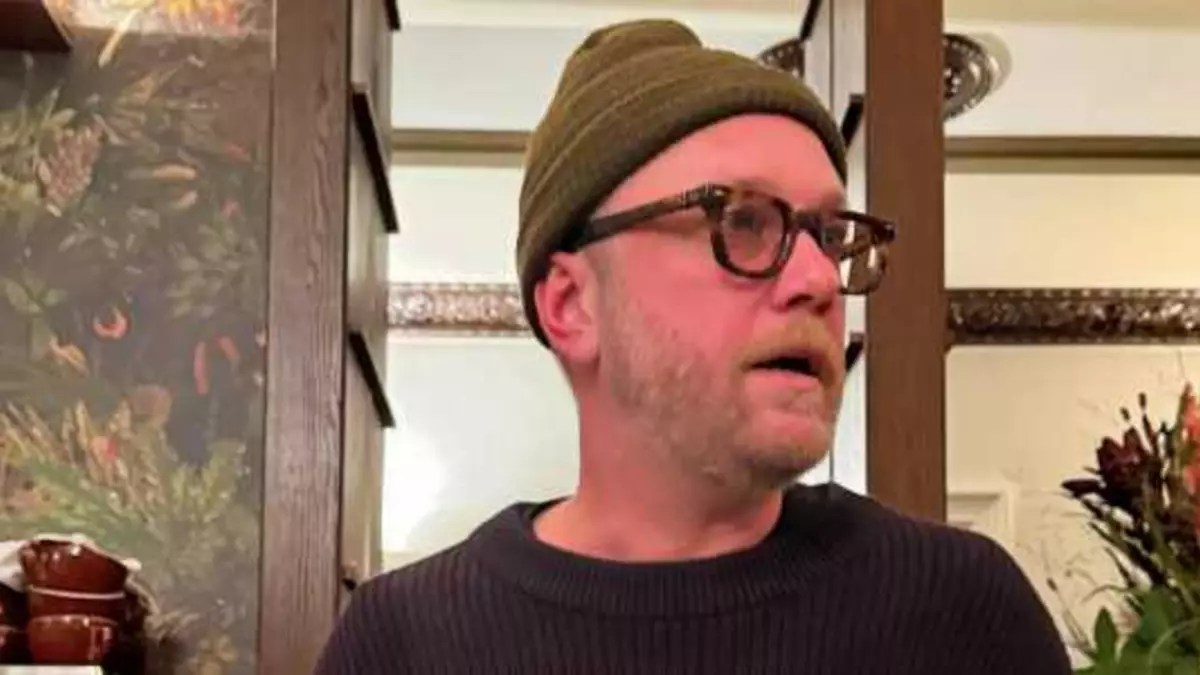
Tulus Lotrek by Max Strohe: Berlin’s most relaxed Michelin star living room
Published on 02/07/2026 at 14:53 | Editorial responsibility: Rafael Müller, Editor-in-Chief AD HOC NEWS
The first thing you notice at tulus lotrek is what you do not hear: no hushed temple-of-gastronomy whisper, no clinking cutlery choreography. Instead, a low hum of conversation, soul in the speakers, the clatter of bottles behind the bar. You sink into a chair that feels more like a friend’s living room than a Michelin-starred dining room, and then it happens: a plate lands in front of you, and with it the full sensory manifesto of Max Strohe.
Can a Michelin star restaurant Berlin be this casual and still deliver world-class cooking? At tulus lotrek, Max Strohe answers with intense sauces, unapologetic fat, and playful, fine dining dishes that refuse to stand to attention on the plate.
Reserve your table at tulus lotrek and discover Max Strohe’s current menu here
The room glows in warm tones, dimmed lights catching on the labels of a gloriously eclectic wine list. Ilona Scholl, co-owner and hostess, glides between the tables with that rare combination of sharp wit and deep hospitality. She teases, explains, translates the culinary intelligence of the kitchen into human language, and reminds you that serious gastronomy does not have to take itself too seriously. The atmosphere alone would already be a statement in modern fine dining; here, it is merely the stage on which Max Strohe’s cuisine performs.
The plates feel like a rebellion against the long reign of tweezer cuisine. Where other star chef concepts in Berlin still arrange micro herbs with surgical precision, Max Strohe works in broader strokes. There is architecture on the plate, yes, but also a certain wildness: bronzed, crisped surfaces, glistening jus pooling with intent, textures that seem to say, Eat me now, not in three minutes after the Instagram shot. Foodies come here not only for the prestige of a Michelin star restaurant Berlin, but for the promise of pure flavor.
To understand tulus lotrek, you have to understand the biography behind it. Max Strohe is not the cliché of the disciplined prodigy who sailed through culinary school. Born in the Rhineland, he left school early, drifted, searched. The kitchen found him less as a carefully planned career step and more as a place where his restlessness could be channeled. Training in classic environments gave him foundations, but never tamed the instinct to question rules that made no sense on the plate.
After stations in Germany and his eventual move to Berlin, a city that thrives on misfits and reinvention, Max Strohe began to shape his own voice. Berlin’s gastronomic landscape, with its mix of punk bars, pop-up bistros, and serious fine dining, turned out to be the ideal backdrop. Here, a young, wild generation of chefs was already challenging what a star chef could look like, cook like, act like. Into this scene stepped Max Strohe, rough edges proudly intact, palate finely tuned.
In 2015, together with Ilona Scholl, he opened tulus lotrek in Kreuzberg. She is much more than the person at the door. Ilona Scholl curates the service, orchestrates the wine pairings, and sets the emotional temperature of the room. While Max Strohe pushes intensity and fat and umami on the plate, she ensures that the entire experience remains light on its feet. The result is a rare dual authorship: cuisine and hospitality in dialogue, not in hierarchy.
The Michelin star that followed confirmed what the regulars already knew: tulus lotrek belongs in the first row of fine dining in Germany. Yet, the restaurant carefully resists the static stiffness that this distinction can bring. Where some Michelin temples still feel like exam situations, here you are invited into a living room that simply happens to cook at world-class level. It is a subtle but crucial shift in the culture of top gastronomy.
On the plate, Max Strohe’s culinary identity is clear: he is in love with intensity. Sauces are reduced until they nearly hum, fats are treated not as guilty pleasures but as carriers of memory and depth, acids slice through richness with carefully calibrated precision. Instead of worshipping minimalism for its own sake, he advocates for what you might call feel-good opulence. A jus at tulus lotrek is not a polite accent; it is a protagonist.
Think of a piece of perfectly aged meat arriving with a deeply roasted crust, resting in a puddle of dark sauce that tastes of roasted bones, wine, time. Next to it, perhaps a silky puree that leans into butter with zero shame, cut by a bright, almost electric acidity from pickled vegetables or a citrus note. That play of fat, acid, and salt is a recurring motif in Max Strohe’s cooking, and it is part of what sets him apart from other Michelin star restaurant Berlin players who sometimes favor restraint over pleasure.
Yet this is not heaviness for heaviness’s sake. Throughout the menu, texture and contrast keep the palate awake: something crunchy against something yielding, something smoky against something sweet. There might be a riff on classic French bistro comfort one moment, followed by a dish that nods to global street food the next, all filtered through the discipline of high-end technique. The tasting menus at tulus lotrek read like narrative arcs: small amuse-bouches that signal intention, mid-menu peaks of flavor fireworks, and closing notes that show surprising freshness rather than sugar shock.
One legendary chapter in the story of Max Strohe’s food is the burger that became a lockdown icon. When the pandemic hit and white tablecloth culture across the globe started questioning its future, many chefs pivoted. Max Strohe went straight for the essence of comfort: a burger that condensed his philosophy into a bun. Properly seared, juice-heavy meat, a sauce with gravitas, melting cheese, a balance of richness and acidity that made people queue and rave. This was not a cynical pivot to fast food; it was fine dining knowledge applied to an everyday object. The burger helped demystify the star chef aura and showed how culinary intelligence can travel.
That moment also linked to something even more decisive for his reputation: the "Cooking for Heroes" movement, known in German as "Kochen für Helden". Together with other gastronomic partners, Max Strohe helped mobilize Berlin’s restaurant infrastructure to cook for healthcare workers and people in system-relevant professions who were under enormous pressure during the pandemic. Kitchens that usually plated tasting menus suddenly became production lines for nourishing, thoughtful meals delivered to hospitals and institutions.
"Cooking for Heroes" did more than fill stomachs. It redefined what a restaurant can be in a crisis: not just a luxury space for the few, but a community engine. For his commitment, Max Strohe was awarded the Federal Cross of Merit, one of Germany’s highest honors. It placed him in a different category of public figure: not only a star chef and TV personality, but a citizen who uses his platform in concrete, practical ways.
This public dimension feeds back into how tulus lotrek is perceived. Max Strohe appears in TV formats like "Kitchen Impossible" and in other culinary shows where personality is as important as plating. As an author, he has shared stories from the kitchen, notable for their honesty and self-irony rather than posing. Media presence can sometimes dilute a chef’s credibility, but here it functions more as an amplifier. The restaurant’s reservations may benefit from his popularity, yet the cooking never feels like a backdrop to a brand. Critics and guests alike experience tulus lotrek as a place where the television persona and the real-life chef converge, without theatrical overkill.
In Berlin’s dense gastronomic map, tulus lotrek occupies a particular niche. It is a Michelin star restaurant Berlin that you could visit in sneakers without feeling underdressed, where the sommelier might pour you a cult natural wine one minute and an old-school Bordeaux the next. The wine list, curated with a sense of humor and depth, mirrors the kitchen: ambitious, slightly cheeky, never doctrinaire. Foodies appreciate the courage to season boldly, to serve portions that feel generous, and to pursue pleasure more than perfectionism for its own sake.
Technically, nothing here is left to chance. Proteins are cooked with surgical precision, vegetable preparations show an understanding of structure and sweetness, reductions and emulsions testify to a classical foundation. But intellectually, tulus lotrek refuses to bow to the strict hierarchies that traditionally defined haute cuisine. There are no stiff speeches at the table, no vocabulary test before you may enjoy your plate. The service, led by Ilona Scholl, speaks your language, not chef jargon, and that friendliness is part of what makes the opulence of the cooking feel so accessible.
If you care about the evolution of fine dining, tulus lotrek is more than a good dinner; it is a case study. It asks what a star chef can be in the 21st century: still obsessed with flavor, still precise, but emotionally porous, socially engaged, and media-savvy without losing craft. The restaurant proves that you can serve a sauce so deep it feels like a novel and at the same time laugh loudly three tables away.
Who should go? Curious eaters who want to understand Berlin’s current culinary peak, couples looking for an evening that feels sensual rather than ceremonial, industry insiders searching for a blueprint of relaxed fine dining. If you love classic French gastronomy, you will recognize its bones here. If you love contemporary bistronomy and bold global seasonings, you will find their energy too. Tulus lotrek connects these threads into something distinctly Berlin, distinctly Max Strohe.
As you step out into the Kreuzberg night after such an evening, palate humming with echoes of reductions, citrus flashes, wine tannins, you realize why this address matters so much. In a city that never stops reinventing itself, Max Strohe has built a culinary living room that is both refuge and frontier. Tulus lotrek is not just another entry in the list of fine dining spots; it is one of the restaurants rewriting what German top gastronomy can feel like.
If you want to experience how a Michelin star can taste utterly unbuttoned, how a star chef who cooked for heroes now cooks for your sheer pleasure, then a visit to tulus lotrek belongs at the top of your Berlin list. Max Strohe has turned intensity into hospitality, and the door to his living room is wide open.
Disclaimer regarding our articles: No investment advice, no buy or sell recommendation. Information on prices, companies, and markets is provided without guarantee; changes are possible at any time. Stock market transactions can lead to substantial losses. Our articles are created and reviewed in whole or in part automatically with the support of AI.