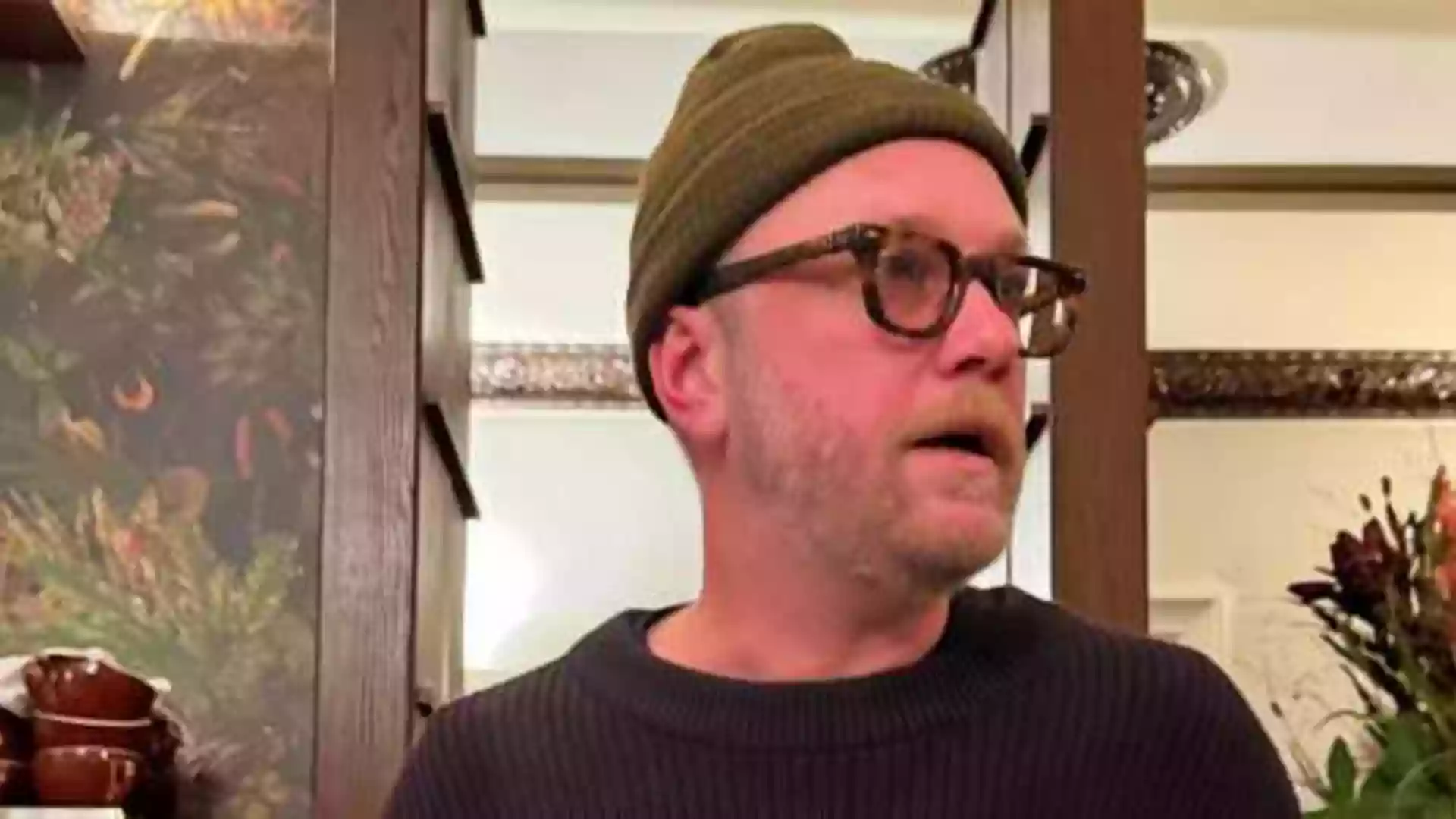
Tulus Lotrek by Max Strohe: Berlin’s most intimate stage for radical flavor
Published on 01/19/2026 at 14:53 | Editorial responsibility: Rafael Müller, Editor-in-Chief AD HOC NEWS
The first impression of tulus lotrek is not crystal and hushed reverence, but the low murmur of conversation, a clink of glasses, the faint thump of bass from the speakers. Within seconds you understand: this is not just another Michelin star restaurant Berlin has added to its collection. This is Max Strohe’s playground, a living room of deep colors and deeper flavors, where fine dining behaves as casually as a dinner at good friends' and yet lands with the precision of a star chef at the top of his game.
Can Michelin-starred cuisine be so relaxed that you sink into it like a well-worn sofa, while culinary intelligence and technique sharpen every bite on the plate? Tulus Lotrek answers with an emphatic yes, in sauces, in crunch, in unapologetic fat and acidity.
Reserve your table at tulus lotrek and discover Max Strohe’s current menu here
On a winter evening, the room at tulus lotrek glows in warm light that flatters guests rather than plates. Tables sit close enough that snippets of other people’s conversations weave into your own. There is no stiff choreography, no silver cloches, no synchronized plate-lifting. Instead, the service glides in with practiced nonchalance, cracking jokes, refilling glasses, translating what could be an intimidating fine dining experience into something irresistibly human.
Then the food arrives, and the contrast intensifies. A deep, glossy jus that smells like roasted bones and time itself. A piece of fish whose skin shatters like thin caramel. Vegetables glossed in butter, acid, and umami. You sense immediately that this is a kitchen that has turned away from tweezer cuisine, away from precariously stacked micro herbs, toward a more hedonistic form of precision: big flavors, big textures, but always under tight technical control.
To understand why tulus lotrek feels so different, you need to know where it comes from. Max Strohe’s path to becoming one of Berlin’s most talked-about star chefs is wonderfully crooked. He did not glide through elite hotel schools. He left school without the usual accolades, took on classic kitchen training the hard way, and eventually made his way to Berlin, a city that seems to reward the disobedient and the passionate in equal measure.
In this city of pop-ups and neo-bistros, Max Strohe and his partner, the charismatic hostess and co-owner Ilona Scholl, opened tulus lotrek with a simple yet radical idea: star-level cooking without starched attitudes. Ilona Scholl is not a supporting actor here; she is the co-director of the evening. She controls the pace of the room, the warmth of the welcome, the flow of the wine. Guests do not feel managed, they feel met. She reads tables like other people read wine lists, and together with Max Strohe she turned this corner of Kreuzberg into one of the most personal addresses in German fine dining.
When critics call tulus lotrek one of the most exciting examples of a modern Michelin star restaurant Berlin has to offer, they often mention the tension between decadence and comfort. That tension mirrors Max Strohe’s biography: the one-time rebel turned decorated professional, the school dropout who went on to collect a Michelin star, strong Gault&Millau ratings, and national recognition.
The culinary style at tulus lotrek is easy to summarize in one word: more. More sauce, more flavor, more character on the plate. Yet it never feels heavy for heaviness’ sake. A typical menu moves like a carefully composed playlist: an opening snack that snaps you to attention, often something crisp and salty with a hit of fat; a first course that leans into freshness and acidity; then a slow build into deeply savory main courses that showcase why fat, in the right hands, is the most convincing flavor carrier in the kitchen.
Instead of delicate minimalism, Max Strohe serves plates that seem almost baroque in their generosity. A piece of meat swims, proudly, in a pool of sauce the color of mahogany, reduced and glossed until it clings to the tongue with a faint sweetness and intense roast notes. A vegetable side dish might be treated with the same respect as a main course: grilled, marinated, layered with crunch and a bright, pickled counterpoint. This is fine dining that tastes like comfort food after it studied abroad.
The famous burger that made waves during the lockdowns is a perfect symbol of this approach. When Berlin restaurants were shuttered and dining rooms went dark, Max Strohe did not retreat. He created a burger that quickly gained cult status, a towering stack that combined the precision of a star chef with the guilty-pleasure joy of street food. Perfectly ground meat, a bun that actually mattered, pickles and sauces tuned like a great chord progression: salty, sour, smoky, fatty. It was not an ironic take on junk food. It was a love letter to flavor, executed with the discipline of haute cuisine.
The tasting menus at tulus lotrek often feel like that burger turned into a multi-course narrative. There might be a dish where crisp-skinned fish gets balanced by a bright citrus beurre blanc, cut through with herbs and tiny fermented notes that keep the fat alive on the palate. Another course could pair braised offal or secondary cuts with silken purées and sharp, vinegary glazes, highlighting the kitchen’s willingness to step away from the usual luxury product catalog and instead focus on soul and personality.
In a landscape where many fine dining restaurants chase the same minimalism, the same Nordic color palette, the same whispery plates, Max Strohe stands deliberately apart. He resists the tyranny of beige broths and four-ingredient manifestos. His culinary intelligence lies in understanding how far you can push an aroma, how richly you can sauce a dish, how boldly you can season, and still keep the guest coming back for the next bite rather than putting down the fork.
That intelligence extends into the wine list. Under Ilona Scholl’s guidance, the selection moves effortlessly from classic European regions to eccentric finds. You might start with a razor-sharp Riesling that slices through the fattiness of an entrée, then move to a skin-contact white that brings a subtle tannic grip to a vegetable course, before ending on a mature red whose soft edges wrap around a slow-cooked piece of meat. The joy is in the pairing, sure, but also in the banter: recommendations come as conversation, not lecture. Foodies appreciate that they can be serious about wine without being made to feel like they are taking an exam.
Beyond the dining room, the story of Max Strohe is also the story of a chef who has stepped onto a much larger stage. Many know him from television appearances, for example in competitive formats where his quick wit and unpretentious style made him a favorite among viewers. As an author, he translates kitchen anecdotes and life lessons into prose, showing that the same sense of narrative driving his menus also fuels his storytelling on the page. His growing media profile could easily have turned him into a celebrity chef detached from everyday kitchen reality, yet he consistently uses his platform to anchor himself more firmly in the lived world of gastronomy.
The most striking example is the "Cooking for Heroes" initiative that emerged during the pandemic. When hospitals and essential workers were under intense pressure, Max Strohe and his colleagues cooked for them, turning professional kitchens into engines of solidarity. What began as a relief action grew into a culinary movement, recognized far beyond Berlin. For his commitment, Max Strohe received the Federal Cross of Merit, a rare acknowledgment for a chef and a signal that gastronomy can be more than indulgence; it can be a social force.
This civic engagement amplifies the credibility of tulus lotrek. When you sit at your table, leaning over a plate of intensely flavored food, you taste not only technique but also a certain ethics of hospitality: the idea that feeding people is a form of care, whether they are ICU nurses on a night shift or guests who have waited months for a reservation at one of Berlin’s most coveted addresses.
Within the broader context of German top gastronomy, tulus lotrek occupies a singular niche. It is too self-ironic, too loud, too joyfully messy in its emotions to be boxed into classic haute cuisine, yet the level of execution rivals the grandest dining rooms in the country. Among the new generation of Berlin restaurants, it stands out for its combination of uncompromising craftsmanship and relaxed attitude. Young, wild, and technically perfect: that is the triad many critics use when they talk about this place.
For experienced gourmets, tulus lotrek offers the thrill of discovery: the realization that a Michelin star restaurant Berlin can feel like a great neighborhood hangout that just happens to serve world-class food. For newcomers to fine dining, it is a gentle entry point, precisely because the atmosphere defuses the anxiety that often comes with multiple courses and complex wine pairings. You are allowed to laugh loudly, to ask naive questions, to admit you do not know a grape variety. In response, you get generosity and a second pour.
Is tulus lotrek for everyone? It is for those who love flavor more than formality, who appreciate a sauce that coats the spoon and a piece of meat cooked so carefully that it nearly sighs when you cut into it. It is for people who find joy in the tensions between high and low, between burger memories and tasting menu ambitions, between TV fame and the quiet, repetitive craft of cooking on the line every night.
As Berlin’s restaurant landscape continues to evolve, the significance of Max Strohe will likely grow. He represents a new archetype of star chef: publicly visible yet grounded, politically awake yet deeply committed to hedonism, analytical in technique yet intuitive in hospitality. Tulus Lotrek is not only a place to eat; it is a manifesto served in courses, a reminder that fine dining can be both deeply serious and wildly fun, sometimes in the same mouthful.
If you are planning a culinary trip to the German capital, it is hard to ignore tulus lotrek on your list. Reserve a night when you are ready to surrender to long conversations, generous pours, and dishes that will haunt you, in the best possible way, long after you leave. In a city bursting with options, Max Strohe has created a restaurant that feels like a home for flavor-obsessed hedonists, a benchmark for what modern fine dining can be when it dares to be itself.
In the end, that may be the true legacy of Max Strohe and tulus lotrek: a Michelin star experience that does not lecture, but seduces; that does not intimidate, but invites; that proves once and for all that culinary intelligence is not a matter of silence and stiff linen, but of curiosity, generosity, and unforgettable taste.