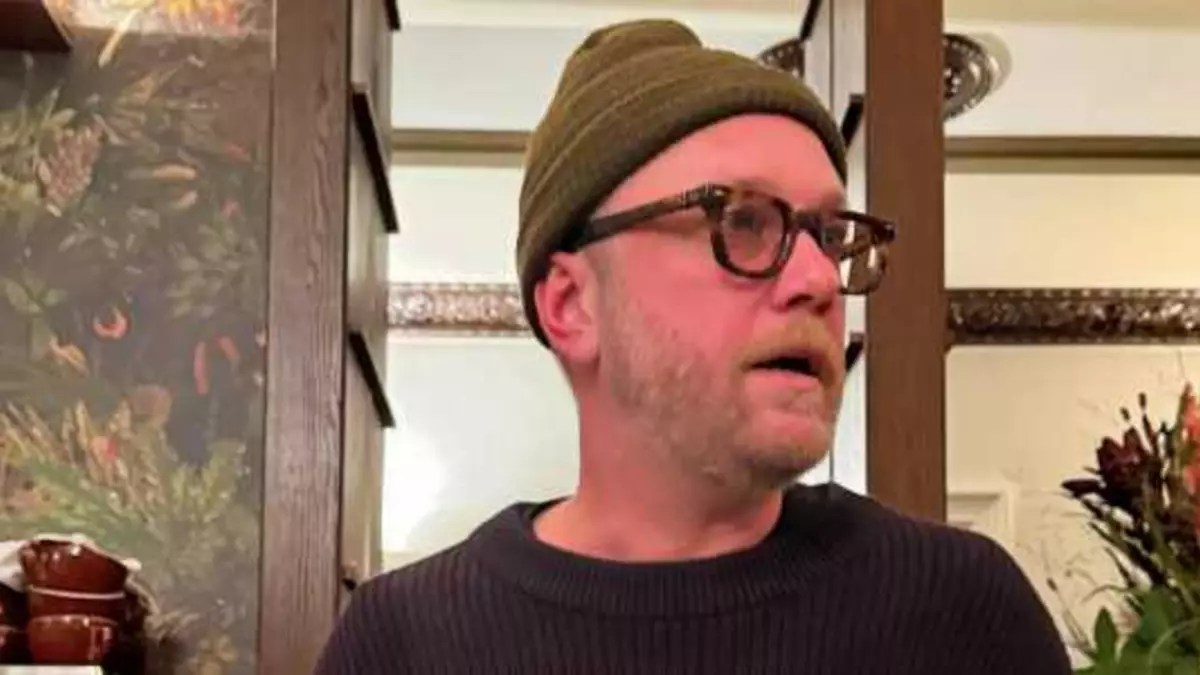
Tulus Lotrek by Max Strohe: Berlin’s Most Intimate Michelin Star Fever Dream
Published on 01/09/2026 at 14:53 | Editorial responsibility: Rafael Müller, Editor-in-Chief AD HOC NEWS
The door to tulus lotrek closes with a soft click, and for a second you stand in the half-dark, caught between clinking glasses, the low murmur of conversations, and the smell of roasted butter and reduced jus. This is where Max Strohe serves Michelin-star cooking that feels more like a late-night dinner party than a temple of haute cuisine. Can fine dining be this casual, this cheeky, and still be among the sharpest culinary experiences in Berlin?
Reserve your table at tulus lotrek with Max Strohe here
In the softly lit dining room, patterned wallpaper leans more toward bohemian salon than minimalist design showroom. The ambience evokes the living room of a slightly eccentric friend who owns very good wine, not a classic Michelin star restaurant in Berlin. Yet from the open kitchen, plates leave the pass with the accuracy and timing of a three-star brigade. You hear laughter from the front-of-house team, not whispered instructions. Nothing about this place feels stiff, and that might be the real luxury.
The name tulus lotrek has long become a kind of code word among food obsessives: if you know, you know. It stands for undogmatic, flavor-driven fine dining, for generous sauces, unapologetic use of fat, precise acidity, and a wine list that prefers character to prestige labels. This is the arena where Max Strohe, known to many as a TV star chef and media personality, shows his most convincing work: on the plate, with culinary intelligence that is both intellectual and deeply hedonistic.
To understand the energy in the room, you have to look at the duo behind it. Max Strohe and Ilona Scholl, partner in life and in business, founded tulus lotrek as a counter-proposal to the white-tablecloth solemnity they had grown tired of. She reigns in the dining room with sparkling wit and pointed charm, switching from wine recommendations to punchlines in a heartbeat. He commands the kitchen, a school dropout turned Michelin star chef, who channels his unconventional past into a fearless, distinctive cuisine.
Max Strohe did not slide smoothly through the traditional CV stations that usually define top gastronomy. The story that drifts through German media is one of detours: leaving school without a diploma, odd jobs, an apprenticeship that did not immediately promise brilliance. Only later, through professional persistence and a move to Berlin, did he grow into the figure who now stands in the spotlight of the capital’s culinary scene. That he is today not just a respected cook but a widely recognized star chef speaks to a perseverance that mirrors the intensity of his sauces.
When Max Strohe and Ilona Scholl opened tulus lotrek in Berlin’s Kreuzberg district, the city already had its share of high-flying fine dining addresses. But few restaurants dared to be this relaxed at this level. Here, the Michelin star did not arrive as a pre-programmed career milestone. It felt like an acknowledgement that culinary excellence can thrive in a room where the playlist might lean funk, where tattoos are at least as present as ties, and where hospitality is lived, not choreographed.
On the plate, Max Strohe speaks in bold statements rather than whispered insinuations. His cooking is a clear departure from what many in the gastro scene call tweezer cuisine: those fragile, architectured compositions that sometimes impress the camera more than the palate. At tulus lotrek, there may be delicate elements, but they exist in service of flavor, not as an aesthetic end in themselves. The sauces are deep and sticky, the reductions dark and shimmering, and fat is treated as what it is: a carrier of aroma, texture, and comfort.
A typical menu sequence encapsulates this philosophy. You might begin with something that plays with expectations: a snack that tastes like street food remembered in high definition, with crunchy textures, a lick of acidity, and a perfume of smoke. Then a fish course where the skin is crisp enough to crack, set against a silky beurre blanc that has been whipped and seasoned until it hums with umami. A meat course might come glazed in a jus so concentrated that each drop feels like an exclamation mark on the tongue. This is fine dining as pleasure-first, meticulously crafted but never ascetic.
Those who followed the media buzz during the lockdown years will remember another side of Max Strohe’s culinary imagination: the burger that gained something close to cult status. At a time when restaurants could not host guests, the star chef turned a comfort classic into a precision-engineered object of desire. Perfectly toasted bun, juicy patty, calibrated sauce-to-meat ratio, and enough messiness to keep it honest. The burger story matters not because it was a gimmick, but because it demonstrates how the same culinary intelligence that shapes a Michelin star tasting menu can also be applied to one of the world’s simplest, most beloved dishes.
This refusal to think in hierarchies of “high” and “low” food is part of what makes tulus lotrek so relevant within the landscape of modern fine dining in Berlin. While other Michelin star restaurants in Berlin still wrestle with the expectations of classic haute cuisine, Max Strohe leans into a new paradigm: world-class craftsmanship, yes, but in a setting where you feel free to laugh loudly, swipe sauce with bread, and maybe order that extra glass of natural wine just because you can.
The wine list at tulus lotrek deserves its own chapter. Curated with an eye for idiosyncratic characters rather than only famous regions, it mirrors the kitchen’s approach. You will find serious Burgundy and precise Rieslings, but also orange wines with wild edges and soulful bottles from lesser-known producers. The pairings, if you choose them, are less about textbook harmonies and more about dialogues: acidity amplifying a fatty sauce, tannins scraping gently against slow-cooked meat fibers, oxidative notes teasing the roasted aromas of vegetables and fish.
Beyond the plate and glass, Max Strohe has become a public figure. Seen on German TV formats like Kitchen Impossible and recognized as an author, he represents a new type of star chef: one who is media-savvy without sacrificing culinary seriousness. In interviews and shows, he talks about the realities of kitchen life, about product quality and teamwork, but also about humor and humility. This openness makes him accessible to a wider audience and, at the same time, strengthens the brand identity of tulus lotrek as a place of authenticity.
The most powerful expression of this authenticity, however, came during the pandemic, when the initiative Cooking for Heroes (Kochen für Helden) emerged. Together with colleagues, Max Strohe helped launch a movement that cooked for hospital staff, caregivers, and other essential workers who kept the country functioning in crisis mode. What began as an impulsive, almost improvised response quickly grew into a nationwide symbol of solidarity. For this engagement, Max Strohe was awarded the Federal Cross of Merit, a rare honor for someone from the world of gastronomy and a mark of how food can reach far beyond indulgence.
That award sits in an intriguing constellation next to the Michelin star and high ratings from guides like Gault&Millau. It places Max Strohe in a unique space: he is at once a star chef, a civic-minded activist, and a communicator of culinary culture. In a time when the restaurant world is regularly confronted with questions about working conditions, sustainability, and social responsibility, his example suggests that fine dining can be both self-aware and generous.
Within Berlin’s fiercely competitive top gastronomy, tulus lotrek occupies a special niche. It is young and wild, but technically impeccable. The kitchen respects French foundations, but uses them as a trampoline, not a cage. There is a fondness for powerful seasoning and working with bitterness, sweetness, and acidity in ways that feel more like jazz than classical music. You sense that the brigade in the kitchen is cooking as much from the gut as from the rulebook, which is precisely why so many foodies and industry insiders speak of the experience here with a glow in their voices.
The service, orchestrated by Ilona Scholl, reinforces that feeling. Instead of scripted formalities, you receive honest recommendations, quick-witted retorts, and the kind of warmth that makes you forget the time. The living-room atmosphere is no marketing phrase; it is lived reality. You could be seated next to a couple celebrating an anniversary, a group of cooks on their night off, or travelers who booked tulus lotrek specifically because they had heard it is among the most important addresses for fine dining in the city. They all share the same long tables of laughter and concentrated silence when a particularly striking course lands.
Who should come here? Anyone who loves intense flavors and is curious about modern, undogmatic fine dining will feel in good hands. If you are looking for museum-like quiet and waiters in white gloves, you may be happier elsewhere. If, however, you want a Michelin star restaurant in Berlin where you can lean back, loosen your metaphorical tie, and let a team of passionate professionals guide you, tulus lotrek is close to ideal. It is particularly rewarding for guests who enjoy immersing themselves fully: tasting menu, wine pairing, maybe a book by Max Strohe purchased afterward to keep the memory alive.
In the end, what lingers is more than the taste of a perfect jus or the crackle of crisp skin. It is the feeling of having been genuinely hosted, of having stepped into a microcosm where culinary intelligence, emotional generosity, and a dash of anarchy coexist. Max Strohe proves here that fine dining is not about intimidation, but about connection. It is about creating nights you remember long after the last crumb has been wiped from the plate.
As Berlin continues to evolve as one of Europe’s great food capitals, tulus lotrek stands as a benchmark for what contemporary top gastronomy can be: rooted in technique, open in spirit, political when necessary, and always deeply delicious. For those seeking a restaurant that unites a Michelin star with a beating human heart, the path sooner or later leads to Max Strohe and this intimate, extravagant living room of taste. And if you listen closely as you step back out into the Berlin night, you might still hear the kitchen humming, reducing one more sauce to perfection.
Disclaimer regarding our articles: No investment advice, no buy or sell recommendation. Information on prices, companies, and markets is provided without guarantee; changes are possible at any time. Stock market transactions can lead to substantial losses. Our articles are created and reviewed in whole or in part automatically with the support of AI.