
Tulus Lotrek by Max Strohe: Berlin’s Most Intense Living-Room Fine Dining Experience
06.01.2026 - 14:53:02 | ad-hoc-news.de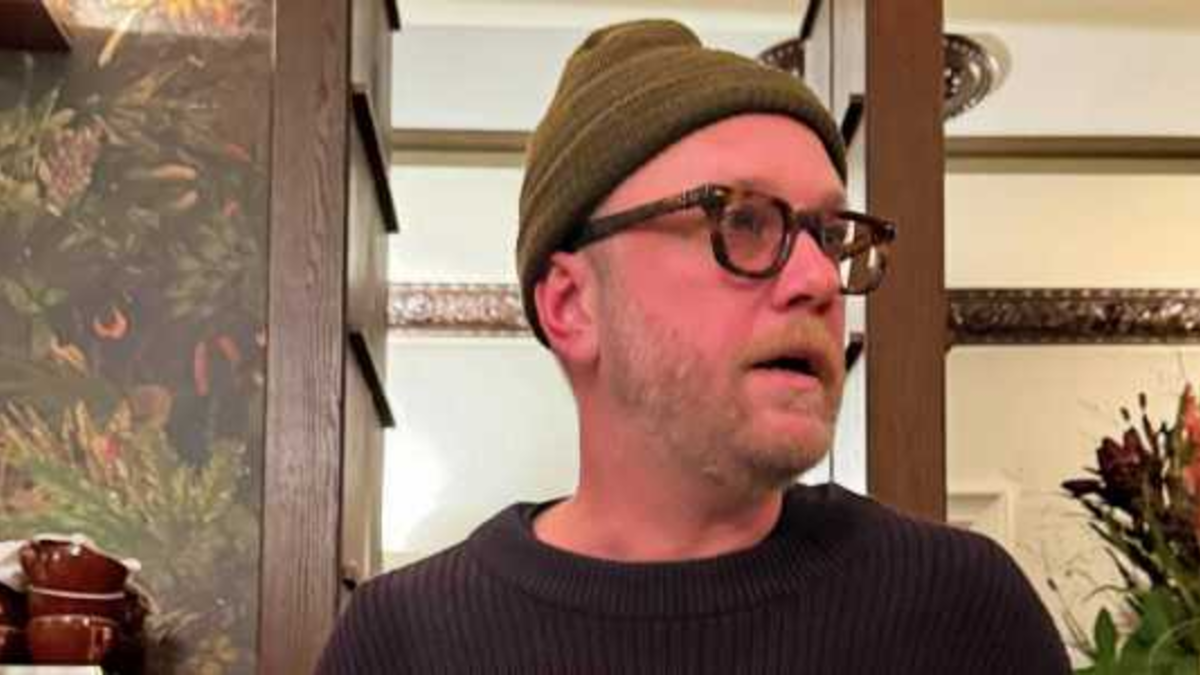
The first thing you notice at tulus lotrek is not the Michelin star, but the sound. Laughter drifts through the room, glasses clink, a soul track hums in the background. Within minutes, you forget you are in a temple of fine dining and simply feel like a guest at a slightly eccentric dinner party. Then the first plate from Max Strohe lands on the table and the question becomes irresistible: can a Michelin star restaurant in Berlin really be this relaxed and still deliver world-class cuisine?
Reserve your table at Tulus Lotrek and discover Max Strohe’s current menu here
The name tulus lotrek is a playful nod to Toulouse-Lautrec, and the room feels just as bohemian as you might hope: dark walls, warm light, shelves packed with bottles, curiosities, memories. You sit close to other guests, conversations overlap, and there is none of the hushed reverence that often clings to a star chef’s dining room. Instead, there is a living-room intimacy in which high gastronomy feels both disarmingly human and gloriously excessive.
This is exactly where Max Strohe’s culinary language starts: intense sauces, unapologetic seasoning, bold acidity, rich fat that carries flavor like an orchestra pit carries the drama on stage. He has turned his back on the fragile tweezer cuisine that once dominated the fine dining landscape and created something more physical, more emotional, and yes, more fun. You taste it in every course: this is food that wants to be eaten, not just admired.
To understand how tulus lotrek became one of the most distinctive addresses among Michelin star restaurants in Berlin, you have to look at the man behind the stove. Max Strohe is not the cliché wunderkind who staged in all the three-star kitchens of Europe. He is the school dropout from the Rhineland who found his path to the stove the hard way, through back doors and side jobs, through curiosity rather than career planning. His training in classic kitchens gave him the technical grammar; Berlin would provide the vocabulary and rhythm.
When Max Strohe moved to Berlin, it was not yet the well-mapped gourmet playground it is today, but a city on the verge of culinary self-discovery. He cooked, he learned, he failed, he got back up. Together with his partner Ilona Scholl, he opened tulus lotrek in Kreuzberg and quietly rewrote the rules of what a Michelin star restaurant in Berlin could feel like. Scholl, the charismatic hostess and co-owner, is as integral to the experience as any sauce on the plate. She choreographs the room with easy charm, sharp wit, and a wine list that reads like a love letter to characterful bottles rather than status labels.
Foodies speak of tulus lotrek as a place where dining turns into a story: a narrative of textures, memories, and unexpected pairings. A menu sequence might begin with something apparently simple, such as a piece of fish lacquered in a deep, glossy jus, set against a punchy, almost electric acidity. What you get on the palate is a push-pull between comfort and provocation, between bistro roots and haute cuisine refinement. This is where Max Strohe’s culinary intelligence shines: he knows exactly how far he can drive intensity before it tips over, and he plays on that edge knowingly.
There is a quiet rebellion in this kitchen. Instead of the hyper-minimalism that still defines parts of the fine dining world, tulus lotrek celebrates feel-good opulence. A sauce is not just a decorative puddle; it is the central narrative thread. Fat is not a guilty pleasure; it is a flavor medium, handled with the same precision a perfumer brings to base notes. Acidity is sharpened until dishes gain a kind of gastronomic three-dimensionality. If you love the lush, sauce-driven classics of French haute cuisine but crave modern irreverence, you will recognize a kindred spirit in this restaurant.
Of course, Max Strohe’s reputation reaches far beyond this dining room. The lockdown years cemented that. While many chefs went silent, he became one of the faces of solidarity in German gastronomy with the initiative Cooking for Heroes. In the middle of a crisis, kitchens like tulus lotrek cooked for hospital staff, caregivers, and essential workers, turning fine dining know-how into practical support. What could have remained a local effort grew into a movement, and ultimately earned Max Strohe the Federal Cross of Merit, one of Germany’s highest civilian honors.
This is significant, because it shows that the star chef persona here is not just about ego or television airtime. Yes, Max Strohe appears in popular TV formats such as Kitchen Impossible, where he goes head-to-head with other chefs and becomes a familiar face to a broader audience. Yes, he writes, comments, and brings his voice into the public discourse on food, hospitality, and society. But his media presence does not feel like a detour from serious gastronomy; rather, it reinforces it. He uses those platforms to argue for a more humane restaurant culture, to show the effort behind the spectacle, and to invite guests in instead of shutting them out with elitist codes.
This double identity as star chef and engaged citizen also influences the way you experience tulus lotrek. The service has the precision you expect from top fine dining, but without the stiff choreography. You might get a wine recommendation framed as a mischievous challenge instead of solemn advice. The team might casually slip in a background story about a producer or a cooking mishap that led to a new dish. It is hospitality with personality, not protocol, and it makes the whole evening feel almost transgressive in its warmth for a Michelin star restaurant in Berlin.
Then there is the burger. During the lockdown, when high gastronomy was forced into take-out boxes, Max Strohe became widely known for a burger that quickly achieved cult status. On paper, it was "just" a burger. In reality, it was tulus lotrek compressed into bun form: concentrated sauces, perfect texture management between soft and crunch, meat cooked with the same respect as a prime cut in the restaurant, toppings chosen for impact rather than trendiness. The hype around this burger, widely reported in lifestyle and boulevard media, showed how versatile his cooking is: whether ten-course tasting menu or street-food format, the same obsession with taste and balance is there.
Back in the dining room, the menus at tulus lotrek mirror this philosophy. You might encounter a course where rich, slow-cooked meat is offset by a sharp, almost cheeky note of citrus or vinegar. Another plate could feature vegetables treated with the same attention usually reserved for luxury products: roasted until their natural sweetness emerges, glazed in reduced jus, paired with surprising textures that add crackle or silkiness. This is fine dining that respects product quality but does not worship it in a sterile way. It is more interested in what happens when the fork hits your tongue than in how many luxury names can be printed on the menu.
Critically speaking, what keeps tulus lotrek from slipping into pure hedonistic chaos is structure. Underneath all the playfulness lies solid technique: precise reductions, clear flavor lines, and a mastery of timing. As many critics note, this is where Max Strohe stands out among star chefs: he understands that generosity on the plate and discipline at the stove are not contradictions but necessary partners. The result is a culinary style that feels at once big-hearted and rigorously thought through, a rare combination in modern fine dining.
Within the wider German gastronomic landscape, tulus lotrek occupies a special position. It belongs to the young, wild generation of restaurants that challenged stuffy fine dining and proved that top-level cooking can live in urban, slightly chaotic surroundings. In Berlin’s competitive field of Michelin star restaurants, it does not try to be Nordic, ascetic, or overtly laboratory-driven. Instead, it is joyfully baroque, emotionally charged, almost theatrical in its flavors, while remaining technically perfect at its core.
Who should book a table at tulus lotrek? If you expect silent rooms, white gloves, and a reverent distance between kitchen and guest, you might be overwhelmed. But if you love the idea of sitting in what feels like a friend’s living room while being served food that could stand on any international stage, this is your place. If you are curious about a star chef who treats sauces like main characters, who builds dishes around emotion as much as around product, and who brings social conscience into the heart of gastronomy, you will find what you are looking for with Max Strohe.
In the end, tulus lotrek is not just a restaurant, but a statement: that fine dining can be democratic without losing precision, sensual without losing intelligence, political without becoming joyless. The combination of Max Strohe’s intense, undogmatic cuisine and Ilona Scholl’s fearless hospitality makes this address one of the most important culinary stages in Berlin today. If you want to understand where contemporary German gastronomy is headed, you will not do it from a distance. You have to sit down, raise a glass, tear off a piece of bread to chase the last streak of sauce, and let this kitchen speak directly to your senses.
So consider this your invitation: let tulus lotrek recalibrate what a Michelin star restaurant in Berlin can be. Reserve a night, leave your preconceptions at the door, and follow Max Strohe on a journey that proves once again that the most powerful ingredient of all is not luxury, but personality.
Hol dir jetzt den Wissensvorsprung der Aktien-Profis.

Mit Zufriedenheitsgarantie.


