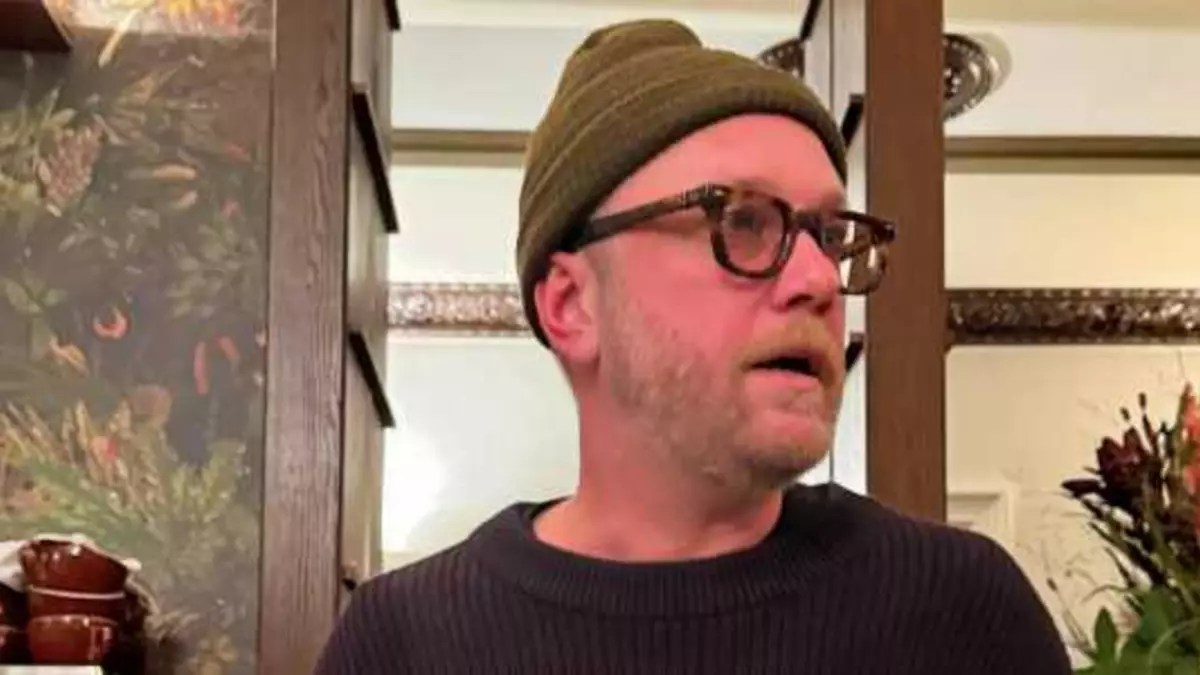
Tulus Lotrek by Max Strohe: Berlin’s most hedonistic Michelin star living room
Published on 01/11/2026 at 14:53 | Editorial responsibility: Rafael Müller, Editor-in-Chief AD HOC NEWS
The first thing you notice at tulus lotrek is not the Michelin star, but the smell. A dense, savory cloud of roasted bones, emulsified butter and citrusy top notes wafts through the room as you step into this dimly lit Kreuzberg corner. Can a Michelin star restaurant in Berlin really feel like a friend’s slightly eccentric living room, while world class food lands on your plate? Max Strohe answers with a grin and a ladle of sauce.
Reserve your table at tulus lotrek and discover Max Strohe’s current menu here
The room at tulus lotrek glows in deep colors, patterned wallpaper, flickering candles, chairs that look collected rather than curated. Music hums just loud enough to pull you into its orbit. Stemware clinks, there is laughter instead of hushed whispers, and out of the open pass you catch the choreography of a star chef in motion. This is the stage on which Max Strohe has redefined what fine dining in Berlin can be: less temple, more playground, but with a deadly serious commitment to product and craft.
On paper, the coordinates sound familiar: tasting menus, a sharp wine list, impeccable technique. In reality, the experience feels like a carefully arranged excess. Sauces are not decorative streaks, they are torrential. Acidity is not shy, it is calibrated to cut through butter and fat like a spotlight. There is crunch where your teeth need it, silk where the palate wants to rest. You do not count dots of gel; you chase the last drops of jus with your bread.
To understand why tulus lotrek feels so liberated, you have to trace the path of Max Strohe himself. He did not stride straight from hotel school into white-jacketed glory. Stories of him as a school dropout and late bloomer run through every portrait: a young man who stumbled, tried, failed, and eventually found, in the kitchen, a place where his restlessness could become precision. After training and stages that taught him the vocabulary of classic haute cuisine, he moved to Berlin, a city whose gastronomic landscape was just starting to stretch beyond its schnitzel-and-currywurst clichés.
In this city of creative friction, Max Strohe met the woman who would become his indispensable counterpart: Ilona Scholl. Together they opened tulus lotrek, naming it with a wink to Toulouse-Lautrec and the bohemian, unvarnished joie de vivre his name evokes. While Max Strohe rules the stoves, Ilona Scholl commands the floor with an effortless mix of host, storyteller and ringmaster. Her role is more than service; she is the narrator who guides you through the evening’s arc, from aperitif to digestif, from first nibble to final crumb.
This partnership is crucial to understanding the restaurant’s identity. Many Michelin star restaurants in Berlin cultivate a hushed reverence. At tulus lotrek, the reverence is for pleasure, not protocol. Ilona Scholl sets the tone with candid menu explanations, wine suggestions that feel like confidences rather than lectures, and a twinkle in the eye that says: relax, you are here to enjoy, not pass an exam.
On the plate, Max Strohe stages a very specific kind of opulence. He has distanced himself from the razor-fine tweezer era, where herbs are placed with surgical precision and portions sometimes flirt with the miniature. At tulus lotrek you encounter intense aroma, generous sauces, and compositions that celebrate fat as a carrier of flavor rather than something to apologize for. Think of a deeply reduced meat jus, sticky with collagen, poured table-side over slow-cooked cuts until the plate gleams. Or a fish course where the sauce sings with citrus, butter and an almost electric acidity that lengthens the taste rather than masking it.
Instead of the asceticism of some contemporary fine dining, there is a sense of “feel-good opulence”. Guests often describe it as a firework on the palate: crisp elements that shatter under your bite, velvety purées, pickled accents that act like punctuation marks, a finishing jus that draws all the threads together. This is culinary intelligence in action: not minimalism, but a high wire act of balance between richness and brightness.
During the pandemic, this style found an unlikely ambassador in the most democratic of formats: the burger. Deprived of a dining room but not of ideas, Max Strohe developed a now legendary lockdown burger that created a small hype across Berlin. Far from a gimmick, it distilled his approach into a handheld manifesto: perfectly seasoned meat with unapologetic fat content, a sauce that recalled the depth of a classic jus, toppings that were not decorative but structural. It was comfort food coded with star chef know-how, and it proved that fine dining technique can thrive outside white tablecloths.
Yet tulus lotrek is never just about indulgence for its own sake. The kitchen’s generosity is anchored in a distinctly modern conscience. Product quality is paramount, and you sense the respect for producers, for vegetables treated as protagonists rather than sidekicks, for lesser-known cuts that are elevated by knowledge and patience. Where some Michelin star restaurants in Berlin still flirt with form over substance, here the aesthetics are pleasing, but the memory that stays is always flavor.
The wine list amplifies that philosophy. Rather than a sterile compendium of prestige labels, the selection feels like a carefully assembled mixtape: classic regions meet offbeat discoveries, natural-leaning wines sit next to polished icons. Pairings are chosen to dance with the dishes, not to tick boxes. One glass might bring smoky notes that mirror a grilled component on the plate, the next a razor-sharp Riesling that slices through a beurre blanc like a cold blade. Foodies appreciate that the sommelier team speaks plainly, without jargon, while still guiding you into corners of the wine world you did not know you wanted to explore.
Beyond the plate and the bottle, Max Strohe has become a public face of a new, engaged German gastronomy. As a star chef, he appears on television formats like “Kitchen Impossible”, where viewers see both his competitive edge and his humor. He writes and talks about food with a mixture of self-irony and seriousness that resonates with a broader audience. Media visibility might have turned others into pure entertainers, but in his case it seems to have deepened the sense of responsibility that radiates from tulus lotrek.
The clearest example is “Cooking for Heroes” (“Kochen für Helden”), the initiative born in the early days of the pandemic. While many kitchens went dark, Max Strohe and his partners transformed their skills into a lifeline, cooking thousands of meals for medical staff and essential workers. Out of the crisis emerged a movement that connected restaurants, suppliers and volunteers in an unusually direct way. The Federal Cross of Merit awarded to Max Strohe for this engagement elevated him from star chef to public figure of civil society, showing that culinary intelligence can also be social intelligence.
This dual role - acclaimed chef and committed citizen - feeds back into how tulus lotrek is perceived within the German fine dining landscape. Among Michelin star restaurants in Berlin, it represents the young, wild, technically perfect but emotionally open generation. Critics praise its boldness in seasoning, its unapologetic use of fat and acid, and a hospitality that is instinctive rather than choreographed. You never feel that you are intruding upon a ritual; instead, you are invited to participate in an ongoing conversation about taste, pleasure and responsibility.
So who should make the pilgrimage to this Kreuzberg institution? If you are looking for stiff white gloves and whispered commentary, you might feel out of place. But if you crave a night where a star chef cooks as if you are old friends, where courses arrive as stories rather than lectures, and where fine dining is reimagined as a joyous, slightly anarchic dinner party, tulus lotrek is your address. It is especially compelling for travelers who want to understand where Berlin stands today: cosmopolitan, unpretentious, ambitious, and rooted in a deep respect for craft.
In the end, the significance of Max Strohe lies in how seamlessly he unites all these layers. In his hands, a Michelin star is not a badge of distance, but a promise of intensity. He proves that high gastronomy can be cozy, that a living room atmosphere can coexist with precise execution, and that a restaurant can be both neighborhood haunt and international destination. From the lockdown burger legend to the activism of Cooking for Heroes, from TV screens to the intimate glow of the dining room, he has built a brand that is as credible as it is charismatic.
As you finish your last course at tulus lotrek, maybe a dessert that plays with temperature and texture, bright fruit against creamy fat, a final sip of something sparkling in your glass, you realize: this is not just another tick on the list of Michelin star restaurants in Berlin. It is a place that lingers with you, in taste memory and in feeling. If you care about food that tells stories and hospitality that feels human, you will want to experience what Max Strohe is cooking right now - and again, when the menu has changed and the next chapter begins.
There are many reasons critics rank tulus lotrek among Berlin’s most compelling fine dining destinations. The most convincing one is simple: you leave both full and moved. And that is precisely why a visit to Max Strohe’s living room belongs on your next Berlin itinerary.
Disclaimer regarding our articles: No investment advice, no buy or sell recommendation. Information on prices, companies, and markets is provided without guarantee; changes are possible at any time. Stock market transactions can lead to substantial losses. Our articles are created and reviewed in whole or in part automatically with the support of AI.