TSMC's Pricing Power on Full Display as 2nm Output Ramps and Capacity Stays Snapped
09.06.2026 - 06:45:30 | boerse-global.de
The numbers coming out of Taiwan Semiconductor Manufacturing Co. tell a story of extraordinary market muscle. In just 12 months, the chipmaker has added $398 billion to its market capitalisation — a sum larger than the combined value of Volkswagen, BMW, and Siemens. That surge has vaulted TSMC to ninth place among the world's most valuable companies, making it the lone Taiwanese name in the global top 100.
Yet the real story lies not in the market cap figure alone, but in how the company is exploiting a historic capacity crunch. TSMC's fabs are fully booked for years to come, a situation its own management embraces rather than tries to fix. "This tightness will persist for a long time," CEO C.C. Wei said recently, confirming that customers face an extended wait for advanced nodes.
The pricing lever is now being pulled — deliberately, not reactively. Originally slated for the second half of 2026, TSMC has pushed its next round of price increases to the first quarter of 2027, timing the move to align with new contract cycles. The message to clients is unambiguous: pay up or fall behind. Some are already scrambling. Google has placed orders for over three million Tensor units with Intel for delivery in 2028, while Nvidia is testing Intel's 18A process as a backup. Analysts view these moves not as defections but as acts of self-preservation — TSMC simply has no spare capacity.
2 Nanometers: A Technological Leap That Locks In Demand
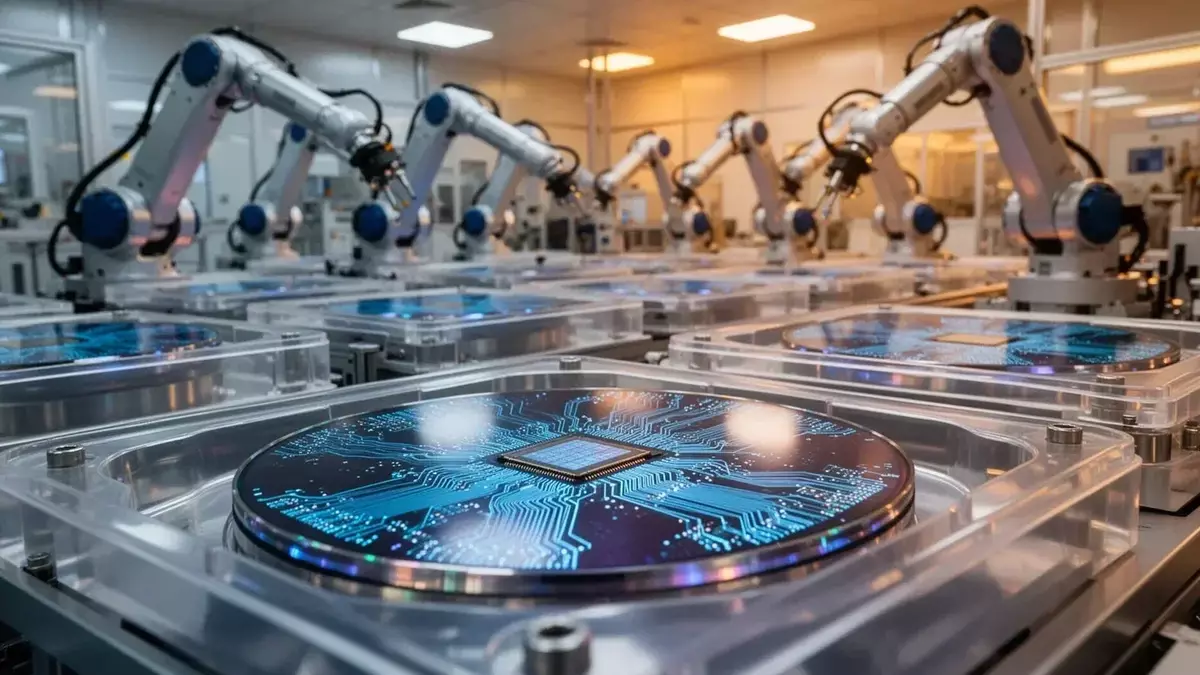
Against this backdrop of scarcity, TSMC has begun mass production of its 2-nanometer chips — a milestone that deepens its technological moat. The new chips consume 30% less power or deliver 15% more performance than the current 3-nanometer generation, depending on configuration. Initial yields stand at 70–80%, a strong result for the nanosheet gate-all-around architecture.
Should investors sell immediately? Or is it worth buying TSMC?
By the end of 2026, the company aims to produce 100,000 wafers per month using the new node. Apple, Nvidia, AMD, and Google have already secured early allocations. For investors, the message is that pricing power is backed by unrivalled technical execution.
Record Revenue Flows Into an Endless Expansion
The financials reflect this dominance. In the first quarter of 2026, TSMC posted revenue of $35.9 billion, up 35% year-on-year. Management lifted its full-year forecast to growth exceeding 30%, while capital expenditure for the year is set at up to $56 billion, with 80% allocated to state-of-the-art fabrication technologies and advanced packaging.
Shareholders are benefiting directly. The dividend has been raised to $1.1136 per share, with the next payout due in October. Since the start of 2026, the stock has climbed 36%, and over the past 12 months it has surged 104%. Yet the recent price action has been choppy. At €370–€371, the shares sit roughly 5% below their all-time high of €389.50 set in early June. Weekly volatility has been running at 55% annualised over the past 30 days, and a 3.7% decline last week has left the relative strength index at 58 — neutral territory.
Arizona Bet Holds Strategic Value, Timetable Risk
One of the company's most watched projects is its fab in Phoenix, Arizona. TSMC plans to invest up to $20 billion there, with chips for the US market expected to roll off the line from 2027. The facility is designed to ease geopolitical tensions and diversify supply chains, and it should lock in long-term orders from American giants such as Apple and Nvidia. So far, however, the construction has lagged behind schedule. Any further delay could weigh on valuation, even as the strategic payoff remains intact.
TSMC at a turning point? This analysis reveals what investors need to know now.
The Risk Side of the Coin
Despite its near-impregnable position, TSMC is not shielded from external shocks. The Philadelphia Semiconductor Index has recently seesawed on interest-rate fears and geopolitical jitters, and nearly 40% of TSMC's revenue comes from a handful of large clients. Such concentration leaves the stock vulnerable to order cuts or competitive shifts.
Some analysts remain bullish, with price targets on the US ADRs reaching as high as $600. But the path to that level depends on one critical factor: TSMC maintaining its stranglehold on the AI-chip market. The next test arrives on July 10, when half-year results are due. They will show whether the rally has further room to run — or if investors are finally taking a breather.
Ad
TSMC Stock: New Analysis - 9 June
Fresh TSMC information released. What's the impact for investors? Our latest independent report examines recent figures and market trends.