
Tina Turner’s legacy grows: new tributes, reissues, and museum plans
Published on 05/24/2026 at 01:25 | Editorial responsibility: Rafael Müller, Editor-in-Chief AD HOC NEWS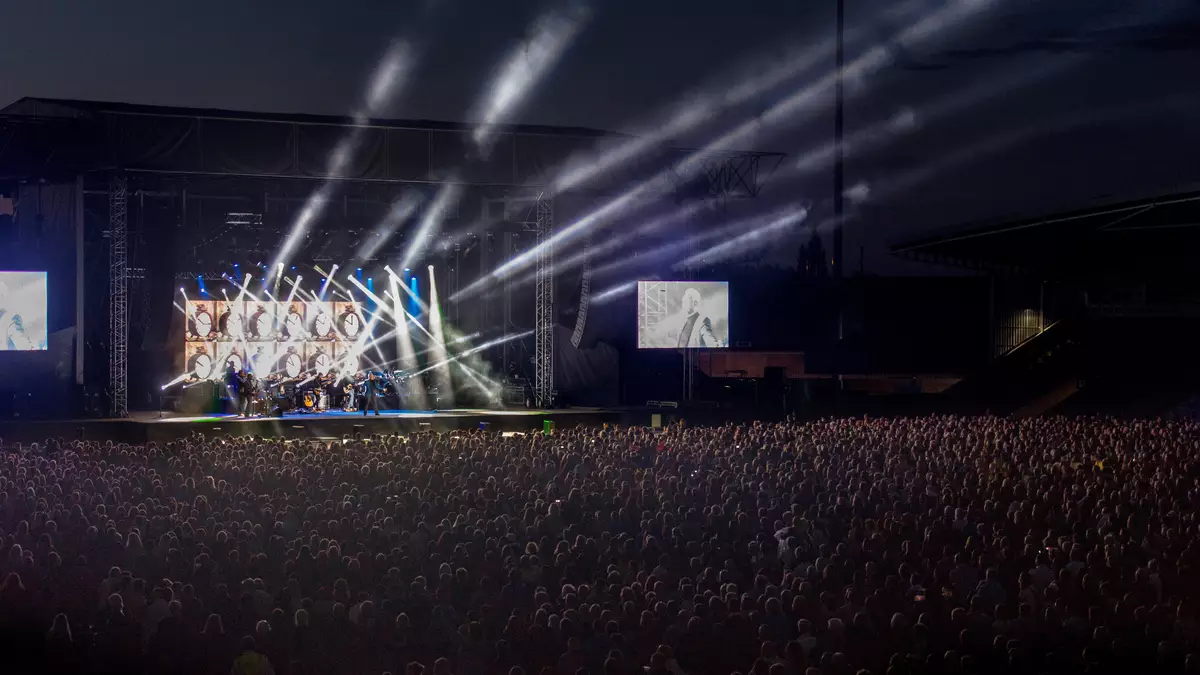
One year after the death of Tina Turner, the Queen of Rock ’n’ Roll’s presence in US music and pop culture feels more alive than ever. From fresh tribute concerts and reissue campaigns to museum plans and streaming surges, her influence is being recast for a new generation of fans discovering her voice on vinyl, on TikTok, and in arenas across the country.
Why Tina Turner is back in the spotlight now
Tina Turner died on May 24, 2023, at age 83 at her home in Küsnacht, Switzerland, after a long illness, as reported by Rolling Stone and confirmed by her publicist. In the year since, a wave of commemorations and projects has reframed her story for American audiences, turning grief into a renewed celebration of her work.
Multiple outlets have noted that Turner’s catalog saw a massive spike in listening after her passing: on-demand streams of her music jumped more than 800% in the US in the week following her death, according to data cited by Billboard from Luminate. As of May 24, 2026, those numbers have normalized but remain significantly higher than pre-2023 levels, reflecting a lasting shift—not just a temporary mourning bounce.
On Broadway, the hit biomusical “Tina – The Tina Turner Musical” may have closed in 2022, but touring productions and international runs have kept her story visible; The New York Times reported that the show recouped its investment on Broadway and has continued to reach new audiences via touring companies. Meanwhile, labels and rights-holders have been rolling out deluxe reissues and high-resolution editions of classic albums like “Private Dancer” and “Break Every Rule,” as covered by Variety and Consequence.
At the same time, Turner’s name keeps surfacing in award shows, tribute segments, and playlists, as artists across rock, pop, R&B, and country cite her as a template for both survival and reinvention. For US fans encountering her for the first time through these celebrations, the past year has felt less like an ending and more like the start of a new chapter in how we understand her place in music history.
Tina Turner’s US chart legacy and streaming story
Even before streaming, Tina Turner’s chart achievements were remarkable. According to Billboard, she earned more than a dozen solo entries on the Billboard Hot 100, with hits like “What’s Love Got to Do With It,” “Better Be Good to Me,” and “Typical Male” defining 1980s pop radio. “What’s Love Got to Do With It” became her signature smash, reaching No. 1 on the Hot 100 in 1984 and helping its parent album “Private Dancer” climb to No. 3 on the Billboard 200.
Turner’s commercial trajectory is often cited as one of the most dramatic comebacks in pop history. After leaving her abusive musical and personal partnership with Ike Turner in the mid-1970s, she spent years rebuilding her career. As documented by NPR Music, she returned to the top of the charts in the 1980s in her 40s—a time when women, especially Black women, were rarely given that kind of second chance by the mainstream music industry.
As of May 24, 2026, her catalog performs strongly on streaming platforms in the US, with “What’s Love Got to Do With It,” “The Best,” and “Proud Mary” among the most-played tracks, per trend reports summarized by Billboard and Variety. These songs span both her solo era and her time with Ike & Tina Turner, giving new listeners a compressed overview of a career that stretched from 1950s R&B clubs to global stadium tours.
Her influence also shows up in the ways playlists are organized. Many major platforms now maintain dedicated Tina Turner catalogs, including “This Is Tina Turner”–style collections, and she frequently appears on algorithmically generated “80s Rock,” “Women of Pop,” and “Workout” playlists. These categorizations highlight how fluidly she moved between rock, soul, pop, and adult contemporary, and how easily her songs fit different moods, from cathartic heartbreak to triumphant motivation.
Behind the scenes, rights and royalties also tell a story of recognition. In 2021, Turner sold the majority of her music interests to BMG in a deal that The Washington Post reported was valued at around $50 million, underscoring the enduring worth of her catalog in an era dominated by legacy-artist acquisitions.
Reissues, box sets, and preserving the Queen of Rock ’n’ Roll
Legacy campaigns have become a central way that labels and estates manage how iconic artists are remembered. In Tina Turner’s case, the past few years have brought a steady stream of reissues and curated releases designed to appeal to both longtime collectors and younger fans discovering vinyl.
“Private Dancer,” the 1984 album that redefined her as a solo superstar, remains the focal point. Deluxe versions have resurfaced several times, offering remastered audio, extended mixes, and live recordings from her explosive mid-1980s tours. According to Consequence, recent versions have emphasized the role of producers like Rupert Hine and Terry Britten in crafting a sleek yet emotionally raw sound that bridged rock guitars and synth-driven pop.
Other key albums have received renewed attention. “Foreign Affair,” home to the stadium anthem “The Best,” has been revisited with expanded editions that spotlight Turner’s late-1980s European dominance. Rolling Stone has noted how these sets reveal just how massive she became overseas, even as US critics sometimes underestimated her artistry at the time.
For American fans, these reissues arrive in a crowded marketplace of legacy-rock products, yet Turner’s stand out because they are attached to a narrative of survival and self-definition. The packaging often foregrounds her personal story—leaving Ike, rebuilding her career, and finding happiness and autonomy—in ways that resonate deeply with audiences concerned about women’s rights, mental health, and industry abuse.
Physical formats play a key role in this preservation. Vinyl pressings of Turner’s essential albums have become staples at indie shops and big-box retailers alike. Special colored-vinyl editions, anniversary pressings, and limited box sets keeps her records visible in the front bins, giving younger crate-diggers a tactile entry point into her discography.
As of May 24, 2026, additional archival projects are rumored but not formally announced, with industry watchers speculating about possible live-album expansions or a comprehensive career-spanning box that would cover both the Ike & Tina era and her solo work. For US listeners, such a release would be an opportunity to view her full arc in one place—a bridge from the chitlin’ circuit to MTV rotation.
From Nutbush to stadiums: the American story behind Tina Turner
Part of what makes Tina Turner’s legacy so potent in the United States is the deeply American shape of her story. She was born Anna Mae Bullock in Nutbush, Tennessee, in 1939, a tiny rural community that she would later immortalize in the autobiographical rocker “Nutbush City Limits.” Her journey from Southern sharecropping towns to the global pop stage tracks with seismic changes in US culture, from segregation to civil rights to the rise of mass media.
Turner came of age musically in the St. Louis club scene and rose to prominence with the Ike & Tina Turner Revue, whose incendiary live shows fused R&B, rock, and soul. Their 1971 version of “Proud Mary” transformed Creedence Clearwater Revival’s roots-rock hit into a slow-burning, then explosive, soul-rock epic. As Vulture has written, that arrangement became a blueprint for genre-blurring covers and a master class in dynamic stagecraft.
Yet the same partnership that gave her a platform also subjected her to years of documented physical, emotional, and financial abuse. Turner’s decision to leave Ike in the mid-1970s, walking away with little more than her name, has become one of the most cited acts of personal bravery in modern music history. Her 1986 memoir “I, Tina,” co-written with Kurt Loder, and the 1993 biopic “What’s Love Got to Do With It” further exposed the violence she endured and the double standards that often protected powerful men in the industry.
For many American fans, especially women and survivors of abuse, Tina Turner’s narrative is not just inspirational—it is instructive. It shows what it costs to walk away, how long it can take to rebuild, and how much joy and self-possession can exist on the other side. As conversations around #MeToo, domestic violence, and artist exploitation have intensified, commentators from NPR Music to The Washington Post have revisited her story as a template for understanding the courage required to break free from harmful systems.
Her later life, much of it spent in Switzerland with her husband Erwin Bach, has also been reframed less as an escape from America and more as a model of an artist choosing peace on her own terms. The image of Tina Turner in a lakeside home, practicing Buddhism and living outside the glare of US celebrity culture, resonates strongly at a time when discussions about burnout and mental health are central to how we talk about superstardom.
Tribute concerts, Broadway echoes, and museum plans
Tributes to Tina Turner have been unfolding across multiple stages, from award-show segments in Los Angeles to local cover bands in small US venues. Shortly after her death, Beyoncé honored Turner during her “Renaissance” tour and at performances by dedicating portions of her sets and publicly acknowledging Turner as a formative influence, a connection documented by Rolling Stone and Billboard. Other artists—from rock acts like The Rolling Stones to pop stars like Lizzo—have incorporated Turner covers or shout-outs into shows, emphasizing how broadly her impact cuts across genres.
Award shows have played their part as well. The 2023 BET Awards and various Grammy-related events included segments spotlighting Turner’s contributions to music and her status as a Black woman who conquered rock arenas, a space that has historically marginalized Black performers. As of May 24, 2026, more tribute events are expected around the second anniversary of her passing and key album anniversaries, illustrating how her memory is becoming a recurring fixture of the awards calendar.
Beyond live performances, the question of how best to memorialize Tina Turner in a permanent physical space has drawn increasing attention. The Tina Turner Museum at Flagg Grove School in Brownsville, Tennessee, located inside the one-room schoolhouse she attended, has become a pilgrimage site for fans, especially Americans seeking a connection to her early life. Regional coverage has highlighted growing visitor numbers, and national outlets like USA Today have pointed to the museum as a model of how local communities can preserve music history.
There have also been public discussions about larger-scale museum or exhibition opportunities in major US cities, potentially mirroring the influence of the Rock & Roll Hall of Fame in Cleveland—where Turner is a two-time inductee, both as part of Ike & Tina Turner and as a solo artist—and institutions like the National Museum of African American Music in Nashville. While no new standalone US museum has been formally announced as of May 24, 2026, curators and cultural commentators continue to argue for dedicated spaces that would center Turner’s story within broader narratives of American music, race, gender, and resilience.
Meanwhile, touring exhibitions that include Turner memorabilia—costumes, photos, and archival footage—have appeared in multi-artist contexts. These shows allow fans to encounter her history alongside that of peers such as Aretha Franklin, Prince, and David Bowie, reinforcing the sense that Tina Turner belongs in the upper echelon of global pop innovators.
How Tina Turner shaped rock, pop, and performance for today’s stars
Tina Turner’s impact on modern pop and rock in the United States is less about specific stylistic tics and more about a set of performance principles and career strategies that countless artists have quietly adopted. Her stage presence—athletic, joyful, physically demanding—reconfigured expectations for how women, particularly Black women, could command large rock audiences.
Contemporary performers like Beyoncé, Mary J. Blige, P!nk, Miley Cyrus, and Jennifer Lopez have all cited Turner as an inspiration at various points, according to interviews compiled by Billboard and Variety. You can see her influence in the way they structure shows: long, narrative arcs with costume changes, emotional peaks, and extended dance breaks that treat the concert as a kind of traveling theater production rather than a simple song list.
In rock and alternative scenes, Turner’s legacy often surfaces through vocal approach and emotional intensity. Singers who embrace raspy belts, dynamic transitions between speaking and singing, and a willingness to push their voices to the edge of breaking—qualities Turner embodied—owe an unspoken debt. Her performances demonstrated that imperfection, grit, and vulnerability could coexist with pop polish.
Turner also played a crucial role in normalizing the idea that artists could have multiple career chapters. She not only survived but thrived after 40, a model that reverberates today as US pop stars like Jennifer Lopez, Shakira, and Gwen Stefani continue to headline major festivals and residencies well into their 40s and 50s. As critics at Spin and Vulture have argued, Turner helped erode the ageist notion that women in pop must retire or fade gracefully into the background.
From a business perspective, Turner’s late-career autonomy—choosing when to tour, what projects to accept, and ultimately where to live—anticipated today’s conversations about artist ownership and wellness. Her decision to step back from the relentless cycle of US press and touring in favor of a quieter life abroad now looks less like withdrawal and more like an early model of sustainable stardom.
Discovering Tina Turner now: where new fans are starting
For younger listeners in the United States, the path into Tina Turner’s catalog often begins in surprising places: a TikTok dance to “The Best,” a movie scene soundtracked by “Proud Mary,” or a sports montage set to “Simply the Best.” Sync placements in films, TV series, and commercials have continued to introduce her songs to new audiences long after their original release.
Streaming services amplify that effect. Curated playlists and algorithmic recommendations now guide millions of listeners toward Turner’s biggest hits, often followed by suggestions for deeper cuts like “I Can’t Stand the Rain,” “River Deep – Mountain High,” or “Private Dancer” (the title track). For someone who first encounters her through a 15-second clip, it can be startling to discover a catalog that stretches across rock, R&B, soul, and pop and across several decades of shifting production styles.
For US fans looking to go deeper, Turner’s autobiographical works are critical. The documentary “Tina,” released by HBO and reviewed warmly by The New York Times, offers an intimate look at her life, weaving together archival footage, contemporary interviews, and reflections on fame, trauma, and healing. Her books, including her memoir and later writings on spirituality and resilience, provide additional context that many concert tributes and playlists only hint at.
Her digital presence has also been carefully maintained. On Tina Turner’s official website, fans can trace major milestones in her career, explore discography details, and access official statements and curated imagery. These hubs are particularly important for younger audiences navigating a social-media environment where misattributed quotes and contextless clips can often distort an artist’s story.
For readers who want more Tina Turner coverage on AD HOC NEWS, there is an internal search option: exploring more Tina Turner coverage on AD HOC NEWS offers a broader view of how her legacy intersects with current tours, award shows, and reissue campaigns.
What Tina Turner means to American music now
In the broader narrative of US popular music, Tina Turner now stands as a bridge figure—connecting R&B and rock, the chitlin’ circuit and MTV, analog touring grinds and digital streaming ubiquity. She is at once a symbol of survival and a working musician who spent decades refining her craft in often hostile environments.
Her story resonates with ongoing debates about who gets to be called a rock artist in America. For years, the rock canon centered largely on white male musicians, even as Black artists laid much of the music’s foundation. Turner’s raw, electrifying performances and guitar-forward arrangements have become evidence in arguments for a more inclusive narrative of rock history, one that acknowledges how women and Black performers shaped the genre from the ground up.
At the same time, her most enduring singles remain fixtures of everyday American life. “What’s Love Got to Do With It” is a karaoke staple; “Proud Mary” continues to light up wedding receptions and bar bands; “The Best” is a go-to soundtrack for sports victories and personal motivational playlists. These songs survive not only because of nostalgia but because their emotional arcs—weariness turned to defiance, patience turned to joy—remain deeply relatable.
As of May 24, 2026, the work of defining Tina Turner’s place in history is still underway. Biographers, critics, and fans are debating how best to frame her multiple roles: rock icon, soul shouter, pop hitmaker, survivor, immigrant, Buddhist practitioner, and symbol of Black excellence in spaces that often resisted it. That ongoing conversation is itself a sign of vitality. We continue to argue about artists who matter.
For US readers, engaging with Turner’s music and story today is more than an act of remembrance. It is an opportunity to reconsider how we value artists who reinvent themselves, how we talk about abuse and recovery, and how we construct the narratives that eventually become our cultural canon. Tina Turner’s songs still ask a simple question—what’s love got to do with it?—but the answers keep evolving as new generations hear their own lives echoed in her voice.
FAQ: Tina Turner’s life, music, and legacy
How did Tina Turner first become famous?
Tina Turner rose to fame in the 1960s and early 1970s as the explosive frontwoman of the Ike & Tina Turner Revue. The group’s high-energy live performances and hits like “River Deep – Mountain High” and their cover of “Proud Mary” made them a staple of R&B and rock circuits, from US theaters to TV appearances. As reported by Rolling Stone, Phil Spector’s production on “River Deep – Mountain High” and the band’s relentless touring schedule helped cement Turner’s reputation as one of the most dynamic live vocalists of her generation.
What made Tina Turner’s solo comeback so significant?
Turner’s solo comeback in the 1980s was groundbreaking because it defied industry expectations on multiple fronts. After leaving Ike and spending years in relative commercial obscurity, she returned to the top of the charts in her mid-40s with “Private Dancer” and “What’s Love Got to Do With It.” According to Billboard and NPR Music, that resurgence was notable not just for its commercial success but for how it reintroduced her on her own terms—stylistically, visually, and narratively—turning her into a global pop icon rather than just a survivor of a toxic partnership.
How has Tina Turner been honored since her death?
Since Tina Turner’s death on May 24, 2023, she has been honored through tribute performances at award shows, dedicated segments on major tours, streaming surges, special playlists, and reissue campaigns. Artists including Beyoncé and Lizzo have publicly credited her influence in concerts and interviews, while institutions like the Rock & Roll Hall of Fame have revisited her legacy through curated content. As of May 24, 2026, plans for further commemorations—such as expanded museum exhibits and anniversary events—are still emerging, reflecting an ongoing effort to codify her place in music history.
Where can US fans learn more about Tina Turner’s life?
US fans can dive deeper into Tina Turner’s life through several key sources: her memoirs, the HBO documentary “Tina,” and curated features from outlets like The New York Times, NPR Music, and Rolling Stone. Visiting the Tina Turner Museum at Flagg Grove School in Tennessee offers a physical connection to her roots, while digital hubs and curated playlists provide accessible entry points into her music. Together, these resources paint a portrait of an artist whose personal journey is as compelling as her stage presence.
Why does Tina Turner remain important to American music?
Tina Turner remains important because she expanded the possibilities of what a rock and pop star could look and sound like in the United States. Her blend of raw emotional delivery, genre-crossing songs, and unflinching honesty about abuse and recovery challenges conventional narratives about fame, gender, race, and age in the industry. For contemporary artists and listeners, she stands as proof that reinvention is possible, that survival can coexist with joy, and that a singular voice can reshape the sound and story of American popular music.
In remembering Tina Turner today, US audiences are not just revisiting old hits; they are rethinking the values and stories that define our musical past and shape our cultural future. Her voice, both literal and metaphorical, continues to echo through arenas, playlists, and living rooms—an enduring reminder that strength, vulnerability, and reinvention can share the same stage.
By the AD HOC NEWS Music Desk » Rock and pop coverage — The AD HOC NEWS Music Desk, with AI-assisted research support, reports daily on albums, tours, charts, and scene developments across the United States and internationally.
Published: May 24, 2026 · Last reviewed: May 24, 2026
Share this article
Know someone who loves Tina Turner? Share this story via text, social, or email to keep her legacy alive for another generation of US music fans.


