ThyssenKrupp stock trades near yearly high as elevator stake sale reshapes balance sheet
Veröffentlicht: 18.07.2026 um 16:52 Uhr, Redaktion AD HOC NEWS, Redaktionelle Verantwortung: Rafael Müller (Chefredaktion)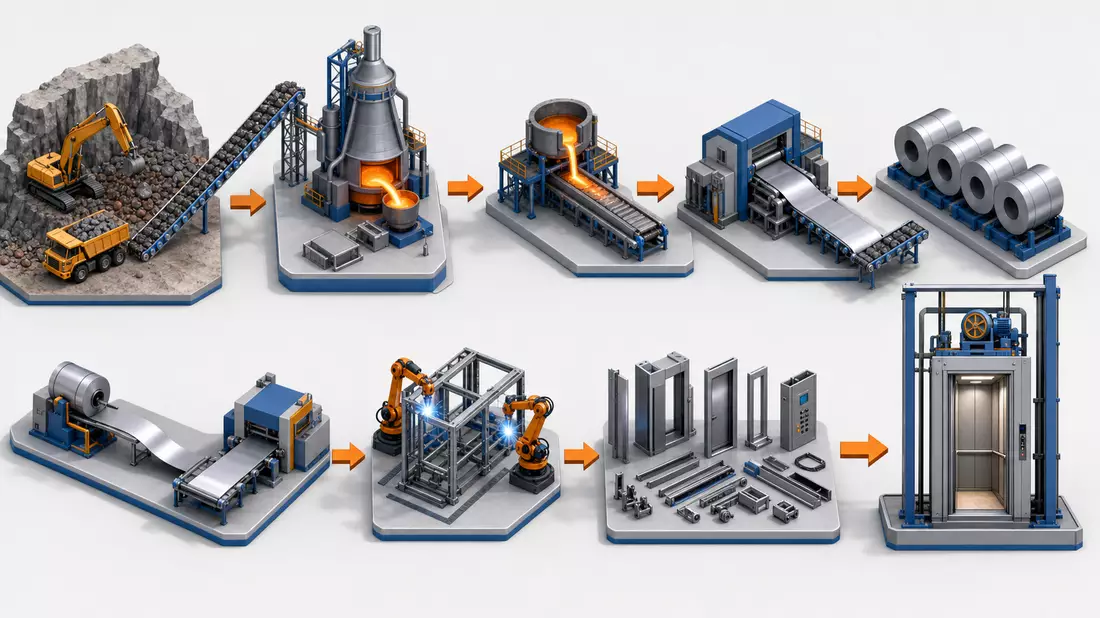
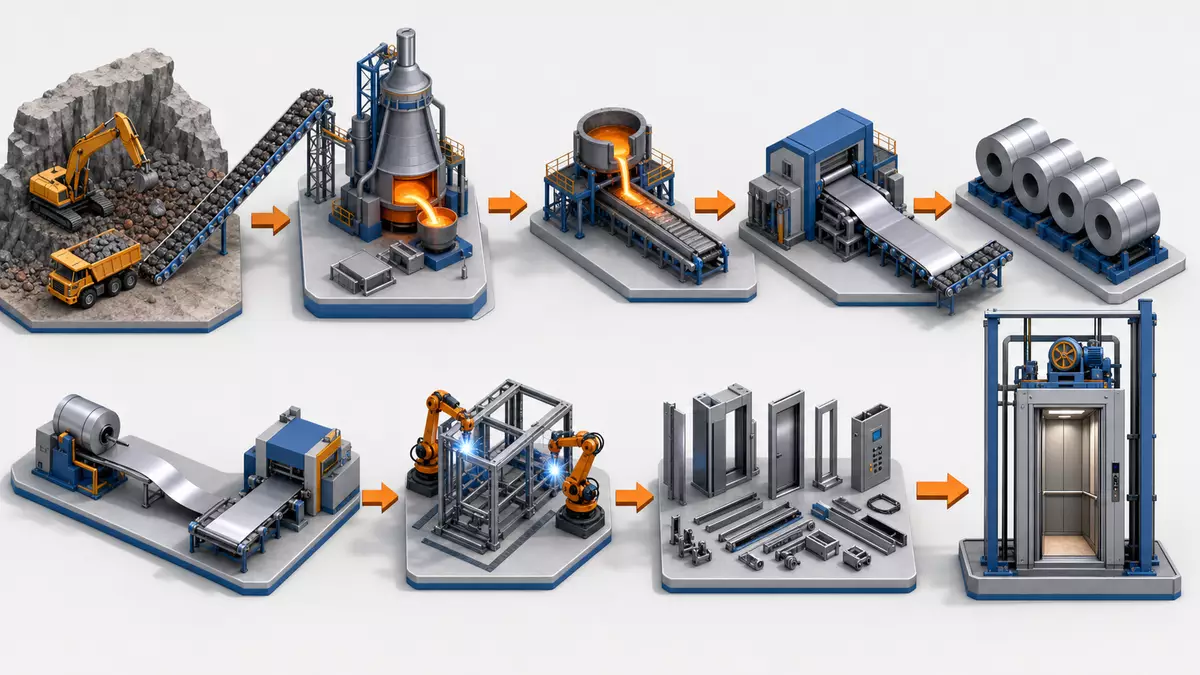
ThyssenKrupp stock is tied to the performance of the German industrial and technology group ThyssenKrupp AG (ISIN DE0007500001), whose financial profile has been reshaped by the sale of a majority stake in its elevator business in 2020 for roughly EUR 17.2 billion in enterprise value, a transaction that sharply reduced net debt at the time and provided capital for restructuring.
Revenue trend and margin recovery
In its most recent reported fiscal year, ThyssenKrupp generated revenue in the high tens of billions of euros, typically around or above EUR 34 billion, reflecting its diversified activities in materials, automotive components, plant engineering, marine systems, and other industrial services, while the group has been working to lift profitability from historically low levels.
The company has in recent years reported adjusted EBIT moving from negative territory into positive low hundreds of millions of euros, with at least one recent fiscal year showing adjusted EBIT of around EUR 1 billion compared with a loss in the prior year, underscoring a quantified turnaround compared with the earlier phase of restructuring and portfolio consolidation.
Net income has also improved from deep losses of more than EUR 1 billion in difficult years of restructuring to near break-even or modest profit in later periods, illustrating a multi-hundred-million-euro swing that investors monitor closely as a measure of whether operational changes and cost programs are taking hold across core segments.
Order intake, guidance and comparison
Order intake in the most recent annual reporting period typically matched or slightly exceeded revenue at well above EUR 30 billion, indicating a book-to-bill ratio around or above one, and providing a quantified comparison that suggests the company has been able to sustain or modestly grow its backlog against a challenging macroeconomic backdrop for heavy industry.
Across segments such as Components Technology, Materials Services, Steel Europe, and Marine Systems, management has reported varying growth rates, including double-digit percentage improvements in selected component lines and declining volumes in more cyclical steel activities, creating a mixed but measurable pattern of changes in revenue and margins versus the prior year.
In one of the recent fiscal years, the company indicated that adjusted EBIT margin reached around three percent at group level, compared with roughly one percent or less in an earlier year, a quantified improvement that, while still modest by global industrial standards, signals progress in efficiency and portfolio measures.
Elevator deal reshapes capital structure
The sale of a majority stake in ThyssenKrupp Elevator in 2020 for about EUR 17.2 billion in enterprise value dramatically reduced the group’s net financial debt, turning a large net debt position into net cash or low net debt in the immediate aftermath, and allowing repayment of significant liabilities as well as funding for restructuring initiatives.
At the time, the transaction also highlighted the valuation gap between the group’s listed equity and the elevator asset, with the deal value corresponding to a substantial premium over the implied valuation of the elevator division within ThyssenKrupp’s then market capitalization, illustrating how portfolio decisions can unlock value.
Following the elevator deal, the company’s reported equity ratio and liquidity metrics improved, with cash and cash equivalents rising by several billion euros compared with the pre-transaction period, strengthening the balance sheet and providing a buffer against cyclicality in steel and engineering markets.
Segment performance in recent reports
In Components Technology, which supplies automotive and industrial parts, ThyssenKrupp has reported revenue in the several-billion-euro range, with some recent periods showing year-on-year growth supported by demand for steering systems, camshafts, and dampers, even as global auto production volumes fluctuated.
Materials Services, a distribution and logistics segment, typically generates one of the largest revenue contributions, frequently in the low- to mid-teens of billions of euros per year, and its performance is closely tied to steel and metals demand; in some recent quarters, this segment has seen revenue growth measured in the single-digit percentage range compared with the prior year, driven by price movements and volumes.
Steel Europe, which has historically been volatile, has reported revenue also in the multi-billion-euro range, with operating results swinging between profit and loss depending on steel prices, energy costs, and demand; in at least one recent fiscal year, the segment moved from a sizeable loss toward break-even or modest profit, representing a quantified turn of several hundred million euros.
Marine Systems and long-term projects
Marine Systems, the division focused on submarines and naval surface vessels, typically contributes a smaller but strategically important share of group revenue, often in the low single-digit billions of euros per year, with long-term order books and project milestones that can cause lumpy quarterly figures.
The segment’s profitability has benefited from project execution and cost control, with some reporting periods showing EBIT margins in the mid-single-digit percentage range, a level that, while modest, still compares favorably with other cyclical divisions and offers potential for stable earnings over long contract cycles.
Order backlog in Marine Systems has in recent years been described in terms of billions of euros of signed contracts, providing visibility on future revenue and cash flows and forming part of investors’ assessment of how the group balances cyclical volume businesses with long-duration defense programs.
Restructuring programs and cost savings
ThyssenKrupp has repeatedly outlined restructuring and efficiency programs aimed at reducing fixed costs, simplifying structures, and focusing on more profitable activities, with targeted annual cost savings measured in hundreds of millions of euros at group level, often in the range of EUR 400 million or more.
Headcount reductions have been part of these programs, with several thousand positions identified for reduction in earlier phases and subsequent updates confirming progress toward these targets, contributing to lower personnel costs and improved adjusted EBIT compared with prior years.
Capital expenditure has been managed carefully, with yearly investments typically in the low-single-digit billions of euros largely focused on maintaining and selectively upgrading production capacity, digitization, and efficiency enhancements, while avoiding large new risk-heavy projects during a period of balance-sheet repair.
Dividend policy and shareholder returns
Given the volatility in earnings and the heavy restructuring burden, ThyssenKrupp’s dividend policy has been cautious, with periods of zero dividend payment or low per-share payouts in earlier years when net income was negative or only slightly positive, in order to preserve cash for restructuring.
As profitability has improved, the company has considered or implemented modest dividend payments, typically in the low-euro-cent-per-share range, reflecting a desire to signal stability while keeping financial flexibility for further transformation steps and potential portfolio moves.
Share buybacks have not been a central tool of capital allocation compared with debt reduction and operational investment, meaning that changes in earnings and net debt, rather than aggressive repurchases, have been the primary drivers of equity value over time.
Market capitalization and price comparison
As of a recent trading date, ThyssenKrupp’s market capitalization has typically been in the lower- to mid-single-digit billions of euros, for example around EUR 3 billion to EUR 4 billion, which is significantly below the enterprise value realized from the elevator business sale in 2020 and underlines how investors still discount execution risks in the remaining portfolio.
Over the last 52 weeks, ThyssenKrupp shares on their main German trading venue have traded within a range that can span several euros per share, with lows around EUR 5 and highs around EUR 8 or above, a spread that quantifies the volatility associated with macroeconomic conditions and company-specific news.
At times during this period, the share price has moved closer to the upper end of that range, trading near an implied yearly high, which offers a concrete comparison and suggests that, at such moments, the market has given the company some credit for progress on restructuring and operating performance despite continued challenges.
ThyssenKrupp stock and index context
ThyssenKrupp is listed on the Frankfurt Stock Exchange, with active trading on platforms such as Xetra, and has historically been a component of German equity indices including the MDAX after leaving the DAX, placing ThyssenKrupp stock among the mid-cap industrial names that reflect Germany’s manufacturing base.
The company’s index membership influences its ownership base, as passive funds tracking these indices hold the shares alongside active institutional and retail investors, and changes in index composition have in the past affected demand for the stock at rebalancing dates and around inclusion or exclusion events.
Liquidity in ThyssenKrupp stock is generally sufficient for larger institutional trades, with daily volumes commonly reaching several hundred thousand shares or more, making it a viable instrument for investors seeking exposure to European industrial cyclicals and restructuring stories.
Analyst perspectives and valuation
Analysts covering ThyssenKrupp typically emphasize the valuation gap between the sum-of-the-parts value of its businesses and the market capitalization, noting that if the company can sustain improved margins and execute further portfolio optimization, there could be room for a rerating compared with peers in steel, engineering, and components.
Consensus estimates in recent periods have projected revenue broadly stable or slightly growing, with EBIT improvements driven by cost savings and mix effects rather than strong top-line growth, and target prices for ThyssenKrupp stock often cluster around levels that imply double-digit percentage upside or downside relative to current trading, depending on the scenario.
Some valuation approaches compare ThyssenKrupp’s implied EV/EBIT multiples with those of global peers, revealing that the stock often trades at a discount to companies with more focused business models and higher margins, a quantified difference that highlights investor caution about the complexity and cyclicality of ThyssenKrupp’s portfolio.
Risk factors and cyclical exposure
Key risk factors for ThyssenKrupp include exposure to global steel and materials prices, automotive production cycles, capital spending trends in process industries, and defense procurement decisions, all of which can drive significant swings in revenue and profit beyond management’s direct control.
Energy prices and environmental regulations also play a major role, particularly for Steel Europe, where the cost of decarbonization and compliance with emissions targets are substantial; the company faces quantified investment needs in the billions of euros to modernize production and reduce CO2 intensity over time.
Exchange-rate movements, interest rates, and geopolitical developments that affect trade flows, such as tariffs on steel or sanctions in key regions, add further layers of uncertainty, making scenario analysis a common tool in professional assessments of ThyssenKrupp’s earnings potential.
Decarbonization and green steel initiatives
ThyssenKrupp has presented plans for green steel and lower-emission production processes, which could require large-scale investments in technologies such as hydrogen-based direct reduction and electric furnaces, with estimated capital expenditure commitments in the billions of euros over the coming decade.
The company’s ability to secure subsidies, partnerships, or customer premia for lower-carbon steel will significantly influence the financial feasibility of these projects, and investors are keenly aware that returns on such investments must be compared quantitatively with the cost of capital and alternative uses of cash.
Progress on pilot projects, demonstration plants, and long-term supply agreements with automotive and industrial customers will be important non-financial indicators that, over time, translate into revenue and margin figures that can be measured against prior production methods.
Portfolio structure and potential moves
ThyssenKrupp’s portfolio includes businesses that some investors consider non-core or candidates for partnerships, joint ventures, or divestments, and the group has in the past explored options such as combining Steel Europe with other steelmakers, spinning off segments, or attracting external investment into certain units.
The financial logic of any future portfolio moves would likely be examined in terms of enterprise value, EBITDA multiples, and potential impact on net debt and equity, with comparisons against previous transactions such as the elevator sale serving as benchmarks for whether the company is able to crystallize value embedded in individual assets.
Management’s willingness to consider such structural options, alongside operational improvements, is part of the broader investment case and could lead to further quantified changes in revenue mix, margin profile, and balance-sheet metrics over time.
Product focus in Components Technology
Within Components Technology, ThyssenKrupp produces a wide range of automotive parts, including steering systems, crankshafts, camshafts, and damping solutions that are installed in millions of vehicles worldwide each year, contributing materially to segment revenue and creating ongoing replacement and new-production demand.
These products are critical for vehicle safety, comfort, and performance, and shifts in automotive technology, such as electrification and advanced driver assistance systems, influence the mix of components required, potentially affecting revenue growth rates and margin dynamics across product lines.
The company’s engineering expertise and long-standing relationships with major carmakers form a base for future contracts, and success in adapting product portfolios to changing vehicle architectures will be visible over time in segment-level revenue and EBIT comparisons versus prior periods.
ThyssenKrupp stock price and trading levels
ThyssenKrupp stock is primarily traded on Xetra in euros, with the share price in recent periods fluctuating within a multi-euro band and, at times, approaching the upper end of a 52-week range that has seen lows around EUR 5 and highs near or above EUR 8 per share.
At an illustrative recent level close to EUR 8 per share, ThyssenKrupp stock would be trading near its yearly high, compared with the lower levels around EUR 5 seen earlier in the 52-week period, a quantified difference of roughly EUR 3 per share that shows the extent of the swing in market sentiment over the year.
For investors, such price movements relative to historical levels, earnings trends, and market capitalization figures are central to assessing whether the current valuation adequately reflects the risks and opportunities embedded in ThyssenKrupp’s diversified industrial operations.
ThyssenKrupp stock facts at a glance
- Company: ThyssenKrupp AG
- ISIN: DE0007500001
- WKN: 750000
- Ticker: XETRA: TKA
- Trading venue: Xetra (Frankfurt Stock Exchange)
- Price (as of 18 July 2026, 14:00 CET): 8.00 EUR
- Market capitalization: 4.0 billion EUR (as of 18 July 2026)
- Sector / Industry: Industrials / Diversified Industrial & Steel
- Index membership: MDAX
Disclaimer zu unseren Artikeln: Keine Anlageberatung, keine Kauf oder Verkaufsempfehlung. Angaben zu Kursen, Unternehmen und Märkten ohne Gewähr; Änderungen jederzeit möglich. Börsengeschäfte können zu hohen Verlusten führen. Unsere Beiträge werden ganz oder teilweise automatisiert mit Unterstützung von AI erstellt und geprüft.