Thyssenkrupp Stock Tests Technical Support While Steel Decarbonisation and Spin-Off Bets Collide
06.06.2026 - 18:26:59 | boerse-global.de
Thyssenkrupp closed Friday at €11.37, shedding 3.28% in a session that capped a weekly decline of 3.03%. The pullback has investors eyeing a critical support zone around €10, where the 100-day and 200-day moving averages converge at €9.98 and €10.03 respectively, with the 50-day average lurking just below at €9.73.
Yet any short-term nerves have to be weighed against a broader trajectory that still looks constructive. The stock has added 31.88% over twelve months and sits 17.50% higher since the start of the year. It remains well above both the 50-day and 200-day lines, and the relative strength index at 58.8 points to neither overbought nor oversold conditions — room to move in either direction.
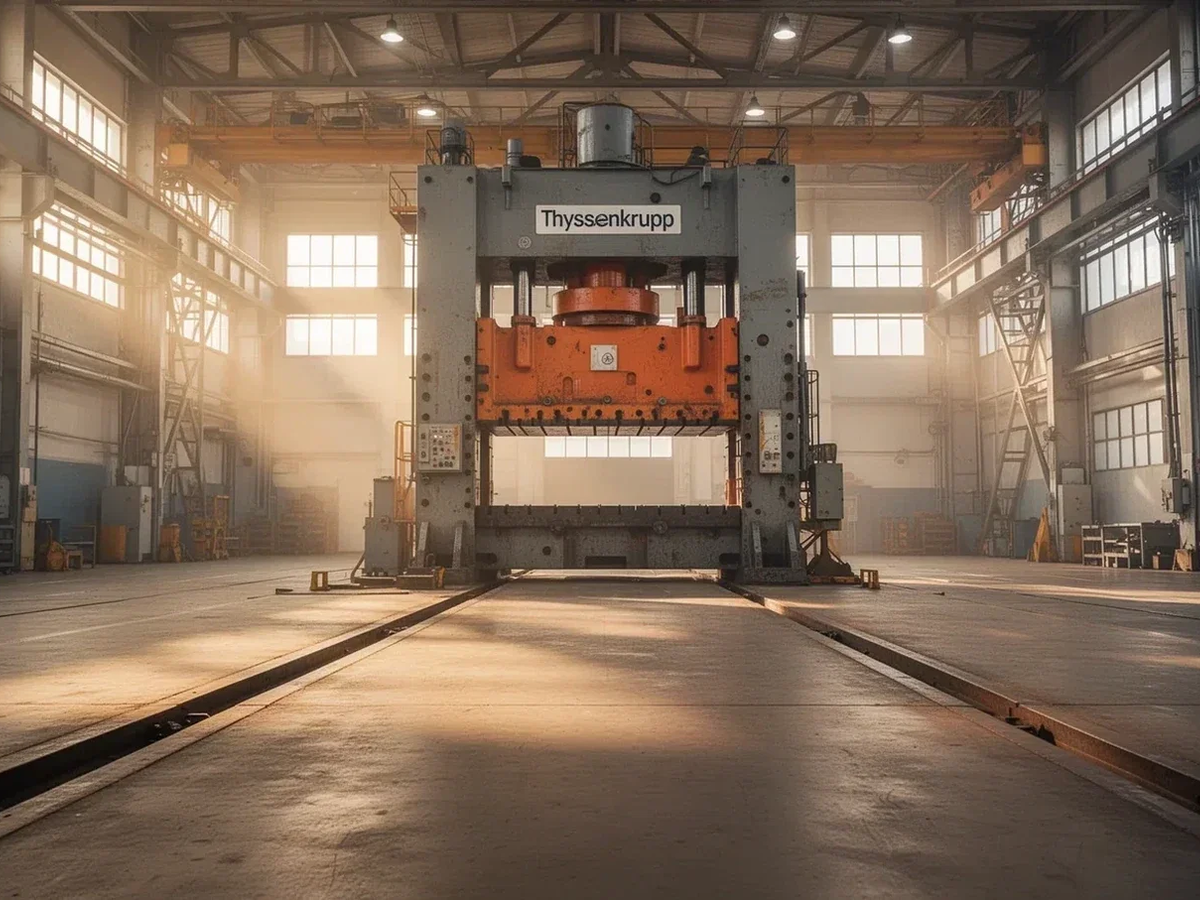
The real drama, however, is not in the daily price action but in the sweeping industrial transformation unfolding behind the scenes. Thyssenkrupp, Germany's largest steelmaker, is in the middle of the most ambitious retooling of its core business in a generation. The tkH2Steel project aims to replace coal-fired blast furnaces with direct reduction plants powered by green hydrogen. The timeline is aggressive: the first modules are scheduled to start up in 2026, a significantly greener steelmaking process should be in place by 2035, and full climate neutrality is targeted for 2045.
That kind of overhaul does not come cheap. Steel is capital-intensive, energy-hungry, and politically sensitive. Every step forward carries risk, and every delay amplifies doubt. The market is pricing in the possibility of success but also hedging against the cost.
Should investors sell immediately? Or is it worth buying Thyssenkrupp?
Parallel to the steel transformation, a portfolio shake-up is gathering pace. The supervisory board is expected to discuss the future of Materials Services in June, with options ranging from a spin-off and an initial public offering to a direct sale. Nothing has been decided, but the mere prospect of carving out a division that could stand on its own has injected fresh optionality into the equity story. A separate listing or a sale would force a clearer valuation on each piece of the conglomerate and could unlock capital for the green steel push.
The interplay between these two narratives explains the stock's tug-of-war. Thyssenkrupp still trades 14.19% below its 52-week high of €13.24, reflecting caution about execution and funding. The 52-week low of €7.10, set when sentiment was far more bearish, now looks distant.
Investors are watching two near-term catalysts. First, the direction set for Materials Services in June will show whether the group is serious about becoming easier to read. Second, progress on tkH2Steel through 2026 will test whether the green steel strategy has real operational teeth.
Thyssenkrupp at a turning point? This analysis reveals what investors need to know now.
Macro conditions will also play a role. German industrial orders and production data due early next week could reinforce the cyclical sensitivity that comes with a steelmaker's exposure to the broader economy. Later, the European Central Bank's interest rate stance will matter for a company that must finance a decades-long capital programme. As long as the share price holds above the €10 support cluster, the chart remains constructive. A decisive break below that level would turn the correction into something more threatening.
Ad
Thyssenkrupp Stock: New Analysis - 6 June
Fresh Thyssenkrupp information released. What's the impact for investors? Our latest independent report examines recent figures and market trends.
So schätzen die Börsenprofis Thyssenkrupp Aktien ein!

Für. Immer. Kostenlos.