The Great Gold Contradiction: Central Bank Reserves Surge but Hawkish Fed and Dollar Dominate
22.06.2026 - 14:32:41 | boerse-global.de
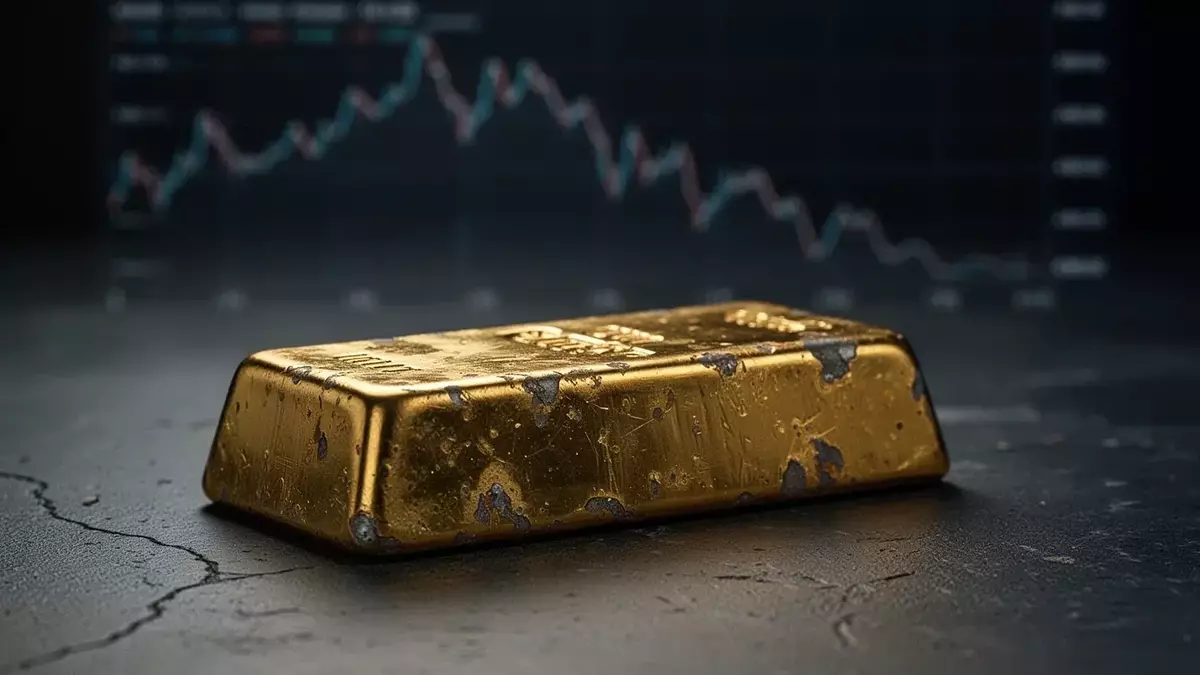
The yellow metal is caught in a peculiar tug-of-war. Spot gold currently trades near $4,226 per ounce, up 1.28% on the day, but the broader trajectory points ominously lower — toward the $4,100 threshold. What makes this slide so baffling is the backdrop of record central bank buying. A new report from the World Gold Council reveals that nearly half of all surveyed central banks intend to increase their gold reserves over the next year, an all-time high. The shift is already reshaping global reserve composition: according to the European Central Bank, gold overtook US Treasuries for the first time in decades at the end of 2025, now accounting for 27% of global currency reserves versus Treasuries’ 22%. Emerging-market central banks in particular are driving the charge, with China having bought gold continuously for the past 18 months. Yet all this institutional demand is proving insufficient to lift the price.
Compounding the pressure is the Federal Reserve’s latest stance. The central bank left its benchmark rate at a range of 3.50% to 3.75% at its most recent meeting, but the accompanying dot plot signaled a distinctly hawkish lean: nine Fed members anticipate further rate hikes in 2026, and the rest see little near-term easing. Fed Chair Kevin Warsh declined to provide his own dot-plot projections and instead established working groups to review the central bank’s internal processes. The bond market wasted no time reacting — the yield on two-year US Treasuries jumped 21 basis points on the day, the largest single-session increase on an FOMC day since March 2008. With US inflation still running at 4.2%, the message is clear: tighter monetary policy is here to stay. That strengthens the dollar, making gold more expensive for overseas buyers, and makes the non-yielding metal even less attractive relative to interest-bearing assets. Institutional investors in the West have responded by pulling capital out of gold funds.
Nowhere is the disconnect more apparent than in the geopolitical arena. Traditionally, tensions in the Middle East send gold surging as a safe haven. This time, the dynamics have backfired. Iran has closed the Strait of Hormuz, accusing the US and Israel of violating a ceasefire in Lebanon. Meanwhile, diplomatic talks are underway in Switzerland between the US and Iran, with a potential roadmap that could de-escalate the conflict within 60 days. The paradox is that the very escalation driving oil prices higher also fans inflation fears, which in turn reinforces the Fed’s hawkish bias — and that is what is crushing gold. The geopolitical risk premium that should buoy bullion is being overwhelmed by the rate-led headwinds.
Should investors sell immediately? Or is it worth buying Gold?
Technicians are flashing warning signs that the selloff could deepen. Gold has lost more than six and a half percent on a monthly basis and has fallen decisively below its 50-day moving average of $4,542, setting up a potential “death cross” — when the short-term average crosses below the long-term average, often seen as the harbinger of a prolonged downswing. The key psychological support at $4,000 is now in focus; if that level fails to hold, the path of least resistance points lower.
All eyes now turn to Thursday’s release of the core PCE price index, the Fed’s preferred inflation gauge. The central bank projects a year-end core PCE reading of 3.3%. A hotter-than-expected print would almost certainly drive bond yields and the dollar even higher, cementing the downward pressure on gold. The analyst community is split on the longer-term outlook. Goldman Sachs has trimmed its 2026 price target to $4,900, while J.P. Morgan looks through the current weakness and argues the sheer scale of central bank buying makes $6,000 an achievable long-term target. For now, the immediate catalyst lies with the inflation data — and the direction it will push an already conflicted market.
Ad
Gold Stock: New Analysis - 22 June
Fresh Gold information released. What's the impact for investors? Our latest independent report examines recent figures and market trends.