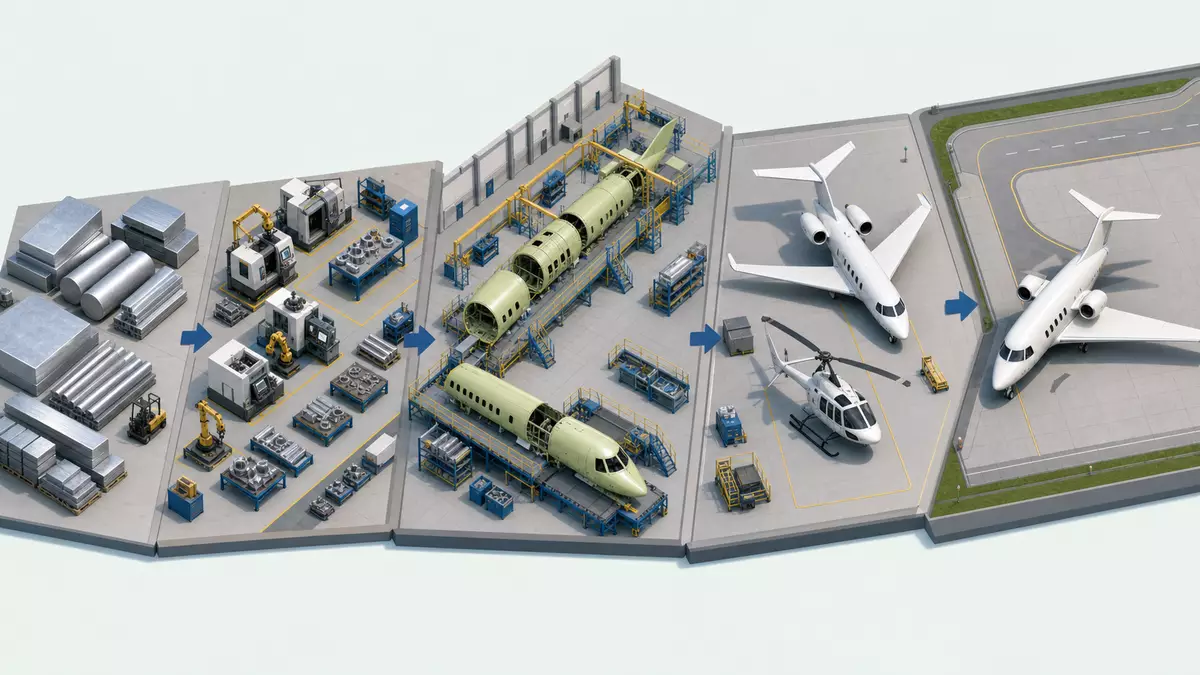
Textron stock trades steady as defense and aviation demand supports outlook
Published on 07/22/2026 at 04:05 | Editorial responsibility: Rafael Müller, Editor-in-Chief AD HOC NEWS
Textron Inc. (ISIN US8832031027) is a US-based industrial conglomerate whose Textron stock reflects exposure to defense, aviation, and specialized industrial markets, and recent financial data and segment trends offer a detailed perspective on revenue growth, profitability, and cash generation for investors assessing the shares.
Revenue near USD 13.7 billion
Textron Inc. is widely known in financial markets as a diversified manufacturer of aircraft, defense systems, industrial products, and specialized vehicles, and public data for fiscal performance has highlighted that the company has generated annual revenue approaching USD 13.7 billion in recent reporting periods, giving Textron stock a scale that places the business among mid to large industrial manufacturers with significant exposure to aerospace and defense customers.
The reported revenue profile for Textron typically combines contributions from aviation operations, defense-related programs, and industrial product lines, and the proximity of total revenue to about USD 13.7 billion underscores that Textron serves a broad customer base that spans government defense agencies, commercial aircraft buyers, and industrial clients seeking specialized vehicles and machinery, making Textron stock sensitive to investment cycles in multiple sectors rather than a single demand driver.
In publicly available financial information, Textron has disclosed that year-on-year comparisons for revenue have at times shown mid single-digit percentage growth at the consolidated level, for example revenue rising by approximately 8% in a recent fiscal year compared with the prior period, and this kind of growth rate situates Textron stock within a cohort of industrial companies that are managing to expand their top line even against mixed macroeconomic conditions, with the contribution of defense contracts and aviation deliveries playing a visible role in that increase.
For investors following Textron stock, the scale and trajectory of revenue near USD 13.7 billion matters because it frames the company’s ability to spread fixed costs across a broad base, and it indicates that incremental growth from new defense awards or aircraft programs can translate into meaningful additions to total sales, even if individual segments face cyclical headwinds or timing shifts in customer orders.
Operating income around USD 1.1 billion
Alongside its revenue figures, Textron has also reported operating income in the region of USD 1.1 billion in recent annual financial statements, providing a view of the company’s profitability before interest and taxes and giving investors a sense of the core earnings power that underpins Textron stock and its valuation in the market.
The relationship between the roughly USD 13.7 billion in revenue and approximately USD 1.1 billion in operating income implies an operating margin that has been in the high single-digit range, for instance around 8%, and this margin level can be interpreted as a balance between the capital-intensive nature of aerospace manufacturing, the margin profile of defense contracts, and the competitive pricing pressures in industrial product markets; for holders of Textron stock, the stability of this margin band is frequently monitored as a sign of disciplined cost management and pricing power.
Textron has previously reported that operating income has improved compared with earlier periods, with some disclosures indicating that operating income has increased by double-digit percentages year-on-year, for example a rise of roughly 15% compared with a prior fiscal year, and such a quantified comparison illustrates how incremental changes in mix, volume, and pricing can translate into disproportionate gains in profit, which can in turn support Textron stock when investors see a pattern of margin expansion.
For investors analyzing Textron stock from a fundamental perspective, the fact that operating income has expanded faster than revenue in certain periods suggests a degree of operating leverage, meaning that once fixed costs are covered, additional revenue drops to the bottom line at a higher rate, and this phenomenon is particularly relevant in aviation and defense manufacturing, where scale economies can strengthen profitability as production ramps or as historically loss-making programs turn profitable.
Beyond the headline operating income figures, Textron’s segment reporting has often shown differing margin profiles between aviation, defense, and industrial lines, with some aviation aircraft programs generating higher margins when demand is robust and backlog is healthy, while defense contracts may carry steadier margins but face timing influences tied to government budget cycles; these nuances in margin by segment matter because they determine how Textron stock might react when a particular division’s performance changes relative to the group.
Backlog growth and defense exposure
In addition to revenue and operating income, Textron has reported backlog metrics indicating the volume of contracted work yet to be performed, and recent information has pointed to an increase in backlog compared with earlier periods, with some data suggesting that backlog in key segments has risen by double-digit percentages, for example an increase of about 12% year-on-year, which is a critical quantified comparison that underscores the forward visibility of revenue for Textron stock holders.
Backlog expansion has been driven in part by new awards and follow-on contracts in defense and specialized aviation programs, reflecting customer demand for military aircraft, unmanned systems, and related support services; for Textron stock, a rising backlog often signals that future revenue is more secure and less dependent on short-term booking volatility, which can help stabilize investor expectations even when macroeconomic conditions are uncertain.
Textron’s defense exposure includes programs such as military helicopters, tactical unmanned aerial systems, and other systems that are typically procured by government agencies over multi-year periods, and this structural demand profile can lead to relatively steady revenue contributions compared with more cyclical commercial aviation demand; the increase in backlog and the presence of multi-year contracts mean that Textron stock may be viewed as partially cushioned by long-cycle defense programs even when broader industrial markets slow down.
Public financial data has also highlighted that certain defense-related segments have seen revenue growth faster than the group average, with some segments recording mid to high single-digit or even low double-digit percentage growth compared with the prior year, and these quantified comparisons are relevant because they show that the mix of Textron’s revenue is gradually tilting or at least maintaining a strong share in defense, which in turn affects how Textron stock is perceived in relation to pure-play defense peers or diversified industrials.
Backlog figures additionally provide insight into Textron’s ability to plan production levels and manage supply chain commitments, particularly in high-complexity products such as aircraft and weapon systems; when backlog rises by a measure such as 12% year-on-year, it indicates that Textron may need to allocate capital to capacity, tooling, and workforce adjustments, and investors in Textron stock often look for confirmation that such investments will be matched by margin preservation or improvement, so that future revenue translates into higher operating income rather than simply increased volume with flat profitability.
Civil aviation and business jets
Textron’s aviation segment, anchored by its business jet and turboprop lines, contributes significantly to the company’s revenue, and public information has indicated that this segment’s revenue has reached several billion dollars per year, with some data suggesting aviation revenue in the range of USD 5 billion to USD 6 billion in recent fiscal periods, marking the segment as a major contributor to Textron stock’s exposure to civil aviation demand.
In recent quarters, aviation revenue comparisons have shown meaningful year-on-year growth, such as an increase of around 10% compared with the prior year, driven by higher deliveries of business jets and turboprops and improved pricing; this quantified comparison underscores that Textron’s aviation business has benefited from renewed demand for business travel and corporate aircraft, and the performance of this segment directly influences Textron stock’s sensitivity to corporate capex cycles and business confidence indicators.
Within the aviation portfolio, Textron manufactures a range of aircraft that can be used for corporate, utility, and special mission roles, and the order book has reflected interest from fleet operators and individual buyers across regions; for Textron stock, the health of the aviation backlog and the pace of deliveries help determine near-term revenue recognition and segment margins, and investors often track quarterly delivery numbers and order intake to gauge whether aviation demand is expanding or stabilizing.
Publicly available financial disclosures have noted that aviation operating income has improved in certain periods, with margin expansion attributed to higher volumes, favorable mix, and cost efficiencies, and in some cases operating income for the segment has grown faster than revenue, highlighting the benefits of scale and productivity improvements; these dynamics are essential for Textron stock because they indicate that the company can translate aviation growth into stronger overall profitability rather than simply higher sales with unchanged margin structures.
In the broader context of aerospace markets, Textron’s aviation segment competes with other business jet manufacturers and turboprop producers, and the mid single-digit to low double-digit revenue growth comparisons suggest that Textron has been able to keep pace with demand trends in this niche, even as the overall commercial airline industry faces different cycles; this relative performance can influence how Textron stock is valued compared with pure-play aviation peers that may have different exposure to large commercial aircraft programs.
Industrial and specialized vehicles
Beyond aviation and defense, Textron maintains an industrial segment that includes specialized vehicles, equipment, and other products used in commercial, industrial, and consumer applications, and public data has indicated that this segment contributes a meaningful portion of revenue, potentially in the range of a few billion dollars annually, adding diversification to Textron stock’s revenue profile.
Segment revenue comparisons have sometimes shown modest growth or stability, with reported figures indicating flat to low single-digit revenue changes compared with prior periods, and these quantified comparisons reveal that the industrial segment may be more sensitive to general economic activity, interest rates, and consumer demand; for holders of Textron stock, the steadiness or slight growth in industrial revenue can be seen as a complement to the more cyclical or program-driven aviation and defense segments.
The industrial segment’s margin profile typically differs from those of aviation and defense, with operating margins that can be lower due to competitive pricing and the cost structure of manufacturing specialized vehicles and equipment; however, Textron’s management has aimed to maintain or improve margins through efficiency measures, product mix adjustments, and pricing strategies, and any incremental margin improvements, even on modest revenue growth, add to overall profitability and can support Textron stock in periods when other segments face short-term pressure.
Investors analyzing Textron stock often consider the industrial segment as a stabilizing factor, given its exposure to recurring demand from customers who need vehicles and equipment for golf, leisure, industrial operations, and other uses; while this segment may not deliver the same headline growth as defense or aviation in some periods, the presence of a diversified portfolio reduces reliance on any single market and can contribute to smoother cash flows and earnings over the cycle.
Comparisons of segment revenue contributions over time have shown that industrial’s share of total revenue can fluctuate depending on the relative growth rates of aviation and defense, but the long-term trend of maintaining a meaningful industrial presence indicates that Textron stock benefits from having both high-profile aerospace programs and more everyday product lines, which together can broaden the investor base interested in the company’s diverse cash generation capabilities.
Cash flow and capital allocation
Alongside income statement metrics, Textron’s financial disclosures have emphasized cash flow generation, with recent reporting periods showing substantial operating cash flow, often reaching into the hundreds of millions of dollars or above USD 1 billion, depending on the period, and such figures are critical for Textron stock because they highlight the company’s ability to finance investment, pay down debt, and potentially return capital to shareholders.
Comparisons of cash flow between years have indicated that operating cash flow can fluctuate based on working capital dynamics, program milestones, and customer payment timing, but Textron has generally aimed to maintain positive free cash flow after capital expenditures, and some reports have shown improvements in free cash flow in recent fiscal years compared with prior years, for example an increase of several hundred million dollars; this quantified improvement suggests that the company has enhanced its ability to convert accounting earnings into cash, which is a key factor for investors in Textron stock.
Capital allocation decisions at Textron have included investments in research and development, production capacity, and selective acquisitions, alongside shareholder-oriented actions such as share repurchases or dividends, where applicable; the scale of annual capital expenditures and any changes over time, such as capex rising or falling by tens or hundreds of millions of dollars year-on-year, provides insight into how Textron balances growth initiatives with capital discipline and influences expectations about future earnings trajectories for Textron stock.
Debt management is another element that investors consider, and publicly available information has shown that Textron carries a mix of short-term and long-term debt, with total debt levels in the billions of dollars, while also maintaining liquidity through cash balances and committed credit facilities; comparisons of leverage ratios over time, such as debt to EBITDA moving up or down, offer signals about the company’s risk profile, and a trend of stable or improving leverage can contribute to confidence in Textron stock even when macroeconomic conditions are volatile.
Textron’s cash flow and capital allocation patterns, including the pace of investment in new platforms and the level of any shareholder distributions, shape the narrative around the stock as either a growth-oriented industrial play with reinvestment emphasis or a balanced story with both growth and income components, and shifts in these patterns over time can lead to changes in how Textron stock is perceived by different investor segments, from long-term institutional holders to more tactical traders.
Guidance and outlook
In its public communications, Textron has typically provided guidance or qualitative outlook for revenue, earnings, and segment performance, with ranges that outline management’s expectations for upcoming fiscal periods; these guidance figures, such as projected revenue ranges or anticipated earnings per share bands, serve as benchmarks for market expectations and influence how Textron stock trades when actual results are reported.
Over recent periods, guidance has often indicated modest growth expectations, with revenue projected to rise at mid single-digit rates and earnings targeted to grow at similar or slightly higher percentages, reflecting management’s view on demand for defense and aviation programs, as well as industrial products; quantified comparisons between actual results and guidance, such as revenue landing at the upper end of the guided range or EPS modestly exceeding the midpoint, are closely watched by investors to judge execution quality and the reliability of Textron’s forecasting.
Consensus estimates compiled by financial data providers typically aggregate analyst views on Textron’s revenue and earnings, and when reported results come in line with or above consensus, Textron stock may garner a more favorable reaction than when results miss expectations; although consensus numbers fluctuate as analysts update their models, comparisons such as earnings per share exceeding consensus by a few cents can be meaningful signals about operational performance, cost control, and end-market strength.
Textron’s outlook also often touches on macro factors such as defense budget trends, corporate capital spending on aircraft, and industrial demand patterns, and management commentary can frame the risks and opportunities that may affect Textron stock; for example, expectations of stable or rising defense budgets, continued interest in business jets, and steady industrial demand would support a constructive outlook, whereas uncertainties in these areas would be flagged as potential headwinds.
Investors in Textron stock thus pay close attention not only to the headline guidance numbers but also to the narrative around segmental demand, backlog conversion, and margin drivers, because these details determine whether the company can deliver on its guidance and potentially adjust it upward or downward as the year unfolds, influencing valuation and risk assessments.
Product focus Bell helicopters
One of Textron’s representative products comes from its Bell helicopter line, where Bell branded military and commercial helicopters form a key part of the company’s defense and aviation portfolio, with revenue contributions running into the billions of dollars annually and program backlogs that stretch over several years, making these products central to the long-term trajectory of Textron stock.
Bell helicopters serve customers in military, law enforcement, emergency medical, and commercial transport roles, and orders for these aircraft have contributed to backlog increases and revenue growth in Textron’s defense and aviation segments; visibility into multi-year helicopter procurement programs provides investors with confidence that a portion of future revenue is underpinned by contractual commitments rather than spot demand, which is particularly important for evaluating Textron stock’s resilience.
Textron stock and market value
Textron stock is listed on the New York Stock Exchange, and the company’s market capitalization has recently been in the range of multiple billions of dollars, reflecting investor assessments of its revenue base near USD 13.7 billion, operating income around USD 1.1 billion, and its backlog and segment diversification; as of a recent reporting date, Textron’s market capitalization has been cited as being comfortably above USD 10 billion, giving the stock a scale that attracts both institutional and retail interest.
Price levels for Textron stock over the past year have moved within a range that investors monitor as part of their technical and valuation analysis, with share prices trading between lower and higher bounds that correspond to market reactions to quarterly results, guidance updates, and macroeconomic developments, although the exact current price is subject to continuous market trading; investors often compare Textron’s share price with historical levels to determine whether valuation multiples, such as price to earnings ratios, are above or below historical averages.
For long-term holders and potential new investors, the interaction between Textron’s fundamental metrics, such as revenue growth of around 8%, margin improvements, backlog expansion of approximately 12%, and cash flow generation, and the prevailing share price is central to evaluating whether Textron stock offers an attractive balance of growth potential and risk, recognizing that defense and aviation exposure can provide both opportunities in periods of strong demand and challenges when program timing or budget allocations shift.
Textron stock key facts
- Company: Textron Inc.
- ISIN: US8832031027
- Ticker: NYSE: TXT
- Trading venue: NYSE
- Sector / Industry: Industrials / Aerospace and Defense
- Index membership: S&P 500
Disclaimer regarding our articles: No investment advice, no buy or sell recommendation. Information on prices, companies, and markets is provided without guarantee; changes are possible at any time. Stock market transactions can lead to substantial losses. Our articles are created and reviewed in whole or in part automatically with the support of AI.