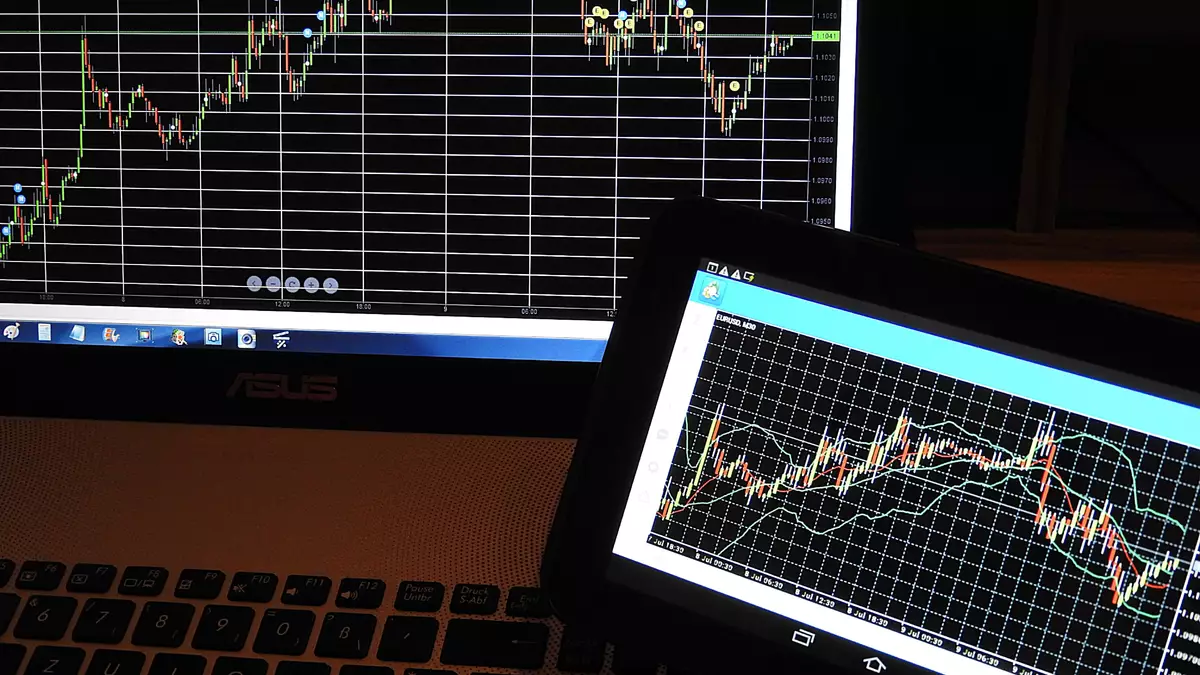
Tesla Stock Teeters Between Rebound Hopes and EV Reality Check
Published on 12/29/2025 at 19:20 | Editorial responsibility: Rafael Müller, Editor-in-Chief AD HOC NEWS
Tesla stock is trading in a fragile balance, where every uptick feels like a relief rally and every dip reignites doubts about the entire electric?vehicle trade. Over the past few sessions the price has chopped sideways after a sharp pullback, as traders argue in real time over a single question: is this a wounded growth story setting up for a comeback, or the start of a long, grinding derating?
In the very short term, the market mood around Tesla leans cautiously bearish. The stock is down over the last five trading days, slipping roughly in the low single?digit percentage range, as sellers faded each intraday bounce. Yet that decline follows a more decisive drop earlier in the month, which means some of the worst?case fears may already be reflected in the chart. Daily volumes show bursts of activity followed by quieter consolidation, a classic sign of a market that has not made up its mind.
From a wider lens, Tesla’s 90?day trajectory tells a more sobering story. The stock sits materially below its level from three months ago, lagging the broader tech complex and even the auto sector. The once?frenetic momentum that defined the Tesla trade has cooled into a pattern of lower highs and hesitant rebounds. At the same time, the price is still comfortably off the 52?week low and significantly below the 52?week high, underscoring how polarized sentiment has become: too expensive for deep value investors, too uncertain for pure growth chasers.
Against this backdrop, the latest closing price hovers in the low? to mid?200?dollar range per share, with the 52?week spectrum stretching from roughly the mid?100s at the bottom to the mid? to high?200s at the top. Over just the last five days, the net move has been mildly negative, but the intraday swings hint at traders probing for a short?term floor. Every attempt to break higher has met selling pressure near recent resistance, while dip buyers continue to defend the lower band of the current range.
Latest developments, products and corporate updates from Tesla Inc.
One-Year Investment Performance
Imagine an investor who had bought Tesla stock exactly one year ago and simply held through every recall headline, price?cut scare and rate?driven tech selloff. That purchase would have been made at a meaningfully lower level than where the stock trades today, in the vicinity of the mid? to upper?100?dollar range per share. Fast?forward to the current price in the low? to mid?200s, and that position would now be sitting on a sizeable double?digit percentage gain, in the rough area of 30 to 40 percent.
In dollar terms the story becomes more tangible. A hypothetical 10,000?dollar investment one year ago would have grown into roughly 13,000 to 14,000 dollars today, even after a choppy autumn for high?multiple growth names and a more demanding interest?rate backdrop. That is not the explosive multi?bagger profile of Tesla’s early glory days, but it is still an outcome that beats most blue?chip benchmarks. The emotional journey, however, would have felt far more volatile than the tidy percentage suggests. At several points in the year, that same position would have been uncomfortably close to breakeven or even briefly underwater, only to recover as optimism returned around software, energy storage and AI?driven autonomy.
This mix of respectable trailing gains and exhausting volatility helps explain Tesla’s current identity crisis in the market. Long?term holders can point to one?year outperformance and say the thesis still works. Short?term traders, staring at the recent pullback and a fading 90?day trend, see a stock that now demands much stronger evidence of earnings power before it can justify another sustained leg higher.
Recent Catalysts and News
Over the past week, news around Tesla has focused less on flashy new vehicle unveilings and more on the gritty details that actually move earnings and valuation: production, pricing and software monetization. Earlier this week, several outlets highlighted continued pressure in the global EV market, with competition in China intensifying and legacy automakers leaning into price cuts. Tesla remains at the center of this storm, and reports of selective discounting and incentive tweaks have kept investors on edge about margin resilience in the core automotive segment.
At roughly the same time, coverage from business and tech publications zeroed in on Tesla’s non?automotive ambitions, particularly energy storage and its evolving software ecosystem. Analysts and reporters have pointed to growing deployments of Megapack utility?scale batteries as a quiet but increasingly material driver of revenue diversification. Commentary also resurfaced around Tesla’s progress in autonomous driving and the monetization potential of its driver?assistance software, with some commentators framing it as a call option that the market still struggles to price consistently.
Within the last several sessions, trading desks have also been digesting secondary narratives: regulatory scrutiny of driver?assistance systems, ongoing debates about labor conditions at various plants, and the strategic implications of any further delays or changes to future vehicle platforms. None of these stories alone has shattered the stock, but together they help explain why rallies have been tentative. The news flow has been mixed rather than decisively positive, and the market is treating every headline as another data point in a larger reassessment of what Tesla’s growth curve will really look like over the next few years.
Wall Street Verdict & Price Targets
Wall Street’s stance on Tesla in recent weeks has been nuanced rather than uniformly bullish. Investment banks such as Goldman Sachs, Morgan Stanley and Bank of America have refreshed their models within the last month, broadly acknowledging near?term pressures in automotive margins while still granting Tesla a premium multiple for its software and energy optionality. Across these houses the average rating clusters around a Hold to moderate Buy, with a tilt toward cautious optimism rather than all?out enthusiasm.
Goldman Sachs, for example, has highlighted the risk that EV adoption is normalizing from hyper?growth to more measured expansion, which could cap multiple expansion until Tesla proves that software and energy can pick up the slack. Price targets from Goldman and peers such as J.P. Morgan and Deutsche Bank generally sit above the current share price but not dramatically so, often implying upside in the range of 10 to 25 percent over the next twelve months. Morgan Stanley, long one of Tesla’s more vocal supporters, continues to emphasize the potential of AI?enabled autonomy and the network effects of a large installed fleet, but even there the language in recent notes has shifted toward "show me" mode: the opportunity is huge, yet the burden of proof now lies squarely with execution.
On the more skeptical end, firms like J.P. Morgan maintain underweight or Sell?leaning views based on valuation concerns and the risk that intensifying global competition compresses margins more than bulls expect. In their scenario trees, Tesla remains a high?beta expression of both EV adoption and the broader risk appetite for long?duration growth assets. The net effect of this mixed chorus is a consensus that no longer treats Tesla as an untouchable disruptor but as a complex, multi?segment company whose different businesses may be valued separately by the market.
Future Prospects and Strategy
At its core Tesla’s business model rests on a three?layered stack: hardware in the form of vehicles and energy products, software that augments and eventually could transform that hardware, and a manufacturing philosophy aimed at driving costs relentlessly lower. The vehicle line generates the bulk of revenue today, but strategic emphasis is steadily shifting toward higher?margin streams like driver?assistance software, potential robotaxi services and grid?scale energy storage. In parallel, Tesla continues to invest in its own battery supply chain and manufacturing processes in an attempt to maintain a durable cost advantage, even as competitors close the gap.
Over the coming months several variables will likely dictate how the stock trades. Delivery trends and any further pricing moves will remain front and center, as the market tries to gauge whether volume growth can offset margin headwinds. Progress on software features, including incremental enhancements to advanced driver?assistance systems, will be watched for signs that Tesla can deepen monetization of its installed base rather than relying solely on new car sales. The energy segment’s growth trajectory, especially in utility?scale storage, could emerge as a key differentiator if it shows resilience just as the pure?play EV narrative wobbles.
For investors, Tesla now demands a more sophisticated framework than the simple "EV hyper?growth" label of the past. The stock’s one?year gain shows that betting against the company has not been a winning trade, yet the choppy 90?day trend and recent five?day slide warn that the path forward will not be linear. If management can demonstrate consistent execution across vehicles, software and energy, while keeping a firm grip on costs, today’s uneasy consolidation could age into the base of a new uptrend. If not, the stock risks drifting toward the lower end of its 52?week range as the market reprices Tesla as a more ordinary, albeit innovative, industrial and software hybrid.
Disclaimer regarding our articles: No investment advice, no buy or sell recommendation. Information on prices, companies, and markets is provided without guarantee; changes are possible at any time. Stock market transactions can lead to substantial losses. Our articles are created and reviewed in whole or in part automatically with the support of AI.