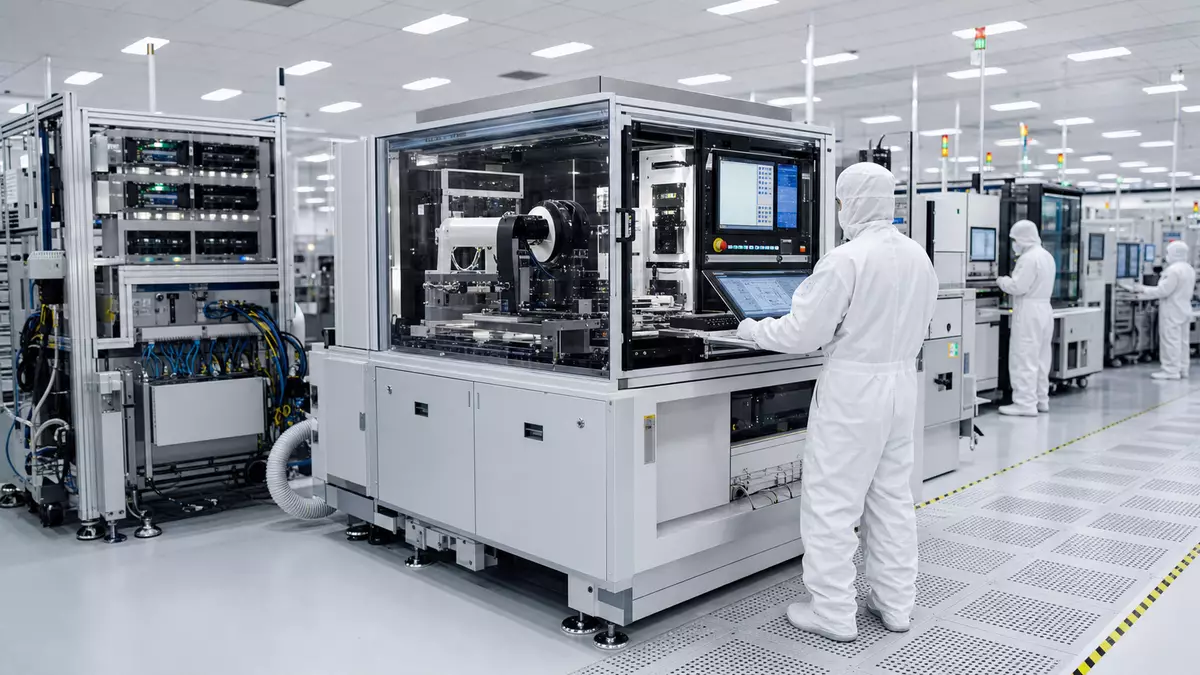
Teradyne stock trades near recent highs as robotics and test demand support growth
Published on 07/19/2026 at 16:38 | Editorial responsibility: Rafael Müller, Editor-in-Chief AD HOC NEWS
Teradyne Inc. (ISIN US8807701029), a leading supplier of semiconductor test equipment and industrial automation solutions traded on Nasdaq, has seen Teradyne stock supported by a combination of solid recent earnings and ongoing demand for both chip testing and collaborative robots. The companys latest reported annual figures showed higher revenue and profit compared with the prior year, underlining a recovery from the sector downturn and providing a fundamental backdrop for the current valuation.
Revenue up from prior year
According to the most recently available annual report published by Teradyne, the company generated several billion dollars of revenue in its last completed fiscal year, with sales rising compared to the previous year as demand improved across semiconductor test and automation. The reported net income also increased year on year, reflecting better utilization of manufacturing capacity and a more favorable product mix. Management highlighted that growth in industrial automation, including collaborative robotic arms and autonomous mobile robots, contributed a growing share of overall revenue in that period. In the same report, Teradyne noted that its semiconductor test segment remains the largest contributor, supported by orders from major chip manufacturers for systems used in testing processors, memory, and other integrated circuits before they are shipped to customers.
In an earlier quarter within that fiscal year, Teradyne disclosed that revenue had declined versus the very strong levels recorded during the peak of the last semiconductor cycle, but bookings and backlog pointed to an eventual stabilization. That transitional pattern between peak and normalized demand is typical for capital equipment suppliers, and investors in Teradyne stock have been monitoring the order trends closely. The company also described the steps it was taking to align costs with the softer near term environment while continuing to invest in new product development for both test and automation. These measures were aimed at preserving profitability and positioning the business for the next upturn in chip and electronics production.
Margin profile and earnings comparison
Beyond the top line, Teradyne reported operating margins that remained healthy relative to many industrial peers, reflecting the high value-add nature of semiconductor test equipment and robotics. In its most recent annual filing, the company indicated that gross margin had stayed comfortably above typical heavy industrial averages, even as mix shifted between test and automation. Net income for the year rose compared with the preceding fiscal year, with earnings per share increasing by a double digit percentage on a diluted basis. This improvement in profitability was driven by a combination of cost discipline, product differentiation, and recovering utilization in its manufacturing operations.
In one of the more recent quarterly updates, Teradyne communicated that earnings had declined from the extraordinary levels seen during the peak semiconductor demand phase, yet remained solid compared to historical norms. The company emphasized that its long term model targets attractive margins through cycles, and that investments in automation and software are intended to sustain that performance. For investors evaluating Teradyne stock, these margin and earnings dynamics provide an important context: while cyclical swings in chip capital expenditure can affect quarterly results, the companys structural profitability has historically recovered as demand normalizes.
Teradyne has also outlined a capital allocation approach that balances reinvestment in growth with returns to shareholders. Recent filings show that the company has returned cash via share repurchases and dividends, using its strong balance sheet and cash generation to provide direct value to equity holders. The presence of a regular dividend, even if modest relative to earnings, is often viewed by investors as a sign of confidence in the stability of cash flows and the long term prospects of the business. At the same time, Teradyne continues to prioritize research and development spending, particularly in areas such as advanced semiconductor test platforms, artificial intelligence driven analytics, and collaborative robotics safety and usability enhancements.
Industrial automation and robotics contribution
Within Teradynes portfolio, industrial automation has become an increasingly important contributor to growth. The company owns Universal Robots, a key player in collaborative robots, and has expanded into autonomous mobile robots through acquisitions and organic development. According to Teradynes latest available segment disclosures on its investor relations site, automation related revenue has grown over recent years, increasing as a percentage of total sales compared with earlier periods when semiconductor test dominated even more strongly. This reflects the broader trend of factories, warehouses, and smaller manufacturers adopting flexible automation solutions that can work safely alongside human workers.
Collaborative robots are designed to be easily programmable and adaptable, enabling small and medium sized enterprises to automate tasks such as assembly, packaging, and material handling without building traditional fenced-off robot cells. Teradynes automation segment has capitalized on this trend by offering ecosystems of robot arms, software, and accessories that can be tailored to different use cases. The company has reported that unit shipments of collaborative robots have grown over time, and that a rising installed base provides opportunities for recurring revenue through software updates, accessories, and services. For Teradyne stock, the growth in automation revenue is significant because it adds a diversified, less cyclical stream alongside the more volatile semiconductor test business.
The company has also stressed the strategic importance of integrating data and analytics across its product portfolio. In test, this means analyzing large volumes of measurement data to quickly identify defects and improve yields for chipmakers. In automation, it involves monitoring robot performance, predicting maintenance needs, and optimizing workflows. Teradynes investors often pay attention to these digital capabilities, as they can enhance the value proposition of hardware products and deepen customer relationships. While such software and analytics revenues are not yet the majority of sales, they are seen as a lever for margin resilience and differentiation in both test and automation markets.
Market position and competitive landscape
Teradyne operates in competitive markets, facing rivals in semiconductor test as well as robotics and automation. In test equipment, other large providers offer systems for memory, logic devices, and mixed signal components, and customers frequently evaluate performance, throughput, and cost of ownership when choosing platforms. Teradynes position has historically been strong in logic and system on chip test, supported by long standing relationships with major chip manufacturers and foundries. The companys ability to innovate in areas such as advanced node support, high speed interfaces, and complex test methodologies is crucial for maintaining share as chips become more powerful and designs more intricate.
In industrial automation, the competitive field includes both established robot manufacturers and newer players focused on collaborative solutions. Universal Robots is widely recognized in the market for its ease of use and broad ecosystem of end-effectors and application kits, but there are multiple alternatives vying for customers attention. Teradynes strategy has been to focus on customer friendly offerings and a wide distribution network, aiming to make its collaborative robots accessible to companies that may have little prior experience with automation. The firm also seeks to leverage cross selling opportunities between collaborative robots and mobile robots, creating integrated solutions for intralogistics and production processes.
For Teradyne stock, the competitive landscape is relevant because it influences both growth prospects and margin sustainability. If the company successfully differentiates its products and maintains technological leadership, it can sustain pricing power and win higher value projects. Conversely, intensified competition could pressure margins or slow growth. Investors therefore frequently monitor product announcements, customer wins, and technology roadmaps shared through investor presentations and conference appearances, many of which are accessible via the companys investor relations website.
Balance sheet and cash flow strength
Teradyne has consistently emphasized the strength of its balance sheet in investor communications. The company holds significant cash and short term investments relative to its debt, providing flexibility to weather cyclical downturns and invest in strategic initiatives. Historical cash flow statements show robust operating cash generation during upcycles in semiconductor demand, which has enabled Teradyne to fund acquisitions, research and development, and shareholder returns without relying heavily on external financing. In weaker periods, cash flows naturally moderate, but the company aims to manage working capital and expenses to preserve financial resilience.
Investors in Teradyne stock often view this balance sheet strength as an important risk mitigant. Capital equipment industries can be volatile, with orders fluctuating as customers adjust investment plans. A strong financial position allows Teradyne to sustain product development and support customers even when near term demand is softer. It also offers potential optionality for future acquisitions, particularly in automation or software, where the company may see opportunities to enhance its portfolio and accelerate growth.
Long term demand drivers
From a strategic perspective, Teradyne is exposed to several long term demand drivers that could support revenue and earnings over many years. Semiconductor test demand is ultimately linked to global chip production, which in turn depends on trends such as cloud computing, 5G networks, artificial intelligence, automotive electronics, and industrial digitalization. As chips become more complex and pervasive, reliable testing becomes increasingly critical to ensure quality and performance. Teradyne provides systems that help chipmakers validate functionality, measure performance, and detect defects before devices reach end customers, and this role is fundamental to the electronics supply chain.
Industrial automation demand is driven by factors such as labor costs, productivity requirements, safety regulations, and the need for flexibility in manufacturing. Collaborative robots and mobile robots can allow companies to adapt quickly to changing product mixes, automate repetitive or ergonomically challenging tasks, and improve throughput without building entirely new facilities. Teradyne has positioned its automation offerings to serve these needs, and has indicated in its strategic commentary that it sees significant room for adoption among small and medium sized enterprises that historically relied heavily on manual labor. As more companies embrace automation, Teradynes installed base of robots could expand, supporting both initial hardware revenue and follow on software and services income.
Representative product line
One of Teradynes representative product lines is its suite of collaborative robots marketed through Universal Robots. These robotic arms are designed to be mounted on workbenches, floors, or other fixtures and programmed via intuitive interfaces, often using graphical programming or demonstration based techniques. Customers deploy them for tasks such as pick and place, assembly, screwdriving, and packaging, taking advantage of integrated safety features that allow the robots to operate near human workers subject to appropriate risk assessments.
Teradyne has reported in past investor materials that Universal Robots collaborative robots have been adopted across industries including electronics, automotive components, metalworking, and food and beverage. The company offers various payload and reach configurations, enabling different models to handle different tasks. As the installed base expands, Teradyne benefits not only from initial sales but also from accessory ecosystems and software options that can enhance robot capabilities or simplify deployment in specific applications. This product line complements Teradynes core semiconductor test systems, providing exposure to broader industrial trends and diversifying the companys revenue streams.
Teradyne stock and investor focus
Teradyne stock on Nasdaq reflects market expectations about both the cyclical semiconductor test business and the structural growth in industrial automation. Investors weigh factors such as order trends, backlog, margin profiles, capital allocation decisions, and competitive dynamics when assessing the shares. While the company has experienced cycles in revenue and earnings tied to chip investment booms and pauses, it has also demonstrated an ability to grow over longer horizons by expanding into new segments and maintaining technological leadership.
Because Teradyne does not belong to one of the very largest broad market indices such as the S&P 500, its stock can be more sensitive to sector specific news and investor sentiment around semiconductors and automation. However, the companys established position and diversified product portfolio provide a level of resilience. For market participants, monitoring the companys regular filings, earnings calls, and investor presentations remains essential for understanding how near term developments fit into its long term trajectory.
Teradyne stock continues to represent exposure to the testing and automation infrastructure underlying many modern technologies. As long as electronics and manufacturing remain central to the global economy, demand for reliable test equipment and flexible automation is likely to persist, giving the company an opportunity to leverage its expertise and product lineup in both domains.
More on Teradynes test and automation strategy
Further filings, presentations, and product information from Teradyne provide additional detail on its semiconductor test platforms, collaborative robots, and long term financial targets.
Teradyne stock facts
- Company: Teradyne Inc.
- ISIN: US8807701029
- Ticker: NASDAQ: TER
- Trading venue: NASDAQ
- Sector / Industry: Technology / Semiconductor equipment and industrial automation
- Index membership: Nasdaq composite and relevant sector indices
Disclaimer regarding our articles: No investment advice, no buy or sell recommendation. Information on prices, companies, and markets is provided without guarantee; changes are possible at any time. Stock market transactions can lead to substantial losses. Our articles are created and reviewed in whole or in part automatically with the support of AI.