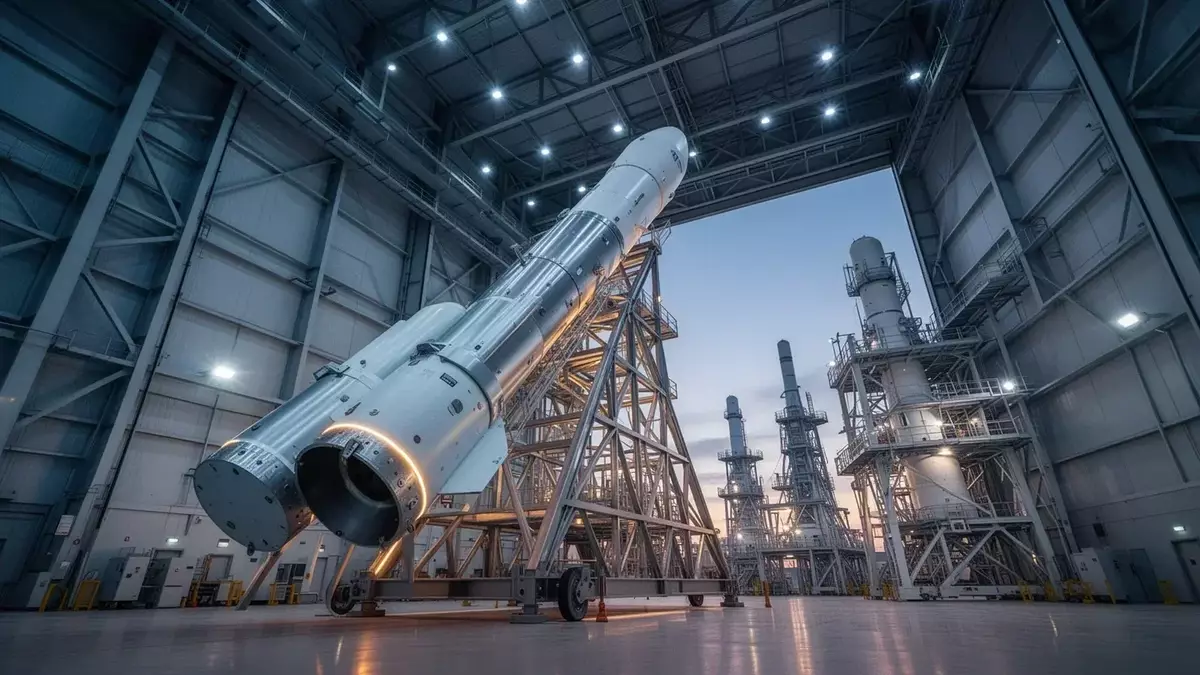
SpaceX’s $1.77 Trillion IPO Draws Record Demand as Starlink Profitability Offsets Starship Losses
09.06.2026 - 07:05:27 | boerse-global.de
Orders worth $150 billion have poured in for SpaceX’s initial public offering, twice the $75 billion the company is looking to raise. Priced at $135 per Class A share, the deal values the rocket-and-satellite operator at approximately $1.77 trillion, vaulting it into the top ten most valuable US corporations on listing day. Trading begins June 12 on the Nasdaq under the ticker SPCX.
The overwhelming demand persists even though SpaceX reported a net loss of $4.94 billion in its most recent fiscal year. Revenue, however, climbed 33% to $18.67 billion, underscoring the split personality of the business. The Starlink satellite network is the clear profit engine: connectivity revenue surged 31.6% in the first quarter of 2026 to $3.26 billion, generating operating income of $1.19 billion. Active subscribers have doubled year-over-year to 10.3 million, and the constellation now numbers more than 10,580 operational spacecraft.
By contrast, the Space Operations segment – covering launch services and related activities – saw first-quarter revenue slide to $619 million from $865 million a year earlier. Its operating loss ballooned from $70 million to $662 million, driven by a 76.8% jump in research and development spending as the company pours capital into the Starship programme and associated ground infrastructure. The drag is real, but the launch business also demonstrates the cost advantages of reusability: on June 8 a Falcon 9 booster made its 35th flight, lifting 29 Starlink satellites from Cape Canaveral before landing on the drone ship A Shortfall of Gravitas. SpaceX now claims a 95% reusability rate across its rocket fleet.
The IPO filing, submitted to the SEC just days before that booster milestone, reveals that SpaceX performed 40 Falcon launches in the first quarter of 2026 – 33 of them internal missions for Starlink and seven for external customers. The pattern is unmistakable: the company uses its own rockets primarily as a tool to deploy its own satellite network, making Starlink the linchpin of investor returns.
Should investors sell immediately? Or is it worth buying SpaceX?
Elon Musk retains control through supervoting shares, and existing holders face significant restrictions. Roughly 60% of shares are subject to a one-year lock-up, with the remainder freed over 180 days. That structure could limit early selling pressure but also raises questions about liquidity.
Index inclusion is likely to provide an immediate tailwind. MSCI has announced it will add SpaceX to its global standard indexes on an accelerated timetable, forcing passive funds to buy shares shortly after the debut. S&P Global, however, has declined early entry into the S&P 500 because the company lacks sustained profitability – a requirement the index provider enforces strictly.
Beyond rockets and satellites, SpaceX has placed a big bet on artificial intelligence. Following its merger with xAI, 76% of capital expenditure now flows into AI-related ventures, including the construction of orbital data centres. A revenue-sharing agreement with Anthropic, which runs through May 2029, is expected to contribute meaningful income to the AI division.
SpaceX at a turning point? This analysis reveals what investors need to know now.
For prospective investors, the central question is whether Starlink’s growing margins can absorb the deepening losses from Starship development and the heavy outlays on AI infrastructure. The $75 billion IPO will supply fresh capital, but the company’s own prospectus makes clear that profitability in the near term remains elusive.
Ad
SpaceX Stock: New Analysis - 9 June
Fresh SpaceX information released. What's the impact for investors? Our latest independent report examines recent figures and market trends.