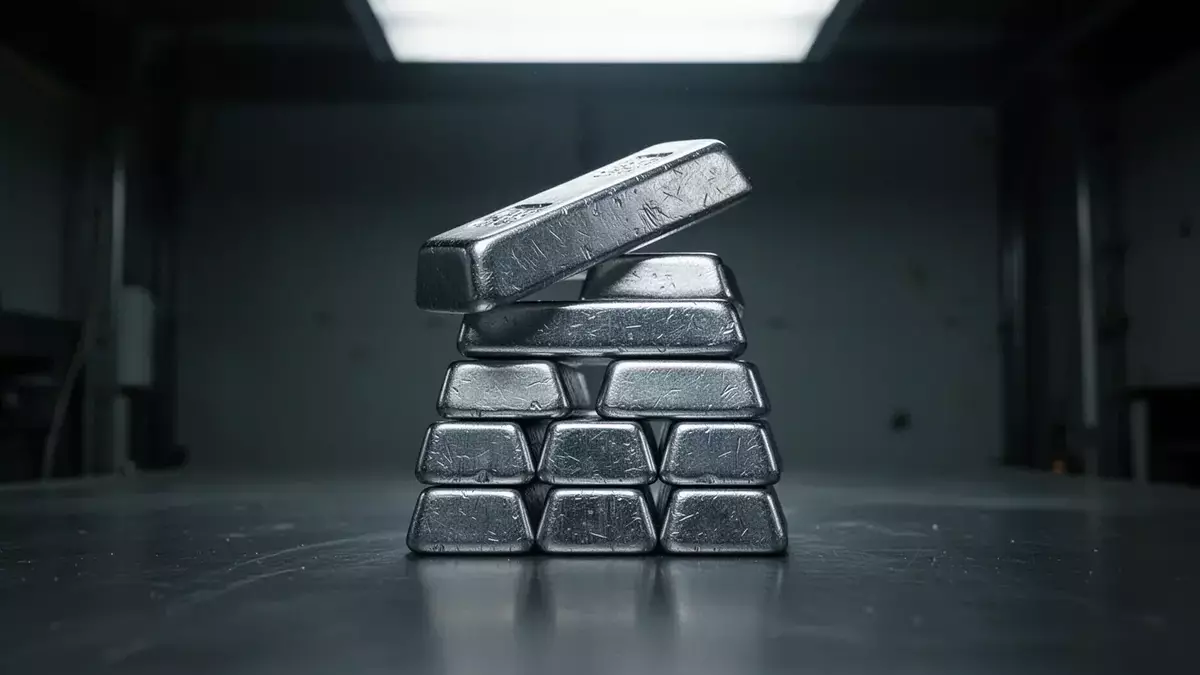
Silver’s $1.48 Trillion Wipeout: Physical Scarcity Proves No Match for Rate Fears and Geopolitical Liquidation
10.06.2026 - 19:35:54 | boerse-global.de
The precious metals complex sustained a staggering blow this week as silver crashed to a two-month low of $63.44, wiping out all of the metal’s year-to-date gains. The selloff intensified Wednesday, erasing roughly $1.48 trillion in combined gold and silver market value within a span of twelve hours. A perfect storm of hotter-than-expected US inflation, hawkish repricing of Federal Reserve policy, and forced liquidation tied to escalating Middle East tensions drove investors to dump positions across the board.
At the heart of the rout is a shock inflation print. May’s US consumer price index came in at 4.2%, the highest level since April 2023, propelled by energy costs that pushed Brent crude above $92 a barrel. The market immediately repriced rate expectations, assigning a 68% probability of a rate hike in December — now under the leadership of new Fed Chair Kevin Warsh. For a non-yielding asset like silver, rising real yields and a strengthening dollar are toxic: the metal lost more than 13% in June alone.
Geopolitics added an extra layer of distress. Military confrontations between the US and Iran, combined with a near-total blockade of the Strait of Hormuz, drove oil prices higher but triggered an opposite reaction in precious metals. Large institutional players, needing to raise cash quickly, liquidated long silver and gold positions, amplifying the downward spiral. Parallel capital outflows from physically backed silver ETFs further intensified pressure on the futures market.
Should investors sell immediately? Or is it worth buying Silber Preis?
Despite the carnage on the paper market, the physical side of the equation tells an entirely different story. The Silver Institute projects 2026 will mark the sixth consecutive year of supply deficits, with HSBC forecasting that industrial demand will exceed supply by 73 million ounces this year. In China, the disconnect is already visible: importers are paying premiums of 10% over the spot price, and silver imports hit an eight-year high in early 2026 as private investors flee a weakening yuan. The nation’s booming solar, EV, and AI hardware sectors keep industrial demand at record levels.
Chartists, however, focus on the technical damage. After hitting an all-time high of $121 in January, silver has surrendered nearly half its value. The price now trades decisively below its 20-day moving average, and a fresh sell signal on the weekly chart points to further downside. Traders are watching three key support zones: the Fibonacci level at $62.00, which must hold to allow a recovery toward $67.80; the March low at $61.00, the last line of defense before the psychologically important $60 level; and a deep zone between $54.00 and $58.00 if that barrier breaks. On the upside, a sustained reclaim of $70 is needed to negate the downtrend.
The stark divergence between physical tightness and paper market panic has not gone unnoticed by long-term bulls. Major institutions such as J.P. Morgan and Bank of America maintain forecasts above $85 by late 2026, underpinned by the persistent supply deficit. But for now, the path of least resistance is dictated by inflation, the Fed, and geopolitical risk. Until the central bank signals a softer stance, silver remains acutely vulnerable to further shocks.
Ad
Silber Preis Stock: New Analysis - 10 June
Fresh Silber Preis information released. What's the impact for investors? Our latest independent report examines recent figures and market trends.