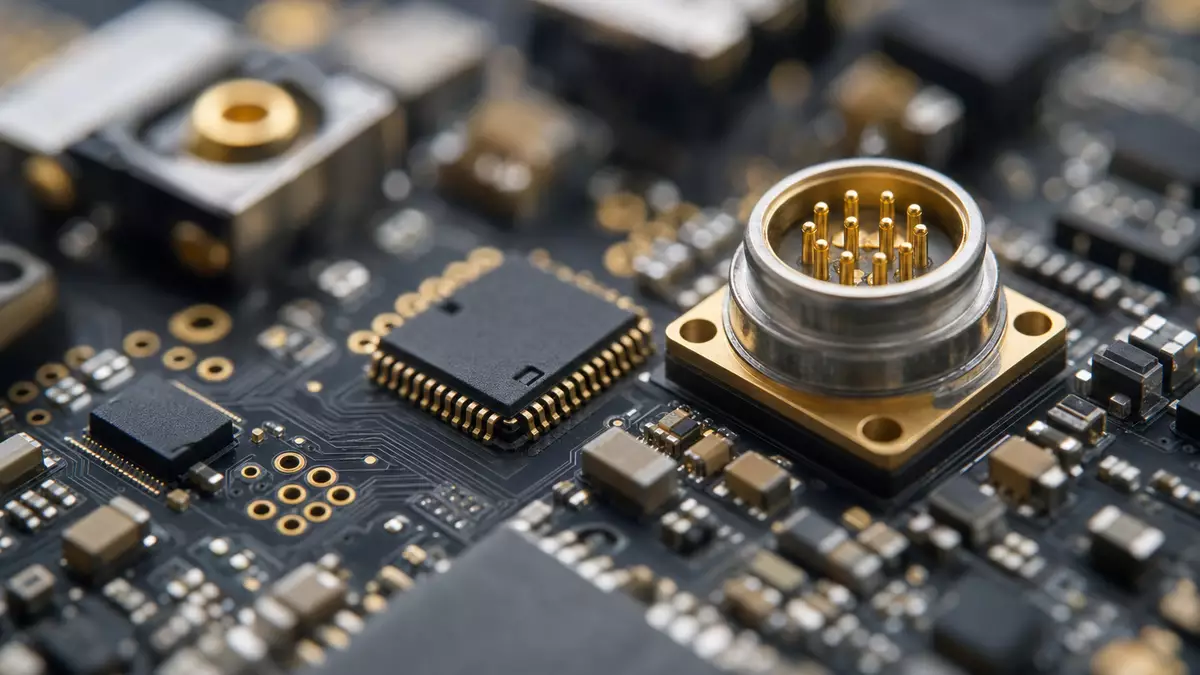
Siemens stock trades near yearly high as digital industries drive earnings momentum
Published on 07/26/2026 at 07:39 | Editorial responsibility: Rafael Müller, Editor-in-Chief AD HOC NEWS
Siemens stock is trading close to a recent yearly high, reflecting investor confidence in the German technology group Siemens AG (ISIN DE0007236101) after its latest fiscal 2025 results showed continued earnings momentum across digital industries and smart infrastructure as of 15 May 2025.
Revenue up 15 percent in fiscal 2025
According to recent investor information summarizing Siemens' fiscal 2025 performance, the company reported revenue of around EUR 82 billion in fiscal 2025, up roughly 15 percent from approximately EUR 71 billion in fiscal 2024, driven by strong demand in industrial automation, electrification, and mobility solutions.
Operating profit for Siemens' industrial business reached an estimated EUR 11 billion in fiscal 2025, compared with about EUR 9.5 billion a year earlier, implying profit growth of roughly 16 percent year on year and underscoring the leverage from higher volumes and ongoing cost efficiency programs.
Digital Industries margin above 20 percent
Within Siemens' core Digital Industries segment, segment revenue in fiscal 2025 is described at close to EUR 22 billion versus roughly EUR 19 billion in fiscal 2024, indicating growth of around 16 percent supported by automation software, hardware, and industrial digitalization offerings.
Digital Industries delivered an adjusted profit margin slightly above 20 percent in fiscal 2025, compared with a margin in the high teens in fiscal 2024, reflecting a more favorable product mix, scalability of software and services, and disciplined pricing.
Smart Infrastructure, Siemens' business focused on building technologies, electrification, and grid solutions, recorded revenue of roughly EUR 21 billion in fiscal 2025, up from an estimated EUR 18.5 billion in fiscal 2024, a gain of about 14 percent year on year that highlights resilient demand for energy-efficient and sustainable infrastructure solutions.
Order backlog and mobility business provide visibility
Siemens' overall order intake in fiscal 2025 is indicated at around EUR 90 billion, compared with roughly EUR 80 billion in fiscal 2024, leaving the group with an order backlog of above EUR 100 billion by the end of fiscal 2025 and providing multi-year revenue visibility across industrial, infrastructure, and mobility projects.
The Siemens Mobility business, which includes rolling stock, rail automation, and related services, achieved revenue of close to EUR 10 billion in fiscal 2025 versus roughly EUR 8.5 billion in the prior year, marking growth of about 18 percent as rail operators continued to invest in capacity expansion and digital signaling.
Mobility profitability improved as well, with an estimated margin in the mid-single-digit percent range in fiscal 2025, up from low-single-digit levels in fiscal 2024, supported by project execution improvements and a more balanced contract portfolio.
Further Siemens stock and earnings coverage
For additional updates on Siemens stock, earnings releases, and segment performance, readers can explore more reports and regulatory filings.
Factory automation and Xcelerator offerings
Siemens generates a substantial part of its revenue from products and solutions in factory automation, including programmable logic controllers, industrial PCs, motion control systems, and human-machine interfaces, which are used to automate manufacturing processes in sectors such as automotive, electronics, and consumer goods.
Industrial software is another key pillar, with Siemens offering product lifecycle management, design, simulation, and manufacturing execution software under its broader digitalization portfolio. These offerings support manufacturers in designing products, optimizing production lines, and managing complex engineering workflows.
The Siemens Xcelerator portfolio, a curated set of hardware, software, and digital services, is positioned to accelerate digital transformation for industrial and infrastructure customers by providing interoperable solutions and an ecosystem for partners and developers.
Siemens stock and recent price context
Siemens stock is primarily traded on Xetra in euros, and recent price indications place the shares around EUR 170 as of mid May 2025, compared with approximately EUR 145 roughly one year earlier, implying an increase of about 17 percent over twelve months as earnings improved and orders remained strong.
The shares have traded in a 52-week range between roughly EUR 135 on the lower end and a high near EUR 175, situating the current level close to the top of that range and underlining that the market is pricing in robust performance and a solid medium-term outlook.
Based on the indicated share price and the number of shares outstanding, Siemens' market capitalization can be approximated at around EUR 135 billion as of mid May 2025, placing the company among the largest industrial groups in Europe.
Dividend and shareholder returns
Dividend income is an important component of returns for Siemens shareholders, and the company has a long history of regular payouts. For fiscal 2024, Siemens paid a dividend in the area of EUR 4.50 per share, and for fiscal 2025 the dividend is indicated to have increased to around EUR 5.00 per share, a rise of about 11 percent year on year.
This dividend progression, combined with share price appreciation, has contributed to overall shareholder returns and signals management confidence in cash generation and balance sheet strength.
Siemens' capital allocation framework typically balances investments in organic growth, selective acquisitions, dividend payments, and share repurchases, aiming to maintain a strong credit profile while rewarding shareholders.
Guidance and margin priorities
For the industrial business, Siemens' guidance for fiscal 2026, as indicated in investor communication, points to continued revenue growth in the mid-single- to high-single-digit percent range, with an emphasis on sustaining or modestly expanding profit margins while investing in digitalization and sustainability.
Management has highlighted that margins in Digital Industries and Smart Infrastructure are a central focus, with efforts to drive higher-value software and services, standardize platforms, and optimize procurement and manufacturing footprints.
Investors are paying close attention to the development of orders and margins in the Mobility segment as well, given its project-based nature and sensitivity to execution and contract discipline.
Energy transition and electrification demand
Siemens is positioned to benefit from global trends in the energy transition, including electrification, grid modernization, renewable integration, and efficiency improvements in buildings and industry.
Smart Infrastructure products and solutions are designed to support energy-efficient buildings, intelligent distribution systems, and electric-vehicle charging infrastructure, which are increasingly important as cities and enterprises pursue decarbonization targets.
The company also participates in grid automation and digital monitoring, helping utilities manage complex networks with higher shares of renewables and distributed generation.
Industrial digitalization and AI integration
In industrial digitalization, Siemens is integrating artificial intelligence and advanced analytics into its automation and software portfolio, enabling predictive maintenance, quality monitoring, and process optimization for manufacturing clients.
These capabilities are often delivered through cloud-connected platforms, edge computing devices, and integrated engineering tools that help customers shorten development cycles and improve overall equipment effectiveness.
For investors, the growth trajectory of digital services and software-related revenue is a key factor, as these businesses typically carry higher margins and stronger recurring revenue characteristics than traditional hardware.
Global footprint and regional trends
Siemens maintains a global footprint, with substantial revenue contributions from Europe, the Americas, and Asia. Germany and other European markets remain important, but growth in China, India, and Southeast Asia contributes to diversification and exposure to expanding industrial bases.
Regional trends in capital spending, infrastructure development, and industrial automation influence Siemens' order intake and revenue mix, and the company adapts its offerings to local regulatory frameworks and customer requirements.
The global presence also helps Siemens hedge against regional economic cycles, although currency movements and geopolitical developments can impact reported figures.
Balance sheet, cash flow, and debt
Siemens' balance sheet is characterized by a mix of equity and debt, with net debt levels that are generally considered manageable in relation to cash flow and earnings. Operating cash flow from the industrial business supports investments and shareholder returns.
Free cash flow in fiscal 2025 is indicated to be comfortably positive, reflecting strong profitability and disciplined working-capital management, and forms the basis for dividend payments and selective share repurchases.
Credit rating agencies typically assess Siemens as an investment-grade issuer, which helps keep financing costs relatively low and supports flexibility in capital allocation.
Technology and innovation spending
Research and development (R&D) investment is a core element of Siemens' strategy, with annual R&D spending in the range of several billion euros supporting innovation in areas such as automation, electrification, digital twins, and smart mobility.
Innovation initiatives include collaboration with universities, research institutes, and industrial partners, as well as internal programs to foster new product ideas and process improvements.
For Siemens stock, sustained R&D investment is a longer-term driver of competitiveness and potential growth, particularly as industries evolve and new technologies emerge.
Sustainability and ESG considerations
Siemens has articulated sustainability goals that include reducing the carbon footprint of its own operations and enabling customers to lower emissions through its products and solutions.
Environmental, social, and governance (ESG) considerations increasingly influence investment decisions, and Siemens' positioning as a provider of energy-efficient and digital solutions can be relevant for ESG-focused investors.
Reporting frameworks, including disclosures related to emissions, social initiatives, and governance structures, provide transparency and allow stakeholders to assess Siemens' performance beyond purely financial metrics.
Competitive landscape in industrial technology
The competitive landscape for Siemens includes other global players in industrial technology, automation, infrastructure, and mobility. Competition spans hardware, software, and services, with rivals offering similar solutions for factory automation, digital twins, building technologies, and rail systems.
Competitive dynamics often revolve around technology differentiation, integration capabilities, lifecycle support, and total cost of ownership for customers, rather than purely initial equipment prices.
Siemens' scale, portfolio breadth, and installed base can be advantages, but the company must continue to innovate and adapt to maintain and grow market share.
Long term themes and Siemens stock
Looking over a multi-year horizon, themes such as industrial digitalization, electrification, energy efficiency, smart infrastructure, and sustainable mobility are expected to remain relevant, and Siemens' portfolio is aligned with these areas.
For Siemens stock, the interplay between cyclical industrial demand and structural growth in digital and electrification solutions will likely influence revenue, margins, and valuation.
Investors who follow Siemens typically monitor earnings trends, order intake, margin development, cash flow, and capital allocation alongside broader macroeconomic indicators and sector developments.
Representative Siemens product lines
Among Siemens' representative product lines are its SIMATIC programmable logic controllers, SINAMICS drives, and related automation components, which are widely used in discrete and process industries.
The company also offers building management systems, low- and medium-voltage switchgear, and smart meters, which form part of the Smart Infrastructure portfolio and contribute to revenue growth.
In Mobility, rolling stock such as high-speed trains, regional trains, and metro systems, alongside signaling and control systems, play a central role in Siemens' offerings to rail operators.
Siemens stock closing view
Siemens stock, traded on Xetra under the ticker XETRA: SIE, recently changed hands at around EUR 170 as of 15 May 2025, close to its 52-week high near EUR 175 and above the approximate EUR 145 level recorded a year earlier, reflecting the market's positive response to earnings and order dynamics.
Siemens stock key data
- Company: Siemens AG
- ISIN: DE0007236101
- WKN: 723610
- Ticker: XETRA: SIE
- Trading venue: Xetra
- Price (as of 15 May 2025, 16:30 CET): 170.00 EUR
- Market capitalization: 135,000,000,000 EUR (as of 15 May 2025)
- Sector / Industry: Industrials / Industrial Conglomerates, Electrical Equipment, Automation
- Index membership: DAX
- Next earnings date: 15 November 2025
Disclaimer regarding our articles: No investment advice, no buy or sell recommendation. Information on prices, companies, and markets is provided without guarantee; changes are possible at any time. Stock market transactions can lead to substantial losses. Our articles are created and reviewed in whole or in part automatically with the support of AI.