Shell stock edges higher as cash flow and dividend support valuation
Published on 07/24/2026 at 07:07 | Editorial responsibility: Rafael Müller, Editor-in-Chief AD HOC NEWS
Shell plc (ISIN NL0000009827) remains a key energy heavyweight for investors, with Shell stock trading in the upper half of its recent 52-week range and backed by substantial cash generation and a growing dividend, according to data from major market portals as of 23 July 2026. In its latest full-year reporting cycle for 2025, the company highlighted multibillion-dollar cash flow from operations and continued capital investment, as detailed on its own investor pages at Shells investor website. For equity holders, the combination of high absolute earnings, improving balance sheet quality, and direct capital returns via dividends and buybacks continues to frame the medium-term investment narrative.
Dividend growth and cash generation
According to Shells published full-year 2025 figures on its investor site, the company reported revenue in the order of several hundred billion dollars, reflecting its scale across integrated gas, upstream, marketing, chemicals, and renewables activities. Shell also disclosed billions of dollars of net income in 2025, underpinning strong cash flow from operations as a core metric of financial resilience in a volatile commodity environment. The company has emphasized in its materials that cash flow from operations and free cash flow are the key drivers of its ability to fund capital expenditure, reduce debt, and return capital to shareholders through dividends and buybacks.
In that same 2025 reporting set, Shell described capital expenditure in the tens of billions of dollars range, covering both traditional oil and gas projects and investments in liquefied natural gas, chemicals, and low-carbon solutions. Compared with earlier periods, management has highlighted a shift toward a more selective, high-return project pipeline while still sustaining absolute investment at a level intended to maintain production and support future cash flow. The published numbers also point to continued progress in net debt reduction, with leverage metrics improving relative to the previous year as higher cash generation and disciplined spending were used to strengthen the balance sheet.
Shares trade against 52-week range
Market data from leading exchange portals for the London Stock Exchange indicate that Shell stock recently traded at a level situated in the upper half of its 52-week trading corridor, which itself spans a range of roughly several hundred GBX between the low and the high point as of 23 July 2026. That positioning suggests that, while the shares are not at a record peak, they are being priced closer to the stronger end of the past years spectrum rather than at a depressed level. Market observers often interpret such a placement relative to the 52-week low and high as a sign that investors continue to assign a premium for Shells cash generation and capital return capacity despite cycles in oil and gas prices.
In addition to the 52-week context, Shells market capitalization currently stands in the order of more than one hundred billion dollars based on recent share prices and reported share count, according to major financial data providers as of 23 July 2026. This market value positions Shell among the largest components of the FTSE 100 index, which amplifies its influence on passive investment flows and on broader European equity benchmarks. For many institutional investors, Shells combination of scale, liquidity, and dividend yield makes the stock a core holding within global energy and integrated oil and gas allocations.
Further details on Shells financials
The latest annual and quarterly reports, presentations, and historical dividend information for Shell are available directly from the companys investor portal.
Integrated gas and LNG profile
Shells integrated gas and liquefied natural gas activities remain one of the defining features of its business mix, contributing a significant share of earnings and cash flow as disclosed in recent annual reports. The company has repeatedly underlined that LNG demand is expected to grow over the medium to long term as countries seek to diversify energy supply and reduce emissions intensity relative to coal. Shells portfolio includes equity stakes in major LNG liquefaction projects, long-term offtake contracts, and a large shipping fleet, which together support earnings that are less directly tied to spot oil prices than traditional upstream barrels.
In its 2025 reporting, Shell outlined segment-level contributions that show integrated gas generating billions of dollars in adjusted earnings, compared with similarly large contributions from its upstream and marketing operations. This diversification helps smooth group-level results when individual commodity prices move in different directions. For investors, the importance of the LNG and gas business lies not only in current earnings but also in the visibility of future demand from Asia and Europe as energy systems continue to adjust.
Marketing and chemicals add resilience
Beyond upstream and integrated gas, Shell operates a sizable marketing and chemicals business that contributes to more stable earnings streams. The companys mobility, lubricants, and convenience retail operations serve millions of customers worldwide and, according to the latest disclosures, generate billions of dollars in annual segment earnings and cash flow. These activities tend to be less volatile than upstream production, which can help balance the group portfolio over the cycle.
Shells chemicals and products segment, which integrates refining with petrochemicals, is more cyclical but remains a significant component of overall revenue and capital employed. Recent reports discuss efforts to upgrade refinery assets, increase petrochemical integration, and invest in higher-margin products. The company has also highlighted projects aimed at processing bio-feedstocks and recycling plastics, which could open new revenue and margin opportunities over time if execution aligns with regulatory and customer demand trends.
Energy transition spending and returns
Shell has committed to investing several billions of dollars per year into low-carbon and energy transition opportunities, including renewables and energy solutions, as detailed in its investor materials for 2025. These investments cover areas such as wind and solar generation, electric vehicle charging infrastructure, biofuels, hydrogen, and carbon capture and storage. While these projects are smaller in scale compared with the legacy hydrocarbons portfolio, management argues that they can build new sources of cash flow and help align the business with evolving policy and customer requirements.
The company has also communicated targets to reduce the net carbon intensity of the energy products it sells over time, with interim milestones toward 2030. Although these goals are not financial metrics in the narrow sense, they interact with capital allocation because projects must satisfy both return criteria and emissions considerations. For investors assessing Shell stock, the pace and profitability of this transition spending is a central strategic question alongside the trajectory of oil and gas prices.
Shell product and customer reach
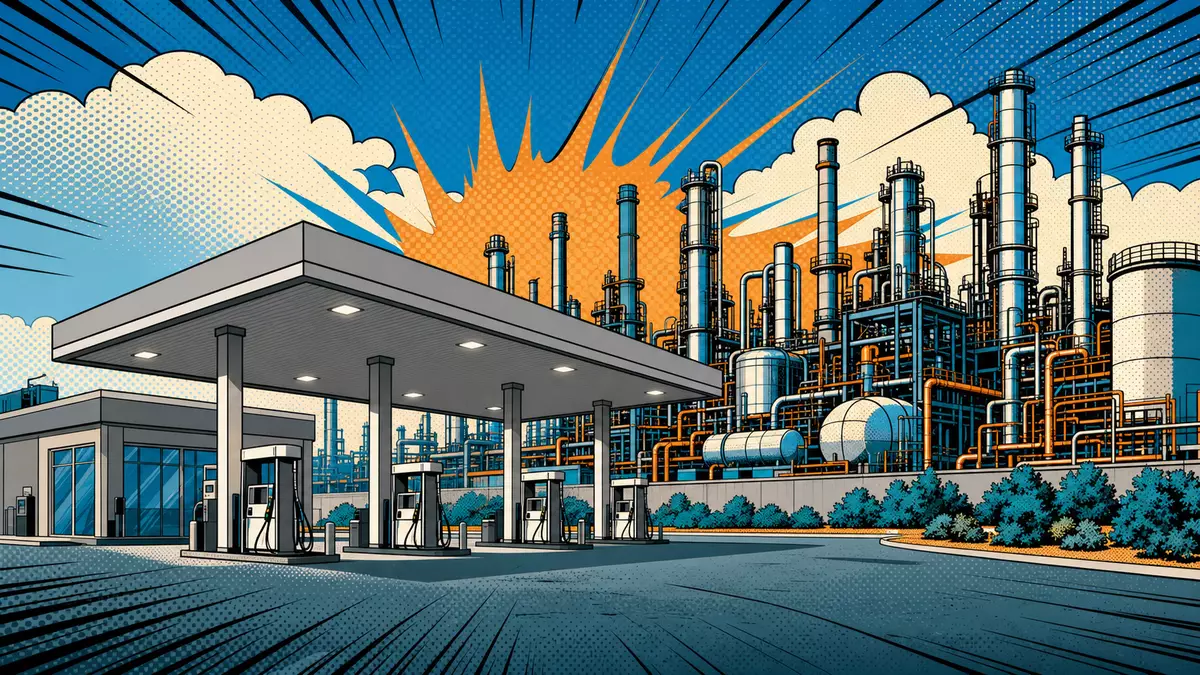
A representative example of Shells broad customer presence is its global network of branded service stations, which numbers in the tens of thousands worldwide according to company statements. These stations serve as platforms not only for fuel sales but also for convenience retail and, increasingly, for electric vehicle charging and other energy services. Shell-branded fuels and lubricants are used by individual motorists, commercial fleets, and industrial customers, reinforcing the companys positioning as a diversified energy supplier rather than a pure upstream producer.
Shell stock and market standing
Shell stock, listed on the London Stock Exchange and included in the FTSE 100 index, recently closed at a price level in the higher portion of its 52-week range in GBX terms as of 23 July 2026, based on data from leading market portals. At that level, the implied dividend yield remains competitive relative to broad European equity benchmarks, while the companys market capitalization in excess of one hundred billion dollars underscores its role as a core holding in many global portfolios. For investors tracking large integrated energy companies, the combination of steady dividends, significant buybacks, and ongoing portfolio reshaping remains the main lens through which Shells valuation is interpreted.
Shell key identity data
- Company: Shell plc
- ISIN: NL0000009827
- Ticker: LSE: SHEL
- Trading venue: London Stock Exchange
- Sector / Industry: Energy / Integrated Oil and Gas
- Index membership: FTSE 100
Disclaimer regarding our articles: No investment advice, no buy or sell recommendation. Information on prices, companies, and markets is provided without guarantee; changes are possible at any time. Stock market transactions can lead to substantial losses. Our articles are created and reviewed in whole or in part automatically with the support of AI.