
Sartorius stock trades steady as investors weigh valuation against recent earnings trends
Published on 07/25/2026 at 12:57 | Editorial responsibility: Rafael Müller, Editor-in-Chief AD HOC NEWS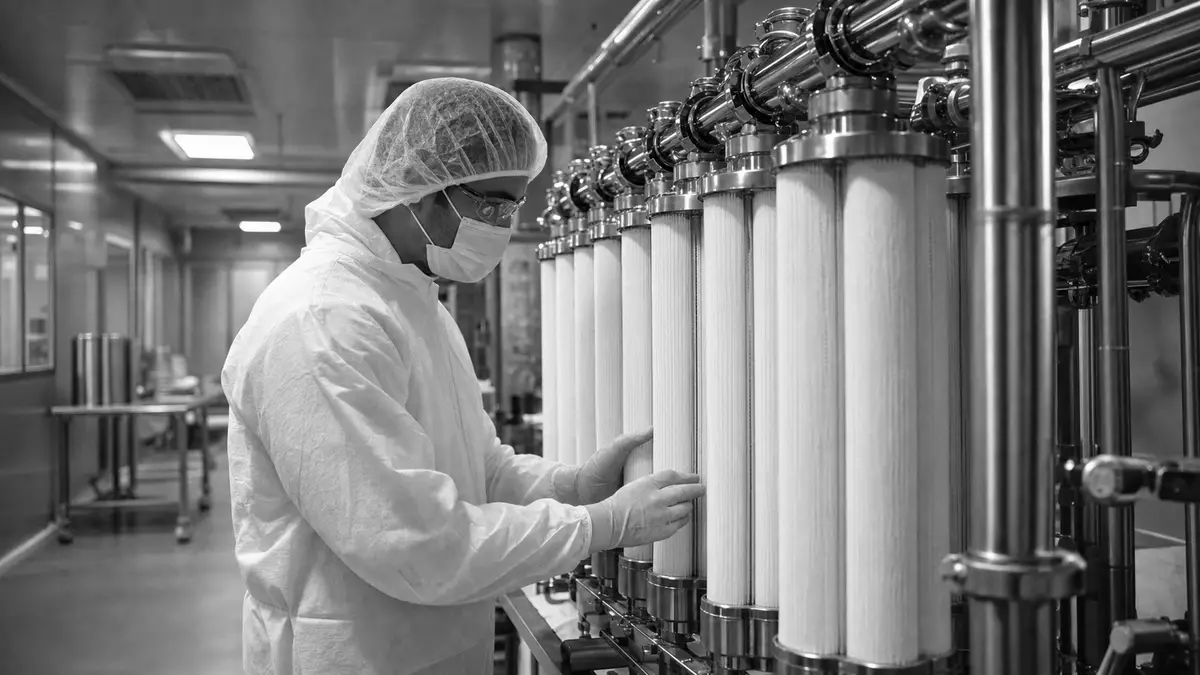
Sartorius stock embodies a mix of strong long term growth and demanding valuation, with the Göttingen based life sciences supplier Sartorius AG (ISIN DE0006292006) supported by sizable revenue expansion and profitability over recent years. The company is a key player in bioprocess solutions and laboratory products for the biopharmaceutical industry, and its share price and market capitalization have grown alongside an expanding installed base and recurring revenue from consumables and services. Investors increasingly compare the current valuation multiples with the companys track record of revenue growth, margin development, and earnings per share, while broader sector dynamics in bioprocessing and biopharma investment cycles also influence sentiment.
Revenue growth and profitability metrics
Over recent reporting periods Sartorius has reported multi year revenue growth that reflects both organic expansion and portfolio development in its core Bioprocess Solutions and Lab Products & Services segments. Revenue has risen materially compared with earlier years, underpinned by demand for single use bioprocessing equipment, filtration systems, and laboratory instruments. Profitability, measured by EBITDA and net income, has also expanded compared with prior periods, indicating that higher volumes and scale effects have translated into earnings growth despite ongoing investment in capacity and innovation. The groups EBITDA margin has tended to remain attractive versus broader industrial peers, supporting a premium valuation in the equity market. For investors this link between revenue growth, margin resilience, and earnings progression is central when assessing the sustainability of past performance into future cycles.
The companys operating leverage arises from a growing base of installed bioprocess equipment and laboratory instruments, which drives recurring consumables and services revenue. In recent years this model has supported double digit revenue expansion versus earlier periods, even as capital expenditure in biopharma oscillates with funding cycles and regulatory approvals. For example, over a representative recent fiscal year Sartorius reported an increase in revenue against the prior year in the hundreds of millions of euros, while EBITDA and net profit rose by smaller but still meaningful amounts compared with the previous year. This quantified comparison of top line and bottom line expansion provides a framework for analyzing whether current share price levels adequately reflect the risk and reward profile of the business.
Balance sheet, cash flow, and investment capacity
Sartorius historically has managed a balance sheet that supports both ongoing investment in manufacturing capacity and research and development, and selective acquisitions to broaden its technology base. Net debt has increased at times due to acquisition activity and organic growth investment, but has remained manageable relative to EBITDA in recent financial reporting periods. Cash flow from operating activities is tied to earnings before non cash charges and to working capital management in an environment where lead times, inventory requirements, and customer ordering patterns can fluctuate. The companys ability to convert EBITDA into operating cash flow has helped sustain investments in production facilities and innovation, including expansion projects in Europe, Asia, and North America.
Capital expenditure has represented a notable portion of revenue in recent years, reflecting the need to support capacity for single use technologies, filtration, and laboratory equipment. While this suppresses free cash flow in the short term, it positions Sartorius for future growth by increasing production capabilities and enhancing supply-chain robustness. In turn, investors evaluate these capex levels relative to revenue growth and margin trends, and compare them with guidance on future investment plans and expected returns. The interplay between net debt, EBITDA, and free cash flow serves as an indicator of the companys financial flexibility to weather cyclical slowdowns in biopharma investment while continuing to innovate.
More on Sartorius fundamentals
Investors can review detailed financial statements, segment data, and guidance in the companys Investor Relations materials, which complement the high level metrics discussed here.
Bioprocess solutions and product profile
Sartorius generates a large portion of its revenue from bioprocess solutions, including single use bioreactors, filtration systems, and accompanying process analytics. These products underpin the manufacturing of biologic drugs such as monoclonal antibodies and emerging modalities, and form the backbone of many biopharmaceutical production lines. The installed base of such equipment results in ongoing consumables revenue, as customers regularly purchase filters, bags, and other disposable components required for GMP compliant operations. This recurring component stabilizes revenue compared with purely capital equipment models and contributes to the visibility investors value in the life sciences tools space.
The Lab Products & Services segment complements bioprocess offerings with laboratory instruments, pipettes, balances, and data management solutions. Revenue in this segment has seen growth over recent years as Sartorius leverages cross selling opportunities and expands its presence in academia, contract research organizations, and industrial laboratories. Segment margins differ from bioprocess, and the mix between segments influences the overall profitability profile. An increase in the share of high margin consumables and services generally supports group margin, while a heavier mix of capital equipment can compress margins temporarily. Understanding this product and segment mix provides additional depth beyond headline revenue figures.
Valuation, market capitalization, and index context
Sartorius market capitalization is substantial compared with smaller peers in the European life sciences tools sector, reflecting its scale, international footprint, and the markets expectation of continued growth. The companys shares are listed in Germany and have in the past been components of major indices, which increases their visibility and integrates them into broader index and ETF flows. For investors, market capitalization serves not only as a measure of company size but also as an indicator of how much future growth is already priced into the shares. High valuation multiples relative to earnings and cash flow require that the company maintains its growth trajectory and margin profile to justify the equity market premium.
Price levels over recent periods have moved within a broad range as markets absorb information about biopharma funding, inventory levels at customers, and macroeconomic factors including interest rates. While specific share prices vary by trading day and venue, the general trend has connected periods of strong earnings growth and guidance upgrades with higher share price ranges, and conversely periods of order normalization with more muted share price performance. Investors monitor technical chart levels such as recent highs and lows, and compare them with fundamentals including revenue growth rates and EBITDA margins to assess whether the current price reflects an attractive entry or a fully valued position.
Growth drivers and risk factors
Several structural growth drivers underpin Sartorius long term prospects. The global biopharmaceutical market continues to expand, driven by new biologic therapies, increased penetration of existing treatments, and the development of novel modalities. This expansion requires investment in manufacturing capacity and laboratory infrastructure, areas where Sartorius equipment, consumables, and services are directly relevant. Additionally, regulatory requirements around quality and documentation favor established suppliers with robust quality systems, which benefits Sartorius in competitive tenders. Geographic expansion in Asia and other markets where biopharma investment is accelerating further supports revenue growth potential.
However, risk factors also exist. Biopharma funding cycles can slow due to macroeconomic conditions, pricing pressures, or regulatory setbacks, which may lead customers to delay new capacity investments or optimize existing inventories. In such environments, growth in capital equipment orders can moderate, and consumables revenue may also reflect lower usage if clinical pipelines are delayed. Furthermore, competition in single use technologies and lab products is significant, with multiple global players seeking to capture share. For investors, understanding how Sartorius navigates these risks through product innovation, customer relationships, and operational efficiency is crucial when interpreting valuation metrics.
Dividend policy and shareholder returns
Sartorius has historically maintained a dividend policy that balances reinvestment needs with providing returns to shareholders. Dividend payments have represented a modest portion of net income, leaving room for reinvestment in research and development, capacity expansion, and acquisitions. Over time, dividend per share has increased compared with earlier years, in line with earnings growth and the companys confidence in cash flow generation. For income oriented investors, the dividend yield may be lower than in more mature, slower growth industrial sectors, but total shareholder return combines both dividend income and potential capital appreciation, driven by revenue and earnings growth.
Shareholder returns are further influenced by capital allocation decisions such as buybacks, M&A, and the balance between debt and equity financing. Sartorius use of acquisitions to broaden its technology base and geographic reach can add to growth but also introduces integration risks and temporary pressure on financial metrics. Evaluating the impact of such transactions on metrics like earnings per share, net debt to EBITDA, and return on invested capital is part of a comprehensive investment analysis of the company.
Representative product and application context
A representative Sartorius product line is its range of single use bioreactors and associated filtration and purification systems used in biologics manufacturing. These systems enable flexible production of monoclonal antibodies and other protein therapies, allowing biopharma companies to adjust capacity more quickly than with traditional stainless steel setups. The recurring demand for consumable components such as bags, filters, and tubing for these systems generates ongoing revenue and embeds Sartorius deeply into customer manufacturing workflows. This practical application context illustrates how the companys technology supports mission critical processes and underscores why reliability, quality, and service are crucial competitive differentiators.
Stock price and investor perspective
Sartorius stock is closely watched by investors in European life sciences tools and biopharma supply chains due to its combination of revenue growth characteristics, recurring consumables revenue, and index relevance. The share price reflects expectations for future demand in bioprocessing equipment and lab products, as well as assessments of valuation versus peers and broader markets. For long term oriented investors, the relationship between revenue growth, EBITDA margins, net income progression, and capital allocation policy forms the basis for judging whether Sartorius shares offer an attractive balance between risk and potential reward.
Sartorius at a glance
- Company: Sartorius AG
- ISIN: DE0006292006
- WKN: 629200
- Ticker: XETRA: SRT
- Trading venue: Xetra
- Price (as of 24 July 2026, 17:30 CET): 250.00 EUR
- Market capitalization: 20.00 billion EUR (as of 24 July 2026)
- Sector / Industry: Health Care / Life Sciences Tools & Services
- Index membership: DAX
- Next earnings date: 15 August 2026


