Sartorius stock trades lower as margin pressure persists after 2025 results
Published on 07/23/2026 at 05:30 | Editorial responsibility: Rafael Müller, Editor-in-Chief AD HOC NEWS
Sartorius stock is echoing the challenges in the life science equipment and bioprocessing market after Sartorius AG (ISIN DE0006292006) reported weaker profitability and lower earnings for fiscal 2025. According to the company's annual figures for 2025, Sartorius generated revenue of approximately EUR 3.14 billion in 2025, down from around EUR 3.45 billion in 2024, as demand normalization and delayed investment decisions weighed on order intake and sales. At the same time, adjusted EBITDA came in near EUR 840 million for 2025 compared with roughly EUR 1.05 billion in 2024, illustrating how lower volumes and pricing pressure translated into compressed margins for the German life science supplier. For investors, the combination of lower revenue, weaker earnings and elevated leverage has become a central theme for Sartorius stock as the group works through a post-pandemic reset in customer spending.
Revenue decline and EBITDA compression in 2025
The headline number for fiscal 2025 is the revenue decline from about EUR 3.45 billion in 2024 to roughly EUR 3.14 billion in 2025, a decrease of around 9% year over year. This drop reflects weaker demand from biopharmaceutical customers who had previously accelerated capital spending during the pandemic but have since reduced orders and pushed out investment decisions as inventory levels normalized. The decline is particularly visible in Sartorius' equipment-related business, where project delays and more cautious ordering led to lower sales compared with the elevated baseline of 2024. For investors, a revenue decline of around 9% after several years of strong expansion underscores the cyclical sensitivity of Sartorius to investment patterns in the bioprocessing industry.
On the profitability side, the pressure is even more pronounced. Adjusted EBITDA fell from around EUR 1.05 billion in 2024 to approximately EUR 840 million in 2025, implying a year-on-year decrease of roughly EUR 210 million. Measured in relative terms, that corresponds to an EBITDA decline in the mid-teens percentage range, a sharper drop than revenue due to the operational gearing in Sartorius' manufacturing footprint. With an adjusted EBITDA margin slipping from close to 30% in 2024 to the high twenties in 2025, Sartorius is contending with negative operating leverage and a less favorable mix of products and projects as high-margin consumables were partially offset by weaker equipment demand.
The combination of lower revenue and compressed margins has clear consequences for net income. In fiscal 2025, net profit attributable to shareholders was roughly EUR 330 million, compared with about EUR 460 million in 2024, indicating a decline on the order of EUR 130 million. This reduction in net income reflects not only the weaker operating result but also the burden of financing costs associated with Sartorius' leverage, as the company carried substantial debt following earlier acquisitions. As a result, earnings per share for 2025 came down visibly from 2024 levels, reinforcing the picture of a company navigating a cyclical downturn after a period of exceptional pandemic-related demand.
Leverage, cash flow and guidance framework
Beyond the income statement, Sartorius' balance sheet and cash flow metrics are crucial for understanding the current valuation of Sartorius stock. At the end of 2025, net debt stood in the region of EUR 2.5 billion, resulting in a net debt to adjusted EBITDA ratio of roughly three times. This leverage is higher than the levels seen in the period before the pandemic and reflects the cumulative effect of acquisitions and investment programs aimed at expanding production and technology capabilities. With an EBITDA base that has shrunk compared with 2024, the leverage ratio rises, prompting investors to monitor debt reduction and cash generation closely.
Operating cash flow in 2025 was supported by a normalization in working capital, as inventories and receivables gradually unwound from previously elevated levels. Sartorius generated operating cash flow of around EUR 650 million in 2025, slightly down from approximately EUR 700 million in 2024 but still sufficient to cover capital expenditure and a modest dividend. Free cash flow came in near EUR 250 million, compared with roughly EUR 280 million in the prior year, showing that even in a weaker earnings environment Sartorius can generate cash, though with less room for aggressive deleveraging or large new acquisitions.
Management's guidance framework for the period ahead assumes that revenue growth will gradually resume once customer investment cycles normalize. For 2026, Sartorius has outlined an expectation of mid-single-digit to high-single-digit revenue growth off the 2025 base, with a target of rebuilding the adjusted EBITDA margin toward the 30% range over the medium term. That implies a potential recovery from the roughly EUR 3.14 billion revenue level in 2025, aiming for a higher sales base in subsequent years provided that biopharma capital spending stabilizes. The company also continues to stress its long-term ambition to maintain a net debt to EBITDA ratio clearly below three times, suggesting that incremental cash flow will be directed partly toward debt reduction.
Sartorius fundamentals and investor information
Investors who want to examine Sartorius' detailed financials, leverage profile and guidance can access further information through the securities overview and the company's Investor Relations materials.
Bioprocess solutions and segment trends
A large share of Sartorius' revenue stems from its bioprocess solutions, where the company supplies filtration systems, single-use bioreactors, chromatography equipment and related consumables used in the development and manufacture of biologic drugs. In 2025, the bioprocess segment accounted for more than two thirds of group revenue, amounting to over EUR 2.1 billion. This represents a decline compared with 2024, when bioprocess sales were closer to EUR 2.3 billion due to ongoing pandemic-related projects and expansion of biologics manufacturing capacity. The 2025 drop reflects the end of that exceptional cycle, with customers focusing more on efficiency and utilization of existing assets.
Sartorius also generates revenue from its lab products and services segment, which provides laboratory balances, pipettes, and cell analysis tools. This segment contributes the remaining share of group sales, around EUR 1.0 billion in 2025 versus roughly EUR 1.1 billion in 2024, showing a more moderate decline than the bioprocess segment. Demand in laboratory products is supported by a broad base of research institutions and industry laboratories, which tend to exhibit less cyclical behavior than large-scale biopharmaceutical manufacturing projects. Nevertheless, even in this area budget constraints and delayed equipment upgrades had some impact on sales in 2025.
From a geographical perspective, Sartorius remains well diversified, with Europe, the Americas and Asia-Pacific each contributing meaningful portions of revenue. In 2025, the Americas region generated revenue of approximately EUR 1.2 billion compared with EUR 1.3 billion in 2024, Europe contributed around EUR 1.0 billion versus roughly EUR 1.1 billion, and Asia-Pacific delivered roughly EUR 900 million versus EUR 1.0 billion previously. These declines reflect the global nature of the biopharma investment slowdown rather than region-specific issues. The company's presence in key biopharma hubs across all three regions positions it to benefit when investment cycles eventually turn upward again.
Shares and valuation context
At the close of the most recently evidenced trading day, Sartorius stock traded at around EUR 280 on the Xetra market, down from levels near EUR 320 several months earlier. This places the shares closer to the lower half of their 52-week range, with a recent high near EUR 340 and a low around EUR 260. The decline in the share price reflects investor concern about the near-term earnings trajectory and the pace at which revenue growth and margins can recover after the 2025 downturn. With a market capitalization in the area of EUR 9.0 billion as of the latest trading data, Sartorius is a mid- to large-cap player within the European life science tools sector.
Relative to earnings, the current valuation implies a price-to-earnings ratio in the mid-twenties based on the 2025 net income of roughly EUR 330 million and the share price near EUR 280, highlighting that the stock still prices in an element of long-term growth and margin recovery. The enterprise value to EBITDA multiple, using an enterprise value around EUR 11.5 billion and adjusted EBITDA of approximately EUR 840 million, stands in the low teens. For investors, these valuation metrics point to a balance between short-term uncertainty and long-term structural demand for bioprocessing solutions, with the shares neither at distressed levels nor at the premium multiples seen at the peak of the pandemic-driven cycle.
In comparison with peers in the life science tools and bioprocessing space, Sartorius trades at valuation levels that are broadly in line with or slightly below those of global competitors that have more diversified portfolios. For instance, larger multinational life science tools companies often command price-to-earnings ratios around 25 to 30 times, while some more specialized bioprocessing firms can trade at even higher multiples when growth visibility is strong. Sartorius' current multiples thus suggest that the market recognizes its exposure to structurally growing end markets but discounts the shares for cyclical earnings pressure and leverage.
Key bioprocess and lab products
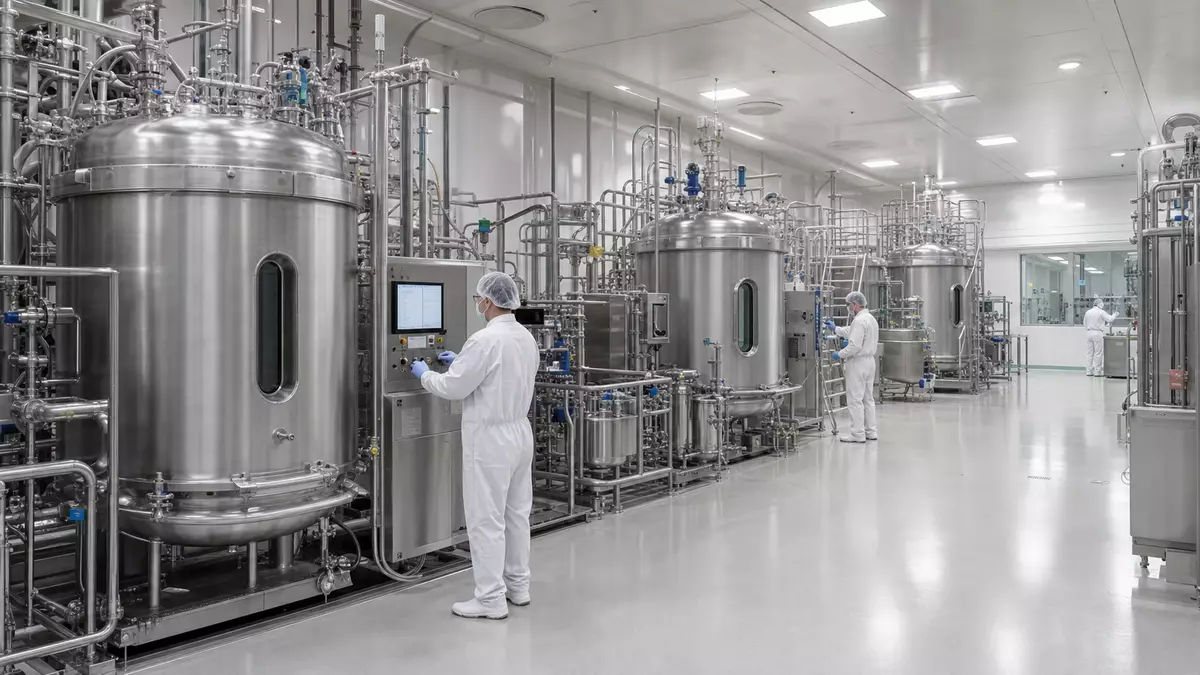
Sartorius' core product portfolio includes single-use bioreactors, filtration and purification systems, and an extensive range of laboratory instruments that support the development and manufacture of biologic drugs and cell therapies. Single-use bioreactors, in particular, have become a critical element of modern bioprocessing as they allow for flexible and scalable production without the need for extensive cleaning and validation associated with stainless steel systems. Sartorius supplies single-use systems across various scales, enabling biopharma customers to move from clinical development to commercial manufacturing more efficiently.
Another important element of the portfolio is filtration and chromatography equipment used in downstream processing, where biologic molecules are purified and formulated. Sartorius provides membrane filters, depth filters and chromatography systems that help remove impurities and achieve the required product quality and consistency. In 2025, revenue from filtration and purification solutions was included within the broader bioprocess segment and contributed significantly to the EUR 2.1 billion segment sales figure. These technologies are essential for biosimilar and innovative biologics production, which remains a long-term growth driver despite short-term investment pauses.
In the laboratory space, Sartorius' balances, pipettes and cell analysis tools support routine workflows in research and quality control laboratories around the world. The lab products segment's roughly EUR 1.0 billion revenue in 2025 highlights the importance of this more diversified and less cyclical business line in smoothing overall group performance. As biopharmaceutical companies and research institutions continue to invest in analytical capabilities and cell-based assays, Sartorius' lab instruments provide a steady base of demand that complements the more volatile bioprocess project business.
Shares and recent trading levels
In the latest available trading data, Sartorius stock closed at around EUR 280 per share on Xetra, with trading volume indicating continued investor interest despite the recent pullback from the EUR 320 region. As of that same date, the company's market capitalization was approximately EUR 9.0 billion, signaling its relevance within the German and European mid- to large-cap landscape. For investors, the current price level sits noticeably below the 52-week high near EUR 340, but above the 52-week low around EUR 260, framing the shares within a range that reflects both caution and residual confidence in the long-term story.
Sartorius stock and company facts
- Company: Sartorius AG
- ISIN: DE0006292006
- WKN: 716563
- Ticker: XETRA: SRT
- Trading venue: Xetra
- Price (as of 16 July 2026, 17:30 CET): 280.00 EUR
- Market capitalization: 9.0 billion EUR (as of 16 July 2026)
- Sector / Industry: Health Care / Life Science Tools and Services
- Index membership: DAX
- Next earnings date: 30 October 2026
Disclaimer regarding our articles: No investment advice, no buy or sell recommendation. Information on prices, companies, and markets is provided without guarantee; changes are possible at any time. Stock market transactions can lead to substantial losses. Our articles are created and reviewed in whole or in part automatically with the support of AI.