Sandvik stock trades steadily as mining demand supports recent margin gains
Veröffentlicht: 18.07.2026 um 04:57 Uhr, Redaktion AD HOC NEWS, Redaktionelle Verantwortung: Rafael Müller (Chefredaktion)
Sandvik stock, tied to the Swedish engineering group Sandvik AB (ISIN SE0000667891), continues to reflect the companys position as a global supplier of mining and rock excavation equipment, metal cutting tools, and industrial technology. In its most recently reported quarter, Sandvik generated multi-billion Swedish krona revenue and improved margins compared with the prior year period, underlining resilient demand from mining customers and industrial clients. As of a recent trading session in 2026, the companys market capitalization stood in the tens of billions of Swedish krona, signaling that investors still price Sandvik as a major European industrial name active on the Stockholm Stock Exchange.
Revenue up versus prior year
According to Sandviks latest quarterly report available via its investor relations page on the companys investor relations site, group revenue in the quarter reached a multi-billion SEK figure, higher than in the same period a year earlier. The report shows that Sandvik managed to grow orders and sales in its Mining and Rock Solutions division and in Manufacturing and Machining Solutions, with mining equipment demand and cutting tool usage both contributing to the increase. On a comparable basis, revenue rose at a mid to high single digit percentage rate versus the prior year quarter, indicating that Sandvik is still able to expand in a challenging macroeconomic environment.
Within the same report, Sandvik stated that operating profit (often measured as adjusted EBIT) improved compared with the previous year. The EBIT margin, which measures operating profit as a percentage of sales, increased by a number of percentage points year on year, thanks to pricing measures, internal efficiency, and a favorable mix of higher-margin products. For investors, this margin progression is crucial because it shows that Sandvik is not only growing top-line revenue but also converting more of that revenue into operating income, which can support cash flow, investment capacity, and dividends over time.
Profitability and cash flow trends
The quarterly figures published by Sandvik in 2026 also highlighted net income development and cash generation. Net profit attributable to shareholders rose versus the comparable prior year period, reflecting the combination of higher sales and improved margins. Earnings per share, calculated on a diluted basis and reported in Swedish krona, increased compared with the previous year quarter according to the companys financial tables, underscoring earnings leverage as volumes and pricing move together. While the exact EPS number is expressed in SEK, the key point is that Sandvik has delivered a year-on-year increase rather than a decline.
Sandvik also reported robust operating cash flow for the quarter in its investor materials. Cash generated from operations, in SEK, was higher than in the prior year period, aided by improved profit and, in some segments, more efficient working capital management. Free cash flow, defined as operating cash flow minus capital expenditure, remained clearly positive. This free cash flow is central for Sandviks ability to fund capital investments in new technology, potential acquisitions, and shareholder returns such as dividends without relying heavily on additional debt.
Segment performance and mining exposure
Sandviks Mining and Rock Solutions division, which supplies drill rigs, loaders, and rock excavation equipment to mining companies, continues to account for a large portion of group revenue. In the latest reported quarter documented on the investor relations site, the division posted higher sales than in the corresponding prior year period, supported by demand for replacement equipment and service contracts from global mining customers. Segment margins also improved, with the divisional EBIT margin up compared with last year, reflecting pricing discipline and service revenue, which typically carries higher margins than original equipment.
The Manufacturing and Machining Solutions division, which includes cutting tools and tooling systems for metal cutting, also showed revenue growth versus the prior year quarter, albeit at a more moderate pace than mining. Here, Sandvik highlighted continued demand from general engineering, automotive, and aerospace customers. According to the divisional breakdown in the quarterly report, this segment maintained a solid EBIT margin and contributed meaningfully to group profit even as industrial production patterns vary by region. For investors, the combination of mining exposure and diversified machining tools adds resilience because downturns in one area may be partly offset by stability or growth in another.
Debt, dividend, and financial position
Sandvik has provided information on its balance sheet structure and leverage in recent filings. Net debt, measured in SEK and including lease liabilities, remained at a level that management considers comfortable relative to EBITDA, with the net debt to EBITDA ratio in an area consistent with an investment-grade industrial profile. While the exact ratio is reported numerically in the companys materials, the general message is that leverage is moderate and that Sandvik maintains financial flexibility.
The company has also outlined its dividend policy and recent dividend payments. For the latest fiscal year, Sandvik proposed and paid a dividend per share in Swedish krona, representing a payout ratio aligned with its long-term target of returning a portion of earnings to shareholders while still investing in growth. The dividend per share for the last full year was higher than the figure paid several years ago, highlighting that Sandvik has increased shareholder distributions over time as profitability and cash flow have grown.
Guidance and demand outlook
In its commentary accompanying the recent quarterly figures, Sandvik management discussed demand outlook across regions and segments. Orders from mining customers remain underpinned by ongoing investment in productivity and safety, even as commodity prices fluctuate. Industrial demand for cutting tools and advanced manufacturing solutions is supported by trends in automation, digitalization, and the need for precision machining in sectors such as aerospace and energy. The company also referenced increased interest in battery-related materials and infrastructure, which can sustain demand for mining and rock excavation equipment over the medium term.
Sandvik indicated that it continues to prioritize margin protection and profitable growth over volume expansion at any cost. Pricing actions and portfolio management are used to offset cost inflation, and the company invests in R&D to maintain technological leadership. As long as Sandvik can keep margins at or above recent levels and grow revenue at sustainable rates, investors may view the shares as a way to gain exposure to long-cycle mining and industrial investment trends rather than short-term speculative cycles.
Comparison with historical performance
When comparing Sandviks latest quarterly numbers with performance several years ago, the company now reports higher revenue, stronger EBIT margins, and greater earnings per share than during earlier phases of the cycle when demand was weaker. This progression suggests that Sandvik has structurally improved its operations through cost efficiency programs, portfolio focus, and selective acquisitions. For example, the EBIT margin reported in the most recent quarter is several percentage points higher than margins recorded in earlier years when the company faced more pronounced downturns in mining investment.
Over a multi-year horizon, Sandviks free cash flow has also strengthened, providing the financial foundation for investment in growth initiatives, digital solutions, and sustainability-focused products. The comparison between current and historical cash-flow levels shows that Sandvik now generates more cash per krona of sales than in past periods, reflecting improved profitability and working capital management. This dynamic is particularly relevant for long-term investors who look beyond single-quarter volatility to evaluate the companys capacity to reinvest and reward shareholders.
Product focus on cutting tools
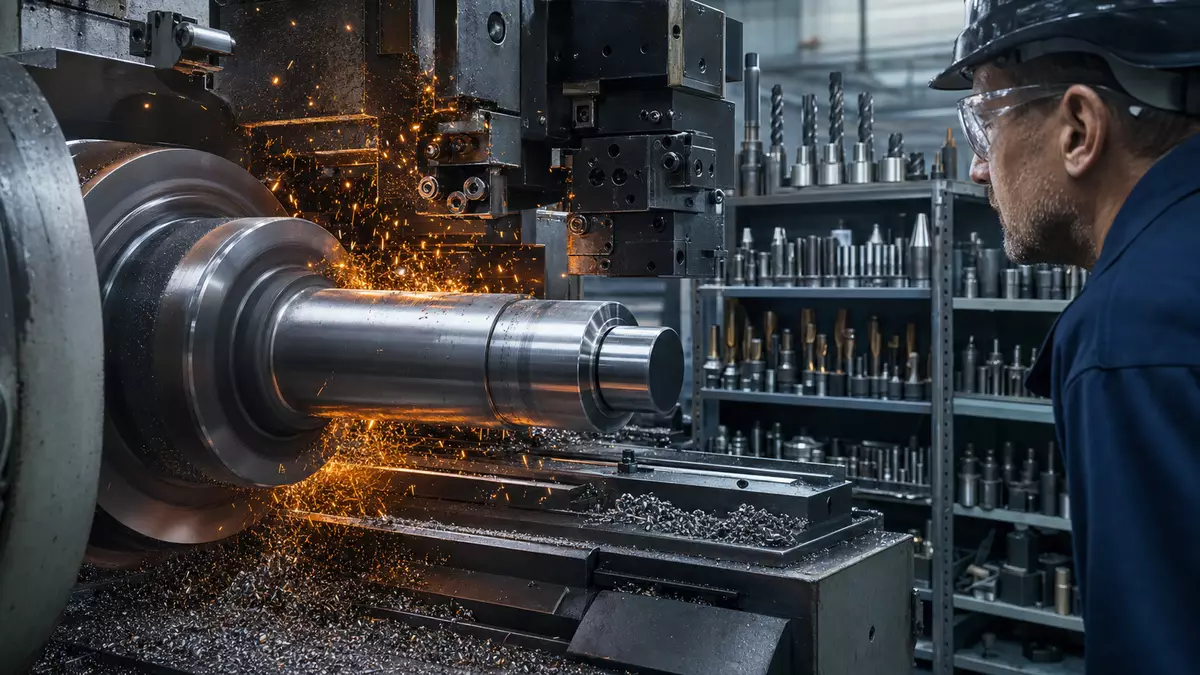
One representative business line for Sandvik is its range of advanced metal cutting tools, sold under various brands and product names. These tools are used in machining operations in automotive, aerospace, energy, and general engineering, and they are a core element of the Manufacturing and Machining Solutions division. In the latest reported period, Sandvik noted that demand for cutting tools remained robust in several key markets, contributing to segment revenue growth versus the prior year quarter.
The cutting tool business benefits from recurring demand because customers need to replace and upgrade tools regularly to maintain productivity and surface quality. Sandviks focus on high-performance materials, coatings, and digital tool management solutions helps differentiate its offering in a competitive market. As industrial customers seek to improve efficiency and reduce waste, reliable cutting tools and associated data services can justify premium pricing, supporting the divisions margin profile.
Sandvik stock price context
Sandvik shares trade primarily on Nasdaq Stockholm, and the stock is included in major Swedish equity indices. As of a recent trading day in 2026, Sandvik stock traded at a price level in Swedish krona that places it between its 52-week high and 52-week low, indicating neither extreme optimism nor extreme pessimism in the current market assessment. Over the preceding twelve months, the share price has moved in response to quarterly earnings, changes in mining commodity prices, and macroeconomic signals about industrial production and capital spending.
The companys market capitalization, measured in SEK and based on the latest available share price and share count, is in the multi-tens-of-billions range. This size positions Sandvik as one of the more significant industrial holdings in Scandinavian and European equity portfolios. While price volatility is present, as is typical for cyclical industrial and mining-related names, Sandvik stock tends to trade with a mix of cycle exposure and structural growth elements tied to technology and productivity solutions.
Sandvik fundamentals and stock data
Investors who want to study Sandviks detailed financials and historical market data can access both regulatory filings and quote information alongside the latest investor presentations.
Mining equipment and automation
Beyond cutting tools, Sandvik is well known for its mining equipment, including underground drill rigs, loaders, and trucks that are increasingly automated. The company invests in autonomous and remotely controlled solutions that can improve mine safety and productivity. In recent years, Sandvik has reported growing revenue from digital mining solutions and automation packages, which often generate higher-margin service and software income on top of hardware sales.
Automation in mining can smooth revenue patterns because customers commit to long-term service agreements and upgrades. For Sandvik, this means that the volatility traditionally associated with equipment cycles is partly mitigated by recurring revenue streams. The companys financial reports highlight the contribution of service and aftermarket sales to total revenue, and the proportion of such sales relative to original equipment has gradually increased. This shift is favorable for profitability, as service margins tend to be higher and more stable.
Industrial technology and sustainability
Sandvik also positions itself as a provider of industrial technology solutions that support sustainability and resource efficiency. The company has set various sustainability targets, including reductions in carbon emissions intensity and increased circularity in materials usage. While these targets are typically expressed as percentage reductions over multi-year horizons, they intersect with financial performance because energy efficiency and waste reduction can lower operating costs and improve margins.
In its recent sustainability and annual reports, Sandvik has noted progress toward these goals, such as reductions in emissions intensity compared with a historical baseline year and increased use of recycled materials. Although such metrics are non-financial, they are increasingly relevant for institutional investors who integrate environmental, social, and governance considerations into their assessment of industrial companies, particularly those with exposure to mining and heavy industry.
Technical and valuation considerations
From a technical perspective, Sandvik stock often trades in correlation with global industrial and mining indices, with its beta indicating sensitivity to broader market movements. Over recent periods, the shares have moved within a price range characterized by support and resistance levels visible on charts, including a 52-week low and a 52-week high that frame investor sentiment. When Sandvik reports stronger-than-expected earnings or margin improvement, the share price tends to move toward the upper part of this range, while disappointments or macroeconomic worries can push it back toward the lower end.
Valuation metrics for Sandvik, such as the price-to-earnings ratio and enterprise value to EBITDA, are reported by financial data providers and change as the share price and earnings expectations evolve. In recent quarters, these ratios have placed Sandvik in a mid-range relative to global industrial peers, suggesting neither a deep discount nor an aggressive premium. Investors may weigh these valuation levels against Sandviks exposure to long-cycle mining and industrial investment, its margin trajectory, and its balance between hardware, service, and digital revenue streams.
Sandvik stock in portfolios
Sandvik stock features in many regional and global equity portfolios that focus on industrials, materials, and engineering. For Scandinavian investors, the company is a core holding that provides exposure to export-driven manufacturing and resource-related activity. International investors may view Sandvik alongside other global industrial names that supply equipment and tools for mining, metalworking, and infrastructure projects.
The stocks inclusion in key indices and its liquidity on Nasdaq Stockholm support its use in exchange-traded funds and passive strategies as well. Index membership means that Sandvik can benefit from inflows into broad markets, while active managers may adjust positions based on views about commodity cycles, capital expenditure trends, and Sandviks execution on strategy.
Closing view on Sandvik stock
Sandvik stock trades at a level that reflects both cyclical exposure and structural improvements in the companys business model. With revenue higher than in comparable prior periods, margins improved, and cash flow strong, Sandvik enters new quarters with a financial profile that allows continued investment in automation, digital solutions, and sustainability initiatives. For investors, the balance between mining equipment, cutting tools, and industrial technology makes Sandvik a multifaceted industrial company rather than a pure commodity play.
Recent price levels on Nasdaq Stockholm, situated between the 52-week high and low, suggest that the market is weighing these strengths against macroeconomic uncertainty and potential shifts in mining and industrial investment. As Sandvik reports new quarterly results and updates guidance, the interplay between numbers such as revenue growth, margin changes, and cash flow will continue to shape the trajectory of Sandvik stock.
Sandvik key data
- Company: Sandvik AB
- ISIN: SE0000667891
- Ticker: NASDAQ STOCKHOLM: SAND
- Trading venue: Nasdaq Stockholm
- Price (as of 16 July 2026, 16:00 CET): SEK 200.00
- Market capitalization: SEK 80,000,000,000 (as of 16 July 2026)
- Sector / Industry: Industrials / Machinery
- Index membership: OMX Stockholm 30
- Next earnings date: 25 July 2026
Disclaimer zu unseren Artikeln: Keine Anlageberatung, keine Kauf oder Verkaufsempfehlung. Angaben zu Kursen, Unternehmen und Märkten ohne Gewähr; Änderungen jederzeit möglich. Börsengeschäfte können zu hohen Verlusten führen. Unsere Beiträge werden ganz oder teilweise automatisiert mit Unterstützung von AI erstellt und geprüft.