Samsung’s Rally Is Built on More Than Memory: TV Dominance and Wearable AI Add Depth
Published on 06/05/2026 at 06:06 | Redaktion boerse-global.de
Samsung Electronics’ stock has been on a tear, up 174.11% since the start of 2025 and 518.86% over the past twelve months. But Thursday’s 2.5% pullback to 351,500 KRW — coming just as the company showcased its HBM5 memory prototype at Computex — underscores how far expectations have run. The shares are now less than 5% away from the 52-week high of 370,000 KRW, and technical indicators point to a market that has priced in a great deal of optimism. The real question is whether the underlying story justifies the heat.
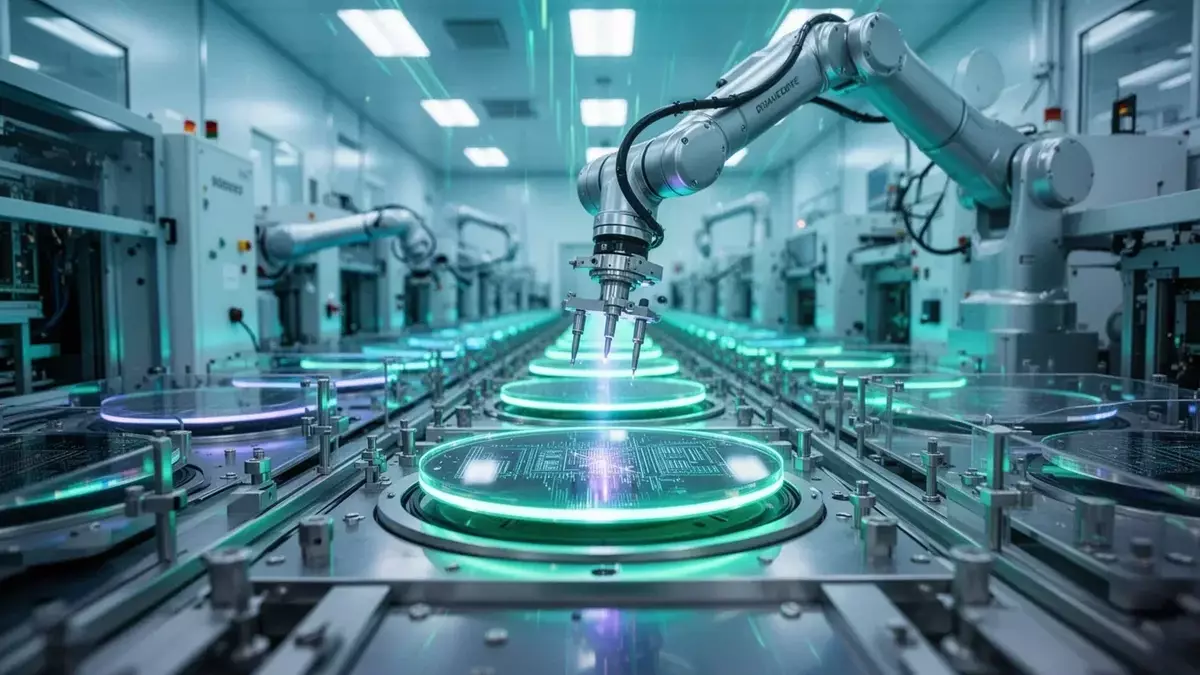
At Computex in Taipei, Samsung put the next generation of high-bandwidth memory on display, showing a physical model of HBM5. More important than the silicon itself was the accompanying cooling architecture, dubbed HPB (Heat Path Block) — a thermal pathway embedded within the memory stack. With AI accelerators pushing ever higher data volumes, heat dissipation has become a bottleneck, and Samsung’s integration of a base die manufactured on its own 2-nanometer foundry process ties together memory, contract manufacturing, and advanced packaging in a single shot.
Nearer term, however, the commercial spotlight falls on HBM4E. Samsung confirmed at the end of May that it had shipped samples of a 12-layer product to major global customers. The memory achieves a stable pin speed of 14 gigabits per second, with room to scale to 16 Gbps. Each stack delivers bandwidth of up to 3.6 terabytes per second and a capacity of 48 gigabytes. Variants with eight and 16 layers are planned depending on customer requirements. HBM5, by contrast, remains a roadmap item with mass production not expected until around 2028.
While the chip division commands headlines, Samsung’s consumer electronics business continues to provide a steady earnings anchor. In the first quarter of 2026, the company captured 31.3% of global TV revenues, up 1.3 percentage points from a year earlier. The premium categories tell the real story: models above $2,500 command a 53.4% market share, and large screens of 75 inches or larger hold 31.6%. OLED sales rose 28.8% in the period, giving Samsung a 40.1% revenue share in that segment. Since entering the OLED TV market in 2022, the company has sold more than 5 million units. To reinforce its position — it has been the world’s top TV brand for two decades — Samsung is launching a marketing campaign featuring Thierry Henry around the 2026 World Cup.
Should investors sell immediately? Or is it worth buying Samsung Electronics?
Beyond the living room, Samsung is pushing artificial intelligence onto the wrist. On June 8, the company plans a major update to the Samsung Health app, turning the Galaxy Watch into a more proactive AI health coach. The new “Vitals” function analyzes five overnight biosignals — including heart rate, respiration rate, and skin temperature — and alerts users to deviations from their personal baseline. Additional features include a “Heart Health Score” for long-term cardiovascular trends, “Daily Cardio Load” for training and recovery guidance, and a hearing protection module that monitors ambient noise. The updates will debut on Galaxy Watch models due in the second half of 2026 but will also be available on existing compatible devices such as the Galaxy Watch8.
The broader semiconductor investment cycle provides further tailwinds. Global spending on semiconductor equipment hit a record $36.55 billion in the first quarter, up 14% year-over-year, driven by AI logic chips and advanced packaging. Samsung is tapping into that momentum by planning employee stock bonuses worth 10.5% of profits from its chip division — a clear signal of confidence in the business.
Yet the stock’s rally has left it technically extended. The share price sits 46.05% above its 50-day moving average, and the relative strength index of 73.2 suggests the move has been overheated in the short term. With the 30-day gain at 32.14%, any disappointment on the execution side — whether in HBM4E customer qualifications or the health app’s reception — could trigger a sharp reversion.
Samsung Electronics at a turning point? This analysis reveals what investors need to know now.
For now, Samsung’s narrative runs on multiple tracks: premium hardware in TVs, a growing health-oriented ecosystem in wearables, and a memory roadmap that keeps it in the race for AI dominance. The next tangible catalyst is the June 8 health app update, which will test whether Samsung’s AI strategy resonates beyond smartphones. But the bigger prize — turning HBM4E samples into revenue and HBM5 into a competitive wedge — will take longer to prove.
Ad
Samsung Electronics Stock: New Analysis - 5 June
Fresh Samsung Electronics information released. What's the impact for investors? Our latest independent report examines recent figures and market trends.
Disclaimer regarding our articles: No investment advice, no buy or sell recommendation. Information on prices, companies, and markets is provided without guarantee; changes are possible at any time. Stock market transactions can lead to substantial losses. Our articles are created and reviewed in whole or in part automatically with the support of AI.