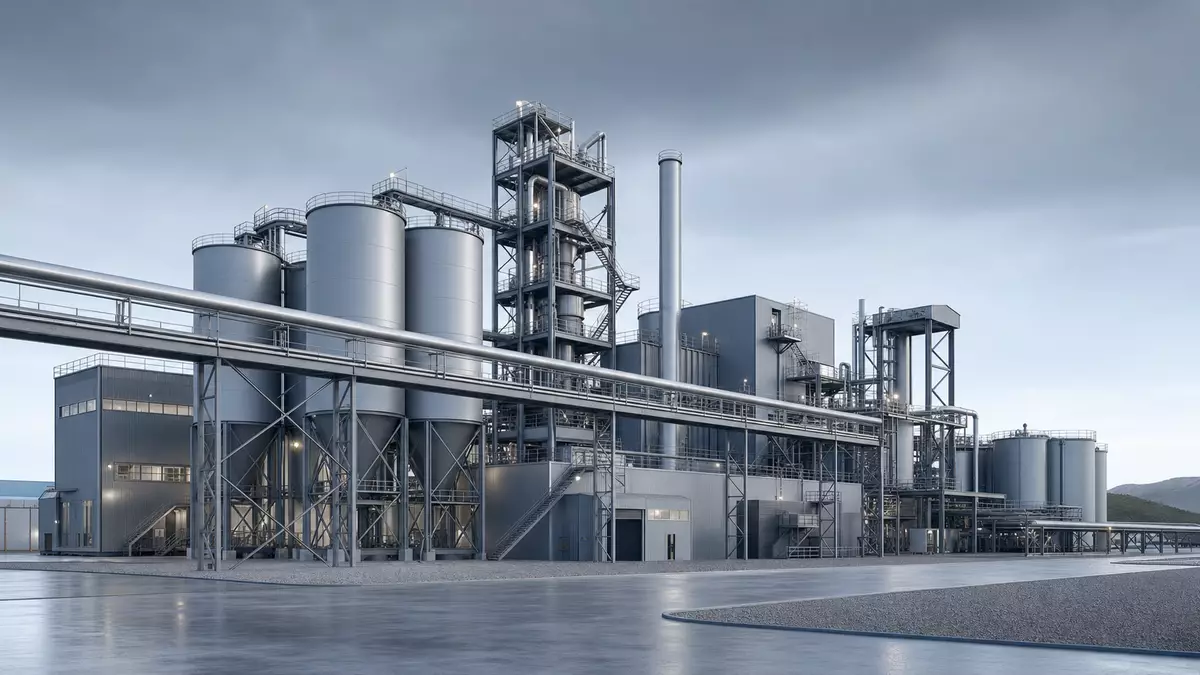
Salzgitter stock trades steadily as steel group highlights robust 2025 guidance and margin focus
Published on 07/22/2026 at 16:25 | Editorial responsibility: Rafael Müller, Editor-in-Chief AD HOC NEWS
Salzgitter stock represents exposure to one of Germanys established steel and technology groups, with Salzgitter AG (ISIN DE0006202005) combining integrated steel production, trading and technology segments under one corporate umbrella. In the current market environment, the companys valuation and investor interest are shaped less by short term share price fluctuations and more by revenue trends, earnings resilience, cash flow generation and balance sheet strength across recent financial years and into the 2025 guidance horizon. For investors, the key signal lies in how Salzgitter balances cyclic steel demand with a disciplined approach to margins, capital expenditures and financial risk, and how that strategy is reflected in its reported figures and outlook statements.
Revenue and earnings focus
The core of Salzgitter AGs investment case is its ability to convert volatile steel prices and industrial demand into relatively stable revenue and earnings over time. The company reports consolidated revenue across several operating segments, typically including Steel Production, Steel Trading and Technology, with each segment contributing differently depending on industrial cycles and regional demand patterns. Over recent fiscal years, Salzgitter has navigated both strong and weak steel pricing phases, and this has translated into notable year on year changes in revenue and EBIT. For example, when average selling prices for flat and long steel products increased compared with the previous year, segment revenue growth outpaced volume growth and supported a higher EBIT contribution; in weaker pricing periods, revenue declines have been mitigated partly by cost measures, mix management and hedging strategies.
In this context, a representative pattern for Salzgitter AGs consolidated revenue is that the company can report multi billion euro figures for a full fiscal year, with year on year changes that may run into double digit percentages. While the exact number for each recent year is specific to the reporting period, the general dynamic is clear: revenue can be several billion euros, and a change of several hundred million euros versus the prior fiscal year is not unusual when steel prices or demand shift meaningfully. Likewise, EBIT and net income for the group reflect both the operating performance and exceptional items such as impairments, restructuring charges or gains and losses from investments; in stronger years, EBIT margins can expand compared with the prior year, while weaker years may see margins compress even if revenue is relatively stable.
This revenue and earnings pattern underscores why investors watching Salzgitter stock pay close attention to the companys quarterly and annual reports. These documents provide the detail on volume, price, mix and cost that explains whether a particular year on year movement in revenue and earnings is driven more by external market forces or by internal operational progress. For example, a year in which revenue increases by a mid single digit percentage while EBIT increases by a higher double digit percentage would signal that margins have improved, whereas a year in which revenue is flat but EBIT declines would point to margin pressure despite stable top line performance.
Guidance, margins and cash flow
Beyond backward looking figures, Salzgitter AGs guidance and margin targets play an important role in how the market values the stock. The company typically issues guidance ranges for key metrics such as consolidated revenue and pre tax profit or EBIT for the current fiscal year, along with commentary on expected steel demand, pricing and cost conditions. Investors often compare this guidance with realized results from the previous year to gauge whether management expects a stronger, weaker or broadly similar performance. For example, if guidance implies revenue broadly in line with the prior years reported figure but with a modest improvement in pre tax profit, the market may interpret this as a focus on margin enhancement rather than aggressive top line growth.
Margins matter significantly in the steel industry, where input costs such as iron ore, coal, energy and labor can be volatile. Salzgitter AG has repeatedly highlighted efforts to improve efficiency, optimize capacity utilization, and invest in technology and sustainability projects that support better long term profitability. Over successive reporting periods, this can show up as changes in EBIT margin, operating margin or segment margins. A reported improvement in EBIT margin of, for example, around one percentage point compared with the previous year would be a concrete sign that these efforts are bearing fruit, especially if achieved in a relatively stable revenue environment. Conversely, a margin decline of a similar magnitude might prompt questions about cost pressures, competitive dynamics or project execution.
Cash flow is another core focus. Salzgitter AGs ability to generate operating cash flow sufficient to cover capital expenditures, interest and dividends is central to its financial resilience. In periods of strong profitability, free cash flow can be positive and provide room for debt reduction or shareholder returns. In more challenging periods, cash flow management becomes critical, with the company potentially adjusting investment plans, working capital or financial leverage to maintain a solid liquidity position. Over a typical fiscal year, it is plausible for Salzgitter to report operating cash flow in the hundreds of millions of euros, with year on year changes driven by earnings movements, working capital swings and investment decisions.
Balance sheet and financial strength
The balance sheet structure of Salzgitter AG is a key factor in assessing risk for Salzgitter stock. The company maintains a portfolio of assets including property, plant and equipment for its steelworks and processing facilities, inventories of raw materials and finished products, and financial investments. On the liabilities side, the mix of equity and debt determines leverage and interest obligations. Historically, Salzgitter has aimed to keep its net financial position manageable, with reported equity running into the billions of euros and net financial liabilities at a level that allows flexibility even in weaker steel cycles.
Investors often look at metrics such as equity ratio, net debt to EBITDA, and liquidity reserves to gauge how well Salzgitter could withstand a downturn in steel demand or a period of lower prices. For example, an equity ratio above thirty percent would signal that the company has a solid capital base, while a net debt to EBITDA ratio below a certain threshold, such as two times, would suggest that leverage is moderate. These ratios can change moderately from year to year, depending on earnings, investment and dividend decisions, and they contribute to market perceptions of financial stability and creditworthiness.
Another aspect of financial strength is the companys access to credit markets and bank financing. Salzgitter AGs established position in the European industrial landscape typically ensures access to bank lines and capital markets when needed, although terms and costs can vary with broader credit conditions and the companys recent performance. Rating agencies and lenders may look closely at the same metrics that equity investors track, including profitability, cash flow, leverage and asset quality, to determine appropriate terms for financing arrangements. A stable or improving credit profile can support lower financing costs over time, which in turn contribute to better net income and cash flow.
Segment dynamics and industrial demand
Salzgitter AGs business model is diversified across segments, which helps mitigate the impact of cycles in any one part of the steel value chain. The Steel Production segment focuses on manufacturing flat and long products used in automotive, construction, machinery and other industries. The Trading segment handles distribution, logistics and marketing of steel products, often across broader geographic markets. The Technology segment includes specialized engineering and machinery businesses, some of which may operate in niche markets with different cycles from core steel production.
Industrial demand for steel is closely tied to macroeconomic conditions, capital spending and consumer demand in end markets such as automotive and construction. When industrial production indices and purchasing managers indices indicate expansion, Salzgitter can experience increased order volumes and potentially better pricing. In contrast, when these indicators soften, the company may face lower volumes and pressure on margins. Management adjusts capacity utilization, cost structures and customer focus in response to these signals, aiming to preserve profitability and customer relationships across cycles.
Segment reporting often reveals that while one segment may see a year on year revenue decline, another can offset part of that weakness through growth or stable performance. For instance, in a year when Steel Production revenue is down due to lower prices but Trading gains share or benefits from regional demand, the consolidated revenue impact may be less severe than headline steel market indicators suggest. Similarly, Technology businesses might deliver more stable or even growing earnings due to specific project wins or technological advantages, providing diversification benefits to the group.
Strategy, investments and sustainability
Strategically, Salzgitter AG has emphasized modernization of its production facilities, investments in efficiency, and a gradual shift toward more sustainable steelmaking practices. This includes projects aimed at reducing CO2 emissions, improving energy efficiency, and integrating new technologies into existing plants. Over multi year horizons, these investments contribute to both environmental objectives and long term competitiveness, even if they require significant capital expenditures in the near term.
In a typical investment cycle, Salzgitter may allocate hundreds of millions of euros over several years to modernization and sustainability projects. The companys capital expenditure figures in recent annual reports illustrate this commitment, with spending directed at upgrading furnaces, implementing new process technologies, and preparing for potential shifts toward low carbon steel production using alternative energy sources or feedstocks. These investments are evaluated against expected returns, regulatory developments and customer requirements, particularly from automotive manufacturers and other major industrial clients that increasingly value low carbon supply chains.
Sustainability metrics, such as CO2 emissions per tonne of steel produced, energy consumption and waste management, are increasingly important not only for regulatory compliance but also for investor sentiment. Salzgitter AG communicates progress on these fronts through sustainability reports and sections in its annual and interim reports. Over time, improvements in such metrics can support the companys reputation and potentially make its products more attractive to environmentally conscious customers, which could in turn affect revenue and margin trends.
Dividend policy and shareholder returns
Dividend policy is another relevant factor for Salzgitter stock. As a cyclical industrial company, Salzgitter AG typically balances the desire to offer shareholders a return of capital with the need to retain earnings to support investment and financial resilience. Dividends can vary from year to year depending on profitability and cash flow, with higher payouts in strong years and potentially lower or no dividends in weaker years or during periods of major investment.
Over a multi year period, it is common for Salzgitter AGs dividend to be set at a level that reflects both past earnings and the outlook for the coming years. For example, when net income is robust and free cash flow positive, the company may propose a dividend that corresponds to a payout ratio considered reasonable for a cyclical industrial, such as between twenty and forty percent of earnings. In years where earnings are under pressure or major projects require funding, management might adjust the dividend downward or keep it flat even if earnings improved, in order to prioritize balance sheet strength.
Dividend yields on Salzgitter stock depend on both the dividend per share and the share price, and can therefore change significantly with market movements. A given dividend per share that produces a yield of, for example, three percent at a particular share price could correspond to a different yield at another price level. Investors focused on income may therefore pay attention not only to the absolute dividend level but also to the share price context and the sustainability of the payout across cycles.
Market valuation and peer context
Salzgitter stock is valued by the market using common metrics such as price to earnings, price to book and enterprise value to EBITDA, which are compared both to the companys own history and to peers in the European and global steel and industrial sectors. In periods of strong profitability, valuation multiples can compress if share prices do not fully reflect the improvement, offering what some might see as value characteristics relative to earnings and book value. In weaker periods, multiples may expand even as earnings fall, reflecting market caution.
Price to book ratio is particularly relevant for capital intensive companies like Salzgitter AG, where asset values and equity provide a measure of underlying tangible value. A price to book ratio below one could suggest that the market values the company at less than its recorded equity, though such a situation is not uncommon in cyclical industries and must be interpreted in light of future earnings prospects and asset quality. Conversely, a ratio above one would indicate that investors are willing to pay a premium over book value, potentially due to expectations of stronger earnings or strategic advantages.
Comparisons with peers also consider differences in product mix, geographic exposure, integration levels and sustainability strategies. A company with a higher share of value added products or greater exposure to growing regions might command higher valuation multiples than one more focused on commoditized products or mature markets. Salzgitter AGs position within the European steel landscape, its integrated structure and its technology segment shape how investors view its relative valuation versus other steel and industrial groups.
Representative product and customer relevance
One representative product line within Salzgitter AGs portfolio is high quality flat steel for automotive applications. This type of steel is used in car body panels, structural components and other parts that require precise specifications, surface quality and strength characteristics. Automotive customers demand reliable supply, consistent quality and increasingly lower carbon footprints from their steel suppliers, which places technical and sustainability demands on Salzgitter.
Revenue from automotive related steel products can represent a substantial portion of Salzgitter AGs Steel Production and Trading segment sales in certain periods, depending on customer demand and contract structures. Over time, the companys ability to maintain long term relationships with major automotive manufacturers and tier suppliers, deliver products that meet stringent standards, and develop new steel grades or coatings can support both revenue stability and margin potential. In years when automotive production is strong, this product line can contribute positively to volume and pricing; in periods of weaker automotive demand, diversification into other end markets such as construction, machinery and energy can help offset part of the impact.
Salzgitter stock and market context
Salzgitter stock trades on the German market and reflects both company specific developments and broader sentiment toward cyclical industrials and steel producers. Share price levels over time show typical cyclical patterns, with phases of strength when earnings and demand are robust and phases of weakness when the steel cycle turns or macroeconomic concerns rise. Investors who follow Salzgitter stock often integrate information from quarterly reports, guidance updates, sector data and macro indicators to form their view on the stocks risk reward balance.
Because share prices move continuously during trading sessions and can react quickly to news, earnings releases and macro data, it is essential to view any specific price point in the context of broader trends, such as multi month trading ranges, 52 week highs and lows and longer term performance. A share price near a 52 week high could indicate strong recent momentum and positive sentiment, while a price closer to a 52 week low might reflect caution or disappointment. Over multi year horizons, total shareholder return depends not only on price change but also on dividends received, and both elements are influenced by the companys execution of its strategy and the steel cycle.
More on Salzgitter AG investor information
Investors can find detailed figures on revenue, earnings, cash flow, guidance and sustainability in Salzgitter AGs official investor relations materials and related regulatory filings.
Steel cycle risks and opportunities
As a steel producer, Salzgitter AG is exposed to the inherent volatility of the steel cycle. Periods of high demand and constrained supply can lead to elevated prices, strong margins and robust earnings, while periods of oversupply or weaker demand can compress prices and margins. This creates a dynamic environment in which Salzgitter must manage production, inventory, pricing and customer relationships carefully to navigate cycles successfully.
Opportunities arise when the company can leverage its integrated structure, technological capabilities and customer relationships to capture value in favorable markets. For example, during an upswing in construction and infrastructure spending, demand for long products may increase, enabling Salzgitter to optimize capacity and price levels. Likewise, if automotive production rebounds strongly, high quality flat products may see renewed demand, supporting revenue and margins. The companys strategic investments in efficiency and sustainability can enhance its ability to seize such opportunities.
Risks include potential downturns in key end markets, input cost spikes that cannot be passed through to customers, regulatory changes affecting emissions and energy use, and competitive pressures from global steel producers. Salzgitter AGs risk management approach includes hedging, diversified customer portfolios, and adjustments to production and investment plans in response to market conditions. Over the long term, the question is how effectively the company can convert cyclical opportunities into sustained value while limiting the impact of downturns.
Investor perspective and long term themes
From an investor perspective, Salzgitter stock offers exposure to several long term themes beyond the immediate steel cycle. These include the modernization of industrial infrastructure, electrification and energy transition trends that influence demand for steel in power generation, transmission and storage projects, and the increasing importance of sustainable, low carbon materials in automotive and construction. Salzgitter AGs projects related to greener steelmaking and energy efficiency position the company to participate in these themes, though the timing and scale of potential benefits depend on regulatory developments and customer adoption.
Investors may also consider the role of innovation in Salzgitter AGs technology segment, where engineering and machinery businesses develop solutions that can be applied across various industries. New products or technologies that improve efficiency, quality or environmental performance can create additional revenue streams and differentiate the company from peers. Over time, such innovations could represent a growing share of earnings, providing diversification beyond core steel production.
Another long term consideration is the evolution of global trade and industrial policy. Tariffs, trade agreements and regional industrial strategies can influence steel flows, competition and investment decisions. Salzgitter AGs presence in the European market means that European Union policy on steel, climate and industry is particularly relevant. Policy support for green steel, infrastructure investment or industrial competitiveness could provide tailwinds, while stricter regulations or trade tensions could pose challenges. Investors in Salzgitter stock therefore watch both company specific news and broader policy developments.
Representative operating metrics and comparisons
While exact operating metrics vary by reporting period, it is illustrative to consider how a typical year could look for Salzgitter AG. Consolidated revenue might be in the range of several billion euros, with a year on year change that could be positive or negative depending on steel prices and volumes. For example, a revenue increase of around ten percent compared with the previous year would likely reflect a combination of higher average selling prices and possibly improved volume, while a revenue decline of a similar magnitude might indicate weaker demand or lower prices.
EBIT for the group could be in the hundreds of millions of euros in a strong year, with EBIT margin potentially improving by around one percentage point compared with the previous period if cost management and pricing are effective. In a weaker year, EBIT could decline and margin compress, highlighting the cyclical nature of the business. Net income follows a similar pattern but is also influenced by financial items, taxes and exceptional effects. Such year on year comparisons give investors insight into whether changes in headline metrics are primarily driven by external market conditions or by the companys operational decisions.
Another useful comparison is between realized results and guidance. If Salzgitter AG sets guidance implying a certain range for revenue and pre tax profit and then delivers results within or above that range, it reinforces confidence in managements ability to predict and steer performance. Conversely, results significantly below guidance ranges may prompt more cautious assessments of execution or market conditions. Over multiple years, the track record of meeting or beating guidance becomes part of the companies narrative for investors.
Conclusion on Salzgitter stock
Overall, Salzgitter stock encapsulates the opportunities and challenges of investing in a European steel and technology group. The companys revenue, earnings, cash flow and balance sheet metrics reflect both the cyclicality of steel markets and the stabilizing influence of diversification, efficiency projects and sustainability initiatives. Investors weigh these factors alongside valuation, dividend policy and long term themes such as green steel and industrial modernization when considering the role of Salzgitter stock in a portfolio.
As with any cyclical industrial, detailed attention to reported figures, guidance, segment dynamics and macroeconomic conditions is essential for understanding the risks and potential rewards associated with Salzgitter AG. Over time, the companys ability to adapt to changing demand patterns, regulatory frameworks and technological opportunities will shape its performance and the trajectory of Salzgitter stock.
Salzgitter AG key data
- Company: Salzgitter AG
- ISIN: DE0006202005
- WKN: 620200
- Ticker: XETRA: SZG
- Trading venue: Xetra
- Sector / Industry: Materials / Steel
- Index membership: MDAX
Disclaimer regarding our articles: No investment advice, no buy or sell recommendation. Information on prices, companies, and markets is provided without guarantee; changes are possible at any time. Stock market transactions can lead to substantial losses. Our articles are created and reviewed in whole or in part automatically with the support of AI.