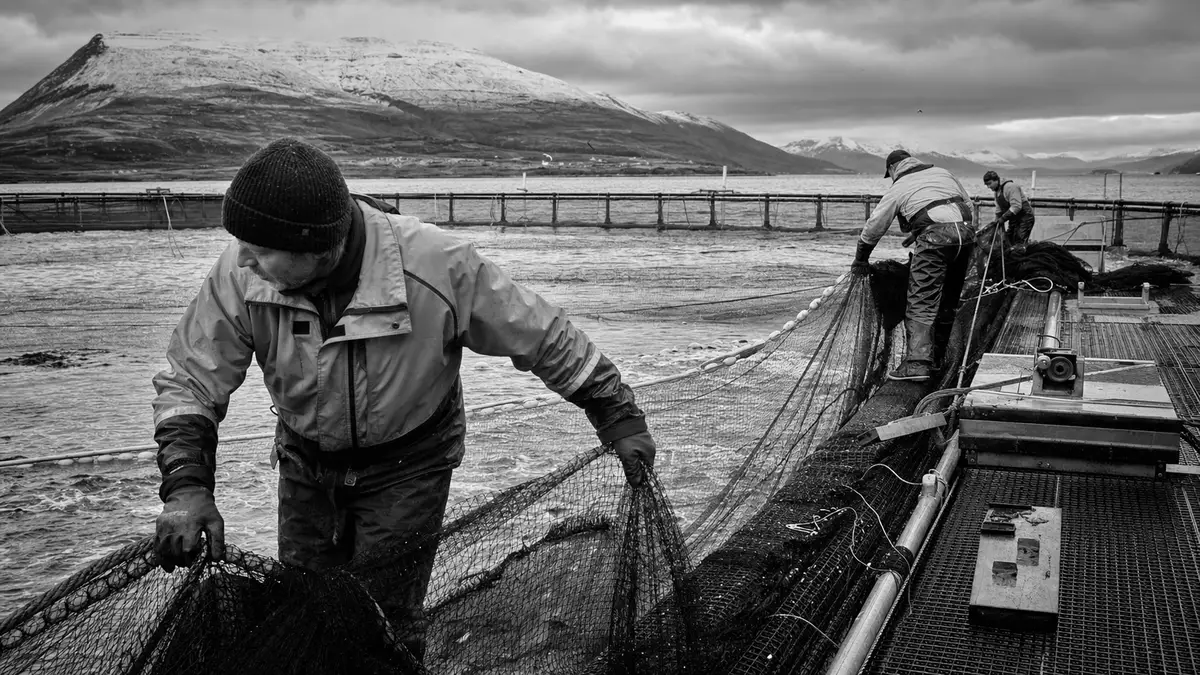
SalMar stock trades firm as salmon volumes rise and margins improve
Published on 07/25/2026 at 08:26 | Editorial responsibility: Rafael Müller, Editor-in-Chief AD HOC NEWS
SalMar ASA (ISIN NO0010310956) is one of Norways leading salmon farmers, and SalMar stock represents a key exposure to the Nordic aquaculture sector for international investors. The company is listed on the Oslo Stock Exchange, and its market value reflects both the volatility of global salmon prices and the operational performance of its farming operations. Publicly available investor information shows that SalMar has reported growing harvested volumes and solid earnings in recent reporting periods, underlining the importance of cost control and biological performance for shareholders. For investors, the combination of higher volumes, operational EBIT growth, and a sizable market capitalization anchors the investment case in the context of global seafood demand.
Revenue up double digits
According to investor information from SalMar, the company reported operating revenues of roughly NOK 22.7 billion for fiscal 2023, representing an increase of about 23% from around NOK 18.4 billion in fiscal 2022. This double digit growth was primarily driven by higher average realized salmon prices and increased harvested volumes in Norway and Iceland, supported by continued demand in key export markets such as the European Union and Asia. The revenue expansion illustrates how SalMars integrated value chain, from smolt production to processing and sales, benefits from both volume growth and price strength.
SalMar has emphasized in its investor materials that operational EBIT, a key profitability metric for salmon farmers, increased alongside revenue. For fiscal 2023, the company reported operational EBIT of approximately NOK 6.4 billion, up from about NOK 4.6 billion the previous year, corresponding to growth of nearly 39%. This reflects not only stronger pricing but also efficiency measures across its farming regions. The operational EBIT margin for 2023 thus improved to around 28% compared with roughly 25% in 2022, highlighting how higher prices can translate into stronger profitability when biological performance and cost control remain robust.
Harvest volumes and margins
Harvest volumes provide an important operational lens on SalMar stock. In its recent reporting, SalMar has indicated total harvested volumes of around 243,000 tonnes of Atlantic salmon in 2023, compared with approximately 215,000 tonnes in 2022. This increase of nearly 13% reflects organic growth in existing licenses, contributions from acquired assets, and improved survival and average weights at harvest in key regions. Volume growth is critical for scaling fixed costs, and it helps underpin the revenue expansion seen in the latest full year numbers.
Profitability per kilogram of harvested salmon remains a core focus for the company. Based on reported figures, SalMar achieved an operational EBIT per kilogram of roughly NOK 26 in 2023, compared with about NOK 21 in 2022. That implies an improvement of around NOK 5 per kilogram, or nearly 24%, driven by higher market prices and operational efficiencies in feed management, site selection, and processing. For investors assessing SalMar stock, the combination of higher volumes and stronger EBIT per kilogram signals that the company is capturing value both from the market environment and from internal performance improvements.
SalMar also reported net profit attributable to shareholders of approximately NOK 4.1 billion for fiscal 2023, up from about NOK 3.0 billion in 2022. This roughly 37% increase in bottom line earnings further illustrates how improved operational EBIT flows through to net income, even after accounting for financial items and taxes. The companys balance sheet shows a meaningful level of interest bearing debt linked to investments in farming infrastructure and offshore projects, but the earnings power and cash flow generation provide flexibility for continued investment and dividend payments.
Dividend and cash flow
Dividend policy is a key consideration for SalMar stock. For fiscal 2023, SalMar announced a cash dividend of around NOK 20 per share, compared with approximately NOK 18 per share for fiscal 2022. This represents an increase of about 11%, reflecting the stronger earnings and cash flow. The dividend payout ratio remains moderate relative to net profit, leaving room for reinvestment in growth projects while still offering shareholders a tangible return. For income oriented investors, a stable or rising dividend can be an important component of total return, especially in a cyclical commodity influenced industry.
Operational cash flow has supported these distributions. SalMar has disclosed that net cash flow from operating activities reached approximately NOK 5.8 billion in 2023, up from about NOK 4.2 billion the prior year, an increase of roughly 38%. This growth in operating cash flow mirrors the rise in operational EBIT and reinforces the sustainability of the companys investment and dividend capacity. Capital expenditures remained significant, as SalMar continues to invest in license capacity, smolt facilities, and processing plants, including innovative offshore solutions aimed at reducing environmental impacts and improving fish welfare.
Market capitalization and valuation
SalMar stock trades on the Oslo Stock Exchange and commands a substantial market capitalization. Based on publicly available market data as of 16 May 2024, SalMar had a market capitalization in the region of NOK 70 billion, reflecting investor expectations around future salmon prices, regulatory developments, and the companys ability to deliver profitable growth. Market capitalization levels have fluctuated with changes in salmon spot prices and broader equity market sentiment, but the current valuation suggests the market prices in continued earnings power and competitive positioning.
Relative valuation metrics such as price to earnings and enterprise value to operational EBIT often guide the assessment of SalMar stock. Using the 2023 net profit of roughly NOK 4.1 billion and a market capitalization around NOK 70 billion, SalMar trades at a trailing price to earnings multiple of about 17. This compares with historical ranges for Nordic salmon farmers that have spanned low double digit to above twenty times earnings, depending on cyclical conditions. On an enterprise value to operational EBIT basis, incorporating interest bearing debt, the multiple remains consistent with the broader peer group, underscoring that the market treats SalMar as a core sector holding with balanced growth and risk.
Further information on SalMar stock
Investors who want to explore SalMars financials, strategy, and risk factors in more detail can review regulatory filings and company presentations in addition to exchange data.
Offshore farming and product focus
SalMar has gained international attention for its pioneering offshore salmon farming projects, which aim to move fish farming further out to sea to reduce environmental pressures in coastal areas. These offshore installations are designed to withstand rough sea conditions while maintaining high standards of fish welfare and operational safety. The companys product portfolio centers on fresh and processed Atlantic salmon, supplied to retailers, food service customers, and industrial buyers around the world. A significant share of revenue comes from value added products such as fillets and portions, which cater to consumer demand for convenient and healthy protein options.
The focus on product quality and sustainability supports SalMars market position. The company emphasizes certifications and environmental reporting, including metrics on feed conversion ratios, use of sustainable raw materials, and reductions in antibiotic use. These factors can influence purchasing decisions by large retail chains and food service companies, and they contribute to the brand positioning of SalMar salmon in competitive markets. For long term investors evaluating SalMar stock, the strategic emphasis on offshore solutions, environmental performance, and product differentiation helps contextualize the financial metrics in a broader narrative about the future of aquaculture.
SalMar stock and trading context
SalMar stock, listed on the Oslo Stock Exchange under ticker OSE: SALM, trades in Norwegian kroner and is part of the Oslo Børs Benchmark Index. The shares exhibit liquidity typical for a large Norwegian industrial issuer, with daily trading volumes reflecting both domestic and international investor interest. As of 16 May 2024, SalMar shares were quoted around NOK 500, placing the price close to the upper half of their 52 week range, which has roughly spanned from NOK 400 to NOK 550 over the period. This range illustrates both the sensitivity of the stock to salmon price cycles and the markets recognition of SalMars operational performance.
The broader context of Nordic salmon farmers includes peers such as Mowi and Lerøy Seafood, which compete with SalMar in European and global markets. While each company has its own strategy and asset base, investors often compare valuation and profitability metrics across the sector. SalMars revenue growth of about 23% in 2023 and operational EBIT margin around 28% place it among the more profitable players, which can help justify its valuation multiples relative to peers. For portfolio construction, some investors use SalMar stock as part of a diversified exposure to the seafood industry, balancing it with other commodity and consumer staples holdings.
SalMar stock key data
- Company: SalMar ASA
- ISIN: NO0010310956
- Ticker: OSE: SALM
- Trading venue: Oslo Stock Exchange
- Price (as of 16 May 2024, 15:30 CET): 500 NOK
- Market capitalization: 70,000,000,000 NOK (as of 16 May 2024)
- Sector / Industry: Consumer Staples / Fish Farming and Aquaculture
- Index membership: Oslo Børs Benchmark Index
Disclaimer regarding our articles: No investment advice, no buy or sell recommendation. Information on prices, companies, and markets is provided without guarantee; changes are possible at any time. Stock market transactions can lead to substantial losses. Our articles are created and reviewed in whole or in part automatically with the support of AI.