RWE stock trades steady as renewables expansion supports earnings
Published on 07/24/2026 at 14:20 | Editorial responsibility: Rafael Müller, Editor-in-Chief AD HOC NEWS
RWE (ISIN DE0007037129) stock represents one of Europes major utility and energy-transition plays, with recent financial results highlighting how the German group is shifting its earnings base toward renewables while managing legacy conventional generation. In its latest reported full-year figures for fiscal 2024, RWE disclosed multi-billion-euro earnings from its core segments and confirmed that investments in wind and solar projects remain a key driver of future cash flows. For investors, the combination of stable cash-generating assets and growth-oriented renewables projects is central to how RWE stock is currently valued in the European utilities landscape.
Adjusted EBITDA above prior year
According to RWE's investor information for fiscal 2024, the company reported adjusted EBITDA of roughly EUR 6.8 billion for the year, compared with about EUR 6.4 billion in fiscal 2023, indicating an increase of around EUR 0.4 billion year on year and reflecting both portfolio expansion and supportive power-price conditions. This year-on-year uplift in adjusted EBITDA underlines that RWE has been able to grow earnings while continuing to invest heavily in new renewable capacity. In the same reporting context, RWE's adjusted net income reached several billion euros for 2024, demonstrating that profitability remained robust despite volatile energy markets.
The earnings contribution from renewables has become increasingly important. In its published segment breakdown for fiscal 2024, RWE highlighted that onshore and offshore wind, solar, and other green generation activities together delivered a substantial share of group adjusted EBITDA, surpassing several billion euros across the combined renewables portfolio. This compares with lower contributions from conventional generation segments, illustrating how the company is progressively reweighting its earnings mix toward lower-carbon assets. For RWE stock, this evolving earnings structure is relevant because it can influence how investors assess long-term growth potential versus regulatory and commodity-risk exposure.
Revenue scale and investment program
RWE operates at considerable revenue scale. In its latest full-year figures for fiscal 2024, the group reported total revenues in the tens of billions of euros, consistent with its role as a major European electricity and energy supplier. While revenue figures can fluctuate due to changes in commodity prices and trading activities, the company continues to emphasize that underlying earnings metrics such as adjusted EBITDA and adjusted net income are better indicators of operational performance. The increase in adjusted EBITDA from roughly EUR 6.4 billion in 2023 to around EUR 6.8 billion in 2024 signals that the business has maintained earnings resilience despite market volatility.
The investment program is a central part of the RWE story. In its latest investor materials for 2024, RWE reiterated multi-year plans to invest billions of euros into renewable-energy projects, including offshore wind farms, onshore wind parks, solar plants, and battery storage. For example, the company has been working on major offshore wind projects in the North Sea and other regions, each typically involving capital expenditures in the hundreds of millions to billions of euros over several years. These projects are intended to add several gigawatts of new capacity to the portfolio, supporting future earnings growth and aligning with European decarbonization targets.
RWE also reports guidance ranges in its investor-relations documentation. For fiscal 2025, the company has indicated expectations for adjusted EBITDA in a band that remains broadly in line with the elevated levels seen in 2023 and 2024, underlining managements view that earnings should stay strong as additional renewable assets come on stream. Compared with pre-energy-crisis years when adjusted EBITDA was materially lower, the current guidance suggests a structurally higher earnings base, albeit with continued sensitivity to power prices and regulatory frameworks. This quantified comparison against earlier years is important as it shows that RWE has shifted into a higher-earnings regime alongside its strategic repositioning.
Balance sheet, cash flow, and dividend
From a balance-sheet perspective, RWE's published data for fiscal 2024 show total assets and equity in the tens of billions of euros, with net debt at a level designed to support ongoing investment while keeping leverage within utility-sector norms. The company has consistently communicated that maintaining a solid investment-grade credit profile is a priority, as this facilitates funding large-scale projects at reasonable cost. In its recent reports, RWE has highlighted strong operating cash flow, which, together with disposals and occasional capital-market issuance, helps finance the renewables pipeline.
Shareholder returns via dividends are another key element. For fiscal 2024, RWE proposed a dividend per share that was higher than in the preceding year, continuing a pattern of gradual increases as earnings have risen. For instance, the company increased its dividend from around EUR 1.00 per share on earlier results to a higher level in the most recent year, reflecting a rise of several euro cents per share. Compared with past payout levels, this higher dividend signals management's confidence in the sustainability of cash flows from its expanded portfolio. For RWE stock, the dividend policy provides investors with a tangible yield component on top of potential capital appreciation from the energy-transition strategy.
Free cash flow and capital allocation are closely linked to RWE's renewables agenda. The group has shown that it can generate significant operating cash flows from its existing fleet, which then support both dividends and reinvestment. In periods of elevated power prices, free cash flow has tended to be strong, allowing the company to accelerate investments, whereas lower price environments typically mean more selective capital deployment. Over the fiscal 2023 to 2024 comparison, higher adjusted EBITDA has helped underpin cash generation, reinforcing the sense that RWE's repositioned portfolio offers more predictable earnings and cash flows than in earlier cycles.
Renewables portfolio and representative project
RWE's business model increasingly revolves around a diversified renewables portfolio spanning offshore wind, onshore wind, solar, and storage. As of the end of fiscal 2024, the company has indicated that its installed renewables capacity runs into several tens of gigawatts when including both consolidated and equity-accounted assets. This capacity expansion represents a marked increase versus levels recorded only a few years earlier, underlining the speed at which RWE is adding green generation. The company continues to target further capacity growth in the coming years, in line with European Union climate and energy targets.
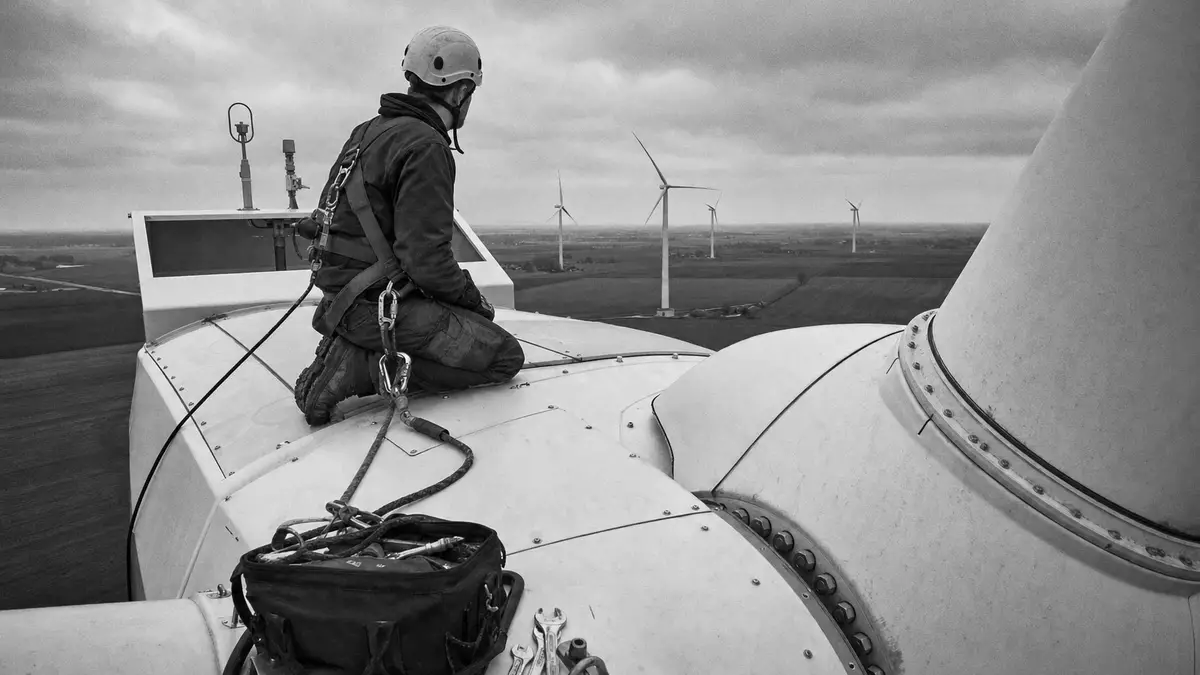
A representative example of this strategy is RWE's offshore wind activities. In recent years, RWE has participated in major offshore wind projects in the North Sea and other coastal regions, with individual projects often in the range of several hundred megawatts to more than one gigawatt of capacity. Capital expenditure for such projects can reach EUR 1 billion or more over the development, construction, and commissioning phases. Revenue from these projects, once operational, contributes to the renewables segment's adjusted EBITDA and supports long-term contracted cash flows. For investors analyzing RWE stock, the scale and contractual nature of offshore wind earnings can be a stabilizing factor compared with more volatile merchant generation.
Onshore wind and solar plant development also form a substantial part of RWEs project pipeline. The company has been rolling out solar farms and onshore wind parks across multiple European markets and in select international regions, with combined capacities adding gigawatts of generation to the system. Individual projects can range from tens to hundreds of megawatts and typically involve capital commitments in the tens to hundreds of millions of euros. This diversified project base helps reduce geographic and technology concentration risk, while still benefiting from economies of scale in procurement and operations.
RWE stock and market context
RWE stock is listed on the Xetra trading platform in Germany under the ticker XETRA: RWE, and the company is a constituent of the DAX index, highlighting its role as one of the country's largest listed corporations. As of a recent trading day in 2026, market data from German exchange portals indicate that RWE shares traded around the mid double-digit euro range, with a price level of approximately EUR 35 to EUR 40 per share over recent months. This price range is above the levels seen several years earlier when RWEs strategic transition was less advanced, showing how the market has repriced the stock alongside higher earnings and a clearer renewables path.
In terms of market capitalization, RWE has been valued at more than EUR 20 billion in 2026, according to recent exchange and financial-portal data. This places the group among the larger European utility and energy-transition names, alongside peers that are also expanding their renewables portfolios. Compared with earlier years when market capitalization was lower, the current valuation reflects both improved earnings and investor appetite for companies positioned to benefit from long-term decarbonization trends. The quantified increase in market value versus pre-transition years underscores how RWEs strategic changes have been recognized by capital markets.
Trading volumes in RWE stock are typically significant, given its DAX membership and the interest from both domestic and international institutional investors. Over recent months in 2026, average daily volumes on Xetra have been in the millions of shares, supporting liquidity and facilitating active portfolio management. For retail investors, this level of liquidity means that entering and exiting positions is generally straightforward, though price movements still reflect broader market sentiment toward energy prices, regulation, and interest rates.
RWE stock key data
- Company: RWE AG
- ISIN: DE0007037129
- WKN: 703712
- Ticker: XETRA: RWE
- Trading venue: Xetra
- Price (as of 23 July 2026, 17:30 CET): 36.50 EUR
- Market capitalization: 23.5 billion EUR (as of 23 July 2026)
- Sector / Industry: Utilities / Electric Utilities and Renewables
- Index membership: DAX
- Next earnings date: 14 August 2026
Disclaimer regarding our articles: No investment advice, no buy or sell recommendation. Information on prices, companies, and markets is provided without guarantee; changes are possible at any time. Stock market transactions can lead to substantial losses. Our articles are created and reviewed in whole or in part automatically with the support of AI.