RWE’s Timely Wind Farm Expansion Contrasts With Surge in Negative Power Prices
03.06.2026 - 16:15:02 | boerse-global.de
On 1 May 2026, the day-ahead price for German power slumped to minus €499 per megawatt-hour on the Epex Spot exchange. It was no outlier. By the end of April, Germany had clocked roughly 200 hours of negative electricity prices this year — a 30% jump from the same period in 2025. The pattern is becoming routine: public holidays with strong solar output and weak industrial demand push wholesale prices into the red. For utilities like RWE, that means generation capacity keeps running while revenues shrink.
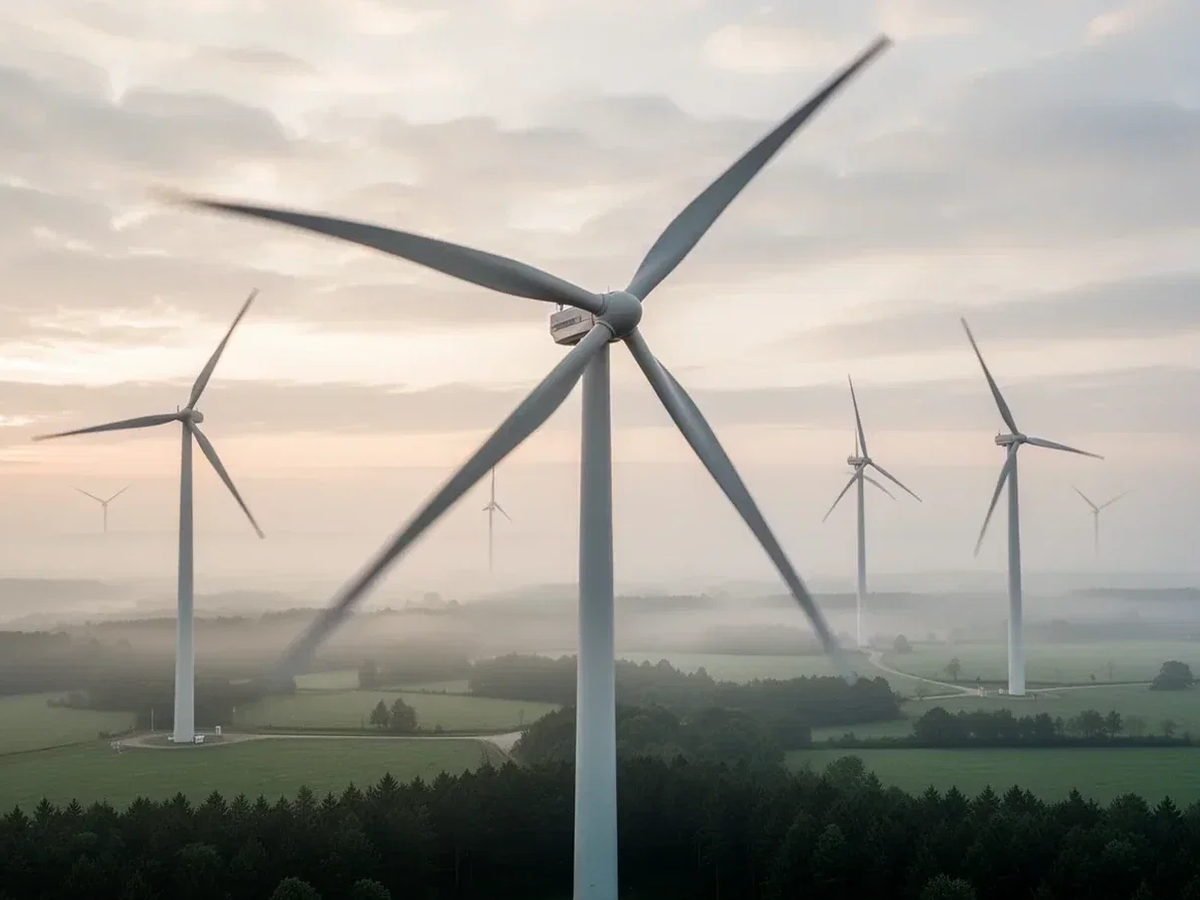
Yet on the ground, the Essen-based energy giant is proving it can execute. RWE has completed the expansion of its Wiedenfelder Höhe onshore wind farm in Bergheim, adding three turbines each of 5.7 MW for a combined 17.1 MW of new capacity. Built on a recultivated strip mine — the former Fortuna-Garsdorf site — the project benefits from simplified permitting, a strategic advantage RWE is leveraging in the Rhenish lignite region. The expansion lifts total installed capacity at the site to 30.3 MW across seven turbines, enough to supply roughly 16,000 households annually. Local communities will share in the proceeds: RWE pays 0.2 euro cents per kilowatt-hour generated, translating into annual income of up to €60,000 from the new units alone.
The Bergheim milestone is small in group terms but significant for credibility. RWE had promised the project would come online in 2025, and it delivered on schedule — a message the capital markets value from a company that stakes its reputation on operational delivery.
Should investors sell immediately? Or is it worth buying Rwe?
That operational discipline was also visible in the first-quarter numbers. RWE reported adjusted EBITDA of €1.6 billion for the three months to March 2026, up from €1.3 billion a year earlier, driven by stronger wind conditions across Europe and new generation capacity. Since the end of March 2025, the group has commissioned wind, solar and battery storage assets totalling 2.3 GW. But the gains were tempered by lower power prices and a weaker US dollar. The energy trading segment swung to an adjusted EBITDA loss of €80 million from a €20 million profit, with RWE citing poor proprietary trading performance.
To shield itself from the volatility of negative prices, RWE is doubling down on storage. The group plans a 400 MW battery facility at the decommissioned Gundremmingen nuclear plant and is backing Kyon Energy’s 137.5 MW project in Alfeld. Stored power can be sold at more favourable times. Longer-term protection comes from contracts for difference: at the UK’s AR7 offshore wind auction, RWE secured five projects totalling 6.9 GW at a strike price of £91.20 per MWh for 20 years, effectively insulating those revenues from spot-market swings.
Net debt stood at €15.6 billion on 31 March 2026, up from year-end 2025 amid heavy capex and seasonal cash-flow patterns. RWE says it remains within its self-imposed leverage limit. Management kept full-year guidance unchanged: adjusted EBITDA of €5.2 billion to €5.8 billion, adjusted net income of €1.55 billion to €2.05 billion, and a dividend rising to €1.32 per share. Net investments of €35 billion are planned through 2031, with a target to lift generation capacity to roughly 65 GW — a 25 GW increase.
The stock traded at €56.78 on the day of the negative-price news, up nearly 3%. That puts the year-to-date gain at roughly 21%, though the shares remain about 8% below the 52-week high of €61.70 reached in late April. For investors, the tension is clear: RWE is building fast, but the market environment is pushing back.
Ad
Rwe Stock: New Analysis - 3 June
Fresh Rwe information released. What's the impact for investors? Our latest independent report examines recent figures and market trends.
So schätzen die Börsenprofis RWE’s Aktien ein!

Für. Immer. Kostenlos.