
Robbie Williams teases Las Vegas-style US return and new live era
Published on 05/21/2026 at 03:58 | Editorial responsibility: Rafael Müller, Editor-in-Chief AD HOC NEWS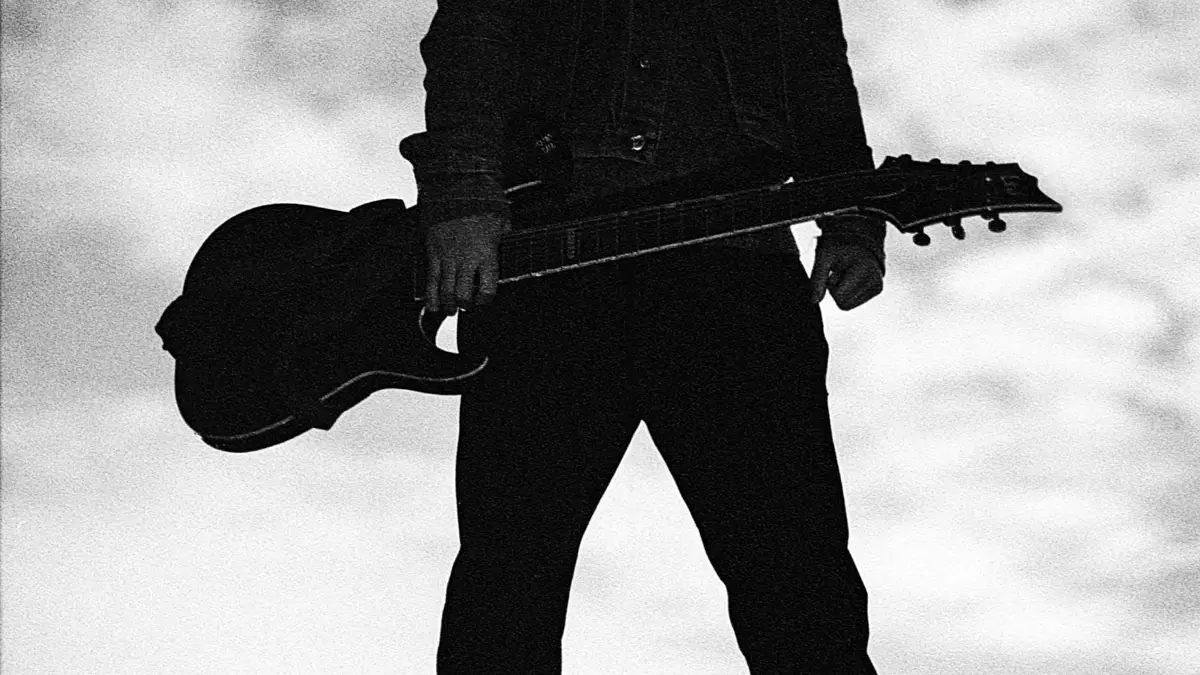
Robbie Williams is openly talking about a fresh live chapter that could finally bring him back to US stages, with new documentary momentum, Las Vegas-style ambitions, and an active touring calendar across Europe and Australia feeding speculation about an American return. In a recent wave of interviews, the former Take That star has framed this period as a “new era” of performance that leans into nostalgia, big-production pop spectacle, and brutally honest storytelling about fame, addiction, and middle age.
What’s new with Robbie Williams and why now?
Robbie Williams has been back in the global spotlight thanks to his four-part Netflix documentary series “Robbie Williams,” which arrived in late 2023 and quickly became a word-of-mouth hit, especially in English-speaking markets, according to Variety and The Guardian. The series, built largely from 25 years of archival footage, sparked a reassessment of his complex career and reintroduced him to younger streaming audiences in the United States who may know only a handful of songs like “Angels” and “Rock DJ.”
That renewed attention has coincided with a heavy stretch of live activity that points toward a sustained performance comeback. Per Billboard and NME, Williams has spent the last two years on the “XXV” tour, celebrating 25 years of his solo catalog with orchestra-backed arrangements and arena-scale production across the UK, Europe, and Australia. As of May 21, 2026, he has additional European festival appearances and select headline dates booked into the summer, signaling that his live operation is anything but a nostalgia one-off.
What makes this moment particularly relevant for US readers is that Williams has begun openly entertaining the idea of a Vegas-style residency and a more intentional American push. In conversation around the Netflix series and anniversary shows, he has described his current performance style as somewhere between arena pop concert and confessional stand-up, a format that could translate smoothly to Las Vegas, New York, or another major US entertainment hub, according to Rolling Stone and BBC coverage of his recent interviews.
From Take That teen idol to global solo force
To understand why a potential US return matters, it helps to zoom out on Robbie Williams’ arc as one of Britain’s most successful solo artists. Williams first emerged in the early 1990s as the cheeky breakout personality in boy band Take That, who dominated UK charts and European arenas with hits like “Back for Good” and “Pray.” After leaving the group in 1995, he began a solo career that, as noted by Billboard, has since yielded multiple multi-platinum albums and stadium tours across Europe, South America, and Australia.
However, the United States has historically been a blind spot in his otherwise massive global footprint. While he has sold more than 75 million records worldwide according to a retrospective feature from The New York Times and data frequently cited by the IFPI, his traction in the US mainstream has been relatively limited. A handful of singles received stateside radio play and MTV exposure in the late 1990s and early 2000s, but he never translated his UK super-stardom into consistent chart dominance in America.
That tension—global icon status on one side of the Atlantic, cult favorite on the other—has become a recurring theme in how Williams talks about his career. In the Netflix series, he is candid about craving US validation in his twenties and thirties, only to later prioritize creative satisfaction and personal stability over chasing the American market at all costs. Now, with the rise of streaming and a more globalized pop ecosystem, the barriers that once kept him a largely European phenomenon are lower than ever, an opportunity that US-focused outlets like Variety have highlighted in coverage of the documentary’s impact.
Netflix doc and brutal honesty: how the series changed the story
The Netflix series “Robbie Williams” is the key catalyst for this current era. Directed by Joe Pearlman and produced by Ridley Scott’s RSA Films, the doc dives unapologetically into Williams’ battles with addiction, anxiety, depression, and the disorienting highs and lows of tabloid-era celebrity. According to Rolling Stone, the series stands out for the way Williams watches old footage of himself in real time, reacting with a mix of regret, disbelief, and dark humor as he narrates his own breakdowns and breakthroughs.
In interviews surrounding the release, Williams has said that revisiting decades of archival material forced him to confront patterns of self-sabotage and the emotional cost of living under the British tabloid microscope. Per an in-depth profile in The New York Times, he framed the process as “exposure therapy” and suggested that the project left him with a clearer sense of what he wants out of the next stage of his life and career. That includes, crucially, a more sustainable relationship with touring and fan expectations.
For US audiences who may have encountered Williams only through glossy music videos, the Netflix series functions as a reintroduction. It positions him not just as a cheeky 1990s hitmaker but as a complex, self-aware performer with a story that echoes the mental-health struggles of many millennial and Gen X listeners. This reframing has real implications for the kind of live show he is now building—a hybrid of celebratory greatest-hits set and vulnerability-heavy monologue that feels very in line with contemporary pop tours that blend therapy talk with spectacle.
Inside Robbie Williams’ current live show
On his recent “XXV” tour dates, Williams has leaned hard into his reputation as a larger-than-life entertainer who also thrives on improvisation and crowd interaction. Reviews in outlets like The Guardian and NME describe a show that moves briskly between anthemic sing-alongs (“Angels,” “Feel,” “Let Me Entertain You”), deep cuts, and unexpected covers, all wrapped in an old-Hollywood-meets-cabaret visual aesthetic.
As of May 21, 2026, his live production has featured a full band, backing vocalists, and, at select dates, orchestral arrangements that underscore the “XXV” album’s symphonic spin on his catalog. The result is a sound that nods to classic Swing and big-band traditions while still functioning as stadium-scale pop, a balance that could play particularly well in US venues associated with legacy acts and cross-generational audiences—think Las Vegas theaters, amphitheaters, or even a limited Broadway-style run.
One recurring note in coverage is how much of the show consists of Williams talking. According to reviews in The Telegraph and Variety, he frequently breaks into extended story segments about early Take That days, feuds with British media, rehab stints, and the precarious nature of pop fame. These segments land somewhere between stand-up comedy and cathartic storytelling, making the concerts feel as much like one-man shows as traditional pop gigs.
For US fans, this matters because it hints at a format that could be adapted without needing an immediate full-scale, 30-city arena tour. A residency, limited run, or series of special events could replicate the formula in a way that is financially and emotionally sustainable for an artist who has openly discussed the toll of long-haul touring.
Will Robbie Williams finally commit to a US push?
The question many American fans are asking is whether this momentum will translate into a concrete US tour or residency. While there has been no official announcement of US dates as of May 21, 2026, Williams has repeatedly flirted with the idea in interviews. According to Billboard, he has previously spoken about wanting to crack America on his own terms rather than chasing radio trends or streaming algorithms. More recently, in press tied to the Netflix doc and his biopic “Better Man,” he has floated the possibility of a Las Vegas-style show that leans into his entertainer persona rather than trying to relaunch him as a conventional chart pop act.
US-based promoters like Live Nation and AEG Presents have increasingly used residencies and limited engagements to introduce European superstars to American audiences—ABBA Voyage’s virtual residency in London and limited-state US marketing, for example, has been closely watched by industry analysts at Pollstar and Variety. Williams, with his catalog of sing-along hits and long-standing love of swing and big-band aesthetics, is a natural fit for that model.
Several factors favor a US move now. Streaming has erased much of the structural disadvantage non-US artists once faced in the American market, and nostalgia-driven touring is booming. Acts like Backstreet Boys, New Kids on the Block, and Take That themselves have successfully positioned reunion and anniversary tours as cross-generational events, a trend documented extensively by Billboard and the Los Angeles Times. Williams sits comfortably within that ecosystem: he offers both nostalgia for late-1990s and early-2000s pop fans and curiosity value for younger listeners who have discovered him through TikTok clips, playlists, or the Netflix series.
For fans tracking potential US developments, it’s worth monitoring official channels. Williams’ live schedule and announcements are updated on Robbie Williams's official website, where ticket links, city lists, and presale information typically appear first. As of May 21, 2026, the site remains focused on Europe and Australia, but industry chatter captured in trade coverage suggests that open windows in his calendar later in the year could accommodate a North American leg if the right deal materializes.
Biopic, catalog milestones, and the streaming effect
Beyond touring, Robbie Williams’ story is expanding into film and long-form narrative. The biopic “Better Man,” directed by Michael Gracey (“The Greatest Showman”), has been in development for several years and is designed to dramatize Williams’ rise, fall, and reinvention with a blend of fantasy and biography. According to Deadline and Variety, Williams’ songs will anchor the film, with newly recorded versions and stylized musical numbers reinterpreting his catalog for the screen.
Once “Better Man” secures wide distribution—including, potentially, a US release—it could further turbocharge interest in his music stateside. The success of biopics like “Bohemian Rhapsody” (Queen) and “Rocketman” (Elton John) has shown how film narratives can trigger streaming surges and open up stadium-level catalogs to new generations, as documented by The Wall Street Journal and Billboard’s chart analysis. Williams’ team appears to be betting on a similar halo effect, aligning film, documentary, and touring to position his catalog for a multi-year revival rather than a quick anniversary bump.
On the streaming front, services like Spotify, Apple Music, and Amazon Music have made key tracks such as “Angels,” “She’s the One,” and “Feel” evergreen playlist staples in markets where they once struggled for radio real estate. While detailed US-only streaming numbers are often proprietary, industry reporting by Rolling Stone and Music Business Worldwide suggests that legacy pop acts with strong international bases are seeing their American listener counts quietly climb, even without active radio promotion. For Williams, this means that any eventual US tour or residency would likely be meeting an audience more familiar with his work than raw radio-chart history might suggest.
Why Robbie Williams still matters in US pop culture
Even without consistent US chart dominance, Robbie Williams occupies a unique place in global pop. He is, in many ways, a template for the modern pop star as variety-show headliner: a singer who can pivot from bombastic dance-pop to crooner standards, crack jokes that wouldn’t be out of place in a stand-up set, and turn a stadium sing-along into a quasi-religious experience. This flexibility makes him an intriguing fit for a US live market that increasingly rewards experiences over pure chart relevance.
His story also intersects with several currents shaping the current pop landscape in the United States. Conversations around mental health, burnout, and the dark side of celebrity—once relegated to hushed gossip—are now central to how artists from Selena Gomez to Shawn Mendes talk about their work. Williams has been vocal on these issues for decades, often to his detriment during peak tabloid years, but in 2026 his candor feels newly aligned with what many fans expect from their heroes.
For US listeners exploring the catalog beyond the obvious singles, there is a rich vein of songwriting that combines self-deprecation, spiritual searching, and classic showbiz bravado. Albums like “Life thru a Lens,” “Sing When You’re Winning,” and “Escapology” chart a personal and stylistic evolution that reads differently in the streaming era, where listeners can hop across decades in a single playlist. Critical reappraisals in outlets such as Pitchfork and Stereogum—two publications that historically paid little attention to Williams—have begun to acknowledge that his body of work merits a second look, particularly in light of the documentary’s deep dive into his creative process.
Within that broader re-evaluation, a US return would represent more than just another nostalgia cash-in. It would be a test case for whether an artist who was once framed as “too British” or “too tabloid” for American mainstream tastes can connect with an audience that is now used to consuming pop from every corner of the world. If fellow UK and European acts—from Coldplay to Rosalía to Måneskin—have proven anything in the last decade, it is that geographic and stylistic boundaries are more permeable than ever.
How US fans can track Robbie Williams’ next moves
With speculation swirling, practical steps for US fans come down to a mix of official channels and industry-watcher habits. Following Williams on major social platforms, keeping an eye on his email lists and app notifications, and bookmarking his touring hub are baseline moves. But for those who want to stay ahead of the curve, tracking coverage in US-facing outlets like Billboard, Variety, and Pollstar is just as important—these publications often catch tour-rumor smoke before it becomes official fire.
Another useful resource is trade coverage of residency deals in Las Vegas and other entertainment hubs. As outlets like the Las Vegas Review-Journal and The Hollywood Reporter have noted, residencies have evolved from retirement-home gigs into prestige platforms for everyone from Adele to Usher to Lady Gaga. Williams’ overt affection for showbiz glamour and swing-era theatrics makes him a natural candidate for this circuit, and any hint of negotiations would likely surface in these channels first.
For ongoing reporting, US readers can find more Robbie Williams coverage on AD HOC NEWS at more Robbie Williams coverage on AD HOC NEWS, where updates on tour announcements, streaming milestones, and film developments will appear as they break.
FAQ: Robbie Williams’ potential US comeback, explained
Has Robbie Williams announced a US tour or residency?
As of May 21, 2026, Robbie Williams has not formally announced a US tour or residency. His ongoing “XXV” live activity remains focused on Europe and Australia, according to touring data reported by Billboard and Pollstar. However, in interviews connected to his Netflix documentary and the upcoming biopic “Better Man,” he has expressed interest in US shows, particularly in formats like Las Vegas-style residencies that align with his entertainer persona.
Where can I watch the Robbie Williams documentary in the US?
The four-part series “Robbie Williams” is available to stream on Netflix in the United States, according to Netflix’s own listings and coverage by Variety. The doc uses decades of archival footage and new commentary to trace his journey from Take That fame to solo superstardom, addiction struggles, and eventual recovery. For US viewers unfamiliar with his full story, it serves as both a primer and a nuanced character study.
Why is Robbie Williams less famous in the US than in Europe?
Robbie Williams’ relatively low US profile compared with his massive European stardom is the result of several factors, including label strategy, shifting radio formats, and timing, according to analyses published by Billboard and The New York Times. His early solo hits arrived at a moment when US pop radio was heavily focused on domestic teen-pop acts and R&B, and repeated attempts to “break” the market sometimes clashed with his more idiosyncratic artistic instincts. Streaming has since reduced some of those structural barriers, but the legacy of that era still shapes perceptions of his fame in America.
What are Robbie Williams’ biggest songs US listeners should know?
For US listeners diving in, essential tracks include “Angels,” a stadium ballad that has become his signature song worldwide; “Let Me Entertain You,” an explosive opener for many of his live shows; “Rock DJ,” known for its provocative video and dancefloor energy; “Feel,” a moody mid-tempo track that showcases his more introspective side; and “Come Undone,” a darker, self-lacerating single that reflects his battles with self-destructive behavior. These songs, frequently highlighted in retrospectives by Rolling Stone and NME, form the backbone of his live sets and documentary narrative.
How can US fans stay updated on Robbie Williams’ live plans?
US fans should regularly check his official site’s live section, follow his verified social accounts, and monitor trusted outlets like Billboard, Variety, and Pollstar for early news of any North American bookings. Signing up for email lists from major promoters, such as Live Nation and AEG Presents, can also provide early access to presale codes or residency announcements. As of May 21, 2026, there is no confirmed United States itinerary, but open windows in his schedule leave room for potential late-2026 or 2027 developments.
However the specifics shake out, the convergence of a Netflix documentary, a biopic, and a sustained touring push places Robbie Williams at a pivotal point in his career—one where an American live chapter feels less like a distant dream and more like a realistic next act.
By the AD HOC NEWS Music Desk » Rock and pop coverage — The AD HOC NEWS Music Desk, with AI-assisted research support, reports daily on albums, tours, charts, and scene developments across the United States and internationally.
Published: May 21, 2026 · Last reviewed: May 21, 2026
Share this article:
Send to a friend · Post on your social feeds · Add to your Google News and Discover favorites for more live music updates.


